Farhan hamdan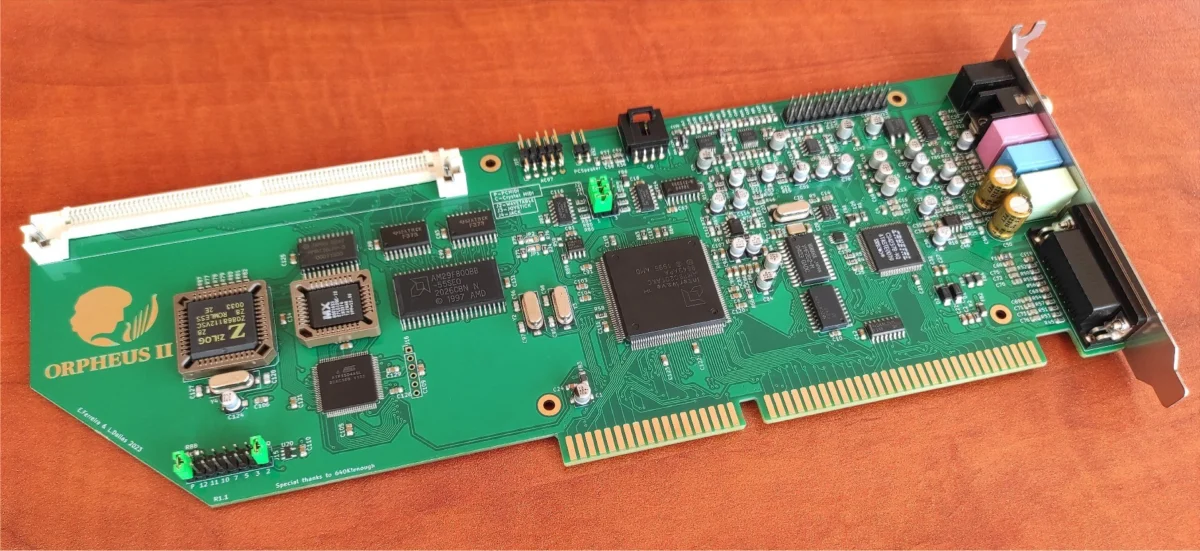
The acclaimed Orpheus 2 ISA Soundcard, a cornerstone for vintage PC enthusiasts seeking authentic and comprehensive audio reproduction, has unexpectedly announced a new pre-order window for a limited production batch. Spearheaded by the dedicated team behind the project, this highly sought-after hardware solution integrates multiple iconic sound technologies onto a single ISA card, promising an unrivaled auditory journey through the golden age of PC gaming and computing. This development comes as welcome news to a dedicated community, despite the premium price point of €340, reflecting the card’s intricate design, hand-assembled quality, and broad compatibility.
A Synthesis of Retro Audio Excellence: Deconstructing the Orpheus 2’s Capabilities
At its core, the Orpheus 2 is a meticulously engineered device designed to address the complex and often fragmented audio requirements of classic DOS-era personal computers. The card’s impressive feature set is a testament to its ambition, aiming to consolidate the functionalities of several historical soundcards into one robust package.
Central to its appeal is the inclusion of a genuine Yamaha OPL3 (YMF262) FM synthesis chip. This component is crucial for accurately replicating the soundscapes of thousands of DOS games from the late 1980s and early 1990s, as it was the primary audio chip found in popular soundcards like the AdLib and the ubiquitous Sound Blaster Pro 2 and Sound Blaster 16 series. FM (Frequency Modulation) synthesis, with its distinctively bright, metallic, and often charmingly artificial tones, defined a generation of PC audio. The Orpheus 2’s integration of a true OPL3 chip ensures that games designed with this hardware in mind sound precisely as their developers intended, free from the inaccuracies often associated with software emulation or later, less compatible hardware.
Complementing the FM synthesis, the Orpheus 2 also features an onboard AMD Interwave chip. This powerful digital signal processor (DSP) delivers capabilities akin to the legendary Gravis Ultrasound (GUS), a revolutionary soundcard from the mid-1990s known for its advanced sample-based synthesis and hardware mixing capabilities. The GUS, while less widespread than Sound Blaster, offered superior audio quality and advanced features, becoming a favorite among demo scene artists and for games that specifically leveraged its unique architecture, such as Doom, Duke Nukem 3D, and Unreal. The Interwave chip, a later iteration designed by AMD (which acquired MediaVision, the original GUS developer), provides excellent compatibility with the GUS standard, allowing Orpheus 2 users to experience these titles with their intended rich, sampled audio and advanced effects, including 3D positional audio and high-quality MIDI playback.
Further expanding its sonic palette, the Orpheus 2 incorporates a wavetable header. This crucial addition allows enthusiasts to connect external daughterboards, significantly enhancing MIDI playback capabilities. One highly recommended accessory is the DreamBlaster X2GS from Serdashop, which provides a licensed Roland GS (General Standard) soundbank. This effectively transforms the Orpheus 2 into a virtual Roland SC-55, a highly revered external MIDI module that set the standard for MIDI music in many iconic PC games, particularly those from LucasArts and Sierra On-Line, during the early to mid-1990s. The SC-55’s lush, realistic instrument samples and expressive capabilities created an immersive audio experience that FM synthesis alone could not match, making its emulation a key feature for serious retro gamers.
Not overlooking other critical functionalities, the card also includes PCMIDI, an option that provides Intelligent MPU-401 mode. This feature is vital for properly connecting and utilizing external MIDI devices like the Roland MT-32. The MT-32, an early MIDI synthesizer module, delivered a unique and sophisticated soundscape that was specifically composed for many pioneering PC games, including classics from Sierra (e.g., King’s Quest, Space Quest) and LucasArts (e.g., Monkey Island, Indiana Jones and the Last Crusade). Intelligent MPU-401 mode ensures precise timing and SysEx (System Exclusive) message handling, which is paramount for the MT-32 to play back music and sound effects as intended, without glitches or missing instrument patches.
The Resurgence of Retro Computing and the Demand for Authenticity
The market for modern recreations of vintage PC hardware, such as the Orpheus 2, is a direct response to the burgeoning retro computing movement. Driven by nostalgia, a desire for historical preservation, and an appreciation for the unique challenges and aesthetics of older technology, enthusiasts worldwide are actively seeking ways to build, restore, and experience classic computer systems.
However, maintaining original vintage hardware presents numerous obstacles. Decades of operation can lead to component degradation, such as leaking capacitors, failing ICs, and general wear and tear. Sourcing fully functional original soundcards, especially high-end models like the Gravis Ultrasound or Roland MT-32, can be prohibitively expensive and often involves navigating unreliable second-hand markets. Even if acquired, these original cards may require extensive repair and refurbishment to ensure stable operation. Furthermore, the sheer number of different soundcard standards from the DOS era means that achieving comprehensive compatibility often requires installing multiple physical cards, leading to system conflicts, power consumption issues, and limited ISA slot availability in vintage motherboards.
It is within this context that projects like the Orpheus 2 find their niche. By offering a single, modern, and reliable solution that emulates or integrates the key functionalities of multiple historical cards, the Orpheus 2 addresses critical pain points for the retro computing community. It provides a stable, high-quality audio experience that is true to the original hardware, without the fragility, scarcity, or compatibility headaches associated with vintage components. This commitment to authenticity, combined with the convenience of a unified solution, underpins the card’s strong reputation and consistent demand.
Project Genesis and Community Engagement: The Vision of Keropi (Leo)
The Orpheus 2 project is deeply rooted in the collaborative and passionate retro computing community, particularly within forums like VOGONS (Very Old Games On New Systems). The project’s lead, Keropi (Leo), has been a prominent figure in this space, known for his dedication to hardware preservation and innovation. The Orpheus 2 is not merely a commercial product but a community-driven initiative born from a deep understanding of what retro enthusiasts truly desire.
The initial launch of the Orpheus 2 (and its predecessor) was met with significant enthusiasm, quickly establishing its reputation for exceptional quality and unparalleled feature integration. The project’s success is a testament to Keropi’s vision to create a "no-compromise" solution that delivers the full spectrum of classic PC audio experiences. The hand-assembly process for each card underscores a commitment to quality control and a bespoke craftsmanship often absent in mass-produced electronics. This meticulous approach, while contributing to the premium price, ensures that each unit meets the high standards expected by discerning hobbyists.
The announcement of this new pre-order window was initially made by Keropi on May 12 via the VOGONS forums, a central hub for retro computing discussions. This direct communication channel highlights the project’s grassroots nature and its close ties to the community it serves. The initial deadline was set for the end of May, reflecting the typical limited production runs for such specialized hardware. However, acknowledging the high demand and the brief notice, a subsequent conversation with Keropi confirmed an extension of the pre-order period by an additional week into June, mirroring the flexibility and responsiveness seen in previous runs. This extension provides a crucial opportunity for enthusiasts who may have missed the initial announcement to secure their card.
Pre-Order Dynamics and Accessibility: A Model for Niche Hardware
Securing an Orpheus 2 card requires a specific pre-order process, a common model for high-demand, limited-production retro hardware. Prospective buyers are required to deposit half the cost of the card, amounting to approximately €170, for their pre-order to be considered valid. This deposit system helps manage production costs, gauges firm demand, and mitigates financial risk for the small-scale manufacturing operation. Full details and instructions for the pre-order process are available on the project’s official PCMIDI.eu website.
A minor but notable detail for this particular production run is the return to the standard green PCB color. While previous runs may have offered alternative colors, such as red, this batch will exclusively feature the classic green, indicating a streamlining of the manufacturing process or a decision based on component availability. For a community that often appreciates the aesthetic details of hardware, such specifications are relevant. The limited nature of these pre-order windows and the specific terms underscore that the Orpheus 2 is not a mass-market consumer product but a specialized item catering to a passionate, albeit niche, audience. The "surprise" nature of the pre-order window also suggests that production cycles are often dictated by component availability and the capacity of the small team, rather than a fixed commercial schedule.
Craftsmanship and Cost: The Value Proposition of a Premium Solution
The €340 price tag for the Orpheus 2 positions it firmly in the premium segment of retro computing hardware. For those unfamiliar with the specialized nature of this market, the cost might appear substantial. However, a deeper analysis reveals a compelling value proposition.
Firstly, the card consolidates the functionality of multiple expensive and increasingly rare vintage sound solutions. Acquiring a genuine Yamaha OPL3-based Sound Blaster 16, a functional Gravis Ultrasound PnP, a Roland SC-55, and a Roland MT-32 (along with an MPU-401 interface card) separately would likely exceed €340 significantly, not to mention the inherent risks of purchasing decades-old electronics. Furthermore, integrating these disparate components into a single system often leads to driver conflicts, IRQ/DMA issues, and limited compatibility. The Orpheus 2 sidesteps these challenges by offering a single, pre-configured, and highly compatible solution.
Secondly, the hand-assembly process, as highlighted by the project team, is a significant factor in the cost. This bespoke approach ensures meticulous quality control, precise component placement, and thorough testing of each unit, leading to a product with superior reliability and performance compared to mass-produced alternatives. Such craftsmanship is labor-intensive and cannot achieve the economies of scale seen in mainstream electronics manufacturing.
Finally, the cost reflects the extensive research and development (R&D) involved in reverse-engineering, designing, and manufacturing a complex ISA card that integrates diverse technologies while maintaining high compatibility with vintage software. This includes sourcing specific, often obsolete, components or finding modern equivalents that faithfully reproduce original functionality. The Orpheus 2 is not merely a clone but an expertly engineered integration designed for optimal performance in a retro environment. For dedicated enthusiasts, the investment represents access to the definitive audio experience for a vast library of classic PC games and applications.
Broader Implications for Hardware Preservation and Innovation
Projects like the Orpheus 2 are vital for the long-term preservation of digital heritage. As original hardware inevitably fails, modern recreations ensure that future generations can continue to experience and study the foundational technologies of personal computing. By consolidating multiple audio standards, the Orpheus 2 democratizes access to authentic retro sound, making it easier for hobbyists, educators, and historians to set up and explore vintage PC environments without the financial and technical barriers of acquiring and maintaining numerous original cards.
Moreover, the success of the Orpheus 2 inspires further innovation within the retro computing community. It demonstrates that there is a viable market for high-quality, specialized hardware designed to meet the exacting standards of enthusiasts. This encourages other developers to tackle similar challenges, fostering a vibrant ecosystem of new hardware solutions that bridge the gap between vintage and modern technology. From custom motherboards to video cards and storage solutions, the retro computing scene benefits immensely from such dedicated and professional endeavors.
Looking Ahead: Continued Demand and Future Prospects
The sustained demand for the Orpheus 2, evidenced by successive pre-order runs and the rapid uptake of available units, underscores the enduring appeal of authentic retro experiences. As long as vintage PC gaming and computing continue to captivate enthusiasts, there will be a need for high-quality, reliable hardware solutions that faithfully reproduce the original experience. The Orpheus 2 stands as a benchmark in this regard, offering a comprehensive and expertly crafted audio solution that celebrates the rich sonic history of personal computers.
Enthusiasts interested in securing an Orpheus 2 ISA Soundcard are strongly advised to visit the official PCMIDI website and the VOGONS forum post for the latest information on the extended pre-order window and detailed instructions. Given the limited nature of these production runs, prompt action is recommended to avoid disappointment.
Key Information and Resources:
- PCMIDI Website: https://pcmidi.eu/orpheus2.html
- VOGONS Forum Post: https://www.vogons.org/viewtopic.php?p=1422153#p1422153
- Previous RetroRGB Article: https://retrorgb.com/launch-of-the-new-isa-soundcard-orpheus-ii.html