 Indra Gunadi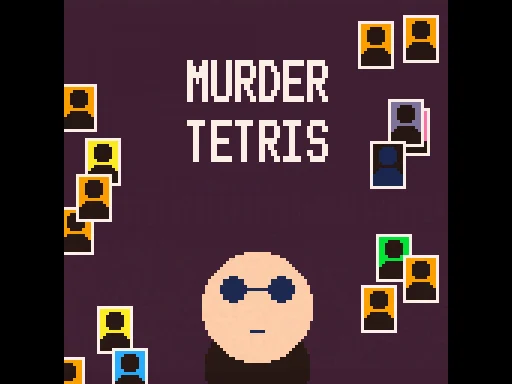
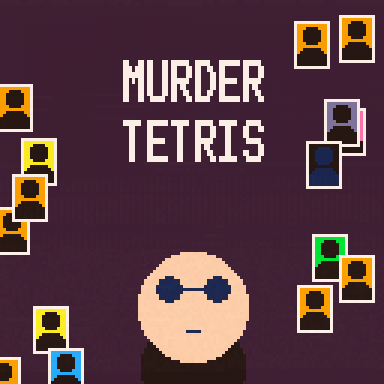
This innovative title, released on September 28, 2026, represents the latest entry in the thriving ecosystem of the PICO-8 fantasy console. By synthesizing the high-stakes tension of a procedural crime drama with the structural mechanics of a tile-matching puzzle game, the developer has introduced a unique sub-genre of "investigative puzzle-solving" to the retro-gaming community. The game challenges players to move beyond the rote pattern recognition of traditional falling-block titles, forcing them to engage with narrative-driven goals while managing the spatial constraints of a classic grid-based playfield.
The Evolution of the Puzzle-Crime Genre
The fusion of puzzle mechanics and narrative storytelling is not an entirely new phenomenon in the gaming industry, yet the application within the limited hardware constraints of PICO-8 provides a distinct challenge. Historically, the tile-matching genre, popularized by Alexey Pajitnov’s 1984 masterpiece Tetris, has relied on abstract geometry. Over the decades, titles like Catherine (2011) and the Professor Layton series have attempted to bridge the gap between logical puzzle-solving and investigative narrative.
Detective marks a significant departure from these precedents by integrating the investigative process directly into the primary mechanic. In most puzzle games, the blocks are interchangeable, serving only as variables to be cleared. In this title, the blocks are represented by color-coded suspect photographs. This shift in visual representation transforms the player’s goal: rather than simply clearing lines for the sake of survival, the player is ostensibly "processing" a caseload. Each match of three identical suspect photos acts as a closure event for a specific investigation, creating a loop where the player feels the progression of a detective’s workload through the medium of a fast-paced arcade game.
Chronology of the Development
The development cycle for PICO-8 titles is typically accelerated, often spanning weeks rather than years, owing to the engine’s restrictive architecture. The developer behind Detective utilized the platform’s native Lua-based scripting environment to create a robust grid-management system.
- Q1 2026: Initial conceptualization of a "narrative-driven puzzle" game. The developer began experimenting with sprite-based assets that could function as both game pieces and narrative tokens.
- Q2 2026: Integration of the color-coded suspect database. This period focused on balancing the difficulty curve, ensuring that as the "investigation" progressed, the speed of the incoming suspect files increased, simulating the mounting pressure of a real-world police backlog.
- September 28, 2026: Official release via the Lexaloffle BBS, the primary distribution hub for PICO-8 software. Within hours of the release, the title saw a significant surge in interest from the retro-enthusiast community, highlighting the enduring appeal of high-skill ceiling puzzle games.
Data and Mechanics: How the System Functions
The mechanics of Detective are designed to be intuitive yet deceptively complex. The playfield is a standard 10×20 grid, typical of the genre, but the scoring system relies on a proprietary "Case Clearance Index."
When a player aligns three suspect photos of the same color, the system triggers a "Case Closed" notification. Unlike standard games that simply clear lines, Detective calculates the efficiency of the match. Factors influencing the final score include:
- Clearance Speed: Time elapsed between the first suspect entering the grid and the final match completion.
- Stack Efficiency: The number of "misaligned" suspect photos left on the grid during the clearing process, which acts as a penalty, simulating "unsolved" or "cold" cases.
- Combo Multipliers: Chaining multiple clearances together results in higher-tier case files, rewarding players with in-game "swag"—digital commendations that track the player’s career progression as a detective.
This data-driven approach turns the game into a performance-based simulation. Players are not just playing for high scores; they are effectively managing a digital police station. The developer has noted that the core loop is designed to encourage long-term engagement, as the difficulty scaling is non-linear, mirroring the unpredictable nature of criminal investigation.
Industry Implications and Community Reaction
The reception of Detective has been largely positive among the PICO-8 community, with many users noting that the game addresses a common critique of the tile-matching genre: the lack of a tangible "why" behind the actions. By providing a narrative hook—solving murders—the game grants the player a sense of agency that transcends simple score-chasing.
Industry analysts observe that the success of niche titles on platforms like PICO-8 underscores a broader trend in game development: the return to simplicity. In an era where AAA titles often prioritize photorealistic graphics and expansive open worlds, the success of a 128×128 pixel-resolution game based on the concept of "Murder Tetris" serves as a reminder of the power of well-executed game design.
"The brilliance of Detective lies in its ability to take a universally understood mechanic and apply a thematic skin that elevates the experience," says industry commentator Elias Vance. "It’s not just about matching colors; it’s about the psychological satisfaction of tidying up chaos. In this case, that chaos happens to be a series of unsolved murders."
The Broader Impact on the PICO-8 Ecosystem
The PICO-8 engine, developed by Lexaloffle, has become a hotbed for experimentation. Because the engine limits the number of sprites and the total amount of memory available, developers are forced to innovate within strict boundaries. Detective contributes to the platform’s prestige by proving that even within these limitations, complex narrative-driven games are possible.
The implications for the independent gaming sector are notable. As developers seek more sustainable ways to build games without the massive overhead of modern development kits, the PICO-8 model offers a viable, community-centric path forward. Titles like Detective provide a template for how small, independent creators can capture significant audience attention through creative genre-blending.
Future Outlook and Continued Support
While the developer has not yet announced a roadmap for expansions or updates, the initial feedback suggests a demand for more narrative depth. Users have requested additional suspect categories, potentially incorporating sub-plots or narrative branching paths that could be unlocked through high-performance play.
As of early October 2026, the game maintains a stable position on the Lexaloffle leaderboard. The community continues to refine their strategies, sharing "case clearance" tactics that emphasize speed and efficiency. The success of the project reinforces the viability of the PICO-8 platform as a training ground for developers looking to master the fundamentals of game loop design, pacing, and player retention.
In conclusion, Detective stands as a masterclass in minimalist design. It proves that a compelling game does not require millions of dollars in budget or thousands of hours of rendering time. Instead, it requires a single, strong hook, a balanced gameplay loop, and a clear understanding of the player’s psychological drive. Whether one is a fan of the classic puzzle genre or a newcomer to the PICO-8 scene, the game offers a rigorous test of speed, logic, and detective-level decision-making. As the gaming landscape continues to evolve, projects like this serve as a critical reminder that innovation often happens in the most restricted of environments.