Farhan hamdan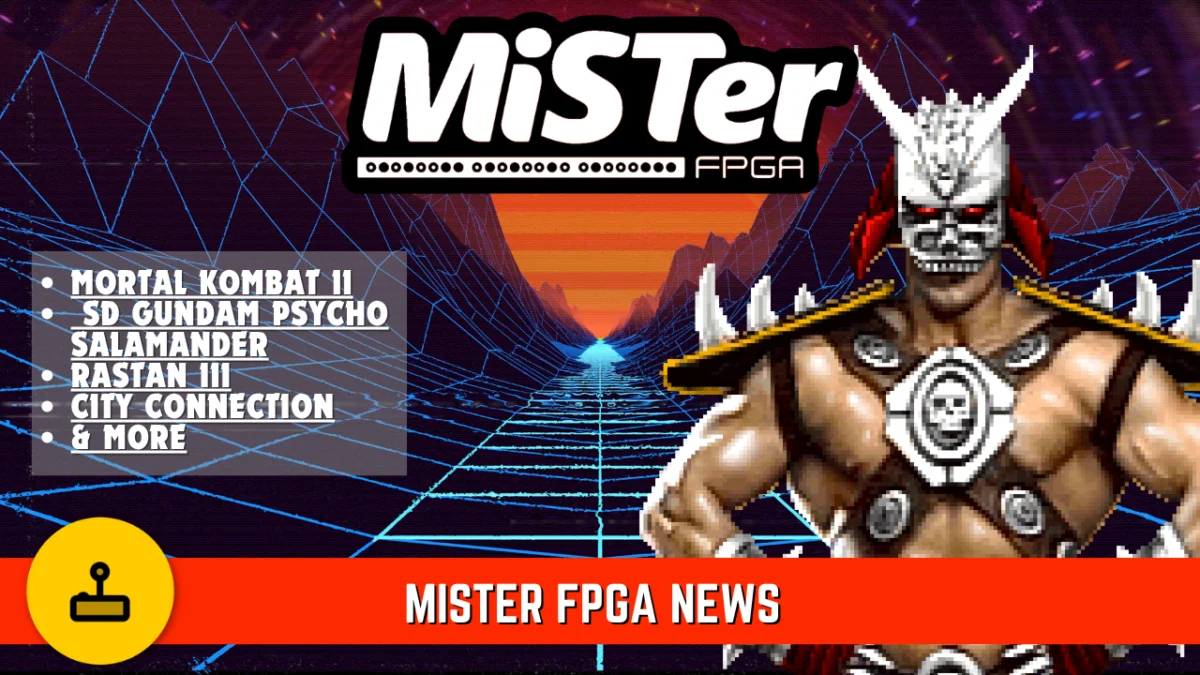
The MiSTer FPGA platform continues its remarkable evolution, showcasing an intensive period of development marked by the highly anticipated beta release of a core for Mortal Kombat II, significant progress and technical hurdles in optimizing the Sega Saturn core, and an impressive array of new and upcoming arcade game cores from dedicated developers. These advancements underscore the platform’s commitment to high-fidelity hardware recreation, expanding its library of meticulously preserved classic titles and pushing the boundaries of what is achievable on the Terasic DE10-Nano board. The recent updates reflect a vibrant and active development community, continually enhancing the MiSTer experience for retro gaming enthusiasts worldwide.
The MiSTer FPGA Phenomenon: A Foundation of Preservation
At its core, the MiSTer FPGA project represents a paradigm shift in digital retro gaming, moving beyond traditional software emulation to offer hardware recreation. Utilizing a Field-Programmable Gate Array (FPGA) chip, specifically the DE10-Nano board, MiSTer cores are digital blueprints that configure the FPGA to behave like the original hardware of classic arcade machines and home consoles. This approach minimizes latency, enhances accuracy, and delivers an authentic gaming experience often indistinguishable from the original systems, making it a cornerstone for video game preservation and historical accuracy. The open-source nature of the project fosters a collaborative environment where skilled engineers and enthusiasts contribute to an ever-growing library of "cores," each designed to replicate specific hardware architectures.
Mortal Kombat II Enters the Arena with T-Unit Core
Among the most significant announcements is the release of a beta MiSTer FPGA core for the legendary fighting game, Mortal Kombat II. Developed by Coin-Op Collection, this core brings Williams/Midway’s T-Unit arcade hardware to the MiSTer platform, a significant technical achievement given the complexity of the original system. Mortal Kombat II, first released in 1993, quickly became a cultural phenomenon, renowned for its digitized sprites, fluid animations, brutal fatalities, and a vast roster of memorable characters. Its innovative combat system and dark, gritty aesthetic set it apart in the crowded arcade fighting game scene of the early 90s, cementing its legacy as one of the most influential titles in the genre.
The T-Unit hardware, which powered Mortal Kombat II and several other Williams/Midway titles, was a custom-designed architecture that presented considerable challenges for accurate hardware recreation. The Coin-Op Collection’s core debuts with a beta version of the game, notably featuring an extensive cheat menu. This menu is a direct result of meticulous full ROM disassembly, allowing developers to uncover and expose functionalities typically hidden within the game’s original code. This level of detail not only provides an enhanced user experience but also speaks to the profound technical expertise involved in the core’s development, offering an unprecedented look into the game’s internal workings.
Currently, the Mortal Kombat II beta core is accessible as a Patreon exclusive, a common model within the MiSTer community to support developers and fund their intensive work. This tiered release strategy allows early supporters to gain access to cutting-edge developments while providing financial sustainability for ongoing projects. Coin-Op Collection has affirmed its commitment to a public release, promising to make the core freely available to all users once it has been thoroughly tested, stabilized, and deemed ready for broader distribution. This approach balances developer support with the community’s desire for accessible, high-quality content.
Sega Saturn Core Pushes FPGA Limits: An Engineering Gauntlet
The development of the Sega Saturn core continues to be one of the most ambitious and technically demanding endeavors within the MiSTer FPGA ecosystem. According to a detailed article on the Sega Saturn Shiro website, the core is currently reaching the fundamental limits of the DE10-Nano FPGA chip in its present state. This revelation highlights the extraordinary complexity of the Sega Saturn’s architecture, a system notoriously challenging even for modern software emulators due to its unconventional design.
Released in 1994, the Sega Saturn was a 32-bit console celebrated for its powerful 2D capabilities and innovative 3D hardware, though its parallel processing design proved difficult for third-party developers to fully harness. The Saturn featured dual Hitachi SH-2 CPUs, multiple Video Display Processors (VDPs) for graphics, and a dedicated Sound Control Unit (SCU), among other custom ASICs. Recreating such a multi-faceted and highly parallel architecture on a single FPGA chip like the DE10-Nano requires immense optimization and careful resource management. Each component, from CPU timing to memory access patterns and graphical rendering pipelines, must be precisely mapped onto the FPGA’s logic gates, often competing for finite resources.
The Shiro article indicates that the challenges are serious enough that certain features of the core may need to be removed or undergo a complete overhaul to ensure stability and performance. This could potentially involve difficult decisions regarding the fidelity of certain graphical effects, audio channels, or even peripheral support if the FPGA’s logic cells, memory blocks, or clocking resources become oversubscribed. The discussions detailed on the Shiro site delve into specific bottlenecks encountered, offering a rare glimpse into the "gritty details" of FPGA development. It serves as a testament to the dedication of lead developer srg320, who is concurrently advancing the 3DO core, another notoriously complex 32-bit system. The 3DO Interactive Multiplayer, released in 1993, also featured a unique hardware configuration, including a custom ARM60 CPU and multiple co-processors, presenting its own set of formidable challenges for accurate hardware recreation. The ongoing work on both the Saturn and 3DO cores represents a frontier in FPGA retro gaming, pushing the boundaries of the DE10-Nano’s capabilities and providing invaluable insights into the intricacies of these historic systems.
A Deluge of New and Upcoming Arcade Cores
Beyond the high-profile releases, the MiSTer community has witnessed a surge in the development and release of numerous arcade cores, significantly expanding the platform’s retro library. Developer rmonic79, in particular, has been a prolific contributor, bringing several classic titles to life on the MiSTer.
-
China Gate: The Technos beat-em-up China Gate is now available as a MiSTer FPGA core. Released in 1987, this game, known in Japan as Power Instinct or The Legend of Kage 2, allows players to choose from two distinct animal characters for single or simultaneous two-player action. Technos Japan Corporation was a prominent developer in the arcade scene, renowned for pioneering the beat-em-up genre with titles like Renegade and Double Dragon. The successful porting of China Gate (and its Japanese version) underscores the MiSTer’s ability to accurately replicate diverse arcade hardware from this golden era.
-
Cobra Command: Coin-Op Collection has also released a beta core for the 1988 Data East DECO-8 arcade title Cobra Command. This side-scrolling helicopter shooter should not be confused with the 1984 LaserDisc game of the same name by Data East, which featured full-motion video gameplay. The 1988 version is a more traditional sprite-based shooter, challenging players to navigate treacherous landscapes and engage enemy forces from an aerial perspective. Data East was a prominent arcade manufacturer, known for a wide range of innovative titles throughout the 1980s and 90s, and the DECO-8 hardware platform powered many of their successful releases.
-
SD Gundam Psycho Salamander: rmonic79 has previewed a future MiSTer arcade core for SD Gundam Psycho Salamander. This title is a side-scrolling run-and-gun game set within the expansive and popular Gundam universe. The Gundam franchise, originating in 1979 with the Mobile Suit Gundam anime, has since spawned numerous series, films, manga, and video games, making it a beloved staple in Japanese pop culture. Bringing this particular arcade entry to MiSTer adds another dimension to the platform’s diverse game offerings.
-
Warrior Blade – Rastan Saga III: Further diversifying the MiSTer’s arcade beat-em-up collection, rmonic79 is actively developing a core for Warrior Blade – Rastan Saga III. This game is powered by the Darius 2 core, demonstrating an efficient development strategy where existing, stable cores are leveraged as baselines for new projects with similar hardware architectures. Warrior Blade, released by Taito in 1991, is notable for its multi-monitor setup, which was a Taito signature feature (as seen in Darius and The Ninja Warriors) that provided an expansive field of view and an immersive arcade experience. The successful implementation of such multi-monitor configurations on MiSTer showcases the platform’s adaptability to unique arcade setups.
-
Blood Bros: Another work-in-progress core from rmonic79 is Blood Bros, a Wild West-themed shoot-em-up. The developer utilized the foundation established for the Gundam core to expedite the development of Blood Bros, illustrating the collaborative and iterative nature of core creation. This game plays similarly to other classic arcade titles like Cabal, NAM-1975, and Dynamite Duke, featuring a fixed-screen perspective where players aim and shoot at enemies from a static position, often with a unique control scheme involving a trackball or joystick and a dedicated aiming button.
-
D-Con: rmonic79 is also developing a core for D-Con, a side-scrolling shooter with a distinctive first-person perspective by Success Corp. This core builds upon the SD Gundam Psycho Salamander core as a baseline and benefits from invaluable assistance from the MAME project. MAME (Multiple Arcade Machine Emulator) is a vast open-source project dedicated to documenting and preserving arcade games, and its extensive research and driver code often serve as critical references for MiSTer FPGA core developers, streamlining the process of understanding complex arcade hardware.
-
City Connection: The City Connection core, developed by rmonic79, has been officially released and is now available for download via the update-all script, making it readily accessible to the entire MiSTer community. City Connection, an iconic 1985 arcade platformer by Jaleco, tasks players with controlling a car to drive over elevated platforms, changing their color from white to green. Once all platforms on a level are colored, the player progresses. Its simple yet addictive gameplay, combined with catchy music, made it a memorable title in the mid-80s arcade landscape.
MiSTer Companion: Enhancing User Experience
Beyond individual game cores, the MiSTer ecosystem benefits from a suite of utilities designed to streamline the user experience. MiSTer Companion is one such tool that has received numerous updates lately. While specific new features were not detailed, such companion applications typically provide functionalities for managing ROMs, updating cores and firmware, configuring settings, and generally simplifying the maintenance and customization of the MiSTer system. These tools are crucial for making the powerful, yet sometimes technically intricate, MiSTer platform more user-friendly and accessible to a wider audience, fostering greater adoption and enjoyment.
Steam Controller Integration: Community-Driven Solutions
The integration of non-standard input devices, such as the Steam Controller, presents unique challenges for retro gaming platforms designed primarily for traditional gamepads and joysticks. An initial assessment of the Steam Controller’s compatibility with MiSTer FPGA concluded that while it wasn’t a universal fit, certain games could benefit from its unique features.
However, the strength of the MiSTer community lies in its problem-solving ethos. Shortly after the initial assessment, a project emerged on Reddit that aims to enable the Steam Controller to function as a proper gamepad on MiSTer. This community-driven initiative exemplifies the collaborative spirit of the MiSTer ecosystem, where users and developers actively seek and implement solutions to enhance the platform’s versatility. The project, still in development, continues to add features, promising to unlock new possibilities for input customization and accessibility, allowing users to leverage their preferred controllers for an optimal gaming experience across the vast MiSTer library.
Broader Implications and Future Outlook
The recent wave of updates and developments within the MiSTer FPGA community underscores the platform’s sustained growth and its pivotal role in the ongoing effort to preserve video game history with unparalleled accuracy. The release of major cores like Mortal Kombat II, the challenging yet rewarding progress on the Sega Saturn core, and the continuous flow of new arcade titles demonstrate a robust development pipeline. The innovative approaches, such as leveraging existing core baselines and collaborating with projects like MAME, highlight the technical ingenuity and efficiency within the community.
As MiSTer FPGA continues to evolve, it not only provides access to a meticulously recreated past but also serves as a living testament to the dedication of its developers and the passion of its user base. The ongoing dialogue around technical limits, feature optimizations, and community-driven solutions ensures that the platform remains at the forefront of hardware-accurate retro gaming, promising an exciting future for enthusiasts eager to revisit the golden eras of arcade and console gaming.