Vera Clarissa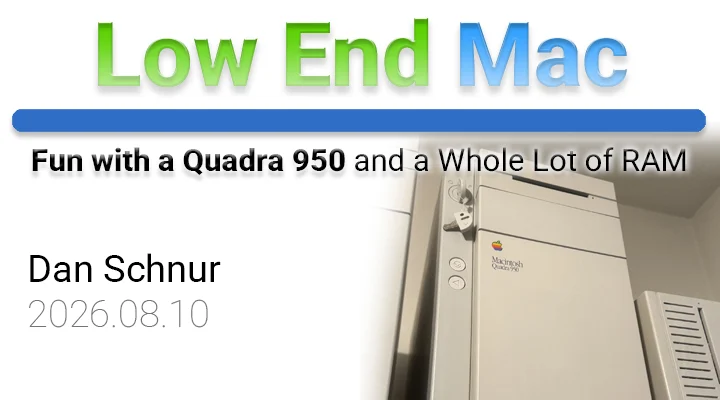
The Macintosh Quadra 950, introduced by Apple Computer in May 1992, represented the pinnacle of the company’s high-end workstation architecture during the early 1990s. Powered by the Motorola 68040 processor clocked at 33 MHz, the Quadra 950 was designed to compete with high-end Unix workstations from competitors such as Sun Microsystems and Silicon Graphics. Recently, an enthusiast-led engineering project successfully populated the machine’s sixteen SIMM slots with custom-built 16 MB modules, reaching the theoretical maximum capacity of 256 MB of RAM. This experiment, while technically impressive, serves as a revealing case study into the memory management constraints of 1990s-era operating systems and the historical evolution of hardware scalability.
Historical Context and Hardware Specifications
During its initial release, the Quadra 950 was a marvel of engineering, featuring a "tower" chassis that provided significant room for expansion. The machine was the successor to the Quadra 900 and served as the platform for the Workgroup Server 95, a specialized version of the machine running Apple’s A/UX—a proprietary Unix-based operating system. In the early 1990s, the cost of RAM was exorbitant; 16 MB SIMMs were virtually unheard of in consumer settings, and the machine was generally shipped with configurations ranging from 8 MB to 32 MB.

The architectural limit of the Quadra 950 was set at 256 MB, requiring all sixteen 30-pin SIMM slots to be filled with 16 MB modules. Achieving this in a contemporary setting required sourcing vintage-compatible components and modern printed circuit board (PCB) design to replicate the specific Fast Page Mode (FPM) signaling required by the 68040-based memory controller.
The Engineering Process: Custom Fabrication
The project involved a multi-stage engineering effort to overcome the scarcity of original 16 MB SIMMs. The methodology utilized open-source hardware designs that allowed for the construction of modern PCBs capable of accepting individual memory chips harvested from high-density, double-sided parity EDO (Extended Data Out) DIMMs found in legacy PC hardware.
The construction phase involved:

- Component Harvesting: Utilizing a hot-air rework station to desolder high-density memory chips from salvaged 256 MB EDO DIMMs.
- PCB Assembly: Utilizing custom-designed boards from PCBWay, configured to bridge the gap between modern chip density and the vintage 30-pin SIMM interface.
- Calibration: Integrating voltage regulators and passive components to ensure signal integrity across the sixteen-slot bus, a configuration notorious for potential noise interference and timing errors in early 1990s hardware.
Overcoming the Memory Test Latency
Upon reaching the 256 MB threshold, a significant performance bottleneck emerged during the Power-On Self-Test (POST). Apple’s original ROM-based boot process was never optimized for memory capacities exceeding 64 MB. Consequently, the initialization sequence performed a linear memory check that resulted in an extended "hang" state, effectively rendering the machine non-responsive for several minutes during startup.
The resolution involved the use of a custom-flashed ROM SIMM. By replacing the stock boot ROM with a modified image—specifically one designed by the vintage Mac community—the system was able to bypass the exhaustive memory verification routine. This intervention successfully reduced the boot time from a multi-minute delay to a standard cycle, demonstrating that the underlying hardware was capable of addressing the memory but the firmware lacked the logic to manage such a large address space efficiently.
Comparative Analysis: Mac OS vs. A/UX
The experiment highlighted a distinct disparity between the performance and compatibility of contemporary operating systems. While classic Mac OS (System 7) recognized and utilized the full 256 MB of memory without issue, Apple’s A/UX Unix environment proved highly resistant to the upgrade.

Technical diagnostics revealed that A/UX possessed hard-coded memory management limitations. When the system detected 256 MB, the Unix kernel failed to boot, likely due to address-space limitations or buffer overflows in the kernel’s memory mapping subroutines. Systematic testing revealed that A/UX stability peaked at 64 MB. This finding suggests that Apple’s engineering team prioritized stability within the constraints of the hardware available at the time of the OS’s development, effectively hard-coding an ceiling that prevented the software from leveraging future-proof hardware upgrades.
Implications and Broader Impact
The endeavor to maximize the Quadra 950 serves as a bridge between the rapid hardware growth of the 1990s and modern retro-computing preservation efforts. The data gathered provides a clear picture of how "future-proofing" was viewed by 1992-era engineers. The fact that the hardware could technically address 256 MB—a staggering amount for the time—while the software environment could only utilize a fraction of that capacity, illustrates the "software-hardware gap" that defined the era.
Industry analysts note that such experiments are critical for documenting the legacy of workstation hardware. By verifying the exact thresholds of the Quadra 950, researchers have established a verified performance baseline for the Motorola 68k architecture. While the practical utility of 256 MB of RAM in 1992 would have been limited to specialized server tasks, the ability to achieve this today allows for a deeper understanding of memory bus limitations and the longevity of high-end components.

Conclusion: The Value of Legacy Engineering
The Quadra 950 project stands as a testament to the durability of 1990s workstation hardware. While the financial and time-intensive nature of upgrading such a machine renders it impractical for commercial use, the technical success validates the architectural ambition of Apple’s early server division. The machine, once a backbone of internet traffic and research, remains a functional artifact. The transition from a 32 MB server to a 256 MB enthusiast project underscores the shift in the industry from hardware scarcity to a modern era of hardware preservation and hobbyist engineering. For the Quadra 950, the legacy is not found in its speed or its utility, but in the enduring capability of its design to accept upgrades long after its intended lifecycle has concluded.