Cecilia Chamidah Nur
The retro gaming community is buzzing with the release of "Junk Runner 64," a groundbreaking new title developed for the iconic Nintendo 64 console. This ambitious project, spearheaded by renowned N64 homebrew developer James Lambert and his team, redefines expectations for the 64-bit platform, delivering an open-world experience described as "Skyrim-scale" in its expansive scope. Released as part of the N64brew 2025 game jam, "Junk Runner 64" is not merely a nostalgic curiosity but a testament to modern developers’ ingenuity in pushing the limits of decades-old hardware. Its availability for free download via GitHub marks a significant moment for the N64 homebrew scene, demonstrating that the console, nearing its 30th anniversary, still holds untapped potential.
A New Benchmark for N64 Homebrew Development
The unveiling of "Junk Runner 64" has immediately captivated enthusiasts and technical experts alike. The game is an extraordinary technical achievement, particularly for a console launched in 1996. While the term "Skyrim-scale" is used to convey the sheer size and freedom of its open world rather than a direct comparison of graphical fidelity, it highlights the unprecedented ambition of the project. The game’s visuals, characterized by its extensive draw distance and detailed environments, have led some observers to compare it favorably with titles typically seen on more advanced systems like the Nintendo 3DS or even the Sega Dreamcast. Crucially, "Junk Runner 64" operates natively on actual N64 hardware, a feat made possible by a series of highly sophisticated optimization techniques detailed by Lambert in a recent technical breakdown video.
The development team for "Junk Runner 64" includes Pyroxene, Caitlin G. Cooke, terzdesign, and <kÆlin>, each contributing to various aspects of the game’s creation, from art and design to programming and technical implementation. Their collaborative effort under Lambert’s leadership has resulted in a title that stands as a new benchmark for what can be achieved on the Nintendo 64, challenging long-held assumptions about its graphical and processing capabilities.
The Visionary Behind the Code: James Lambert’s Track Record
James Lambert has carved out a distinctive reputation within the retro computing and homebrew communities over the past few years, consistently pushing the boundaries of what is thought possible on vintage hardware, particularly the Nintendo 64. His work is characterized by a deep understanding of hardware architecture and an innovative approach to circumventing its inherent limitations.
Lambert first gained widespread attention for his "Portal 64" project, an unofficial demake of Valve’s critically acclaimed puzzle game "Portal." This project showcased an astonishing level of fidelity and gameplay adaptation for the N64, demonstrating not only Lambert’s programming prowess but also his ability to translate complex modern game mechanics onto an older platform. Although the project faced a DMCA takedown from Valve, it solidified Lambert’s standing as a leading figure in N64 homebrew.
Beyond "Portal 64," Lambert has continued to surprise and impress. He successfully implemented "RAGE-esque MegaTextures" on the N64, a technique for rendering vast, detailed textures efficiently, which was a significant graphical innovation for its time, even on much more powerful hardware. Furthermore, he demonstrated functional VR capabilities on the 64-bit console, an endeavor that seemed almost fantastical given the N64’s original specifications and the nascent state of VR technology in the late 1990s. These prior achievements provide essential context for understanding the scope and technical ambition behind "Junk Runner 64." Each project has served as a stepping stone, refining his methods and deepening his mastery of the N64’s unique challenges.
N64brew 2025 Game Jam: A Catalyst for Innovation
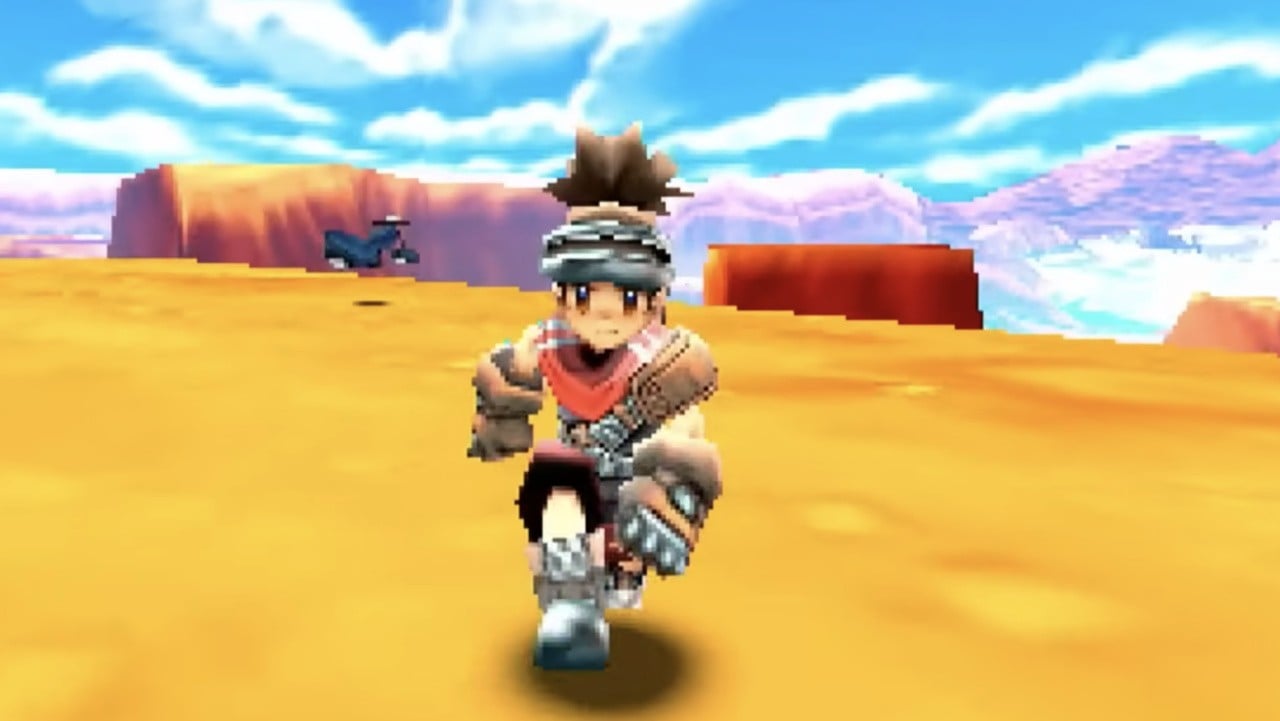
"Junk Runner 64" emerged from the N64brew 2025 game jam, an event organized by the N64brew community. The N64brew movement is a vibrant, global collective of developers, enthusiasts, and modders dedicated to exploring, understanding, and expanding the capabilities of the Nintendo 64. This community engages in various activities, including creating new tools, developing emulators, and, most notably, crafting entirely new games and applications for the console.
Game jams, such as the N64brew 2025 event, serve as powerful catalysts for innovation. They provide a structured yet creative environment where developers can collaborate, share knowledge, and challenge themselves to produce functional games or tech demos within a set timeframe. The competitive and collaborative spirit often pushes participants to devise novel solutions to complex problems, much like the technical hurdles overcome in "Junk Runner 64." These events are crucial for fostering talent, building community, and continually pushing the boundaries of what is thought possible on retro hardware, ensuring the console’s legacy is not just preserved but actively expanded upon. "Junk Runner 64" stands as a prime example of the high-quality output and technical ambition that such community-driven initiatives can inspire.
Overcoming the N64’s Technical Hurdles: A Deep Dive into Optimization
The Nintendo 64, while revolutionary in its time for its 3D capabilities and analog stick, presented significant technical limitations that developers in the 1990s often struggled with. Key among these was memory bandwidth, texture memory, and the infamous "fog" used to mask short draw distances. "Junk Runner 64" directly confronts these issues, particularly the challenge of rendering a vast, open world.
One of the most formidable obstacles in creating expansive 3D environments on the N64 is managing draw distance and preventing a visual artifact known as "z-fighting." Z-fighting occurs when two or more polygons are at approximately the same distance from the camera (on the z-plane). The N64’s Z-buffer, which determines the order in which objects are drawn based on their depth, can become imprecise at greater distances. This imprecision leads to flickering or incorrect rendering, where objects that should be behind one another appear to "fight" for screen space, drawing in the wrong order. Traditional N64 games often mitigated this by employing heavy fog to obscure distant objects, effectively reducing the visible world and thus the likelihood of z-fighting.
Lambert and his team, however, sought a solution that would allow for clear, distant views. Their ingenious approach involves a multi-pass rendering system and a unique management of the console’s Z-buffer:
-
Dual-Pass Rendering: Instead of trying to render the entire scene in one go, the world is drawn twice. The first pass renders all distant objects, and the second pass renders all close-up objects. This separation allows for different rendering strategies and optimizations for each distance range, reducing the computational load and precision issues associated with a single, massive scene.
-
Tiled World with Levels of Detail (LOD): The expansive open world is not treated as a single, monolithic mesh. Instead, it is divided into numerous smaller tiles. These tiles are rendered with varying levels of detail (LOD) based on their proximity to the player camera. Tiles closer to the player receive higher detail textures and geometry, while those further away are rendered with simplified models and lower-resolution textures. This technique is standard in modern game development but is particularly challenging to implement efficiently on the N64 due to its limited memory and processing power. The cleverness lies in how these LOD transitions are managed seamlessly to avoid jarring visual pop-in.
-
Z-Buffer Disablement and Back-to-Front Drawing: Perhaps the most radical departure from conventional N64 rendering, Lambert opted to disable the console’s Z-buffer. Instead of relying on the hardware to sort objects by depth, the team manually controls the drawing order. By intentionally rendering the world’s tiles from back to front, they effectively guarantee correct depth sorting. This technique bypasses the Z-buffer’s limitations, eliminating z-fighting and allowing for clear, extended draw distances without the need for heavy fog. This manual control over rendering order requires meticulous planning and execution but yields superior visual results for open environments.
These combined techniques represent a profound understanding of the N64’s hardware and a masterful application of software-based solutions to overcome its inherent limitations. The result is an open world that feels genuinely vast and visually coherent, pushing the N64 to a graphical frontier previously considered unattainable.

Broader Implications and the Future of Retro Gaming
The release of "Junk Runner 64" carries significant implications for the retro gaming community, hardware preservation, and the future of homebrew development.
-
Revitalization of Retro Hardware: Projects like "Junk Runner 64" breathe new life into vintage consoles. They prove that these systems are not merely relics of the past but active platforms for creativity and innovation. This sustained interest helps to keep the hardware relevant, encouraging new generations of enthusiasts to explore its capabilities.
-
Pushing Boundaries and Inspiring Innovation: Lambert’s work, including "Junk Runner 64," continually redefines the "possible" on older hardware. It challenges developers to think outside the box, explore low-level programming, and devise clever algorithms to achieve results previously thought impossible. This spirit of pushing boundaries can inspire other homebrew developers to embark on equally ambitious projects across various retro platforms. The N64, once seen as notoriously difficult to develop for, is now being shown to possess latent capabilities.
-
Preservation and Documentation: The N64brew community, through its game jams and projects like "Junk Runner 64," contributes significantly to the preservation of console history. The technical insights shared by developers like Lambert, often through detailed videos and code repositories, provide invaluable documentation for understanding the hardware’s intricacies and optimizing development practices for it. This knowledge might otherwise be lost over time.
-
Community Engagement and Collaboration: The collaborative nature of "Junk Runner 64," involving multiple team members and emerging from a community-driven game jam, underscores the power of collective effort in the homebrew scene. These projects foster a strong sense of community, where knowledge is shared, and individuals with diverse skills come together to create something truly remarkable. The positive reception from the broader retro gaming community, including prominent figures and publications, further validates the importance and impact of such endeavors.
-
Educational Value: The technical explanations provided by Lambert serve as an excellent educational resource for aspiring game developers, particularly those interested in optimization, graphics programming, and understanding hardware limitations. It offers a practical demonstration of how fundamental computer graphics principles can be applied creatively to overcome real-world constraints.
"Junk Runner 64" is more than just a new game for an old console; it is a profound statement about the enduring power of human ingenuity, the vibrant spirit of the homebrew community, and the timeless appeal of pushing technological boundaries. It underscores that even three decades after its launch, the Nintendo 64 can still surprise and delight, proving that innovation is not solely the domain of cutting-edge technology but also thrives in the dedicated pursuit of mastering the past.
Availability and Requirements
For those eager to experience this technical marvel firsthand, "Junk Runner 64" is available for free download. The game’s source code and compiled ROM can be accessed via James Lambert’s GitHub repository. To run "Junk Runner 64," players will require either original Nintendo 64 hardware with a flash cart or a highly accurate emulator. Lambert specifically recommends emulators like Ares, known for their fidelity in replicating N64 hardware behavior, to ensure the best and most authentic gameplay experience. Additionally, a detailed technical breakdown video by James Lambert, explaining the intricate methods used to achieve "Junk Runner 64"’s impressive feats, is available on YouTube and comes highly recommended for anyone interested in the technical specifics.