Cecilia Chamidah Nur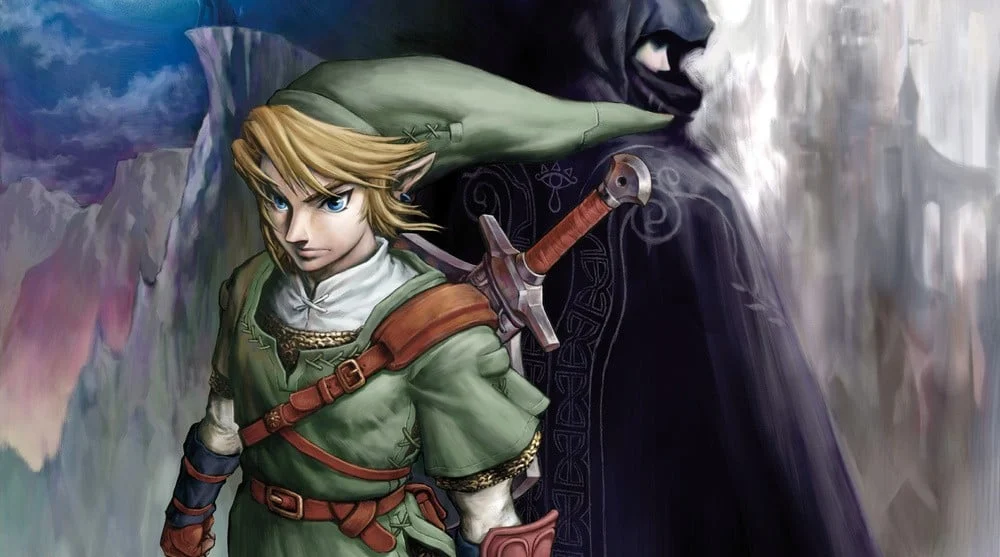
The Initial Revelation: Courage Reborn Takes the Stage
The initial news surfaced recently with the unveiling of "Courage Reborn," a project that garnered attention through a "first look" video presented by its lead developer, Linifadomra. This initial preview offered a glimpse into the painstaking efforts involved in porting a game originally designed for Nintendo’s bespoke hardware onto the versatile PC ecosystem. While details were somewhat scarce at the time, the mere announcement of a native PC port for Twilight Princess was enough to send ripples of anticipation throughout the fan base, who have long relied on emulation to experience Nintendo classics on non-Nintendo hardware. The prospect of a truly native version, free from the inherent limitations and occasional inaccuracies of emulation, represented a significant leap forward in accessibility and performance for the beloved title.
Dusk Emerges: A Parallel Path to PC Modernization
However, the landscape of Twilight Princess PC ports dramatically shifted with the subsequent announcement of a second, entirely separate project named "Dusk." This revelation came via a brand-new announcement trailer published on April 12th, 2026, which quickly circulated across enthusiast channels and gaming communities. Further details about Dusk were elucidated through dedicated videos from prominent YouTubers such as Video Game Esoterica and BeenTachi, who offered additional footage and developer insights. The simultaneous existence of two independent porting efforts for the same game is an unusual occurrence in the realm of fan-driven projects, underscoring both the enduring popularity of Twilight Princess and the growing technical prowess of community developers.
Divergent Origins, Shared Ambition: The Development Teams
A crucial distinction to note is that Dusk is being crafted by a completely different consortium of talent than Courage Reborn. The Dusk project draws its expertise from "members from the Twilight Princess Decompilation team, the Twilight Princess speedrunning community, and the Aurora team: Twilit Realm." This confluence of specialized groups—from those meticulously reverse-engineering the game’s original code to speedrunners intimately familiar with its mechanics and glitches, and even a team dedicated to broader Twilight Princess modding—suggests a robust and multifaceted development approach.
Despite their independent genesis and development trajectories, both Courage Reborn and Dusk have publicly conveyed mutual support. Their respective Frequently Asked Questions (FAQs) sections reportedly contain statements affirming this collaborative spirit, indicating an absence of rivalry or ill will between the two teams. This spirit of camaraderie, rather than competition, is a testament to the community’s overarching goal: to make The Legend of Zelda: Twilight Princess accessible and enhanced for a wider audience. Such cooperation is not always a given in fan projects, making this particular situation noteworthy and inspiring.
The Legacy of Twilight Princess: A Bridge Between Eras
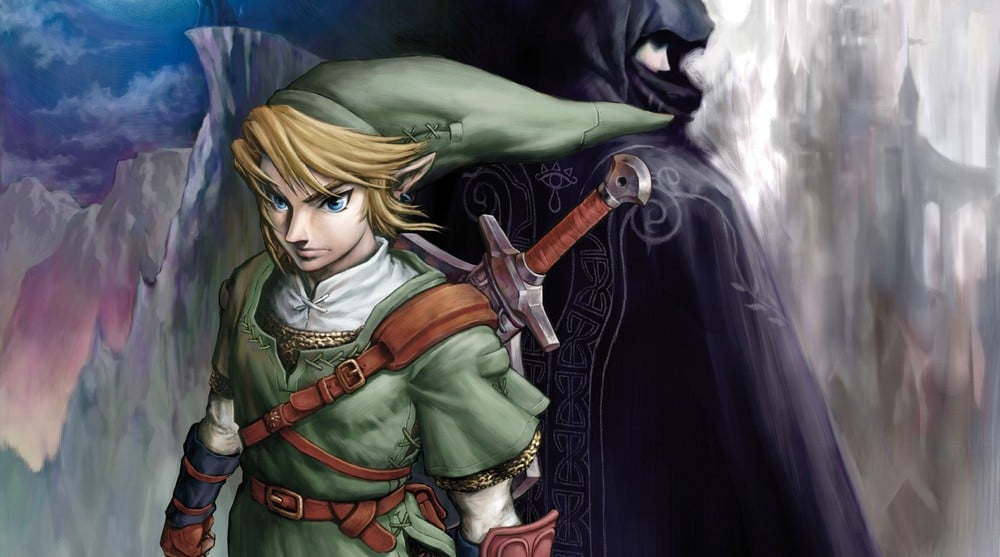
To fully appreciate the significance of these dual porting efforts, it’s essential to contextualize The Legend of Zelda: Twilight Princess within its historical and cultural framework. Released in late 2006, simultaneously on the Nintendo GameCube and as a launch title for the revolutionary Wii console, Twilight Princess represented a pivotal moment for the Zelda series. It marked a return to a more mature, darker aesthetic reminiscent of Ocarina of Time and Majora’s Mask, following the cel-shaded departure of The Wind Waker. The game’s narrative, featuring Link transforming into a wolf and navigating a Hyrule consumed by an encroaching Twilight Realm, resonated deeply with fans craving a more gritty and epic adventure.
The dual release on GameCube and Wii introduced subtle but significant differences, most notably the Wii version’s mirror-imaged world to accommodate motion controls for right-handed players, and its unique pointer-based aiming system. Over the years, Twilight Princess has consistently been lauded for its sprawling world, intricate dungeon design, memorable characters like Midna, and a hauntingly beautiful orchestral score. Its enduring appeal has been further solidified by a high-definition remaster, The Legend of Zelda: Twilight Princess HD, released for the Wii U in 2016, which introduced graphical upgrades and quality-of-life improvements such as larger wallets and faster climbing animations. This rich legacy underscores why a native PC port is not merely a technical exercise but a cultural endeavor, aimed at preserving and modernizing a beloved piece of gaming history for future generations.
The Technical Advantage: Native Ports vs. Emulation
For many years, the primary method for playing Nintendo console games on PC has been through emulation. While emulators like Dolphin have achieved remarkable feats in terms of compatibility and performance, they inherently operate by simulating the original console’s hardware. This process, while impressive, can introduce limitations: perfect accuracy is difficult to achieve, performance can be heavily dependent on CPU power, and deep-seated modifications or enhancements are often constrained by the emulator’s architecture.
Native PC ports, conversely, involve recompiling the game’s original source code (or a reverse-engineered equivalent) to run directly on PC hardware. This approach offers several profound advantages. Firstly, it allows for significantly better performance, often enabling unlocked framerates, higher resolutions, and more robust graphical settings than emulation can typically provide. Secondly, native ports can leverage PC-specific features and APIs, leading to improved stability, broader peripheral support, and greater compatibility with modern operating systems. Thirdly, and perhaps most crucially for a game like Twilight Princess, a native port opens the door to far more extensive and integrated modding capabilities, allowing the community to introduce new content, graphical enhancements, or even gameplay tweaks with greater ease and stability. The development of these ports relies heavily on "decompilation" efforts, where volunteers meticulously reverse-engineer the original compiled game code back into human-readable source code. The Twilight Princess decompilation project has been a monumental undertaking, serving as the foundational bedrock for both Courage Reborn and Dusk.
Dusk’s Ambitious Feature Set and Multi-Platform Reach
The announcement trailer for Dusk, released on April 12th, 2026, outlined an ambitious scope for the project. It explicitly targets a wide array of operating systems: Windows, MacOS, and Linux, demonstrating a commitment to broad PC compatibility. Remarkably, Dusk also aims to support mobile platforms, with iOS and Android versions currently being targeted. This multi-platform approach would make Twilight Princess accessible on an unprecedented range of devices, from high-end gaming rigs to smartphones and tablets, significantly expanding its potential audience.
Beyond platform support, Dusk promises a suite of modern enhancements mirroring some of the aspirations of Courage Reborn. A key feature is unlocked framerates, with targets extending up to 120 frames per second (FPS). This is a monumental improvement over the original 30 FPS cap of the GameCube/Wii versions and even the Wii U HD remaster. Achieving higher framerates in older games, particularly those with complex physics or animation systems, can be challenging. BeenTachi, in his video, probed the Dusk team on Discord regarding their technical approach, revealing that unlocked framerates are being handled via "skeleton interpolation." This advanced technique "finds the vertexes for the current frame and the next and does a linear interpolation between them," effectively smoothing out animations and character movements between rendered frames, thereby mitigating potential visual artifacts or animation speed-ups that can plague high-framerate ports of older titles.
Further enhancements detailed in various preview materials and developer communications include support for ultrawide monitors, a feature highly sought after by PC gamers for an immersive panoramic experience. A "mirror mode" will also be included, allowing players to replicate the left-handed world design of the original Wii version, catering to purists or those who prefer that specific configuration. Additionally, Dusk plans to integrate quality-of-life improvements inspired by the Wii U HD version, such as larger wallets (reducing the need to constantly upgrade or spend rupees) and faster climbing mechanics, streamlining some of the more tedious aspects of the original game. The team has also hinted at the possibility of Wii Remote motion control support, stating that "someone was looking into it," though no official confirmation has been provided. The inclusion of such a feature would be a significant technical achievement, offering a truly authentic recreation of the Wii experience on PC.

Broader Implications: Preservation, Accessibility, and Legal Frontiers
The emergence of these two native PC ports for The Legend of Zelda: Twilight Princess carries significant implications for the broader landscape of video game preservation, accessibility, and the delicate relationship between intellectual property holders and fan communities.
Game Preservation: These projects exemplify a growing trend within the gaming community to take active roles in preserving and modernizing classic titles. As original hardware ages and becomes more difficult to maintain, community-driven ports ensure that beloved games remain playable and accessible on contemporary systems. Native ports, unlike emulation, offer a more robust and future-proof solution, potentially extending the lifespan of these games indefinitely.
Enhanced Accessibility: By targeting multiple PC operating systems and even mobile platforms (in Dusk’s case), these ports dramatically increase the accessibility of Twilight Princess. Players who do not own Nintendo hardware, or whose consoles have long since ceased functioning, will have new avenues to experience the game with enhanced performance and features. This democratizes access to gaming history, allowing new generations to discover and appreciate titles that might otherwise be lost to time.
The Role of Decompilation: The success of Courage Reborn and Dusk hinges entirely on the prior completion of the Twilight Princess decompilation project. These community-led efforts, which painstakingly reverse-engineer game code, are foundational to enabling native ports, extensive modding, and deep technical analysis. They represent a powerful, if legally contentious, form of digital archaeology, unlocking the secrets of proprietary software.
Legal Considerations and Nintendo’s Stance: Nintendo, as a company, is famously protective of its intellectual property. Historically, the company has taken swift and decisive legal action against fan projects that infringe on its copyrights, particularly those involving ROM distribution, emulation front-ends, or direct ports of its games. While Courage Reborn and Dusk are "native ports" and not direct ROM distributions, they rely on Nintendo’s copyrighted assets (graphics, sound, game logic). The developers will likely need to navigate a precarious legal tightrope, operating in a grey area where explicit distribution of copyrighted material is avoided, often by requiring users to provide their own legally obtained copies of the game from which assets can be extracted. The lack of any official statement from Nintendo regarding these projects is typical, as the company rarely comments on unofficial fan endeavors until legal action is deemed necessary. The long-term viability of these projects will undoubtedly be influenced by Nintendo’s eventual reaction, which could range from tacit acknowledgement to cease-and-desist orders.
A Precedent for Future Fan Projects: Should Courage Reborn and Dusk reach successful public releases, they could set a significant precedent for other fan communities hoping to port beloved Nintendo titles. The technical blueprints, community collaboration models, and legal strategies employed by these teams could serve as a valuable roadmap, potentially ushering in an era of more sophisticated and widespread fan-made native ports.
The Road Ahead: Anticipation and Uncertainty
As both Courage Reborn and Dusk continue their development journeys, the gaming community watches with bated breath. The promise of experiencing The Legend of Zelda: Twilight Princess with unlocked framerates, ultrawide support, and a host of modern quality-of-life improvements on PC is a tantalizing prospect. While the mutual support between the two development teams is encouraging, the inherent challenges of such ambitious projects—technical hurdles, sustained volunteer commitment, and the ever-present shadow of legal action—remain. Nevertheless, the dual emergence of these native PC ports for Twilight Princess represents a remarkable moment in fan-driven game development, pushing the boundaries of what is possible through collective passion and technical expertise. The ultimate success of these endeavors will not only bring a beloved classic to a new generation of players in its most polished form but also serve as a powerful testament to the enduring legacy of The Legend of Zelda.