Farhan hamdan
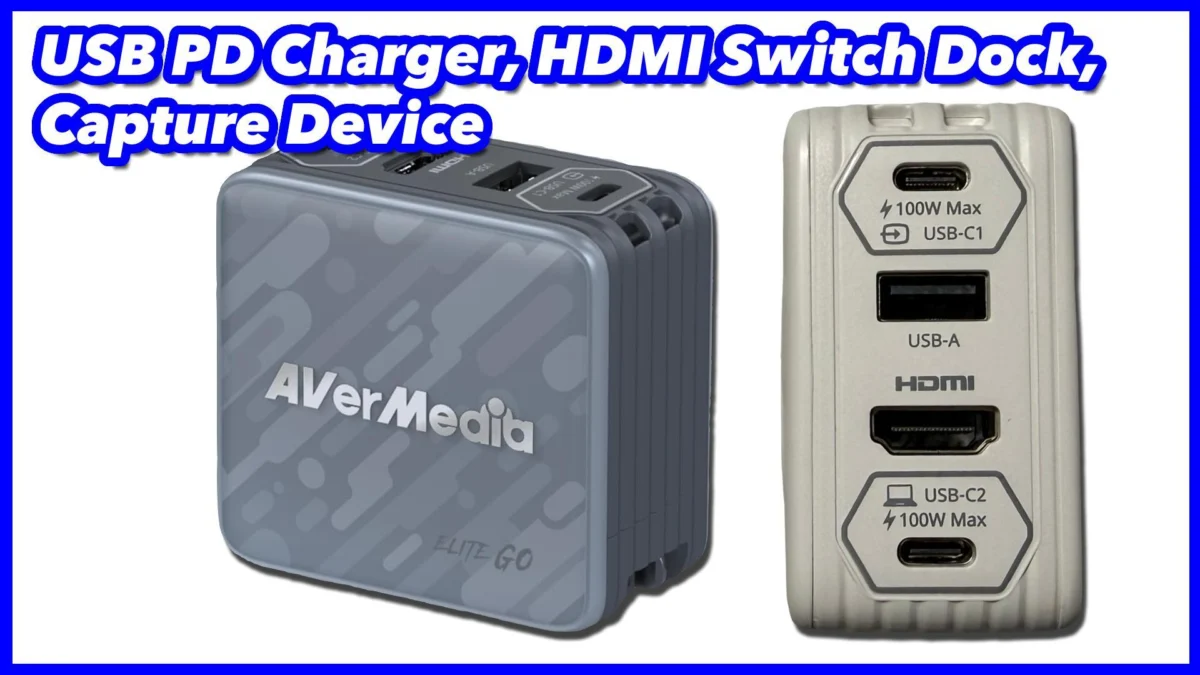
The landscape of portable gaming hardware has undergone a profound transformation over the past decade, driven largely by the mainstream success of hybrid systems like the Nintendo Switch and the subsequent explosion of PC-based handhelds such as the Valve Steam Deck. As consumers increasingly demand mobility without sacrificing the traditional living room or desktop gaming experience, accessories manufacturers have faced mounting pressure to deliver hardware that is both highly functional and exceptionally compact. Entering this competitive market, prominent multimedia and streaming hardware manufacturer Avermedia has introduced a dual-purpose solution: the Avermedia Core Go and its sibling, the Elite Go. Positioned as high-output USB Power Delivery (PD) chargers that double as fully functional display docks, these devices aim to streamline the travel kits of modern gamers. However, questions regarding pricing strategy, competitive positioning, and niche utility have sparked considerable discussion within the tech and gaming hardware community regarding their overall market viability.
Main Facts and Core Functionality of the Avermedia Go Series
At their foundational level, both the Avermedia Core Go and the Elite Go function primarily as advanced USB Power Delivery chargers designed to replenish the batteries of modern electronics, including smartphones, tablets, laptops, and portable gaming consoles. However, their engineering extends well beyond standard power delivery. Each unit features an integrated HDMI-out port capable of supporting video output up to 4K resolution at 60 frames per second, bridging the gap between mobile gaming and high-definition home displays.
Furthermore, the units include a dedicated USB input port, allowing users to connect essential peripherals such as game controllers, computer keyboards, and computer mice directly through the charging brick. This integration transforms a standard wall charger into a minimalist desktop workstation or living room gaming hub. The Core Go is shipped with a high-durability USB cable designed to withstand the rigors of frequent travel.
The primary distinction between the two models lies within the Elite Go. While the Core Go functions strictly as a power brick and display dock, the Elite Go integrates a low-capacity USB capture card directly into the hardware chassis. This addition allows users to capture or stream gameplay footage on the go without carrying external capture hardware, though it comes at an approximate forty-dollar premium over the base Core Go model. In terms of market positioning, Avermedia has priced the standard Core Go competitively—positioning it below the cost of an official Nintendo Switch dock, yet notably higher than low-cost, third-party alternatives widely available through online retailers.
Background Context: The Evolution of Portable Docks and Power Delivery
The release of the Avermedia Core Go and Elite Go occurs against a backdrop of continuous evolution in third-party docking accessories. When Nintendo released the Switch in 2017, it popularized the concept of seamless transition between handheld and television play. However, the official dock included with the console was bulky and ill-suited for travel. This paved the way for a burgeoning market of third-party travel docks. Early iterations of third-party docks faced significant technical hurdles, with some poorly engineered units occasionally causing hardware damage due to non-standard power implementations or improper protocol handshakes with the console’s charging integrated circuit.
Over subsequent years, advancements in Gallium Nitride (GaN) semiconductor technology and USB-IF power delivery standards allowed manufacturers to shrink power bricks significantly while safely handling high-wattage throughput and high-definition video output simultaneously. Competitors such as JSAux, Skull & Co., and various generic manufacturers flooded the market with compact docking stations and multifunctional hubs.
By the time Valve launched the Steam Deck in 2022, followed by subsequent hardware revisions across the portable PC market, the demand for universal USB-C docks that could support multiple platforms—including Windows-based handhelds, MacBooks, and iPads—had reached an all-time high. Avermedia’s entry into this space represents a strategic effort by a legacy streaming hardware brand to leverage its expertise in video capture and power delivery to capture a share of the mobile productivity and gaming accessory market.
Comparative Market Analysis and Pricing Strategy

A critical element in evaluating the Avermedia Core Go and Elite Go is analyzing their cost-to-benefit ratio relative to existing market competitors. The standard Core Go occupies a middle tier in the pricing hierarchy. It is more expensive than generic, unbranded USB-C to HDMI adapter hubs found on discount e-commerce platforms, but it offers the build quality, safety certifications, and brand reliability associated with a recognized manufacturer like Avermedia.
For consumers seeking a direct replacement for a broken or lost Nintendo Switch dock, ultra-cheap third-party solutions often remain the most economically pragmatic choice. However, the value proposition of the Core Go shifts significantly when evaluated through the lens of travel efficiency. For frequent travelers, consolidating a laptop charger, a smartphone charger, and a gaming console dock into a single, pocket-sized device eliminates considerable baggage bulk. In practical deployment scenarios, the ability to plug a laptop into power while simultaneously routing a clean 4K signal to a hotel room television or monitor provides tangible utility that justifies the elevated price point for specific consumer segments.
Conversely, the Elite Go presents a more complex economic equation. Integrating a built-in USB capture card into a compact charging brick is an impressive feat of engineering, but its practical applications require careful consideration. At a $40 markup over the Core Go, the Elite Go appeals primarily to users who require immediate, mobile video capture capabilities without the footprint of external hardware like an Avermedia Live Gamer Portable or an Elgato Cam Link.
Industry Implications and Alternative Configurations
Despite the engineering ingenuity behind the Elite Go, industry analysts and hardware reviewers have questioned its broad market appeal compared to modular alternatives. For many users, achieving the same functional outcome—power delivery, display output, and gameplay capture—can be accomplished more cost-effectively through a la carte purchasing strategies.
For instance, a consumer can purchase a standard Core Go (or a comparable high-quality USB-C hub), pair it with a separate HDMI splitter with audio extraction capabilities, and acquire an entry-level USB capture device. In many cases, this modular approach yields a lower total expenditure while offering superior flexibility, higher capture resolutions, or broader feature sets that can be upgraded independently. Consequently, while the Elite Go serves as a compelling proof of concept for space-constrained environments such as college dormitories or compact urban apartments, market projections suggest the Core Go will likely account for the vast majority of sales within the product line.
Furthermore, competition in the portable dock sector remains fierce. Rival manufacturers have begun introducing versatile hubs supporting advanced display specifications, such as 4K resolution at 120Hz, catering to high-refresh-rate monitor users and next-generation hardware iterations like anticipated successor consoles from Nintendo. This competitive pressure means that brands entering the multifunctional charger space must continually justify their pricing through build quality, firmware stability, and rigorous safety compliance.
Broader Impact on the Gaming and Streaming Ecosystem
The introduction of devices like the Avermedia Core Go series reflects a broader convergence between mobile computing, console gaming, and content creation. As the boundary between traditional desktop setups and mobile gaming continues to blur, consumers increasingly expect their accessories to perform multiple roles. A power adapter is no longer merely a conduit for electricity; it is a display interface, a peripheral hub, and, in specialized cases, a broadcasting tool.
For hardware manufacturers, diversifying product lines to capture these overlapping use cases represents a vital strategy for maintaining relevance in a crowded peripherals market. By addressing the pain points of travel convenience and minimalist desktop organization, Avermedia has positioned its latest offerings to appeal to modern digital nomads, digital content creators, and mobile gamers alike.
Ultimately, the long-term success of the Core Go and Elite Go will depend on real-world reliability, sustained firmware support, and consumer reception as these devices undergo rigorous, long-term testing by the gaming community. As third-party accessory standards continue to mature, hardware solutions that successfully balance safety, multi-functionality, and portability will undoubtedly remain a cornerstone of the modern digital lifestyle.