Chalid Lutfie
The landscape of contemporary electronic music is set for a significant shift as Danimal Cannon, the stage name of composer and multi-instrumentalist Dan Behrens, prepares for the release of his latest full-length studio album, Lunaria. Scheduled for a global release on March 11, the project marks a pivotal moment in the artist’s career, representing the culmination of half a decade of technical refinement and conceptual development. Lunaria serves as a follow-up to the 2013 collaborative effort Parallel Processing with the artist Zef, and it is the first solo-led project since the 2011 landmark release Roots. This new offering is not merely a collection of tracks but a sophisticated integration of 8-bit synthesis and high-gain progressive metal, a stylistic fusion that has long been a staple of Behrens’ live performances but has rarely been captured with such fidelity on a studio recording.
The announcement of Lunaria comes at a time when the "chiptune" or "bitpop" genre is undergoing a period of intense evolution. Moving away from the nostalgic limitations of early video game soundtracks, artists like Behrens are utilizing the hardware of the past—specifically the Nintendo Game Boy—as a legitimate synthesizer capable of complex polyphony and rhythmic density. By pairing the harsh, square-wave textures of the Game Boy’s internal sound chip with the organic, fluid dynamics of the electric guitar, Lunaria seeks to bridge the gap between digital retro-futurism and modern progressive rock.
The Evolution of the Danimal Cannon Sound
The journey toward Lunaria began shortly after the release of Roots in 2011. While Roots was critically acclaimed for its innovative use of the Game Boy as a primary instrument, Behrens found himself dissatisfied with the integration of live instrumentation at the time. In the early stages of his career, the artist maintained a strict separation between his studio recordings, which were largely purist chiptune, and his live shows, which featured heavy improvisation on the guitar. The technical challenge of "marrying" these two disparate sonic worlds proved to be a formidable obstacle.
According to technical analysis of the production process, the primary difficulty in combining 8-bit audio with electric guitar lies in the frequency spectrum. The square and pulse waves generated by a Game Boy occupy many of the same mid-to-high frequencies as a distorted guitar, often leading to a "muddied" mix where neither instrument can be clearly discerned. Behrens reportedly spent four years mastering the compositional and engineering techniques required to allow both elements to coexist. This involved a deep dive into frequency carving, side-chain compression, and, most importantly, writing music where the two instruments act as a cohesive "band" rather than a lead instrument accompanied by a backing track.
The timeline of the album’s development reflects this meticulous approach. Following the 2013 release of Parallel Processing, Behrens shifted his focus toward a solo project that would fulfill long-standing fan requests for a "live-style" album. By 2015, the conceptual framework for Lunaria had solidified, leading to a rigorous recording schedule that incorporated guest musicians and high-fidelity production standards.
Conceptual Framework: The Giant Impact Hypothesis
Beyond its technical achievements, Lunaria is a concept album rooted in planetary science and astronomical theory. Behrens, a self-described "science geek," utilized the "Giant Impact Hypothesis" as the narrative backbone for the record. This scientific theory suggests that approximately 4.5 billion years ago, a Mars-sized body known as Theia collided with the early "proto-Earth." The resulting debris from this cataclysmic event eventually coalesced to form the Moon.
In a creative departure from purely abstract music, Behrens personified this cosmic event through the character of "Lunaria," representing both the impactor and the resulting celestial body. The title itself is a linguistic play on words, combining "Lunar" with "aria"—a long, accompanied song for a solo voice, typically found in operas. This naming convention highlights the album’s dual nature: it is both a scientific exploration of the moon’s origins and a dramatic musical performance. This thematic depth provides a structured arc for the listener, moving from the violent energy of a planetary collision to the serene, orbiting presence of the moon in the modern sky.
Collaborative Efforts and Artistic Contributions
To achieve the "aria" aspect of the album’s title, Behrens enlisted the talents of Emily Yancey, a professionally trained operatic singer. The decision to include a trained vocalist was a strategic one, intended to provide a "celestial" and "divine" timbre that could match the scale of the album’s cosmic themes. Yancey’s contributions on two tracks serve as a melodic anchor, contrasting with the jagged, rhythmic complexity of the Game Boy and guitar layers.
Furthermore, the album features a significant contribution from Samuel Ascher-Weiss, better known in the experimental music community as Shnabubula. A virtuoso pianist and fellow chiptune pioneer, Ascher-Weiss was tasked with providing a piano rendition of the track "Axis." This inclusion is particularly noteworthy for its subversion of expectations. While the rest of the album pushes the boundaries of digital and electric sound, the piano version of "Axis" strips the composition down to its core harmonic and melodic elements. Behrens noted that "Axis" was the most challenging song on the record to compose, and hearing it translated from the "quirky digital" sounds of a Game Boy to the "traditional" resonance of a grand piano provides a stark and breathtaking contrast for the listener.
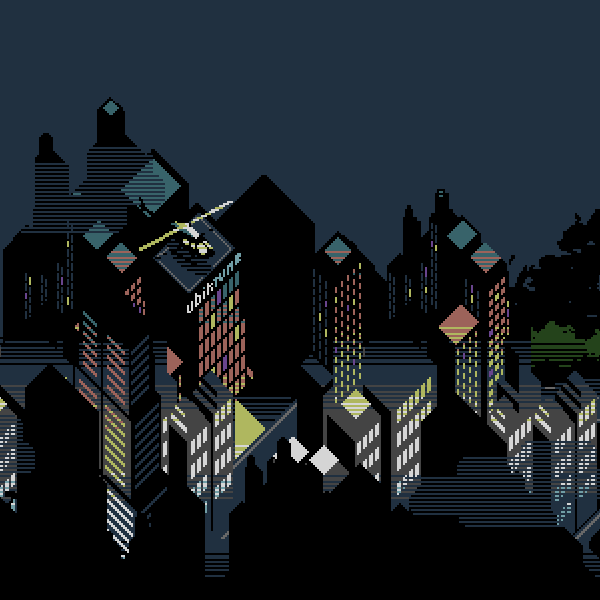
The visual identity of the album was handled by artist Minerva Mopsy, whose artwork aims to capture the ethereal and monumental scale of the Lunaria character. The physical release of the album, available on CD, will include a poster featuring this artwork, further emphasizing the project’s status as a comprehensive multi-media experience.
Stylistic Influences and Genre Fluidity
While Lunaria is firmly rooted in the "metal" camp of the chiptune spectrum, the album draws from an eclectic array of influences that defy simple categorization. Analysis of the lead single, "Behemoth," reveals a heavy industrial undertone reminiscent of Nine Inch Nails and KMFDM, characterized by driving rhythms and aggressive synth textures. However, the melodic sensibilities of the album are also heavily indebted to indie rock acts like Buke and Gase, as well as the intricate soundtrack work found in modern indie gaming, such as the Shovel Knight OST.
Perhaps most surprising is the influence of classical and choral music. Behrens has cited the works of Wolfgang Amadeus Mozart and contemporary choral composer Eric Whitacre as significant inspirations during the writing process. These influences are most apparent in the album’s structural complexity and its use of counterpoint—a technique where two or more melodic lines are played simultaneously, each independent in contour and rhythm but harmonically interdependent. This level of compositional rigor elevates Lunaria above standard electronic fare, positioning it as a work of "progressive" music in the truest sense of the word.
Industry Implications and Market Context
The release of Lunaria via the Ubiktune label signifies a broader trend in the independent music industry where niche genres are achieving higher production values and cross-over appeal. Chiptune, once relegated to the fringes of internet forums and underground DIY shows, is increasingly being recognized for its technical demands and artistic potential.
The "Game Boy as an instrument" movement relies on software like LSDJ (Little Sound DJ) or Nanoloop, which require artists to program music in a tracker interface—a method that is fundamentally different from traditional DAW (Digital Audio Workstation) recording. This "limitation-based" creativity has fostered a community of musicians who are exceptionally skilled in sound design. Danimal Cannon’s ability to take these 8-bit sounds and place them alongside professional-grade guitar work and operatic vocals sets a new benchmark for the genre.
From a market perspective, the decision to offer Lunaria on Bandcamp for pre-order, alongside a physical CD release, caters to a dedicated fanbase that values high-fidelity audio (FLAC/ALAC) and tangible collectibles. In an era dominated by streaming, the success of artists like Behrens often depends on these direct-to-fan models, which allow for greater creative freedom and the ability to fund ambitious projects that involve guest vocalists and specialized mastering.
Conclusion and Future Outlook
As the March 11 release date approaches, the anticipation for Lunaria reflects a growing appetite for music that challenges the boundaries of technology and genre. By grounding the album in both rigorous scientific theory and emotional musicality, Danimal Cannon has crafted a project that is as intellectual as it is visceral.
The implications of this release extend beyond the chiptune community. Lunaria serves as a case study in how "obsolete" technology can be repurposed to create contemporary art that is both relevant and revolutionary. As listeners engage with "Behemoth" and the subsequent tracks on the album, they are not just hearing a tribute to the gaming sounds of the 1990s; they are witnessing the birth of a new "lineup" in the world of progressive metal—one where the silicon chips of the past and the vacuum tubes of the present collide to create a sound that is uniquely, and undeniably, Lunaria.