Chalid Lutfie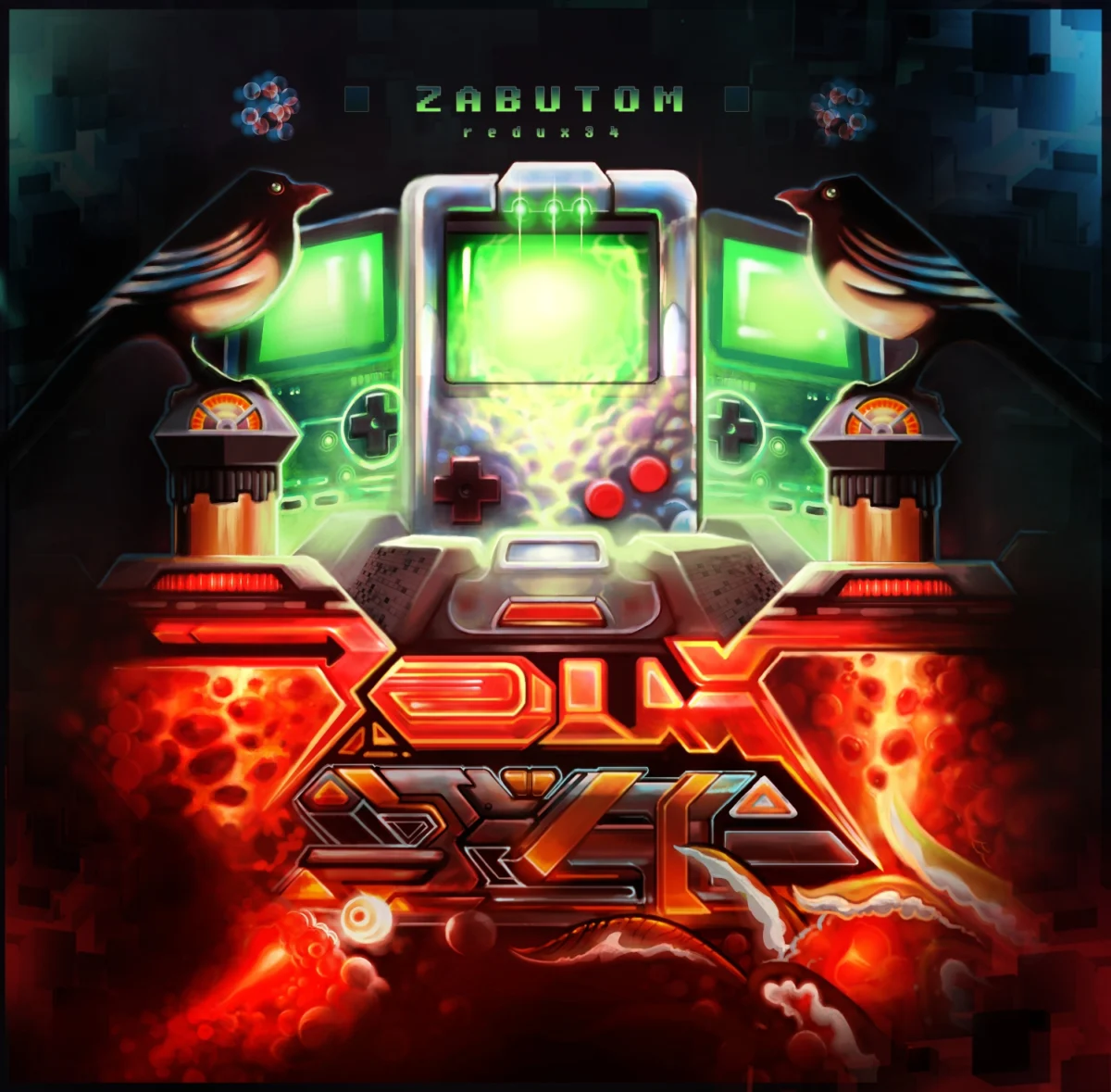
The landscape of contemporary electronic music witnessed a significant evolution on September 18, 2015, with the official release of Redux34, the latest full-length studio album from the Swedish composer and chiptune pioneer Niklas Sjösvärd, known professionally as zabutom. Released under the Ubiktune label, the album represents a sophisticated departure from the artist’s earlier works, effectively bridging the gap between the rigid, algorithmic constraints of 8-bit hardware and the expansive, fluid arrangements of progressive rock and experimental electronica. By synthesizing traditional Nintendo Entertainment System (NES) soundscapes with electric guitars, analog synthesizers, and intricate Intelligent Dance Music (IDM) structures, Sjösvärd has produced a work that challenges the conventional boundaries of the chiptune genre.
A Synthesis of Technical Precision and Artistic Maturity
Redux34 is characterized by its high production values and a dense, layered approach to composition. Unlike many releases within the chiptune subculture that rely solely on the nostalgic novelty of vintage hardware, Sjösvärd’s latest offering utilizes 8-bit bleeps as a foundational texture rather than a stylistic limitation. The album incorporates elements of folk-inspired melodies, spaced-out delay textures, and complex time signatures, creating what critics have described as a retro-futuristic vision.
The thematic core of the album is one of exploration and resilience. The compositions navigate a narrative arc that feels simultaneously melancholic and hopeful, reflecting a "mysterious new world" through sound. This atmospheric depth is achieved through the seamless integration of disparate sonic elements. For instance, the use of live electric guitars provides an organic warmth that contrasts with the cold, precise oscillations of the Gameboy’s sound chip, while analog synthesizers add a mid-range richness often missing from pure 8-bit productions.
The Chronology of Composition and the Redux Incident
The journey toward the completion of Redux34 spans nearly seven years, beginning in 2008 during a period when Sjösvärd was becoming a prominent fixture in the international chiptune festival circuit. At that time, his primary tools were Nintendo Gameboys running Little Sound DJ (LSDJ), a popular tracker software used to sequence music on original hardware.
A pivotal moment in the album’s development occurred in 2008 during the creation of the title track. While Sjösvärd was finalizing the groundwork for the composition, his LSDJ cartridge suffered a catastrophic hardware failure, resulting in the total erasure of all saved music data. This technical setback forced the artist to reconstruct the track from memory and initial notes. This process of reconstruction gave the album its name: "Redux" signifying the recreation of lost work, and "34" referencing the complex 3/4 time signature that defines the piece.
This theme of loss and restoration became a recurring motif throughout the production cycle. Sjösvärd reported several instances of lost patterns, corrupted settings, and discarded mixes that required him to return to the drawing board. This iterative process, while time-consuming, allowed the artist to refine his techniques. It was only after the release of his 2011 debut, Zeta Force, and his 2014 project, New Beginnings, that Sjösvärd felt he possessed the technical proficiency required to realize the ambitious vision of Redux34.
Academic Influence and the Evolution of Niklas Sjösvärd
Niklas Sjösvärd, born in 1985, belongs to a generation of musicians who transitioned from the grassroots "demoscene"—a computer art subculture focused on programming and music—to formal musical education. Sjösvärd has been active in the scene since the early 2000s, contributing to various compilations and performing live globally.

In 2014, Sjösvärd solidified his technical credentials by earning a Bachelor’s degree in Composition and Electronic Music from the Academy of Music and Drama at the University of Gothenburg. This academic background is evident in the structural complexity of Redux34. The album moves beyond the "shmup-esque" (shoot-’em-up video game) tropes of his earlier work, Zeta Force, and instead embraces the sophisticated arrangements typical of contemporary classical and progressive electronic music.
Before the release of Redux34, Sjösvärd diversified his portfolio through several experimental projects. These included:
- Friktion and Scratches and Petals: Experimental electronic music and visual collaborations.
- Buchla Boys: A project focused on modular live techno using high-end Buchla synthesizers.
- Fowlcloud and Léonore Boulanger: Folk-inspired acoustic acts where Sjösvärd performed as a guitarist and vocalist.
These varied experiences informed the eclectic nature of Redux34, allowing Sjösvärd to return to his chip music roots with a broader palette of influences and a more mature approach to sound design.
Technical Specifications and Label Context
The release of Redux34 is a significant event for Ubiktune, a label known for its curation of "high-fidelity" chip music and progressive electronic sounds. Ubiktune has long advocated for the recognition of chip music as a legitimate form of modern composition rather than mere video game accompaniment. Redux34 fits perfectly within this mission, pushing the boundaries of what is expected from the genre.

From a technical standpoint, the album showcases a mastery of the 2A03 sound chip (found in the NES) and the Sharp LR35902 (found in the original Gameboy). However, the "magic" of the album lies in the post-production. The mixing process involved balancing the sharp, square-wave transients of the 8-bit chips with the harmonic complexity of modern studio recording. The result is a soundscape that feels expansive and professional, suitable for both dedicated chiptune enthusiasts and mainstream electronic music listeners.
The visual identity of the album was crafted by Anders Karlsson, a concept artist and painter based in Norrköping, Sweden. Karlsson’s artwork complements the "retro-futuristic" themes of the music, providing a visual gateway into the mysterious worlds Sjösvärd evokes through his compositions.
Broader Impact and Industry Implications
The release of Redux34 comes at a time when the influence of 8-bit aesthetics is increasingly visible in mainstream culture, yet often simplified. Sjösvärd’s work serves as a reminder of the depth and versatility inherent in these "primitive" sounds when handled by a trained composer. By integrating progressive rock and IDM, Redux34 positions chiptune as a foundational element of a new hybrid genre rather than a niche novelty.
Industry analysts suggest that the success of such releases indicates a growing market for "maximalist" electronic music—works that prioritize complex arrangements and high-concept narratives over the repetitive structures of standard dance music. Furthermore, Sjösvärd’s transition from the demoscene to academia and back to independent production reflects a broader trend of "academic-underground" crossover, where formal training is used to elevate subcultural art forms.

Conclusion and Availability
Redux34 stands as a testament to Niklas Sjösvärd’s persistence and his refusal to be pigeonholed by the limitations of his tools. The album’s long gestation period and the "Redux" narrative highlight the often-unseen labor involved in electronic music production, particularly when working with aging or temperamental hardware.
The album is currently available for purchase and streaming through all major digital platforms, including Spotify, iTunes, and Bandcamp. For collectors and audiophiles, Ubiktune has also made the album available on physical compact disc, ensuring that the intricate production and high-fidelity soundscapes are preserved in a tangible format.
As the electronic music community continues to grapple with the balance between digital convenience and hardware authenticity, Redux34 offers a compelling argument for a middle ground—a space where the bleeps of the past can harmonize with the sophisticated technologies and compositional theories of the present. Through this release, zabutom has not only revisited his roots but has also paved a new path forward for the evolution of the chip music medium.