Chalid Lutfie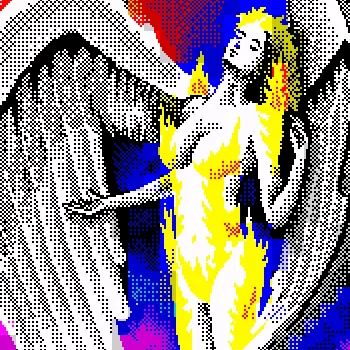
The Technological Context of 2002 Chiptune Production
To understand the significance of Still Flying, one must examine the technological landscape of the era. By 2002, the ZX Spectrum—a home computer originally released by Sinclair Research in 1982—had long been commercially obsolete in the West. However, in Russia and other former Soviet states, a vibrant subculture of enthusiasts, engineers, and artists continued to push the hardware to its absolute limits. This was facilitated by the proliferation of sophisticated Spectrum clones, such as the Pentagon 128, which featured expanded memory and enhanced sound capabilities.
C-Jeff utilized Pro Tracker 3, a highly regarded piece of software within the Russian demoscene, to compose the album. Unlike modern digital audio workstations (DAWs) that offer infinite tracks and high-fidelity sampling, Pro Tracker 3 required composers to work within the strict confines of the AY-3-8910 (or the compatible YM2149) programmable sound generator. This chip provided only three channels of square-wave sound, a single noise generator, and limited envelope control. Creating "lyric music novels" on such hardware required not only musical talent but a deep understanding of machine-level optimization, using techniques like rapid arpeggios to simulate chords and "ornaments" to create the illusion of complex instrumental timbres.
Competitive Origins and the Demoparty Circuit
The tracks comprising Still Flying were not merely studio experiments; they were forged in the highly competitive environment of the international demoscene. Two of the album’s most prominent tracks, "My Mind is Free" and "Lonely Soul," have histories rooted in the demoparty culture of 2002, where programmers and musicians gathered to showcase their latest creations.
"My Mind is Free" was specifically written for the CAFe 2002 demoparty, an event held in Kazan, Russia, that served as a major hub for the Eastern European scene. The track’s original title, "My mind free," was a result of a minor linguistic error by the artist at the time, though its emotional resonance was unmistakable. Competing in the ZX Spectrum AY Music category, the track achieved 13th place. While not a podium finish, the track’s inclusion in the final album directly after the competition signaled its importance to the artist’s evolving style. It represented a departure from the more aggressive, high-tempo "techno" styles common in the scene, opting instead for a more atmospheric and contemplative sound.
In contrast, "Lonely Soul" achieved significant critical acclaim on the competition circuit. Although it was not part of the initial tracklist during the early stages of the album’s conception, it was written during the same creative window and shared the thematic DNA of the Still Flying sessions. The track was entered into the Paradox 2002 demoparty, where it secured 2nd place in the ZX Spectrum AY Music competition. The success of "Lonely Soul" validated C-Jeff’s "lyrical" approach to chiptune, proving that the limited 8-bit palette could evoke profound melancholy and sophistication.
From Audio to Executable: The 2004 Musicdisk Release
Approximately 1.5 years after the initial completion of the music, Still Flying underwent a secondary release that transformed the album from a collection of audio files into a piece of interactive software. In the demoscene, this format is known as a "musicdisk." This version was a collaborative effort involving several key figures in the ZX Spectrum community.
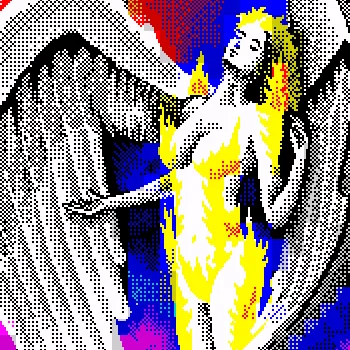
The coding for the musicdisk was handled by Vortex, a programmer known for creating efficient and visually appealing shells for Spectrum software. The visual identity of the release was provided by Schafft, whose graphics added a layer of aesthetic cohesion to the "lyric music novels" concept. Finally, the package was assembled and "packed" by Poisoned CyberJack. This executable release allowed users to listen to the music on real hardware or through emulators, complete with a custom interface and visualizers that reacted to the AY chip’s output. The musicdisk format was essential for the preservation of the work, as it ensured the tracks were experienced exactly as they were intended to be heard: through the specific synthesis algorithms of the ZX Spectrum hardware.

Collaborative Synergy and Professional Mastering
While Still Flying is primarily the vision of C-Jeff (Dmitry Zhemkov), the project benefited from the involvement of other specialists who helped elevate the production to a professional standard. C-Jeff served as both composer and producer, overseeing the thematic direction and structural integrity of the tracks. The artwork by Schafft provided the necessary visual context, grounding the abstract electronic sounds in a tangible aesthetic.
A crucial contributor to the album’s longevity was MmcM (Sergey Erofeev), a legendary figure in the Russian chiptune scene who handled the mastering of the tracks. Mastering for the AY-3-8910 chip involves a unique set of challenges; the goal is to balance the three-channel output so that the lead melodies are clear without drowning out the percussive noise effects or the subtle basslines. MmcM’s expertise ensured that Still Flying had a sonic clarity that surpassed many of its contemporaries, making it accessible to both hardcore enthusiasts and casual listeners.
The "Lyric Music Novels" Philosophy
The tagline "lyric music novels" is central to the album’s identity. In the context of 2002, much of the music produced for the ZX Spectrum was either functional (intended for video games) or focused on technical "flexing" (demonstrating complex programming tricks). C-Jeff took a different path, focusing on narrative structure.
Each track in Still Flying functions as a short story told through melody. By utilizing the limitations of the AY chip, C-Jeff created a sense of intimacy. The "lyricism" refers to the song-like structure of the compositions—clear verses, soaring choruses, and bridge sections that mirror the emotional arc of a novel. This approach helped define the "melodic chiptune" subgenre, influencing a subsequent generation of artists who looked to the ZX Spectrum not just as a retro novelty, but as a legitimate instrument for serious musical expression.
Broader Impact and Historical Implications
The release of Still Flying occurred at a crossroads in digital history. It was one of the last great hurrahs for the "pure" hardware era before the widespread adoption of modern PC-based emulation and VST plugins that could mimic 8-bit sounds with ease. By sticking to the Pro Tracker 3 environment on an actual Spectrum, C-Jeff preserved a specific "grit" and "warmth" that is often lost in digital recreations.
The album also serves as a cultural artifact of the post-Soviet demoscene. It reflects a time when young creators in Russia were using inherited 1980s technology to forge a new, globalized identity. The fact that the album is now available on modern platforms like Bandcamp demonstrates the enduring relevance of this work. It has transitioned from a niche executable file on a 3.5-inch floppy disk to a celebrated piece of electronic music history available to a global audience.
Chronology of the Still Flying Project
The timeline of the album’s development illustrates the dedication required to produce high-quality chiptune during the early 2000s:
- January – December 2002: C-Jeff composes the core tracks of the album on a ZX Spectrum using Pro Tracker 3.
- Late 2002: "My Mind is Free" is entered into the CAFe 2002 demoparty in Kazan.
- Late 2002: "Lonely Soul" is entered into the Paradox 2002 demoparty, taking 2nd place.
- 2003: The concept for the musicdisk release is finalized, and collaborations with Vortex and Schafft begin.
- 2004: The Still Flying musicdisk is officially released to the public as an executable ZX Spectrum file.
- Post-2004: The album gains cult status within the chiptune community, eventually being remastered and uploaded to digital streaming and purchase platforms for modern preservation.
In conclusion, Still Flying by C-Jeff is more than a collection of 8-bit tracks; it is a masterclass in constrained creativity. By treating the ZX Spectrum as a platform for "lyric music novels," C-Jeff proved that the soul of a composition is not dependent on the bit-depth of the hardware, but on the narrative intent of the composer. As the chiptune genre continues to evolve and influence mainstream pop and electronic music, Still Flying stands as a foundational text, reminding listeners of the era when "flying" was a matter of turning three channels of square waves into a symphony.