Chalid Lutfie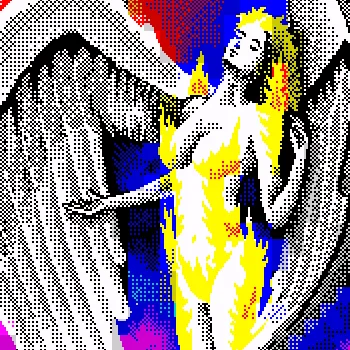
The release of Still Flying by the artist known as C-Jeff marks a significant milestone in the evolution of the 8-bit chiptune scene, specifically within the niche of ZX Spectrum hardware composition. Originally composed throughout 2002, the album represents the first full-length solo effort by Dmitry "C-Jeff" Zhemkov, a prominent figure in the international demoscene and tracker music community. Utilizing the Pro Tracker 3 music editor on a physical ZX Spectrum machine, the album serves as both a technical demonstration of the AY-3-8910 sound chip’s capabilities and a thematic exploration described by the artist as "lyric music novels." This collection of tracks highlights a pivotal era in digital music where software constraints necessitated high levels of creative ingenuity to produce complex, emotive soundscapes.
Technical Foundation and Hardware Constraints
The production of Still Flying is rooted in the specific hardware limitations of the ZX Spectrum, a home computer that gained immense popularity in Europe and the former Soviet Union during the 1980s and 1990s. Central to the album’s sound is the AY-3-8910 (or its variants like the YM2149), a programmable sound generator capable of producing three channels of square-wave synthesis and a single noise generator. Unlike modern digital audio workstations that offer unlimited tracks and high-fidelity sampling, the Pro Tracker 3 software used by C-Jeff required the composer to manage voice stealing, arpeggiation, and rapid volume modulation to simulate the presence of more than three concurrent sounds.
Pro Tracker 3, the specific software utilized for Still Flying, was a staple of the Russian ZX Spectrum scene in the early 2000s. It offered a sophisticated interface for the era, allowing for detailed control over ornaments (sequences of pitch changes) and envelopes (sequences of volume changes). C-Jeff’s mastery of these tools allowed him to move beyond the "bleepy" reputation of early computer games, creating the lush, narrative-driven compositions that the album’s tagline implies. The "lyric music novel" concept suggests that each track was designed to follow a narrative arc, using melodic progression rather than lyrics to convey a story.
Chronology of Composition and Release
The timeline of Still Flying begins in early 2002, a year characterized by a resurgence of interest in legacy hardware within the Eastern European demoscene. While the global music industry was transitioning to high-bitrate MP3s and streaming prototypes, a dedicated community of "sceners" continued to push the boundaries of 1980s hardware. C-Jeff composed the bulk of the material on original hardware, ensuring that the playback would be authentic to the machine’s specific timing and electrical characteristics.
In the summer of 2002, specific tracks from the burgeoning album were entered into international demoparty competitions. These events, which serve as a combination of computer art festivals and technical hackathons, provided a platform for peer review and ranking. The track "My Mind is Free" was submitted to the CAFe 2002 demoparty. Due to a self-acknowledged limited proficiency in the English language at the time, the track was originally titled "My mind free." Despite the minor grammatical error, the composition resonated with the audience, eventually securing 13th place in the ZX Spectrum AY Music competition. Following the competition, the track was integrated into the final album tracklist.
Later that year, the track "Lonely Soul" was composed. Although it was not part of the initial conceptualization of Still Flying, its stylistic alignment with the "lyric music novel" theme led to its inclusion. "Lonely Soul" was entered into the Paradox 2002 demoparty, where it achieved a higher level of critical success, taking 2nd place in the ZX Spectrum AY Music category. This accolade solidified C-Jeff’s reputation as a leading composer in the tracker format and provided the momentum needed to finalize the album.
The 2004 Musicdisk Transition
Approximately 18 months after the completion of the audio tracks, Still Flying underwent a transition from a collection of music files to a standalone software release known as a "musicdisk." In the demoscene, a musicdisk is an executable program that allows users to listen to an album within a custom-designed graphical interface on the original hardware. This format allows the artist to present a cohesive audiovisual experience that transcends a simple list of files.
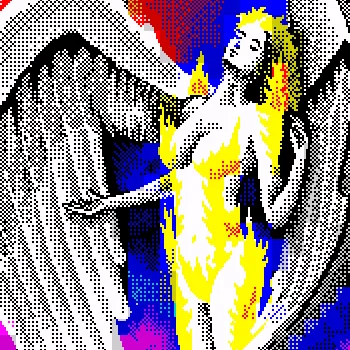
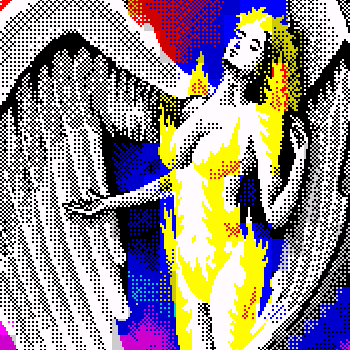
The development of the Still Flying musicdisk involved a collaborative effort among several key figures in the ZX Spectrum community. The software was coded by Vortex, a programmer known for efficient code optimization on the Zilog Z80 processor. The visual aesthetic of the interface was handled by the artist Schafft, who provided the graphics that complemented the album’s introspective tone. The final package was compiled and "packed" by Poisoned CyberJack, ensuring that the entire experience could fit within the limited memory constraints of a standard ZX Spectrum 128K. This 2004 release allowed the album to be distributed via floppy disk and early internet archives, reaching a wider audience of enthusiasts.
Collaborative Credits and Professional Mastering
While Still Flying is primarily a solo project, the involvement of other industry veterans highlights the professional standards applied to this independent release. The mastering of the audio was handled by MmcM (Sergey Myachin), an legendary figure in the tracker music scene. Mastering in the context of AY-chip music involves balancing the frequencies of the square waves to ensure clarity across different playback systems—ranging from original television speakers to high-end studio monitors. MmcM’s contribution ensured that the technical limitations of the ZX Spectrum did not hinder the emotional impact of C-Jeff’s compositions.
The artwork provided by Schafft played a crucial role in establishing the album’s identity. In the early 2000s, the visual component of digital releases was essential for distinguishing projects within the crowded file-sharing networks of the time. The credits list C-Jeff as both the composer and the producer, indicating his oversight of the project from the initial "note-entry" phase to the final software packaging.
Broader Context: The Early 2000s Demoscene
To understand the impact of Still Flying, one must look at the state of the demoscene in 2002. This was a period of transition where the "old school" (8-bit and 16-bit hardware) was beginning to clash with the "new school" (PC-based 3D graphics and high-fidelity audio). While many artists were moving toward modern synthesizers, C-Jeff’s decision to stick with the ZX Spectrum was a statement of artistic intent. It demonstrated that technical constraints could be used as a creative filter, forcing the composer to focus on melody and structure rather than the sheer variety of sound presets available on modern hardware.
The Russian demoscene, in particular, was a powerhouse of ZX Spectrum development during this era. Parties like CAFe and Paradox were hubs for innovation, where programmers and musicians shared techniques that pushed the Z80 processor to its absolute limits. Still Flying emerged from this environment of high technical competition, yet it stood out for its focus on the "lyrical" and "novelistic" aspects of music, prioritizing emotional resonance over mere technical showmanship.
Fact-Based Analysis of Implications
The release of Still Flying had several long-term implications for the chiptune genre and C-Jeff’s career. First, it established a blueprint for the "concept album" within the tracker community. By framing the music as a series of novels, C-Jeff encouraged listeners to view chiptune as a legitimate form of storytelling, rather than just background music for games or technical demos.
Second, the success of the album on both a competitive and technical level helped bridge the gap between the insular demoscene and the broader independent music world. As chiptune began to influence mainstream pop and electronic music in the mid-to-late 2000s, works like Still Flying served as historical reference points for how complex music could be constructed from minimal resources.
Finally, Still Flying was the precursor to C-Jeff’s later, more expansive works. His subsequent founding of the Ubiktune label and his transition into hybrid projects—combining tracker music with live instruments and modern production—can be traced back to the experimental spirit of his 2002 debut. The album remains a case study in how the limitations of 1982 technology can still be leveraged to produce art that feels relevant decades later.
Legacy and Availability
Today, Still Flying is recognized as a classic of the AY-music era. It has been preserved through various digital archives, including Bandcamp and Pouet, ensuring that new generations of chiptune enthusiasts can study its composition techniques. The album’s enduring popularity is a testament to the idea that great songwriting is not dependent on the sophistication of the tools, but on the vision of the artist. As a "lyric music novel," Still Flying continues to communicate its wordless stories to an international audience, proving that the spirit of the ZX Spectrum is, indeed, still flying.
The tracklist of the album, while rooted in the 2002 sessions, has seen various iterations in re-releases, often including the demoparty versions of "My Mind is Free" and "Lonely Soul" as definitive examples of the era’s competitive output. The collaboration between C-Jeff, MmcM, and the coding team remains a high-water mark for the "musicdisk" format, representing a peak in the creative synergy of the Eastern European tech-art underground. All rights to the compositions remain with C-Jeff, who has maintained the legacy of the work through contemporary digital distribution platforms.