Chalid Lutfie
The Origins of the ZX Spectrum Sound
To understand the significance of Still Flying, one must analyze the technological constraints of the era. The ZX Spectrum, a legendary 8-bit home computer released by Sinclair Research in 1982, utilized the AY-3-8910 sound chip. This chip offered three channels of square wave synthesis and a single noise channel. By 2002, when C-Jeff began composing the tracks that would comprise Still Flying, the demoscene—a computer art subculture dedicated to pushing hardware to its absolute limits—had matured significantly.
Composing in Pro Tracker 3 required a sophisticated understanding of hexadecimal data, note frequency tables, and envelope manipulation. Unlike modern Digital Audio Workstations (DAWs) that offer infinite layering and high-fidelity sampling, the ZX Spectrum forced composers to prioritize melody and structural economy. C-Jeff’s approach during this period reflects the "tracker" culture, where the visual representation of music as a scrolling grid of alphanumeric data defined the aesthetic of the composition.
Chronology of Production and Release
The development of Still Flying was not merely a studio endeavor but a series of competitive and collaborative milestones within the European demoscene. The timeline of the project is punctuated by key events in the 2002 calendar:
- Early 2002: C-Jeff initiates the composition of the tracks, utilizing the Pro Tracker 3 environment. The goal is to craft a cohesive narrative album rather than individual functional tracks for games.
- May 2002: The track "My Mind is Free" is premiered at the CAFe 2002 demoparty. Due to the language barriers prevalent in the international computing community at the time, the title was originally submitted as "My mind free." It placed 13th in the highly competitive ZX Spectrum AY Music category, a respectable showing for a debutante in the scene.
- Late 2002: "Lonely Soul" is composed. While not part of the initial conceptual lineup, its thematic consistency and stylistic proximity to the existing tracks warranted its inclusion. The track saw immediate critical success, securing 2nd place at the Paradox 2002 demoparty.
- Late 2003 / Early 2004: The project transitions from a collection of music files into a standalone interactive application. This musicdisk was coded by Vortex, featuring visual assets designed by Schafft, and compressed for distribution by Poisoned CyberJack.
The Evolution of the Musicdisk Format
The release of Still Flying as an executable ZX Spectrum musicdisk is an essential aspect of its historical value. In the early 2000s, distributing music via an executable file was the standard for the demoscene. By wrapping the music in a custom-coded engine, the creators ensured that the listener experienced the audio in the context for which it was designed.
The musicdisk acted as a multimedia portal. It provided not just the sound, but a visual interface—a precursor to the modern album cover art—that integrated Schafft’s graphical contributions. This distribution method allowed the music to be played back directly on period-correct hardware, bypassing the need for modern emulators and ensuring the fidelity of the audio remained true to the AY-3-8910 chip’s output.
Technical Analysis of the Composition
The musicality of Still Flying is often cited by enthusiasts as a "lyric" approach to 8-bit sound. The composition utilizes the limitations of the AY chip to create haunting, melodic lines that contrast with the percussive "clacking" often associated with ZX Spectrum music.
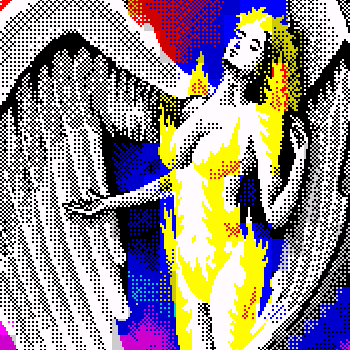
"My Mind is Free" demonstrates C-Jeff’s command of the chip’s limited polyphony. By rapidly arpeggiating chords, the composer simulates the sensation of harmonic depth, a technique known as "arpeggio-based chords." This allows for a perceived complexity that exceeds the hardware’s three-channel limit. "Lonely Soul," conversely, leans into the atmospheric potential of the noise channel, using it to create textures that ground the melodies in a melancholic environment. The mastering of the tracks, overseen by MmcM, ensured that these subtle textures translated across different listening environments, from raw hardware speakers to modern digital interfaces.
Broader Impact and Industry Implications
The release of Still Flying marked a transition point for chiptune artists. It demonstrated that 8-bit music could serve as a standalone artistic product, independent of the software (video games) it was once inextricably linked to. The success of the album within the demoscene validated the concept of the "chiptune album" as a viable format for independent digital musicians.
The subsequent digital re-release on platforms like Bandcamp has allowed a new generation of listeners to engage with these compositions. For modern listeners, Still Flying serves as a historical document of the "bedroom producer" movement of the early 2000s. It provides evidence of how global communities, even those with limited linguistic commonalities, used shared technical languages—such as tracker software and demoparty competition—to create art that transcended borders.
The Legacy of the 2002 Demoscene
The demoscene of 2002 was a crucible for many who would go on to shape the modern digital arts landscape. The collaborative nature of the Still Flying release—involving a composer, a coder, a graphic artist, and a mastering engineer—mirrored the professional development cycles of software houses, albeit within an amateur, volunteer-driven context.
The 13th place finish for "My Mind is Free" and the 2nd place finish for "Lonely Soul" underscore the high level of competition at events like CAFe and Paradox. These parties were not merely social gatherings; they were rigorous testing grounds where technical proficiency and creative ingenuity were measured against the strict benchmarks of the ZX Spectrum hardware.
Conclusion: A Lasting Soundscape
Still Flying remains a cornerstone of the C-Jeff discography and a notable entry in the catalog of ZX Spectrum music. Its significance lies in its refusal to adhere strictly to the "game music" tropes of the era, opting instead for a more introspective and narrative-driven style.
As digital archiving efforts continue to prioritize the preservation of early computer culture, albums like Still Flying are increasingly viewed as essential cultural artifacts. They document a time when the constraints of hardware were not seen as insurmountable obstacles, but as stylistic parameters that forced composers to refine their craft. The endurance of this album, from its humble 2002 beginnings to its current status as a recognized work in the chiptune genre, confirms that the technical limitations of the past do not diminish the longevity of the art created within them. Through its technical ingenuity and emotional depth, Still Flying preserves the essence of an era that redefined the possibilities of 8-bit sound.