Chalid Lutfie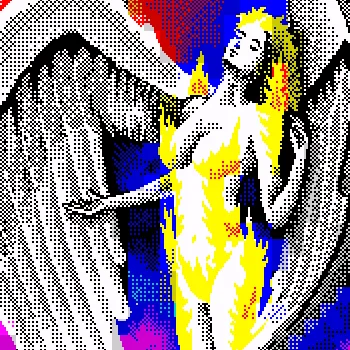
The release of Still Flying marked a definitive turning point in the career of the artist known as C-Jeff, establishing a foundational pillar for the modern chiptune movement while paying homage to the rigorous technical constraints of 1980s computing. Originally composed in 2002, the album represents a sophisticated synthesis of hardware-locked precision and emotive storytelling, a combination the artist famously categorized under the tagline "lyric music novels." By utilizing a real ZX Spectrum home computer and the Pro Tracker 3 music editor, C-Jeff bypassed the conveniences of modern digital audio workstations to craft a work that is as much a feat of engineering as it is a musical achievement.
The significance of Still Flying extends beyond its initial 2002 composition. It serves as a historical record of the Eastern European demoscene—a subculture of programmers, artists, and musicians who push hardware to its absolute limits. While the music was written at the turn of the millennium, its journey to a formalized "musicdisk" release nearly 1.5 years later highlights the collaborative nature of the scene, involving a specialized team of coders and graphic designers to package the audio into an executable software format compatible with vintage hardware.
Technical Framework and the Pro Tracker 3 Environment
To understand the complexity of Still Flying, one must examine the hardware on which it was birthed. The ZX Spectrum, specifically the 128K models popular in the United Kingdom and Eastern Europe, utilized the General Instrument AY-3-8912 sound chip. This hardware is capable of producing three channels of square-wave sound and a single noise generator. Unlike modern software that allows for infinite layering, every note in Still Flying had to compete for space within these three narrow channels.
C-Jeff employed Pro Tracker 3 (PT3), a dominant "tracker" software in the Russian and CIS demoscene during the early 2000s. Trackers utilize a vertical timeline and hexadecimal code to trigger notes, volume changes, and effects. The use of PT3 required the composer to think algorithmically, using "ornaments" (rapid sequences of notes) to simulate chords and "envelopes" to shape the texture of the sound. The result is a crisp, lo-fi aesthetic that possesses a surprising amount of depth and resonance, achieving the "lyric" quality C-Jeff sought to convey.
Chronology of Composition and Competitive Milestones
The development of Still Flying was closely tied to the 2002 demoparty circuit, a series of international competitions where digital creators showcase their work. The timeline of the album’s creation is punctuated by two major events that shaped its final tracklist and public reception.
The CAFe 2002 Demoparty and "My Mind is Free"
In the summer of 2002, C-Jeff submitted the track "My Mind is Free" to the CAFe 2002 demoparty. At the time, the track was titled "My mind free," a linguistic error the artist later attributed to a limited command of English. Despite the title mishap, the composition was a bold exploration of the AY chip’s melodic capabilities.
In the ZX Spectrum AY Music competition, the track secured 13th place. While not a podium finish, the experience provided the momentum necessary to formalize the album. Following the competition, the track was refined and integrated into the Still Flying project, serving as a core component of the "novel" structure the artist intended to build.
The Paradox 2002 Demoparty and "Lonely Soul"
Later that same year, C-Jeff participated in the Paradox 2002 demoparty. The entry for this event was "Lonely Soul," a track that was not originally part of the Still Flying conceptual plan but was written within the same creative window. "Lonely Soul" showcased a more mature grasp of the hardware, featuring intricate melodic weeping and a somber atmosphere that resonated deeply with the judges and the audience.
"Lonely Soul" achieved a significant 2nd place finish in the ZX Spectrum AY Music category. This high-ranking success validated C-Jeff’s direction, and the track was subsequently folded into the album’s repertoire to ensure a cohesive listening experience that spanned the full emotional range of his 2002 output.
The 2004 Musicdisk Release and Collaborative Production
While the music was completed in 2002, the transition from a collection of tracker files to a unified digital product took over a year. In the demoscene, a "musicdisk" is a specialized piece of software designed to play music on original hardware, often featuring custom interfaces, visualizers, and artwork.
The 2004 release of the Still Flying musicdisk was a collaborative effort involving several key figures:
- Vortex: Responsible for the assembly and coding of the software interface, ensuring that the music played accurately on the ZX Spectrum’s Z80 processor.
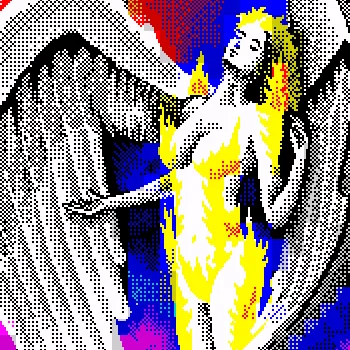
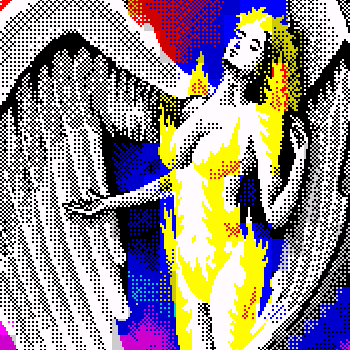
- Schafft: Provided the visual identity of the project, creating 8-bit artwork that complemented the "lyric music novel" theme.
- Poisoned CyberJack: Handled the "packing" and distribution logistics, optimizing the file size for the limited storage capacities of the era.
- MmcM: A legendary figure in the chiptune scene, MmcM provided the mastering for the album. Mastering 8-bit music involves balancing the harsh frequencies of square waves to ensure clarity across different playback systems, a task that requires a deep understanding of the AY chip’s sonic profile.
Stylistic Analysis: The Concept of Lyric Music Novels
The subtitle of the album, "lyric music novels," provides essential insight into C-Jeff’s artistic philosophy. In the early 2000s, much of the chiptune being produced was either highly technical "flexing" (showing off coding tricks) or upbeat, game-inspired melodies. C-Jeff took a different approach, treating each track as a narrative chapter.
These "novels" are characterized by long-form melodic structures that avoid the repetitive loops common in electronic music. There is a sense of progression and resolution in tracks like "Lonely Soul," where the music moves through distinct emotional phases. This narrative-driven style helped elevate chiptune from a hobbyist pursuit to a legitimate form of contemporary composition, proving that even "obsolete" hardware could be used to express complex human emotions.
Broader Impact and the Legacy of Still Flying
The legacy of Still Flying is visible in the subsequent explosion of the global chiptune scene in the mid-to-late 2000s. C-Jeff’s debut demonstrated that the ZX Spectrum was not just a relic of the past but a vibrant instrument for the present. By releasing the album as a musicdisk, he and his collaborators preserved the cultural context of the demoscene while making the music accessible to a wider audience.
In the years following the release, C-Jeff (Dmitry Zhemkov) moved toward more hybrid styles, incorporating modern production techniques and live instrumentation. However, Still Flying remains a touchstone for purists. It represents a moment in time when the limitations of 128KB of RAM and a 3.5MHz processor were not obstacles, but rather the very catalysts for creativity.
The album also highlighted the strength of the Russian demoscene, which remained active long after the ZX Spectrum had faded from commercial relevance in the West. Parties like CAFe and Paradox were essential incubators for talent, and Still Flying stands as one of the most polished musical artifacts to emerge from that era.
Technical Data and Production Credits
The meticulous nature of the album is reflected in its technical credits and the specific software environment used during its tenure.
- Platform: ZX Spectrum (Pentagon/128K models)
- Sound Architecture: AY-3-8912 / YM2149F
- Software Editor: Pro Tracker 3.x
- Release Format: Digital Musicdisk (.tap / .scl / .trd) and later Bandcamp digital streaming
- Composer/Producer: C-Jeff
- Art Direction: Schafft
- Mastering Engineer: MmcM
- Code Implementation: Vortex
Conclusion: Preservation in the Digital Age
Today, Still Flying is available on modern platforms like Bandcamp, ensuring that the "lyric music novels" of 2002 continue to reach new listeners. The transition from a physical ZX Spectrum to digital streaming services marks the final stage in the album’s evolution. It has moved from the niche world of floppy disks and demoparties to the global stage of electronic music history.
As listeners revisit "My Mind is Free" and "Lonely Soul," they are not just hearing the bleeps and bloops of a bygone era; they are engaging with a carefully mastered, emotionally resonant work of art. Still Flying remains a testament to the idea that great music is independent of the power of the computer used to create it, relying instead on the vision of the composer and the community that supports them.