 Farhan hamdan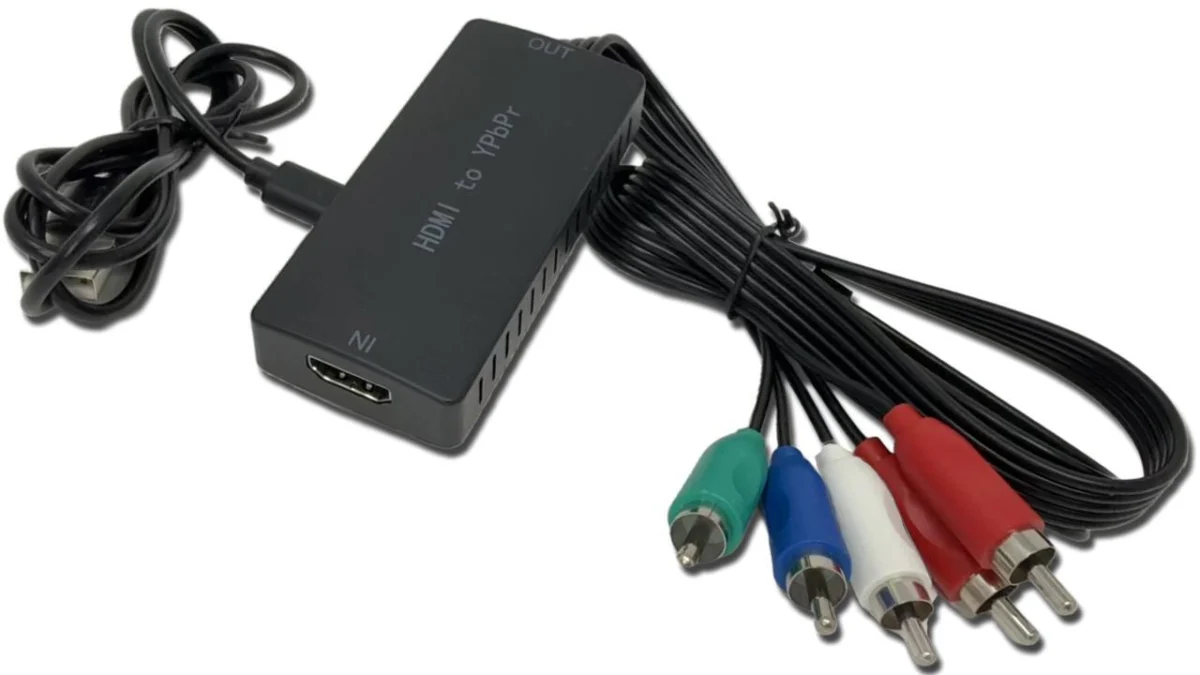
The retro gaming community has long faced the technical challenge of bridging modern digital hardware with legacy analog display technologies. As modern consoles, PC setups, and FPGA-based retro-computing systems increasingly rely on HDMI outputs, enthusiasts seeking to play on vintage cathode-ray tube (CRT) televisions or high-end analog monitors must utilize digital-to-analog converters (DACs). Recently, a newly discovered budget-friendly HDMI to YPbPr component video converter priced at approximately $22 has entered the market, promising zero-lag conversion across a broad spectrum of resolutions, including 240p, 480i, and 480p and above. This hardware development offers a compelling, low-cost alternative to premium professional-grade DACs, though it comes with distinct physical and electrical trade-offs that retro gaming enthusiasts must consider when integrating it into complex analog routing systems.
Background Context and Technological Evolution in Retro Gaming Displays
For decades, standard-definition televisions relied on analog signals such as composite, S-Video, and component video (YPbPr). With the transition to flat-panel liquid-crystal displays and the dominance of the High-Definition Multimedia Interface (HDMI), legacy analog inputs were systematically phased out of consumer electronics. However, a passionate subculture of retro gaming enthusiasts has actively preserved CRT technology due to its inherent advantages for classic content, including zero motion blur, immediate pixel response times, and the natural scanline blending that developers originally designed their pixel art around.
Connecting modern HDMI sources—such as modern streaming sticks, scaled FPGA systems, or HDMI-modded consoles—back to vintage CRT displays requires a reliable DAC. Historically, high-end devices like the Reflex Prism DAC have dominated the premium segment of the market, offering robust build quality, extensive feature sets, and pristine signal processing. Conversely, the market has also been flooded with inexpensive, generic adapters from various overseas manufacturers. Many of these budget units introduce noticeable input lag, fail to support critical low-resolution legacy standards like 240p and 480i (15kHz signals), or suffer from prolonged synchronization delays when powering on or switching resolutions. The newly evaluated $22 RuiPuo adapter attempts to bridge this gap by delivering zero-lag performance and comprehensive resolution support at a fraction of the cost of high-end alternatives.
Chronology and Hands-On Evaluation of the New Adapter
The discovery of the RuiPuo HDMI-to-component adapter follows a continuous wave of testing within the enthusiast community to identify affordable yet functional hardware for analog video chains. Upon initial inspection and benchmarking, several operational characteristics of the device became apparent.
Unlike modular DACs that require separate HDMI and component patch cables, the RuiPuo unit features a standard HDMI input port while directly integrating the YPbPr component video and stereo left/right audio cables into its chassis. While this built-in cabling design streamlines physical connections and reduces clutter behind entertainment centers, it introduces a physical limitation regarding signal shielding. Standard consumer-grade integrated cables lack the rigorous multi-layer shielding found in premium aftermarket cables like HD Retrovision component cables. Consequently, testing revealed minor electromagnetic interference when the adapter was paired with certain digital displays, though this interference was found to be virtually imperceptible when routed into a standard CRT television.
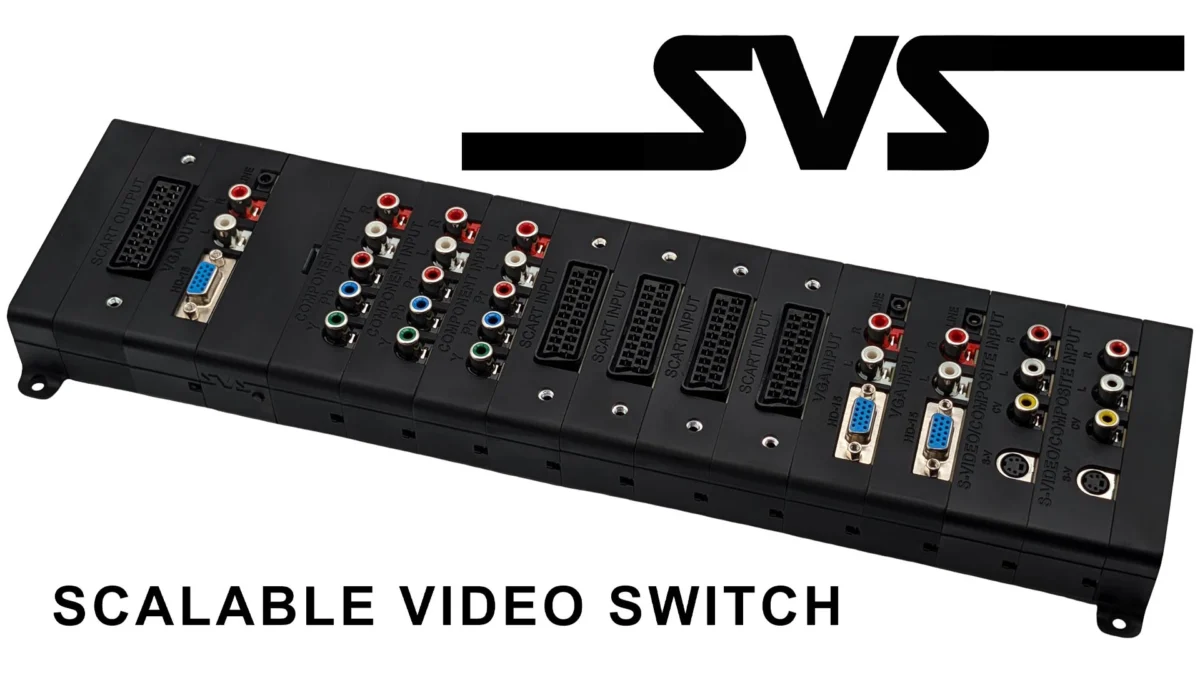
Power management represents another critical design feature of the unit. The adapter necessitates an external USB power source to function. However, the manufacturer integrated a physical power switch directly onto the device housing. This inclusion provides a distinct practical advantage for users utilizing complex automated analog routing setups, such as gcompsw, GamesCare, or SVS automatic component switches. By allowing the user to manually cut power to the adapter when not in use, it prevents the powered-off converter from inadvertently keeping the corresponding switch port active—a common nuisance in multi-console analog routing environments.

Comparative Analysis with Alternative Hardware Solutions
To contextualize the performance of the $22 RuiPuo adapter, comprehensive comparative testing was conducted against several other hardware options available on the consumer market. These tests evaluated signal synchronization speed, resolution compatibility, input latency, and build reliability.
When compared directly against a recently reviewed competing budget DAC, the RuiPuo adapter demonstrated superior performance in signal synchronization speed. Specifically, it required significantly less time to establish a stable picture when powering on connected equipment or when the source material dynamically switched between varying resolutions. This rapid handshake and synchronization prevent prolonged black screens, which can disrupt user experience during multi-resolution gaming sessions.
However, the hardware ecosystem for cheap DACs remains highly inconsistent. Testing of alternative units highlighted the extreme variance in manufacturing specifications across budget-tier devices:
- Anber-Tech Adapter: This unit exhibited zero input lag and successfully handled progressive scan signals of 480p and above. However, like the vast majority of inexpensive standard-definition DACs on the market, it proved entirely incompatible with 240p and 480i 15kHz signals, rendering it useless for native-resolution retro hardware applications.
- Radio Shack Adapter: Despite boasting an attractive, compact form factor that appealed to users with limited shelf space, this adapter suffered from severe operational shortcomings. It failed to produce any image whatsoever when paired with a GameCube equipped with a Carby HDMI output across all tested resolutions. Furthermore, it lacked 240p compatibility and offered only intermittent, unreliable support for 480i signals. Despite extensive troubleshooting, the device proved unusable for standard retro gaming applications, indicating either widespread quality control deficiencies or inherent design limitations in that specific product run.
It is also important to note a specific limitation regarding FPGA-based retro-computing systems. Like virtually all basic YPbPr DACs currently available, the RuiPuo adapter does not natively support direct integration with the Direct Video mode featured on platforms like the MiSTer FPGA, requiring users to rely on alternative configuration pathways if they wish to output analog video from such devices.
Broader Industry Implications and Technical Recommendations
The availability of a functional, zero-lag, multi-resolution budget DAC at the $22 price point marks a notable milestone for accessibility within the retro gaming hardware hobby. Historically, achieving clean analog conversion for legacy displays required a significant financial investment in specialized video processors or premium boutique adapters. While professional-grade hardware continues to offer unmatched build quality, extensive configuration options, and superior cable shielding, consumer-grade alternatives are steadily narrowing the baseline performance gap for casual enthusiasts.
Technical analysts emphasize that while budget adapters are adequate for standard CRT setups where minor signal degradation is visually masked by the analog nature of the display, users operating high-end professional broadcast monitors (PVMs) or complex distribution matrices should carefully weigh the lack of heavy cable shielding against their specific installation requirements. Nonetheless, for everyday users seeking an economical way to bridge modern HDMI sources to legacy component video displays without introducing input latency, the RuiPuo adapter represents a viable, cost-effective solution within the evolving landscape of retro gaming technology.