 Vera Clarissa
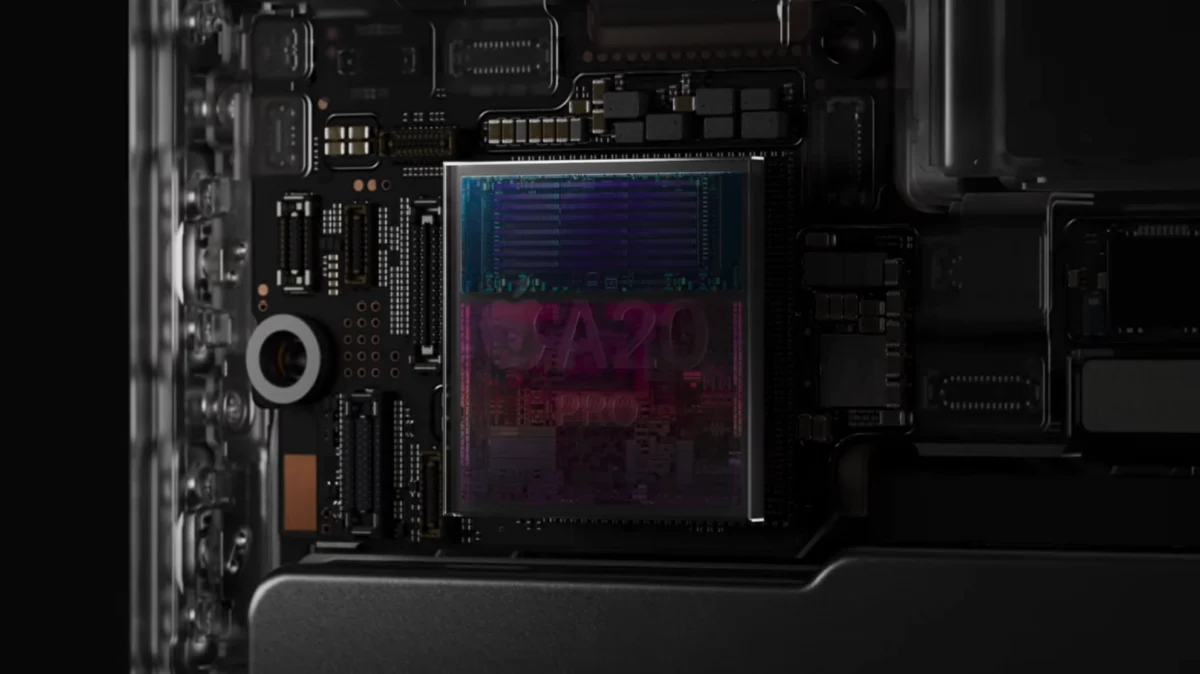
The Apple Silicon M5 Ultra chip, officially unveiled by Apple on August 25, 2025, represents a significant evolution in the company’s custom semiconductor roadmap. As the latest iteration of Apple’s "Ultra" tier—which utilizes the company’s proprietary UltraFusion interconnect technology to bridge two separate M5 Max dies—the M5 Ultra aims to solidify the Mac’s position in the professional workstation market. Fabricated using TSMC’s advanced 3-nanometer-P process, the chip introduces notable improvements in memory bandwidth and AI-specific compute capabilities, addressing the increasing demands of generative AI workloads and professional creative workflows.
The Architecture of the M5 Ultra
At its core, the M5 Ultra is designed for scalability. By doubling the resources of the standard M5 Max architecture, the chip offers a core count configuration of either 30 or 36 CPU cores, depending on the specific model tier. This modular approach allows Apple to maintain high yields while delivering massive throughput. The transition to the 3-nanometer-P fabrication process is a critical component of this release; it allows for higher transistor density compared to the previous N3E nodes, effectively reducing power leakage and improving the performance-per-watt ratio that has become a hallmark of the Apple Silicon transition.

Memory architecture remains a defining feature of the M5 Ultra. The chip supports unified memory capacities of 96GB, 256GB, and 512GB, providing a substantial buffer for memory-intensive tasks such as real-time 8K video rendering, large-scale 3D scene compilation, and local large language model (LLM) inference. The system delivers an impressive memory bandwidth of 1.2 TB/s. This high-speed data path is essential for the integrated GPU, which features 64 or 80 cores, ensuring that the GPU remains fed with data even during the most demanding graphical operations.
Chronology of the M-Series Evolution
The introduction of the M5 Ultra occurs five years into Apple’s transition away from Intel-based processors. To understand the significance of the M5 Ultra, one must look at the timeline of Apple’s silicon development:
- November 2020: The M1 chip is released, proving that ARM-based architecture can compete with traditional x86 desktop processors.
- March 2022: The M1 Ultra is introduced, marking the debut of the UltraFusion interconnect, effectively joining two M1 Max chips.
- June 2023: The M2 Ultra arrives, further refining the architecture and increasing total core counts.
- May 2024: The M4 series is announced, signaling a pivot toward integrated AI-processing power.
- August 2025: The M5 Ultra is unveiled alongside the M6, marking a dual-track strategy where Apple simultaneously pushes the envelope of workstation power and mobile efficiency.
This rapid cadence of releases demonstrates Apple’s commitment to maintaining a yearly refresh cycle for its silicon, an aggressive strategy that has forced competitors in the PC space to accelerate their own internal roadmaps.

AI Compute and Media Acceleration
A primary focus of the M5 Ultra is the integration of high-performance neural processing. The chip features a dual 16-core Neural Engine architecture. While specific AI Operations (OPS) counts have not been fully benchmarked by independent labs at this early stage, the hardware is specifically tuned for local machine learning tasks. Apple has prioritized hardware-level acceleration for common media formats, including H.264, HEVC, ProRes, and ProRes RAW. Notably, the M5 Ultra includes dedicated hardware acceleration for AV1 decoding and encoding, a long-requested feature that finally brings Apple’s hardware in line with modern streaming and production standards.
The inclusion of hardware-accelerated Ray Tracing is another milestone. By offloading complex lighting and shadow calculations from the general-purpose GPU cores to dedicated hardware, the M5 Ultra enables professionals to work in real-time environments that were previously restricted to offline rendering. This capability is expected to be a major selling point for users in the architecture, engineering, and construction (AEC) sectors.
Official Responses and Industry Context
In the official Apple Newsroom press release accompanying the launch, the company emphasized that the M5 Ultra is intended to provide a "big leap in performance and AI compute." While Apple typically avoids granular technical disclosure in its early marketing materials, the broader messaging suggests a strategic pivot toward "on-device intelligence." By ensuring that the M5 Ultra can handle massive datasets locally, Apple is positioning the Mac as a secure, high-performance alternative to cloud-based AI processing.

Industry analysts have noted that the M5 Ultra’s release timing is highly calculated. By launching this chip in August, Apple is positioning its professional desktop lineup—likely the Mac Studio and Mac Pro—for a strong Q4 sales period. Competitors such as NVIDIA and Intel have been aggressively targeting the workstation market with high-TDP (Thermal Design Power) cards and processors. Apple’s counter-strategy remains unchanged: keep the TDP low through efficiency, but keep the unified memory bandwidth high to eliminate the data bottlenecks found in traditional discrete graphics setups.
Implications for Professional Workflows
The implications of the M5 Ultra for the creative industry are profound. For video editors, the 1.2 TB/s memory bandwidth means that multi-stream 8K workflows can be handled without the need for proxy files. For software developers, the ability to compile large codebases while running local AI-driven code completion assistants simultaneously is facilitated by the massive core count and unified memory pool.
Furthermore, the 512GB memory ceiling places the Mac in a unique category. While traditional workstations often require complex multi-socket configurations or specialized server-grade hardware to reach such memory capacities, Apple delivers this in a single, thermally efficient package. This simplification of the hardware stack allows software developers to target a more predictable platform, which historically leads to better optimization and more stable software performance.

Analysis of Technical Challenges
Despite the impressive specifications, the transition to 3-nanometer-P technology is not without challenges. The manufacturing complexity of the UltraFusion interconnect at these smaller scales is immense. Thermal management remains the primary constraint; even with a highly efficient fabrication process, squeezing 80 GPU cores and dozens of CPU cores into a single package generates significant heat density. Observers will be looking closely at how Apple manages thermal throttling in the chassis of the next-generation Mac Studio.
Moreover, the software ecosystem must catch up to the hardware. While the M5 Ultra is theoretically capable of unprecedented tasks, these capabilities are only as good as the software that utilizes them. Apple’s focus on providing deep integration between its Metal graphics API and the chip’s neural architecture is vital. Developers will need to update their applications to tap into the new AI acceleration cores to realize the full performance potential promised by this hardware profile.
Conclusion and Future Outlook
The M5 Ultra is a testament to Apple’s vertical integration strategy. By controlling the hardware, the operating system, and the primary software APIs, Apple has created a platform that delivers workstation-class performance within a compact power envelope. While the full list of technical specifications—such as the exact transistor count and individual core clock speeds—remains to be finalized as independent benchmarking begins to surface, the current data confirms that the M5 Ultra is a formidable piece of engineering.

As Apple continues to iterate on its M-series silicon, the distinction between "mobile" and "desktop" class chips continues to blur. The M5 Ultra stands as the apex of this trend, providing a high-performance floor for the most demanding professional tasks. With the chip now in the hands of early testers and developers, the coming months will provide a clearer picture of how this architecture performs under real-world, long-duration stress tests. For now, it represents a substantial step forward in the evolution of personal and professional computing, reinforcing Apple’s transition to a hardware ecosystem defined by efficiency, unified memory, and specialized AI acceleration. As more data emerges, this profile will be updated to reflect the full, granular capabilities of this latest milestone in Apple Silicon.