Vera Clarissa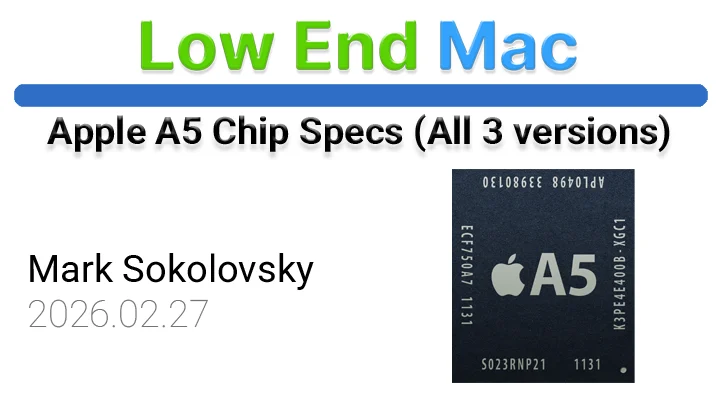
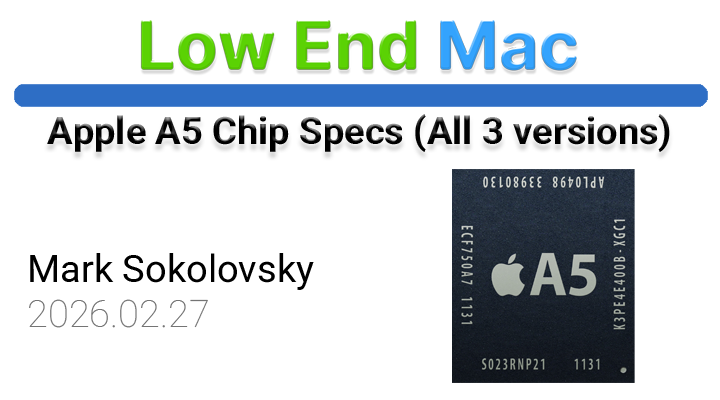
The Apple A5 chip, a pivotal component in the evolution of Apple’s mobile and media device ecosystems, represents a significant leap in integrated processor technology. This article provides a comprehensive hardware profile of the Apple A5 series, exploring its architectural details, manufacturing, performance metrics, and its impact on the devices it powered. The A5 chip family encompasses three distinct variations, each tailored to the specific demands of its intended application, from the groundbreaking iPad 2 to the compact Apple TV.
Genesis and Architecture
The development of the Apple A5 chip was a crucial step in Apple’s strategy to control the entire hardware and software stack of its burgeoning product lines. Launched on March 11th, 2011, the A5 was a successor to the highly successful A4 chip, aiming to deliver enhanced performance and efficiency. Manufactured by Samsung, a key strategic partner for Apple at the time, the A5 was based on the ARMv7 instruction set, a 32-bit architecture that formed the backbone of mobile computing for years.
The A5 chip featured a dual-core design, a notable upgrade from the single-core A4. This configuration allowed for parallel processing, significantly boosting the chip’s ability to handle complex tasks and multitask effectively. The primary cores, often referred to as "Performance Cores" (P-Cores), operated at clock speeds ranging from 800 MHz to 1 GHz. This dual-core approach was a foundational element that enabled the smoother user experiences and more demanding applications that characterized the next generation of iOS devices.
Manufacturing and Fabrication Process
The fabrication of the Apple A5 chip was initially carried out using a 45-nanometer process. However, Apple, in its relentless pursuit of miniaturization and efficiency, transitioned to a more advanced 32nm High-K dielectric metal gate process. This smaller fabrication node offered several advantages, including reduced power consumption, lower heat generation, and the ability to pack more transistors into a smaller area, thus increasing performance potential. While the exact transistor count for the A5 is not publicly detailed, the move to smaller nanometer processes generally correlates with a significant increase in transistor density, a key indicator of processing power.
Memory and Bandwidth
A critical aspect of the A5’s performance was its memory subsystem. The chip utilized a 64-bit memory bus width, facilitating rapid data transfer between the processor and RAM. This was achieved through a dual-channel configuration, with each channel operating at 32 bits. The memory type employed was LPDDR2-800, a low-power double data rate synchronous dynamic random-access memory running at 400 MHz. This setup provided a theoretical memory bandwidth of approximately 6.4 GB/s. The A5 typically came with 512 MB of RAM, a substantial amount for mobile devices of that era, which was crucial for supporting multitasking and graphics-intensive applications.
CPU Core Details and Cache Hierarchy
The dual-core CPU configuration of the A5 was a defining feature. Each of the two performance cores was equipped with a 32 KB L1 instruction cache (P-L1i) and a 32 KB L1 data cache (P-L1d), totaling 64 KB for each type of cache per core. This hierarchical cache structure allowed the CPU to quickly access frequently used data and instructions, minimizing latency and improving overall processing speed.
The L2 cache was also significant, with each performance core benefiting from a 1 MB L2 cache. This large L2 cache acted as a buffer between the L1 caches and main memory, further reducing the need for slower main memory accesses. This sophisticated cache management was essential for maintaining high performance levels, especially during demanding tasks.
It is noteworthy that a variant of the A5 chip was used in the third-generation Apple TV. This version featured a single CPU core, likely to optimize for the specific power and performance requirements of a media streaming device. In this single-core configuration, the L1 instruction and data caches were halved to 32 KB per core, and the L2 cache was also adjusted accordingly, reflecting a tailored approach to silicon design.

Graphics Processing Unit (GPU)
Beyond its CPU capabilities, the Apple A5 integrated a powerful GPU for its time. The A5 featured a dual-core GPU, capable of rendering complex graphics and animations. Each GPU core was equipped with 4 SIMD (Single Instruction, Multiple Data) Execution Units (EUs) and 32 FP32 (Floating-Point) Arithmetic Logic Units (ALUs). Operating at a clock speed of 200 MHz, this GPU configuration delivered approximately 12.8 GFLOPs (Giga Floating-point Operations Per Second) of processing power. This was instrumental in driving the visual fidelity of games and applications on devices like the iPad 2 and iPhone 4S, offering a significant upgrade in graphical performance compared to its predecessor.
Timeline of Evolution and Deployment
The Apple A5 chip’s journey began with its introduction in the iPad 2, released in March 2011. This marked the first device to feature the dual-core A5. Shortly thereafter, the iPhone 4S, unveiled in October 2011, also incorporated a version of the A5, bringing enhanced performance and graphics capabilities to Apple’s flagship smartphone.
A year later, in March 2012, the third-generation Apple TV was released, featuring a single-core variant of the A5 chip. This demonstrated Apple’s ability to adapt and optimize its silicon for different product categories, balancing performance needs with power efficiency and cost considerations.

The A5 chip’s lineage continued with variations like the A5X, which powered the third-generation iPad released in March 2012. The A5X was a significant enhancement, boasting a quad-core GPU and double the memory bandwidth of the original A5. While not explicitly detailed in the provided data, the existence of the A5X highlights the iterative development and refinement of Apple’s A-series silicon.
Broader Impact and Implications
The Apple A5 chip played a critical role in solidifying Apple’s dominance in the mobile device market. Its dual-core architecture and improved graphics performance enabled a new generation of more responsive and visually rich applications and games. This not only enhanced the user experience but also encouraged developers to push the boundaries of mobile software.
The A5’s efficiency, particularly with the transition to the 32nm process, was crucial for battery life in portable devices like the iPad and iPhone. This focus on power management was a hallmark of Apple’s silicon design philosophy, allowing for longer usage times between charges, a key selling point for consumers.

Furthermore, the A5 chip’s deployment across multiple device types – tablets, smartphones, and media streamers – showcased Apple’s ability to leverage its in-house chip design expertise to create a scalable and adaptable platform. This vertical integration allowed Apple to optimize hardware and software in tandem, a strategy that has become a cornerstone of its competitive advantage.
The success of the A5 also paved the way for future generations of Apple Silicon, including the A6, A7, and subsequent A-series chips that would continue to redefine the performance benchmarks for mobile computing. The architectural decisions and manufacturing advancements pioneered with the A5 laid the groundwork for the powerful and efficient processors that would eventually power Apple’s Mac computers as well.
Conclusion
The Apple A5 chip, though now superseded by more advanced processors, remains a significant milestone in the history of mobile computing. Its dual-core CPU, capable GPU, and efficient memory architecture provided the performance backbone for some of Apple’s most iconic devices. From its initial release in the iPad 2 to its adapted single-core variant in the Apple TV, the A5 demonstrated Apple’s commitment to innovation in silicon design, setting a high bar for performance, efficiency, and user experience in the rapidly evolving consumer electronics landscape. The lessons learned and the technologies developed with the A5 continue to influence the design and performance of Apple’s products today.