Vera Clarissa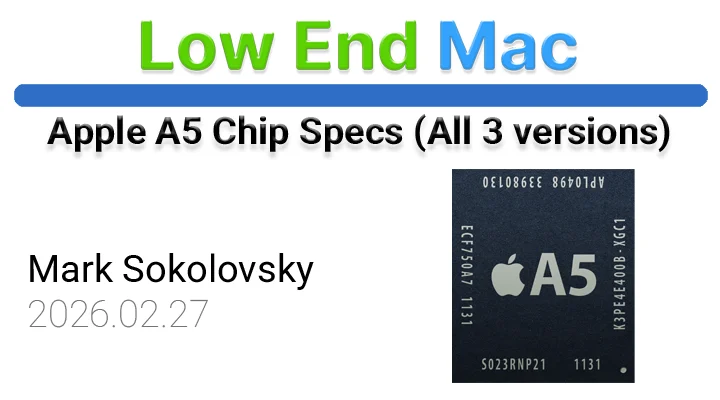
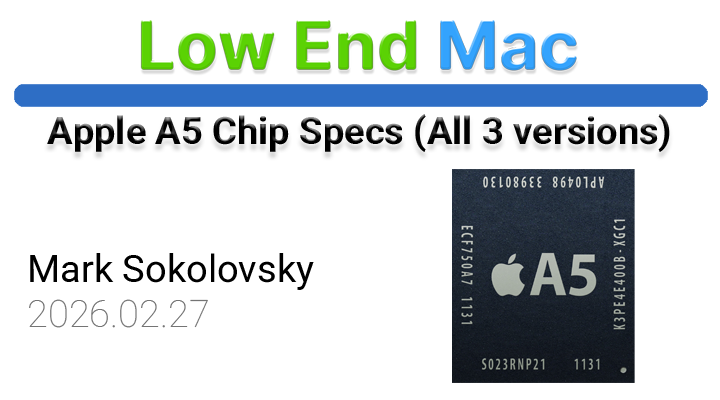
The Apple A5 chip, a pivotal component in the evolution of Apple’s mobile and embedded devices, represents a significant leap in processing power and efficiency for its era. This article delves into the comprehensive hardware profile of the A5 series, exploring its intricate architecture, manufacturing details, and the technological context that defined its release and subsequent integration into a range of Apple products. The A5 chip, primarily manufactured by Samsung, made its debut on March 11th, 2011, marking a new chapter in Apple’s silicon development. Its codename, APL0498, and part number, S5L8940, further categorize this influential piece of technology.
Genesis of the A5: A Strategic Move in Mobile Computing
The introduction of the A5 chip was not an isolated event but rather a strategic maneuver by Apple to solidify its dominance in the burgeoning smartphone and tablet markets. At the time of its release, the mobile computing landscape was rapidly transforming. Devices were becoming more powerful, capable of running complex applications, high-definition video, and sophisticated games. Apple, having already disrupted the market with the iPhone and iPad, needed to ensure its hardware could consistently deliver a premium user experience and stay ahead of increasingly competitive rivals.
The A5 chip was the successor to the A4, which, while capable, was beginning to show its limitations as application demands grew. The A5 was designed to address these growing needs, focusing on enhanced performance for both general computing tasks and graphical processing. This was crucial for Apple’s ecosystem, which relied on smooth operation of its iOS software, the App Store, and its multimedia capabilities.
Core Architecture and Processing Power
At the heart of the Apple A5 chip lies its dual-core CPU architecture, a significant upgrade from its single-core predecessor. This design allowed for more robust multitasking and faster execution of demanding applications.
CPU Specifications:
- CPU ISA: ARMv7 (32-Bit) – This instruction set architecture was standard for high-performance mobile processors of the time, providing a robust foundation for the chip’s operations.
- Number of Performance Cores: 2 – The inclusion of two cores allowed the A5 to handle multiple threads of execution concurrently, leading to a more responsive user interface and improved performance in applications that could leverage parallel processing.
- P-Core Clock Speed: Ranging from 800 MHz to 1 GHz – This variable clock speed indicated Apple’s focus on balancing performance with power efficiency. The chip could ramp up its clock speed when demanding tasks were encountered and throttle down during periods of lower activity, conserving battery life.
- Overall Cores: 2 (with a notable exception in the Apple TV Gen 3, which utilized a single core configuration). This indicates a strategic adaptation of the core A5 design for different device requirements.
Cache Hierarchy:
The A5’s cache system was meticulously designed to minimize latency and maximize data retrieval speed, crucial for maintaining high performance.
- P-L1i Cache: 32 KB per core, totaling 64 KB. This instruction cache stores frequently accessed program instructions, speeding up the fetching and decoding of commands. For the Apple TV Gen 3 variant, this was reduced to 32 KB, reflecting its specialized, less demanding role.
- P-L1d Cache: 32 KB per core, totaling 64 KB. This data cache stores frequently accessed data, allowing the CPU to access it much faster than retrieving it from main memory. Similar to the instruction cache, the Apple TV Gen 3 variant featured 32 KB.
- P-Core L2 Cache: 1 MB (total). This larger cache acts as a buffer between the CPU cores and main memory, storing more data and instructions that are likely to be reused. The unified nature of this L2 cache for the performance cores ensured efficient sharing of cached data between them.
The absence of dedicated efficiency cores (E-cores) in the A5 design, a feature that would become prominent in later Apple silicon generations, signifies the technological limitations and design priorities of that era. The focus was on delivering raw performance through powerful primary cores.
Graphics Processing Unit (GPU) Capabilities
Beyond raw CPU power, the A5 chip integrated a capable GPU designed to handle the graphical demands of mobile applications and entertainment.
GPU Specifications:
- GPU Cores: 2 – The presence of multiple GPU cores enabled parallel processing of graphical tasks, essential for rendering complex 3D graphics in games and providing smooth visual effects in the user interface.
- SIMD EU: 4 – This refers to the number of Single Instruction, Multiple Data Execution Units within the GPU. A higher number of EUs allows the GPU to perform the same operation on multiple data points simultaneously, significantly accelerating graphics rendering.
- FP32 ALU: 32 – The number of Floating-Point Unit (FPU) Arithmetic Logic Units capable of performing 32-bit floating-point operations. These are critical for the mathematical calculations involved in 3D graphics, such as vertex transformations and pixel shading.
- GPU Clock Speed: 200 MHz – While seemingly modest by today’s standards, this clock speed, combined with the architecture, provided sufficient power for the graphical demands of devices like the iPad 2 and iPhone 4S.
- FP32 (FLOPS): 12.8 GFLOPs – This metric quantifies the theoretical peak performance of the GPU in terms of single-precision floating-point operations per second. The 12.8 GFLOPs indicated a significant advancement in mobile graphics capabilities for its time.
Memory Subsystem: Fueling Performance
The efficiency of the CPU and GPU is heavily reliant on the speed and bandwidth of the memory subsystem. The A5 chip utilized an advanced memory configuration for its generation.
RAM Information:
- Memory Bus Width: 64-Bit – A wider bus allows for more data to be transferred between the CPU and RAM simultaneously, increasing overall memory bandwidth.
- Total Channels: 2 – The dual-channel configuration further enhances memory bandwidth by allowing data to be accessed from two different memory locations concurrently.
- Bits per Channel: 32-Bit – Each channel operates with a 32-bit data path.
- Memory Type: LPDDR2-800 (400 MHz) – Low-Power Double Data Rate 2 (LPDDR2) RAM was chosen for its balance of performance and power efficiency, crucial for battery-powered mobile devices. The 800 MT/s transfer rate (effectively 400 MHz clock speed) provided substantial bandwidth.
- Bandwidth: ~6.4 GB/s – This theoretical peak bandwidth was a critical factor in the A5’s ability to feed its dual cores and powerful GPU with data quickly enough to avoid bottlenecks.
- Capacities: 512 MB – This was a substantial amount of RAM for mobile devices at the time, enabling smoother multitasking and the operation of more complex applications.
Manufacturing and Fabrication Process
The manufacturing process of the A5 chip was a testament to the advancements in semiconductor technology.
Fabrication Details:
- MFG: Samsung – Apple’s long-standing relationship with Samsung for chip manufacturing played a crucial role in the A5’s production.
- Fabrication Process: 45-Nanometer or 32nm High-K dielectric metal gate – The A5 chip was initially produced using a 45nm process and later transitioned to a more advanced 32nm process. This shrink in fabrication technology allowed for increased transistor density, improved power efficiency, and higher clock speeds. The use of High-K dielectric metal gate technology was a key innovation that helped mitigate leakage currents in smaller transistors, further enhancing efficiency.
- Transistor Count: Undisclosed – Apple, in its typical fashion, did not publicly disclose the exact transistor count for the A5. However, given its dual-core architecture and integrated GPU, it was undoubtedly a significant increase over its predecessor, reflecting the growing complexity of mobile processors.
Chronology of the A5 Chip’s Integration
The Apple A5 chip was strategically rolled out across Apple’s product line, demonstrating its versatility and the company’s confidence in its capabilities.
- March 11, 2011: The Apple A5 chip is first unveiled, powering the second-generation iPad. This device immediately set a new benchmark for tablet performance and user experience.
- October 4, 2011: The A5 chip finds its way into the iPhone 4S. This marked a significant performance leap for Apple’s flagship smartphone, enabling features like Siri and enhanced camera capabilities.
- November 2011: The A5 chip is integrated into the iPad (3rd generation) and iPod Touch (5th generation), showcasing its adaptability to different form factors and use cases.
- March 2012: A slightly modified version of the A5 chip, featuring a single CPU core, powers the third-generation Apple TV. This demonstrated Apple’s ability to tailor the A5 architecture to specific device needs, optimizing for power consumption and cost in a set-top box environment.
Impact and Implications
The Apple A5 chip had a profound impact on the mobile technology landscape and Apple’s own product strategy.

Performance Enhancements:
The dual-core architecture and improved GPU significantly boosted performance across the board. This enabled:
- Smoother Multitasking: Users could switch between applications with less lag.
- Enhanced Gaming: More graphically intensive games became feasible on iOS devices.
- Faster Web Browsing and App Performance: Websites loaded quicker, and applications launched and operated more responsively.
- Advanced Features: The A5 was instrumental in enabling new features like the natural language voice assistant Siri on the iPhone 4S.
Power Efficiency:
Despite the performance gains, Apple’s focus on LPDDR2 RAM and process node advancements ensured that battery life remained a key selling point. The ability to dynamically adjust clock speeds further contributed to this efficiency.
Competitive Advantage:
The A5 chip provided Apple with a significant performance advantage over many of its competitors at the time. This technological lead helped Apple maintain its premium market position and drive sales of its devices.
Foundation for Future Innovation:
The A5 chip laid the groundwork for subsequent generations of Apple Silicon. The lessons learned in its design, manufacturing, and integration informed the development of more powerful and efficient chips, such as the A6, A7, and eventually the A-series chips that power today’s iPhones, iPads, and Macs. The architectural decisions made with the A5, particularly the focus on a unified design for both CPU and GPU, and the meticulous optimization of the memory subsystem, became recurring themes in Apple’s silicon development.

Broader Context and Future Trajectory
The A5 chip emerged during a period of intense innovation in mobile processors. Competitors were also pushing the boundaries with dual-core designs and increasing clock speeds. However, Apple’s integrated approach, where it controlled both the hardware (the chip) and the software (iOS), allowed for a level of optimization that was difficult for many other manufacturers to achieve. This synergy was a critical factor in the success of the A5 and subsequent Apple Silicon.
The introduction of the A5 also signaled Apple’s increasing commitment to in-house silicon design. While initially relying on partners like Samsung for manufacturing, Apple’s ambition was clearly to control the entire chip development process, from conceptualization to silicon fabrication. This strategy would eventually lead to Apple’s highly acclaimed custom silicon for its Mac computers, a testament to the vision that began with chips like the A5.
The A5 chip, though a product of its time, remains a significant milestone in the history of mobile computing. Its robust architecture, coupled with Apple’s strategic implementation, set new standards for performance, efficiency, and user experience, paving the way for the mobile-first world we inhabit today. The detailed hardware profile of this chip underscores the intricate engineering and design principles that have consistently driven Apple’s technological advancements.
Source: (Apple Silicon, Wikipedia, the free encyclopedia, https://en.wikipedia.org/wiki/Apple_silicon, February 27th, 2026.)