
 Farhan hamdan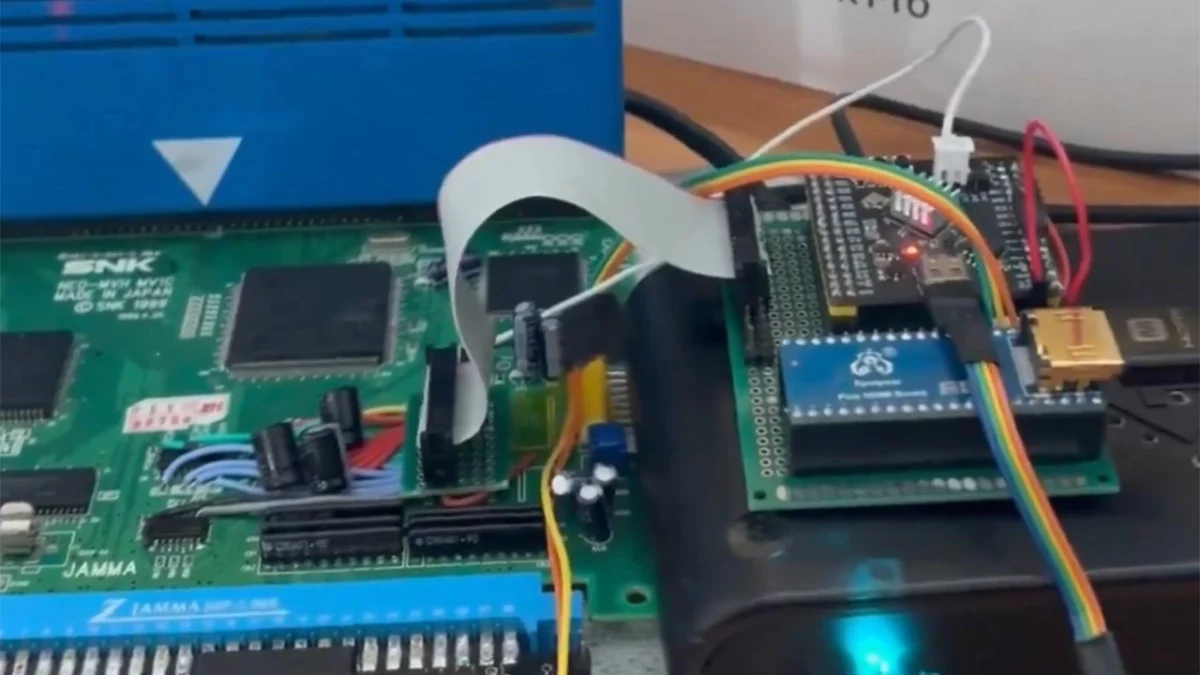
The burgeoning retro gaming community continues to witness significant advancements in hardware preservation and modernization, with developer fliperama86 releasing version 0.1.4 of the NeoPico-HD project. This open-source initiative leverages the capabilities of a Raspberry Pi Pico 2 (RP2350B) microcontroller to directly tap into the digital video and audio signals emanating from a Neo Geo MVS (Multi Video System) motherboard, subsequently converting them into a high-definition HDMI output. The latest update, notably, integrates robust 720p resolution support, marking a crucial step towards making the iconic arcade system seamlessly compatible with contemporary flat-panel displays, alongside existing 240p and 480p functionalities.
Key Enhancements and Technical Specifications
The v0.1.4 update for NeoPico-HD primarily introduces 720p output, a resolution widely supported by modern televisions and monitors. This enhancement is particularly significant for retro gaming enthusiasts who frequently encounter challenges with display compatibility and image quality when connecting older hardware to newer screens. Many modern 4K displays often struggle with lower resolutions like 240p or 480p, introducing undesirable input lag, incorrect aspect ratios, or poor scaling artifacts. The inclusion of 720p, often scaled by modern televisions more effectively than lower resolutions, helps mitigate these issues, offering a cleaner and more responsive gaming experience. The developer’s notes indicate that this 720p firmware, neopico_hd_720p_nonrt.uf2, utilizes a non-Real-Time (non-RT) PicoHDMI path for enhanced stability at this resolution. Furthermore, the PicoHDMI implementation has been updated with fast-slew and 12mA HSTX pad drive, technical improvements aimed at bolstering signal integrity and overall output quality.
Beyond the headline 720p addition, the NeoPico-HD project had previously incorporated 240p support. This feature is invaluable for purists and those with sophisticated external video scalers or CRT displays. A clean 240p signal, devoid of modern display processing, allows external devices like the RetroTINK or OSSC to perform their specialized upscaling algorithms, often resulting in pixel-perfect representations or highly customized visual effects. For users employing older, retro-compatible HDMI-to-YPbPr or HDMI-to-VGA/SCART DACs, the availability of a clean digital signal at native or near-native resolutions provides a superior foundation for analog output compared to relying on the Neo Geo’s original, often noisy, analog video lines. The persistent 480p support also caters to specific setups, including PC CRT monitors, which can natively handle this resolution, offering another versatile output option.
The Power of the Raspberry Pi Pico 2 (RP2350B)
At the core of the NeoPico-HD project lies the Raspberry Pi Pico 2, specifically the RP2350B microcontroller. This component represents a newer generation of the popular Pico series, designed to offer enhanced performance and capabilities over its predecessors, often at a highly competitive price point. The RP2350B, with its dual ARM Cortex-M0+ cores and ample RAM, provides sufficient processing power to handle the complex tasks of reading digital video and audio signals from the Neo Geo MVS, processing them, and then generating a compliant HDMI output.
The choice of the Raspberry Pi Pico 2 is a strategic one, significantly impacting the accessibility and cost-effectiveness of the NeoPico-HD solution. Unlike many high-end HDMI modification projects for retro consoles, which frequently rely on Field-Programmable Gate Arrays (FPGAs), the Pico-based approach dramatically reduces the bill of materials (BOM) and the overall complexity of the circuit board design. FPGAs, while offering unparalleled flexibility and speed for highly customized digital logic, come with higher component costs and often require specialized development expertise. The RP2350B, conversely, provides a robust, off-the-shelf platform that is more amenable to hobbyist development and open-source dissemination, aligning perfectly with fliperama86’s vision for the project. This cost advantage is poised to democratize digital video output for Neo Geo MVS owners, making modern display compatibility attainable for a broader segment of the retro gaming community.
Audio Fidelity: The PCM1802 ADC Integration
Beyond video, the NeoPico-HD project has also made strides in audio fidelity. A recent update introduced support for the PCM1802 Analog-to-Digital Converter (ADC) for AES (Advanced Entertainment System) and non-MV1C MVS boards. The Neo Geo MVS, like many arcade systems of its era, produced analog audio signals which, while groundbreaking for their time, can suffer from noise and degradation when routed through modern audio systems or captured directly. The PCM1802 is a high-performance, single-chip stereo ADC known for its excellent dynamic range and low noise characteristics. Integrating this ADC allows the NeoPico-HD to digitize the Neo Geo’s analog audio signal with high precision, ensuring that the sound accompanying the modernized video output is as clean and faithful to the original as possible. This is particularly important for discerning audiophiles and those who wish to capture or stream their gameplay with pristine audio quality.

The Open-Source Ethos and Community Empowerment
One of the most defining characteristics of the NeoPico-HD project is its staunch commitment to open-source principles. Developer fliperama86 has explicitly stated that there are no current plans to commercialize the project, and crucially, it is released under an open license, allowing anyone to freely use, modify, and distribute the hardware designs and software. This philosophy stands in stark contrast to many proprietary HDMI mods available on the market.
The open-source nature fosters a collaborative environment, enabling other developers, modders, and enthusiasts to scrutinize the code, suggest improvements, identify bugs, and even fork the project for specialized applications. This collective intelligence often accelerates development and improves the robustness of the solution far beyond what a single developer might achieve. For the Neo Geo community, this means that the NeoPico-HD is not a black box; its inner workings are transparent, inviting innovation and ensuring its longevity and adaptability. The absence of a restrictive license also encourages independent producers to manufacture and sell kits or pre-modded boards, should they choose to, further enhancing accessibility without being beholden to a single commercial entity. This approach empowers the community, giving them direct control over the technology that enhances their beloved retro hardware.
A Brief Chronology of Development
The NeoPico-HD project has evolved steadily since its initial unveiling, demonstrating a clear trajectory towards comprehensive Neo Geo modernization:
- Initial Announcement: The project first garnered attention with its ambitious goal of leveraging the Raspberry Pi Pico for direct digital video and audio output from Neo Geo MVS boards, offering an affordable alternative to FPGA-based solutions.
- Early Development & Core Functionality: Initial versions focused on establishing stable 480p output and foundational digital signal tapping from the MVS motherboard.
- Addition of 240p Support: A significant milestone was the integration of 240p output, catering to purists and those with advanced video scalers, ensuring the most authentic pixel representations for classic arcade titles.
- Audio Enhancements: The project then incorporated PCM1802 ADC audio support, addressing a critical component of the retro gaming experience by digitizing analog audio signals from AES and non-MV1C MVS boards for superior sound quality.
- v0.1.4 Release (April 25, 2026): The latest update, highlighted by fliperama86 via social media, introduces experimental 720p firmware (
neopico_hd_720p_nonrt.uf2), improved PicoHDMI stability, and optimized pad drive settings, solidifying its multi-resolution capabilities.
This iterative development process reflects a responsive approach to community needs and technical challenges, steadily enhancing the project’s utility and appeal.
Broader Implications for Retro Gaming Modernization
The NeoPico-HD project, and particularly its latest v0.1.4 update, carries significant implications for the broader retro gaming landscape:
- Democratization of HDMI Mods: By demonstrating a viable, high-quality HDMI solution based on a low-cost microcontroller like the Raspberry Pi Pico 2, NeoPico-HD challenges the notion that sophisticated digital video output requires expensive FPGA hardware. This could inspire similar projects for other retro consoles, making HDMI modifications more accessible and affordable for a wider range of systems and enthusiasts.
- Bridging the Display Gap: The continuous struggle to connect vintage gaming hardware to modern displays is a persistent pain point for retro gamers. Solutions like NeoPico-HD directly address this by providing a clean, compatible digital signal, ensuring that classic titles can be enjoyed on contemporary televisions without significant compromises in visual fidelity or input lag. The versatile output options (240p, 480p, 720p) further enhance its utility for diverse display setups.
- The Power of Open Source: NeoPico-HD serves as a powerful testament to the efficacy of open-source development within specialized hobby communities. Its progression from an initial concept to a feature-rich, multi-resolution solution underscores how collaborative, transparent development can yield innovative and community-centric products.
- Preservation and Accessibility: Ultimately, projects like NeoPico-HD contribute to the ongoing efforts of video game preservation. By making it easier to play original hardware on modern displays, they help ensure that these historical artifacts remain functional and enjoyable for future generations, preventing them from becoming obsolete due to incompatible display technologies.
The retro gaming community, including platforms like RetroRGB, has expressed considerable excitement for the NeoPico-HD. The prospect of an affordable, open-source, and highly functional HDMI solution for the legendary Neo Geo MVS is a compelling one. As fliperama86 continues to refine and expand the project, the NeoPico-HD is poised to become a benchmark for accessible retro console modernization, empowering enthusiasts to experience the golden age of arcade gaming with unparalleled clarity on their modern screens.








