Chalid Lutfie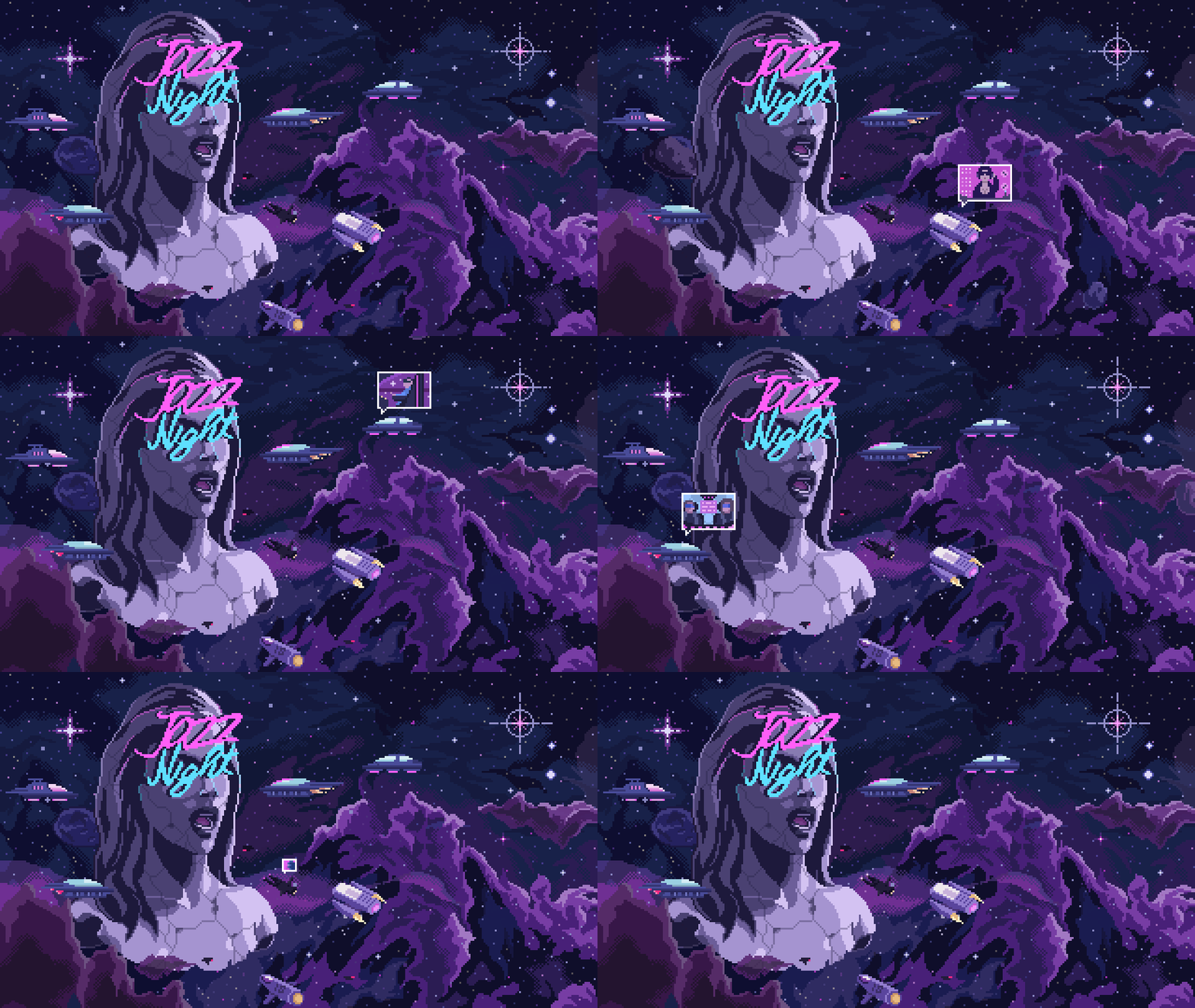
Ubiktune has officially announced the release of The Frequency Modulators Orchestra, Vol. 1, the latest project from Los Angeles-based producer and composer Juan Irming, performing under the moniker Amplitude Problem. This debut for the Ubiktune label represents a significant departure from standard electronic music production, as the album serves as a conceptual exploration of Frequency Modulation (FM) synthesis within the context of retro-electro-jazz. Released on April 25, 2017, the record is comprised of compositions created exclusively using FM synthesizers and lo-fi drum machines, aiming to bridge the gap between the perceived "coldness" of digital synthesis and the organic, improvisational warmth associated with traditional jazz music.
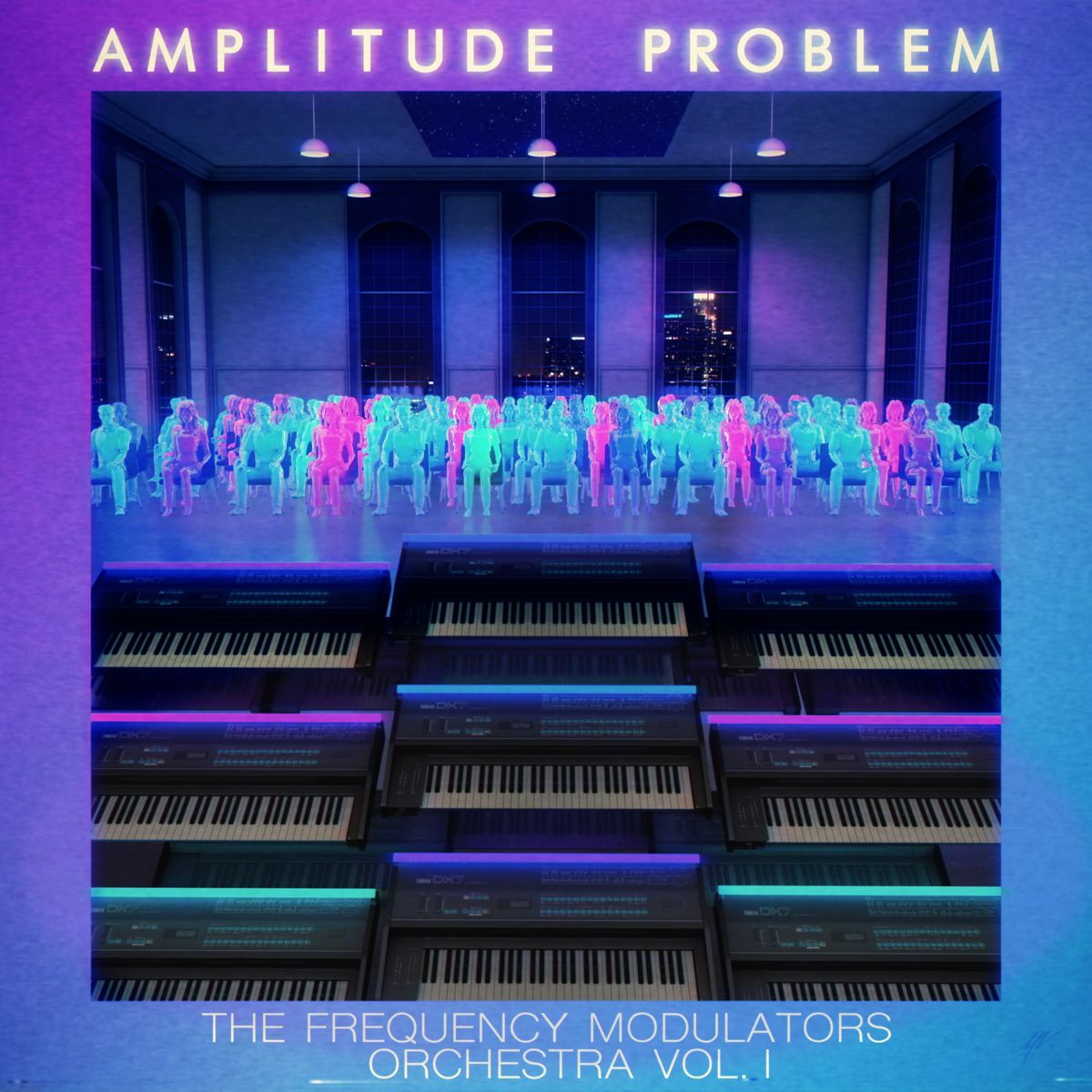
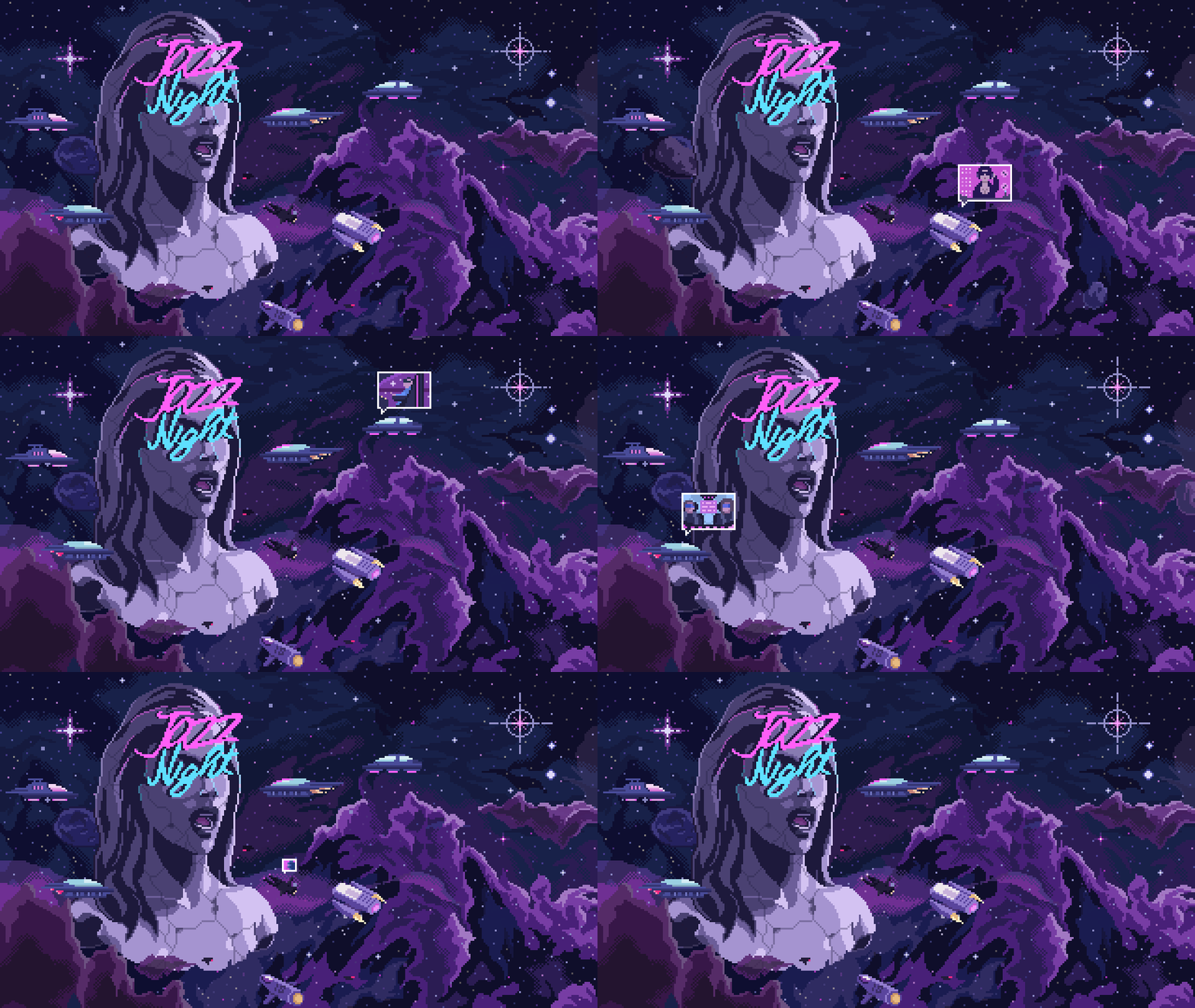
The project is the culmination of a ten-month creative period during which Irming sought to push the boundaries of 1980s-era digital technology. By utilizing the nuanced and often complex programming language of FM synthesis, the artist has crafted a collection of tracks that balance zany chiptune aesthetics with sophisticated synth-funk grooves. The album features a high-profile technical pedigree, having been mastered by Grammy Award-winning engineer Don Grossinger, whose previous credits include work for jazz legend Miles Davis. Visual elements for the release were provided by prominent artists in the retro-aesthetic community, including cover art by Mythical Vigilante and additional pixel-art animations by Valenberg.
The Evolution of Amplitude Problem and the SYNC Demoscene
Juan Irming’s trajectory as a composer is deeply rooted in the European demoscene of the late 1980s, a computer subculture focused on pushing the technical limits of hardware through audiovisual presentations. Operating under the Atari ST platform, Irming served as a composer for the world-renowned demo crew SYNC. During this era, he achieved significant recognition by securing first-place finishes in several demo music contests, establishing a reputation for melodic complexity within the constraints of early sound chips.
Following his foundational years in the demoscene, Irming transitioned to formal musical education in the United States, attending the Musicians Institute in Hollywood during the early 1990s. This formal training in keyboard performance and music theory allowed him to synthesize his technical background in computer music with professional musicianship. Over the subsequent decades, Irming’s portfolio expanded to include sound design and soundtracks for various media, ranging from video games to hip-hop collaborations.

Irming has contributed to at least ten full-length LPs and has appeared on compilations alongside major figures in the synthwave and electronic scenes, such as Mitch Murder, Lazerhawk, and GUNSHIP. His work in the video game industry includes sound effects and musical scores for titles such as Power Drive 2000 and VirtuaVerse. Furthermore, his live performances at high-profile events like Comic-Con and Game On Expo have seen him share stages with acts like The Minibosses and The Gothsicles, cementing his status as a versatile figure in the intersection of geek culture and electronic music.
Conceptual Origins and the Ten-Month Creative Journey
The conceptual seeds for The Frequency Modulators Orchestra, Vol. 1 were planted in 2014 during Irming’s collaboration with the prominent "geeksta" rapper YTCracker. While producing the instrumental for the track "Feel Like Leisure Suit Larry" for YTCracker’s cyberpunk-themed album Introducing Neals, Irming rediscovered the specific percussive and "zany" qualities of FM-synth sounds. This interest was further explored in his 2015 solo track "Funky Mustache," featured on the album Blue Bots Dots.
By late 2015, the vision for a dedicated FM-jazz album had solidified. Irming embarked on a ten-month production schedule with the specific goal of humanizing digital synthesis. The central challenge of the project was the inherent nature of FM synthesis itself. Unlike subtractive synthesis, which is often described as "warm" due to its analog origins and harmonic saturation, FM synthesis is characterized by its mathematical precision and ability to produce sharp, metallic, and "cold" timbres.
Irming’s objective was to use this "cold" medium to replicate the "warm" human grooves of jazz. This required a heavy reliance on live improvisation. By performing the keyboard parts manually rather than relying solely on sequenced programming, Irming introduced the slight rhythmic imperfections and expressive nuances necessary for the jazz genre. This approach allowed the synthesizers to act as "members" of a virtual band, which Irming dubbed The Frequency Modulators.
Technical Analysis of FM Synthesis in Modern Production
Frequency Modulation synthesis, popularized by the Yamaha DX7 in the 1980s and the OPL sound chips found in early PC sound cards and the SEGA Genesis, relies on the modulation of the frequency of one waveform (the carrier) by another (the modulator). This creates complex sidebands and harmonic structures that are significantly more difficult to predict and program than traditional analog methods.
In the context of The Frequency Modulators Orchestra, Vol. 1, the use of FM synthesis serves both a nostalgic and a technical purpose. From a nostalgic perspective, the sound palette evokes the era of 16-bit gaming and early digital pop. From a technical perspective, the album demonstrates the versatility of FM operators in creating percussive "slap-bass" sounds, crystalline leads, and complex Rhodes-style electric piano textures.
The decision to hire Don Grossinger for mastering was a strategic move to ensure these digital frequencies translated well to high-fidelity playback systems. Grossinger’s experience with legacy jazz recordings provided the necessary expertise to balance the sharp transients of FM synthesis with the low-end requirements of funk and jazz-fusion. This collaboration highlights a growing trend in the electronic music community where "lo-fi" or "chip" aesthetics are treated with the same production rigor as mainstream commercial releases.
Narrative Structure and Thematic Depth
The Frequency Modulators Orchestra, Vol. 1 is structured as a narrative journey through the lens of instrumental music. Irming has noted that the absence of vocals placed a higher burden on the musical composition to maintain listener engagement. The album is divided into two distinct thematic sections.
The first four tracks are described by the artist as a "deep introspective," focusing on internal emotional states and personal reflection. This is exemplified by tracks like "Ghosts in My Medicine Cabinet," which Irming describes as a composition delivered with "conviction" and a lack of creative compromise. The final three tracks shift the focus outward, providing a commentary on life, the universe, and the "bizarre space adventure" of human existence.
This duality reflects the artist’s personal philosophy regarding music as a storytelling medium. By personifying each synthesizer as a band member within "The Frequency Modulators Orchestra," Irming creates a sense of collective performance. This conceptual "band" allowed the artist to distance himself from the solo-producer archetype, fostering an environment where "the band" was granted the privilege to improvise and spread "good vibes."

Visual Identity and Pixel Art Collaboration
The visual presentation of the album is an integral part of the release, reinforcing the retro-futuristic themes of the music. The front cover art by Mythical Vigilante sets the tone with a vibrant, neon-inflected aesthetic common in the synthwave genre. However, it is the contribution of Valenberg that provides the deeper stylistic link to the demoscene and chiptune culture.
Valenberg, a renowned pixel artist who previously collaborated with Irming on Blue Bots Dots, created the "Jazz Night" animation for this release. Pixel art, much like FM synthesis, is a medium defined by its limitations. By working within a restricted resolution and color palette, pixel artists must use precise placement to suggest complex forms and moods. This mirrors Irming’s use of FM synthesis, where mathematical constraints are used to evoke complex emotional responses. The synergy between the pixelated visuals and the digital soundscapes creates a cohesive "pixelated rabbit hole" for the audience.
Broader Impact on the Electronic Music Landscape
The release of The Frequency Modulators Orchestra, Vol. 1 on Ubiktune reflects broader shifts in the independent music industry. In 2017, there has been a noticeable resurgence in the use of digital synthesis techniques that were once dismissed as "thin" or "obsolete." As the market becomes saturated with analog-style "retro" sounds, artists like Amplitude Problem are looking toward the late 80s and early 90s digital era for fresh inspiration.
Furthermore, the album represents the continuing professionalization of the chiptune and "fakebit" scenes. By integrating high-end mastering, sophisticated jazz theory, and professional visual art, the project elevates the status of computer-generated music. It challenges the notion that chiptune is merely a novelty or a subset of video game music, positioning it instead as a legitimate tool for avant-garde jazz fusion.
Ubiktune’s support of the album underscores the label’s commitment to releasing music that defies easy categorization. As digital and streaming services continue to dominate the distribution landscape, niche projects that offer a unique "concept" or technical hook—such as an all-FM jazz album—are increasingly finding dedicated audiences among audiophiles and electronic music enthusiasts alike.
The Frequency Modulators Orchestra, Vol. 1 is currently available across all major digital storefronts and streaming platforms. As a contribution to the contemporary electronic music canon, it serves as a testament to the enduring creative potential of "cold" digital synthesis when placed in the hands of a composer with a deep respect for "warm" musical traditions.