Jia Lissa
The history of the video game industry is often defined by its hardware cycles and the iconic mascots that front them, but the internal corporate dynamics that fueled the 16-bit and 32-bit eras remain a subject of intense study for industry historians. Mike Fischer, a veteran executive whose career spanned pivotal roles at Sega, Namco, Microsoft, and Square Enix, provides a rare, bifurcated perspective on this era. Having worked at both Sega’s Japanese headquarters and its American subsidiary, Fischer witnessed the meteoric rise of the Genesis, the turbulent transition to the Saturn, and the eventual pivot to a software-only business model. His experiences highlight a period of immense creativity marred by cultural friction, technical hurdles, and the shifting tides of global consumer preferences.

The Foundation of a Global Career: From Tokyo to Redwood City
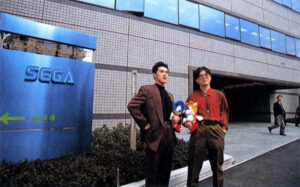
Mike Fischer’s entry into the gaming industry in 1990 coincided with one of the most transformative periods in interactive entertainment. After graduating with a degree in economics and spending two years teaching English in Japan, Fischer joined Sega Enterprises, Ltd. in Tokyo on April 1, 1990. He was placed in the Overseas Consumer Products Business Division, a role that required him to act as a "utility player," handling everything from translating technical repair manuals to naming peripheral hardware.
Fischer’s early years at Sega of Japan (SOJ) placed him at the epicenter of the "Sonic the Hedgehog" project. At the time, Sega was searching for a "Mario-killer" to spearhead its global expansion. While Yuji Naka is often the primary name associated with the blue speedster, Fischer’s account emphasizes the collaborative nature of the project, specifically noting the contributions of character designer Naoto Ohshima and game designer Hirokazu Yasuhara. Fischer’s role included the practical logistics of global marketing, such as taking thousands of screenshots for manuals and translating documents for high-profile visitors like Michael Jackson and Formula One driver Ayrton Senna.

In 1994, Fischer transferred to Sega of America (SOA) as a product manager. This move was unique; while most Western employees began in the U.S. and later interacted with Japan, Fischer’s deep understanding of the Japanese corporate mindset allowed him to serve as a vital, if occasionally misunderstood, liaison. At SOA, he worked under the leadership of Tom Kalinske, the executive credited with turning the Genesis into a dominant force in the North American market.
The Cultural and Strategic Divide Between SOJ and SOA
A recurring theme in the history of Sega is the perceived rivalry between its Japanese and American branches. Fischer’s insights suggest that while a rivalry existed, it was rooted more in differing corporate philosophies and market realities than in personal animosity. During the early 1990s, the Mega Drive (the Japanese name for the Genesis) struggled to gain a foothold in Japan, where Nintendo’s Super Famicom reigned supreme. Conversely, the Genesis was a massive success in the U.S., often outselling the Super Nintendo Entertainment System (SNES) through aggressive marketing and celebrity partnerships.
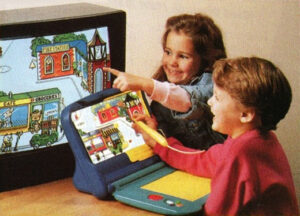
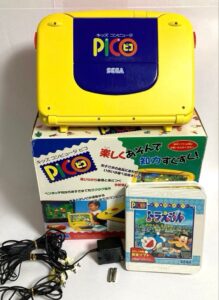
This disparity created a "tail wagging the dog" dynamic. Middle management in Japan often felt slighted by the autonomy granted to Tom Kalinske by Sega CEO Hayao Nakayama. However, Nakayama himself held Kalinske in high regard, recognizing that the American team understood the Western consumer better than the Tokyo office did. Fischer recalls instances where Nakayama would vocally reprimand Japanese engineers for ignoring Kalinske’s advice on pricing and product design, particularly regarding the Sega Pico, an educational toy that Fischer managed.
Despite this respect at the top, the business model remained export-driven. SOJ would ship hardware and cartridges to SOA, counting them as sales on the Japanese balance sheet the moment they left the dock. This forced SOA to manage massive amounts of inventory and face the brunt of price protection issues when products failed to move at retail. This structural flaw would eventually contribute to the financial strain that hampered Sega during the mid-to-late 1990s.
The Saturn Era: Technical Complexity and Market Misalignment
The transition from the 16-bit Genesis to the 32-bit Saturn is widely regarded as the beginning of Sega’s decline as a hardware manufacturer. Fischer identifies several key factors that contributed to the Saturn’s struggle in the West. One primary issue was the hardware architecture. Unlike the Genesis, which utilized the versatile Motorola 68000 chip, the Saturn was built around a dual-CPU Hitachi SH-2 setup. While powerful for 2D sprite manipulation, it was notoriously difficult to program for 3D environments—the burgeoning standard of the era.
Furthermore, the documentation provided to Western developers was often incomplete or poorly translated. Fischer notes that while SOJ attempted to support the platform with developer conferences, the complexity of the machine remained a barrier. There is also the historical speculation regarding the choice of Hitachi over American chipsets. Fischer suggests that domestic industrial policy in Japan may have influenced Sega’s decision to use a Japanese manufacturer, potentially sacrificing the ease of development that had made the Genesis a favorite among third-party creators.
During this period, Fischer was primarily focused on the Sega Pico. While the Pico outlived both the Saturn and the Dreamcast in terms of production lifespan (continuing in some form until 2005), it struggled in the U.S. due to high manufacturing costs and a lack of retail support compared to Japan. This era marked a shift in the corporate atmosphere; the "honeymoon" period of the Genesis success had ended, replaced by the pressure of competing against the burgeoning Sony PlayStation.
The Namco Interlude and the Dreamcast’s Final Stand
In 1997, Fischer left Sega to join Namco, just as the PlayStation was solidifying its market lead. His time at Namco coincided with the release of Soul Calibur for the Sega Dreamcast. Soul Calibur remains a landmark title, often cited as a game that looked and played better than its arcade counterpart. Fischer recalls the technical genius of the Namco teams, who used inverse kinematics to optimize the game’s visuals for home consoles.
However, despite the success of Soul Calibur, Namco’s support for the Dreamcast remained limited. The industry was gravitating toward the PlayStation 2, and third-party developers were wary of Sega’s dwindling hardware market share. Fischer’s tenure at Namco highlighted the shifting alliances of the time; Namco had a "special arrangement" with Sony, and breaking that exclusivity to support the Dreamcast was a significant, albeit short-lived, strategic pivot.
The Return to Sega: Transitioning to a Software-Only Future
Fischer returned to Sega in the early 2000s under the leadership of Peter Moore. By this time, the company had made the painful decision to discontinue the Dreamcast and become a third-party software publisher. Fischer’s role was to help bridge the gap between Sega’s Japanese development houses and the global market.
One of his most significant contributions was delivering the "Gamer’s Manifesto" to the Japanese teams. This document outlined the necessity of embracing M-rated content, multiplayer functionality, and Western-centric game design. While some creators, like Yakuza (Ryū ga Gotoku) creator Toshihiro Nagoshi, were receptive to these trends, others were resistant. Fischer famously clashed with Yuji Naka during this period. Naka, then a powerful figure within the company, reportedly reacted with hostility to suggestions that Sega’s games needed to evolve to meet Western tastes, preferring to stick to more traditional, mascot-driven content like Billy Hatcher and the Giant Egg.
Fischer’s return also involved the symbolic reconciliation with former rivals. He recalls the poignant moment when the Sonic the Hedgehog mascot was welcomed at Nintendo of America’s headquarters, signaling the end of the "console wars" and the beginning of a new era of cross-platform collaboration.

Legacy and Future Outlook
The trajectory of Mike Fischer’s career serves as a microcosm of the video game industry’s professionalization. From the "wild west" days of the early 1990s, where IP rights were often ignored and small teams built global hits, to the data-driven, multi-billion dollar industry of today, Fischer has seen the evolution of gaming from both the creative and business sides.
Looking forward, Fischer expresses optimism for Sega’s current trajectory under the leadership of Shuji Utsumi. He believes that by respecting its legacy while innovating with new IP and modernizing classic franchises—as seen with the global success of the Like a Dragon series—Sega can maintain its relevance in a crowded market. Fischer’s account reinforces the idea that while hardware cycles come and go, the core of the industry remains the talent of the developers and the strategic vision of the leadership.
Chronology of Key Events
- 1988: Mike Fischer graduates from Cal Poly SLO; moves to Japan.
- 1990: Joins Sega Enterprises, Ltd. (Tokyo) in the Overseas Consumer Products Division.
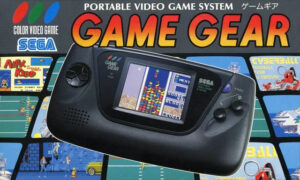
- 1991: Launch of the Sega Game Gear.
- 1994: Transfers to Sega of America as Product Manager; launch of Sega Pico in the U.S.
- 1994-1995: The turbulent launch of the Sega Saturn and 32X.
- 1997: Leaves Sega to join Namco during the PlayStation’s peak.
- 1999: Soul Calibur launches on Dreamcast, representing a high-water mark for third-party support.
- 2001: Sega announces it will discontinue hardware and become a third-party publisher.
- 2002: Fischer returns to Sega of America under Peter Moore to assist in the software-only transition.
- 2004: Fischer follows Peter Moore to Microsoft to work on the Xbox platform.
Analysis of Implications
The "Sega Story" as told through Fischer’s experiences highlights the danger of corporate silos. The friction between SOJ and SOA was not merely a matter of ego, but a failure of organizational alignment. When the Japanese headquarters failed to heed the warnings of the American branch regarding pricing and 3D hardware capabilities, they ceded the market to Sony. However, the eventual pivot to software allowed Sega to preserve its creative DNA. Today, Sega’s success as a multi-platform publisher—owning studios like Atlus and Creative Assembly—suggests that the company’s greatest strength was always its software, not its silicon. Fischer’s career underscores that in the global gaming market, cultural fluency is as important as technical expertise.