Chalid Lutfie
The SOUNDSHOCK series, a cornerstone of the contemporary chip-music landscape, represents more than a mere collection of digital tracks; it serves as a historical bridge between the golden age of 16-bit arcade hardware and the modern independent music scene. Since its conceptual inception in 2010, the project has evolved from a niche collaborative effort into a definitive anthology of Frequency Modulation (FM) synthesis. Orchestrated by the creative lead known as zinger in partnership with the Ubiktune netlabel, the series has successfully united a disparate group of composers from the Western demoscene and the Japanese video game industry.
The Genesis of a Movement: From Bedroom Obsession to Global Collaboration
The origins of SOUNDSHOCK can be traced back to the mid-2000s, rooted in the personal history of its founder, zinger. Like many of his contemporaries, zinger’s fascination with digital sound began with the iconic soundtracks of the Sega Mega Drive (Genesis), specifically titles such as Golden Axe II and Sonic the Hedgehog. These games utilized the Yamaha YM2612 sound chip, a hardware FM synthesizer known for its gritty, metallic textures and complex harmonic capabilities.
By 2007, zinger had established the SOUNDSHOCK Forums, a digital hub dedicated to FM enthusiasts. At a time when mainstream music production was shifting toward high-fidelity sampling and massive digital audio workstations (DAWs), the forum provided a sanctuary for those who preferred the constraints and unique timbres of legacy hardware. The forum became a technical exchange for sound programming, tracker techniques, and Music Macro Language (MML) coding.
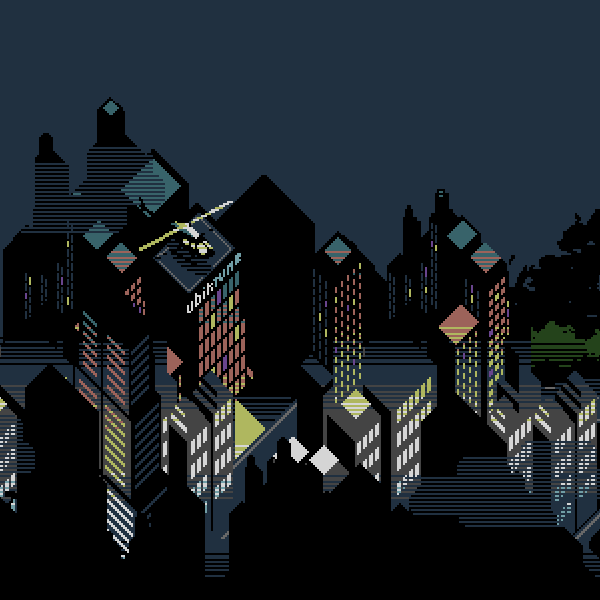
The transition from a community forum to a formal music label project occurred in 2010. Dmitry "C-jeff" Zhemkov, the founder of Ubiktune, initially approached zinger with the intent of producing a solo album. However, zinger proposed a broader vision: a compilation that would showcase the versatility of FM synthesis through the lens of various international artists. This pivot transformed SOUNDSHOCK into a collaborative platform that would eventually feature legends of the Japanese game music industry alongside underground European "trackers."
Technical Foundations: The Science of FM Synthesis
To understand the significance of the SOUNDSHOCK series, one must examine the technology it celebrates. FM synthesis, popularized by the Yamaha DX7 in the 1980s and subsequently integrated into arcade boards and home computers like the NEC PC-88 and PC-98, operates on a principle of modulating the frequency of one waveform (the carrier) with another (the modulator).
Unlike subtractive synthesis, which filters complex waves down to a desired tone, FM synthesis builds complexity from simple sine waves. This requires a deep understanding of mathematical ratios and "algorithms" (the configuration of operators). For the artists involved in SOUNDSHOCK, the appeal lies in the "hardware-accelerated" nature of the sound—a raw, immediate output that software emulations often struggle to replicate perfectly.
The series specifically highlights the aesthetic of "FM Funk," a subgenre that utilizes the rhythmic precision of trackers to create high-energy, groove-oriented compositions. This style demands rigorous technical proficiency, as artists must often work within the limitations of four to six channels of polyphony, forcing creative solutions for percussion and harmony.

A Chronology of Cross-Cultural Exchange
One of the most significant achievements of the SOUNDSHOCK series is its role in fostering communication between the Western demoscene and the Japanese "VGM" (Video Game Music) community. In the late 2000s, these two worlds were largely separated by language barriers and different technological lineages. While Western artists were mastering the Commodore 64’s SID chip or the Amiga’s Paula chip, Japanese composers were pushing the limits of NEC and Sharp computers.
Zinger notes that during his early interactions with Japanese composers like Ryu Takami and hex125, the shared vocabulary of game titles and composer names served as a universal language. This mutual admiration led to a historic convergence. The SOUNDSHOCK tracklists began to feature a blend of talent: Japanese veterans like Keishi Yonao (known for Star Cruiser and Asuka 120%) and hally (a pioneer of the Japanese chip scene) alongside Western masters such as zabutom and Metal.
This cross-pollination had a profound impact on the music produced. Western artists began adopting the intricate "shredding" and melodic complexities found in Japanese PC-98 soundtracks, while Japanese artists found inspiration in the experimental structures and "old-school" aesthetics of the European demoscene.
Artist Perspectives: The Methodology of FM Composition
The 2017 retrospective on SOUNDSHOCK brought forward several key voices who contributed to the series’ legacy, each offering insight into the meticulous process of FM composition.

The Technical Rigor of boomlinde
For the artist boomlinde, FM synthesis was a discovery of "hidden synthesizers" found in consumer hardware, from cell phones to pinball machines. His approach to the SOUNDSHOCK project involved using VGM Music Maker, a specialized tool for creating music for Sega hardware. Boomlinde’s methodology highlights a common theme in the community: the sound design often precedes the composition. By programming custom patches—such as a specific electric bass or horn stab—the instrument itself dictates the musical direction. This "trial-and-error" approach, facilitated by the vertical interface of trackers, allows for a granular level of control over every micro-detail of the sound.
The Community Connection of Extent of the Jam
The artist known as Extent of the Jam emphasized the role of the SOUNDSHOCK forums in breaking the isolation of FM composers. In the late 1990s, many artists believed they were working in a dead medium. The forum provided a space where "legends" and newcomers could interact, bridging the gap between the chiptune and micromusic scenes. This sense of community was essential for the survival of the niche, ensuring that the techniques for programming chips like the OPL2 and OPL3 were not lost to time.
The Discovery of Talent: Simon Stålenhag and Bomb Boy
Perhaps the most notable anecdote from the series’ history involves Simon Stålenhag, who would later gain international fame as the visual artist behind Tales from the Loop. In 2011, while working as a game designer, Stålenhag discovered the work of his colleague Mattis (operating under the pseudonym Bomb Boy). Stålenhag described Mattis’s process as "painstakingly farting out notes with the mouse cursor," guided by a "crystal clear high-definition mental image" of the music. Stålenhag’s insistence on including Mattis in the FM FUNK MADDNESS compilation is a testament to the series’ ability to unearth "musical mutants"—hidden talents who possessed immense creative power but lacked a platform.
Broader Implications and the Legacy of the FM Scene
The SOUNDSHOCK series arrived at a pivotal moment in digital music history. As the "Retrowave" and "Synthwave" movements began to gain mainstream traction in the mid-2010s, SOUNDSHOCK stood apart by maintaining a commitment to authentic hardware constraints and technical excellence. It did not merely imitate the 1980s; it utilized the actual tools of that era to create something contemporary.

The impact of the series extends beyond the music itself. It has influenced the development of modern software synthesizers and VSTs that aim to emulate the "FM sound," such as Plogue’s chipsynth series. Furthermore, the collaborative model established by zinger and Ubiktune has served as a blueprint for other niche communities, proving that a dedicated global audience exists for even the most specialized forms of digital art.
As of 2017, the SOUNDSHOCK series remains a vital archive of a specific sonic era. It represents the triumph of "niche" interests over mainstream trends, proving that the limitations of 30-year-old silicon can still provide a fertile ground for innovation. The project has successfully cultivated a realm where the aesthetics of Japanese arcade centers and Western computer culture coexist, ensuring that the "sound shock" of the FM era continues to resonate with new generations of listeners and composers alike.
The ongoing retrospective serves as a reminder that the community is not merely looking backward in nostalgia, but rather moving forward by exploring the "very depths of those worlds," as zinger aptly described it. With Part 2 of the retrospective anticipated by the community, the legacy of SOUNDSHOCK continues to be written, one operator and one algorithm at a time.