Jia Lissa
The landscape of the international amusement industry is undergoing a seismic shift as Sega Enterprises, Ltd. formalizes a strategic realignment to prioritize television-based video games over traditional mechanical amusements. In an expansive disclosure regarding the company’s internal operations and global trajectory, Hayao Nakayama, Executive Vice President and Representative Director of Sega, has outlined a roadmap that leverages the industrial might of the American conglomerate Gulf & Western (G&W) to solidify Sega’s position as a premier manufacturer in both Japan and the United States. This strategic pivot comes at a time when the "Golden Age" of arcades is reaching a fever pitch, driven by rapid advancements in microprocessor technology and a burgeoning consumer appetite for interactive visual entertainment.
The Corporate Architecture: The Gulf & Western Connection
Central to Sega’s current stability and aggressive expansion is its relationship with Gulf & Western Corporation, a New York-based conglomerate that currently ranks 52nd in the United States with annual sales exceeding $5.3 billion. Since Sega Enterprises, Ltd. became part of the G&W group in 1974, the corporate structure has evolved into a sophisticated international network. While Sega of Japan functions as a "grandchild company" under the G&W umbrella—technically a subsidiary of Sega of America—Nakayama emphasizes that the operational synergy remains direct and robust.
This structure has allowed Sega to pursue a dual-hub manufacturing strategy. By acquiring Gremlin Industries in the United States and Esco Trading in Japan, the Sega Group has created a self-sustaining ecosystem of research, development, and distribution. Under the leadership of President David Rosen, Sega of America serves as the administrative nerve center, managing not only game development through Gremlin but also diversifying into the leisure and hospitality sectors with ventures such as the "Sega Center" arcade chain and the "PJ Pizzazz" pizza restaurant concept. This diversification mirrors G&W’s broader portfolio, which includes Paramount Pictures and significant holdings in automotive and energy sectors, though Nakayama clarified that the group remains independent of the oil industry.
Chronology of Integration and Expansion (1974–1980)
The current state of Sega is the result of a deliberate six-year integration process into the American corporate landscape. The following timeline illustrates the company’s evolution:

- 1974: Sega Enterprises, Ltd. (Japan) is acquired by Gulf & Western Corporation, providing the capital necessary for large-scale industrial manufacturing.
- 1976: Sega of America acquires Gremlin Industries, an American manufacturer known for its early innovations in video game technology.
- 1978: The release of Head-On marks a turning point in game design, introducing the "maze-chase" genre and establishing a template for future hits.
- 1979: Sega acquires Esco Trading in Japan to bolster its domestic distribution and operational capabilities.
- 1979 (Fiscal Year End): Sega of Japan reports record sales of 24 billion yen (approximately $100 million USD) and a declared income of 5.37 billion yen.
- 1980: Sega shifts 70-80% of its research and development focus toward television games, signaling the beginning of the end for the dominance of electro-mechanical machines.
Economic Data and Operational Reach
Sega’s financial health in 1980 reflects the explosive growth of the arcade sector. With a workforce of 1,200 employees and a network of 89 operational offices across Japan—including major hubs in Sapporo, Osaka, and Fukuoka—the company has achieved an economy of scale that few competitors can match. Nakayama notes that the company’s dual identity as both a manufacturer and an operator is a unique byproduct of the Japanese amusement history. While most major Japanese manufacturers began as operators, Sega’s current policy is to maintain a delicate balance between these roles.
The company’s operational philosophy focuses on "long-term business sustainability." By operating a vast number of game centers, Sega can gather real-time data on player preferences, which then informs the R&D process. This feedback loop has been instrumental in Sega’s ability to navigate the volatile shifts in consumer taste that characterize the transition from the 1970s to the 1980s.
The Global TV Game Boom: Regional Disparities and Trends
One of the most striking revelations in Sega’s current business analysis is the disparity in product performance between the Japanese and Western markets. Nakayama highlights that while the television game market is now a global phenomenon, player psychology remains deeply regional.
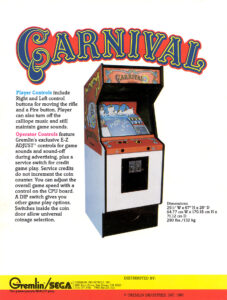
For instance, the game Mini Monaco has emerged as a massive success in the United States and Europe due to its small cabinet footprint and efficient two-player competition. However, the same title failed to gain traction in Japan. Similarly, Carnival, which features the first-ever "bonus round" in a video game, has received critical acclaim and high earnings in the U.S. (outperforming even Atari’s Missile Command in certain regions) while meeting a lukewarm reception in its home market.
This regional variance has forced Sega to adopt a more nuanced manufacturing approach. In Japan, the market remains dominated by "table-type" machines, a trend sparked by the Space Invaders craze where games were integrated into coffee shop tables. In contrast, the Western market continues to favor upright cabinets, which offer higher "added value" through elaborate cabinet art and physical presence. Nakayama maintains that while Sega must follow the table-type trend in Japan for now, the company has no intention of abandoning the upright format, viewing it as a superior vessel for high-end entertainment.

Legal Frontiers: The War on Intellectual Property Theft
As the value of software begins to eclipse the value of hardware, Sega is taking an increasingly litigious stance against "copycats." The "Invader boom" of the late 1970s saw a proliferation of unlicensed clones, a situation Nakayama describes as a "decline in product image" that fostered excessive, unhealthy competition.
Sega’s legal victory in the United States—specifically the lawsuit against Exidy regarding the game Head-On—has set a significant precedent. The court’s recognition of trademarks and the application of unfair competition laws have empowered Sega to confront counterfeiters directly. Nakayama warns that the cost of developing sophisticated, uncopyable hardware will inevitably lead to higher prices for operators, but he argues this is a necessary step to protect the integrity of the industry.
"What would have been considered an acceptable level of copying a year ago is now grounds for a lawsuit," Nakayama stated, signaling a transition from the "Wild West" era of arcade development to a structured, legally protected corporate environment.
Diversification and the Future of Arcade Hardware
Despite the heavy focus on television games, Sega remains committed to a diversified floor plan for operators. The company is currently revitalizing its medal game and pinball offerings to ensure a steady stream of revenue that is less dependent on the "hit-driven" nature of video games.
- Pinball: Sega continues to distribute high-quality machines from Williams and Stern, acknowledging that while the market is established, it requires consistent, "good machines" like Gorgar to remain viable.
- Medal Games: The company is focusing on "eliminating waste" by refurbishing older units with improved game content, such as the updated Blackjack, Faro II, and Punto Banco.
- Prize and Sports Games: Sega plans to introduce at least two new prize-based or sports-themed machines annually to maintain variety in family-oriented game centers.
Broader Impact and Industry Implications
The strategies outlined by Hayao Nakayama suggest that the amusement industry is entering a phase of professionalization and global consolidation. By leveraging the financial backing of Gulf & Western and the creative input of Gremlin Industries, Sega is positioning itself as a bridge between Japanese hardware precision and American software innovation.
The move toward regional distribution networks also marks a change in how the industry interacts with local markets. By training major local companies as distributors, Sega aims to provide "attentive service" that a centralized Tokyo office could not manage alone. This decentralized sales strategy is designed to handle an increasingly diverse and expansive global market.
As 1980 progresses, the industry will likely see a narrowing of the field, with "The Big Three"—Atari, Midway, and Sega/Gremlin—vying for dominance in the Western hemisphere, while Sega continues to battle domestic rivals like Taito and Namco in Japan. Nakayama’s vision is clear: the future of the company lies in the "novelty and entertainment value" of the television screen, backed by rigorous legal protection and a massive, vertically integrated corporate machine.
This pivot to a software-centric business model, supported by the industrial scale of a Fortune 500 conglomerate, sets the stage for Sega’s eventual transition from an arcade manufacturer to a global household name in home entertainment. For now, however, the focus remains on the glowing phosphor of the arcade monitor and the steady chime of yen and quarters.