Jia Lissa
Following the explosive success of Shining in the Darkness and the strategic depth of the original Shining Force, Climax Entertainment sought to pivot away from established genre conventions to create a title that would push the Sega Mega Drive’s hardware to its absolute limit. This ambition culminated in the 1992 release of Landstalker: The Treasures of King Nole, a game that abandoned first-person dungeon crawling and grid-based strategy in favor of a complex, isometric action-adventure experience. Led by co-founder and lead programmer Kan Naitō, the project represented a fundamental shift in game design philosophy, prioritizing spatial geometry and "electronic dioramas" over traditional role-playing mechanics. The development of Landstalker was not merely a creative endeavor but a technical marathon that involved the creation of a proprietary engine, the Diamond-Shaped Dimension System 520 (DDS520), which allowed for a level of verticality and depth previously thought impossible on 16-bit home consoles.
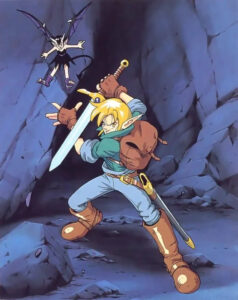
The Architectural Vision of Kan Naitō
The conceptual origins of Landstalker can be traced to March 1991, a period when Climax was riding the wave of success from its debut Mega Drive projects. While Hiroyuki Takahashi focused on the narrative and strategic expansions of the Shining series, Kan Naitō became obsessed with the concept of three-dimensionality. Naitō’s background in PC gaming, specifically his time with early 3D experiments like 3D Maze and Quest on the PC-6001, fueled a desire to move beyond the claustrophobic, 90-degree corridors of Shining in the Darkness. He envisioned a world where players could move diagonally and vertically, experiencing a genuine sense of height and environmental scale.
The inspiration for the game’s unique isometric perspective famously occurred while Naitō was observing the street below from his 10th-floor apartment window. The oblique angle provided a cinematic sense of immersion, reminiscent of the Indiana Jones films he admired. However, implementing this "diagonal" world on the Mega Drive presented a significant engineering hurdle. At the time, isometric games were largely confined to high-end home computers like the Amiga or were restricted to single-screen environments on the NES, such as Solstice (1990), due to Video Random Access Memory (VRAM) limitations. The Mega Drive’s hardware was designed for horizontal and vertical scrolling; an oblique system required constant, complex calculations to determine object priority and character placement within a pseudo-3D space.

Technical Innovation: The DDS520 Engine and Mirage III
Development of the game’s engine began in February 1991. Naitō’s goal was to create a system that could accurately reproduce depth using diamond-shaped panels—64×64 pixel units that formed the game’s floor. This system, eventually named the Diamond-Shaped Dimension System 520 (DDS520), was a marvel of optimization. To prevent the Mega Drive’s Motorola 68000 processor from slowing to a crawl during diagonal scrolling, Naitō utilized vectors to represent the diamonds. This allowed the engine to process movement and environmental rendering far more efficiently than standard tile-based methods.
As the engine evolved, it necessitated the creation of specialized development tools. Climax developed Mirage III, a proprietary graphics suite that allowed designers to manage map structures and character movements. The tool featured a wireframe mode that could detect geometric inconsistencies, ensuring that character sprites remained properly layered behind or in front of environmental objects. This was critical, as every object in Landstalker had a virtual "thickness" and existed as a six-faced shape within the data, even if the back surfaces were never visible to the player.
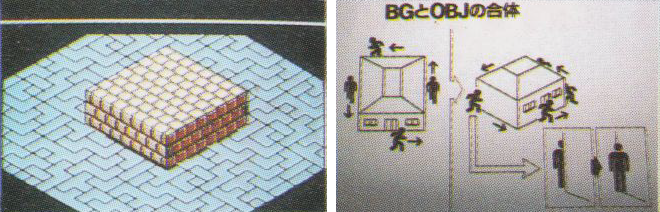
The scale of the project grew exponentially during production. While Naitō initially promised his map designers a world comprised of 200 maps, the final version of Landstalker featured a staggering 850 interconnected maps. The ROM size eventually reached 16 megabits, making it one of the largest games on the platform at the time of its release.
Chronology of Development and the Sonic Co. Joint Venture
To support the massive workload required for both the Shining franchise and the new isometric project, Sega and Climax formed a joint venture in June 1991 called Sonic Co., Ltd. (later renamed Sonic! Software Planning). This allowed Climax to recruit external talent from various sectors of the Japanese entertainment industry.

- March 1991: Initial conceptualization of the isometric perspective by Kan Naitō.
- June 1991: Formation of Sonic Co., Ltd to expand development resources.
- October 1991: Yoshitaka Tamaki begins character designs for the protagonist Nigel (Lyle in Japan) and his companion Friday.
- Autumn 1991: Map designer Yasuhiro Ōhori joins the team, bringing experience from the Famicom title Sanrio Carnival and his background in the "Game Freak" fanzine circuit.
- Early 1992: Finalization of the DDS520 engine after twelve major revisions.
- June 11, 1992: Official press unveiling at the Tokyo Prince Hotel.
- October 30, 1992: Landstalker is released in Japan.
- September–October 1993: International release in North America and Europe.
A unique aspect of the development cycle was the "training camp" method. Naitō organized intensive sessions at the Yomiuri Land Hotel, where the programming, planning, and design teams would meet 24 hours a day for several days to finalize game mechanics. These sessions were grueling, with the team only taking breaks to visit the nearby amusement park to clear their minds before returning to work until the early morning hours.
Narrative Evolution: The Separation from the Shining Series
One of the most debated aspects of Landstalker’s history is its relationship to the Shining series. Early design documents and promotional materials referred to the project as Shining Spirit and, according to some internal sources, Shining Rogue. Artist Yoshitaka Tamaki’s original pitch for the game placed the story immediately after the events of Shining in the Darkness. Nigel was designed as a forest elf of the same race as Pyra, and the game’s antagonists, Wally and Ink, were based on the "Kromeball" and "Chestbeak" enemies from the first Shining game.

However, as the game’s identity solidified, the decision was made to market Landstalker as a standalone franchise. Kan Naitō argued that the gameplay was so fundamentally different from the first-person and strategic roots of the Shining series that it deserved its own name. Rumors of internal friction between co-founders Naitō and Takahashi have persisted for decades, fueled by comments from composer Motoaki Takenouchi regarding "internal frictions" that led to the game’s rebranding. Regardless of the reason, the ties to the Kingdom of Thornwood were severed, and the setting was moved to the isolated Mercator Island.
Auditory Landscape: The Work of Motoaki Takenouchi
The soundtrack for Landstalker was composed by Motoaki Takenouchi, a protégé of the legendary Koichi Sugiyama (Dragon Quest). Takenouchi joined the project in early 1992, bringing a background in classical piano and synthesizer composition. He was tasked with creating a score that complemented the game’s "adventure" theme without relying on the typical tropes of 16-bit RPG music.

Takenouchi utilized an unusual blend of orchestral arrangements and rhythmic elements, pushing the Mega Drive’s Yamaha YM2612 FM synthesis chip. One of the most notable tracks, "A Ballad for Princess Loria," was a nearly two-minute piano-style composition that played during a non-interactive event, encouraging players to simply listen. Takenouchi’s attention to detail was such that he frequently extended tracks beyond their requested length, as seen in the 90-second underground labyrinth theme, which was originally slated to be only 30 seconds.
Market Impact and Critical Reception
Upon its release on October 30, 1992, Landstalker was a commercial success in the Japanese market, selling approximately 35,000 units in its first week. Critics praised the game for its visual depth and the ingenuity of its environmental puzzles. The isometric perspective, while innovative, became a point of contention for some players due to the inherent difficulty of judging jump distances in a pseudo-3D space. Naitō later revealed that the team experimented with adding shadows to Nigel to assist with spatial awareness, but the feature was cut because the additional sprite data would have significantly slowed the engine’s processing speed.
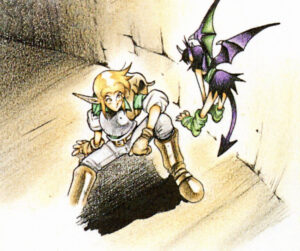
In the West, Landstalker was positioned as a premium title for the Sega Genesis, often compared—favorably or unfavorably—to Nintendo’s The Legend of Zelda: A Link to the Past. While it lacked the immediate brand recognition of Zelda, it gained a dedicated cult following for its mature writing, complex dungeons, and the charismatic dynamic between Nigel and the nymph Friday.
Broader Implications and the Legacy of Climax Entertainment
The development of Landstalker marked a turning point for Climax Entertainment. Following the project, the studio effectively split into two creative camps. Hiroyuki Takahashi’s group continued the Shining Force series under the Sonic! Software Planning banner, while Kan Naitō’s team explored the further potential of isometric design. This lineage led to the development of Dark Savior on the Sega Saturn in 1996, which served as a spiritual successor to Landstalker, and Lady Stalker on the Super Famicom.
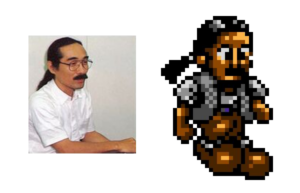
The influence of Landstalker is also visible in the work of Matrix Software, founded by map designer Yasuhiro Ōhori. The studio’s 1997 PlayStation classic, Alundra, is widely regarded as a thematic and mechanical successor to the groundwork laid by the Climax team in 1992.
Despite its enduring popularity, a true sequel to Landstalker never materialized. A 3D remake for the PlayStation Portable (PSP) was announced and showcased at the 2005 Tokyo Game Show, but the project was eventually canceled. Climax Entertainment officially ceased operations in 2014, leaving the rights to the franchise in a state of limbo, though Sega continues to include the original game in various "Sega Genesis Classics" collections and the Mega Drive Mini.

Today, Landstalker stands as a testament to a specific era of game development where technical limitations were viewed not as barriers, but as invitations for architectural innovation. The DDS520 engine remains a milestone in 16-bit programming, and the game’s "electronic diorama" world continues to be studied by retro-gaming enthusiasts and historians as a peak example of the Sega Mega Drive’s untapped potential.