Farhan hamdan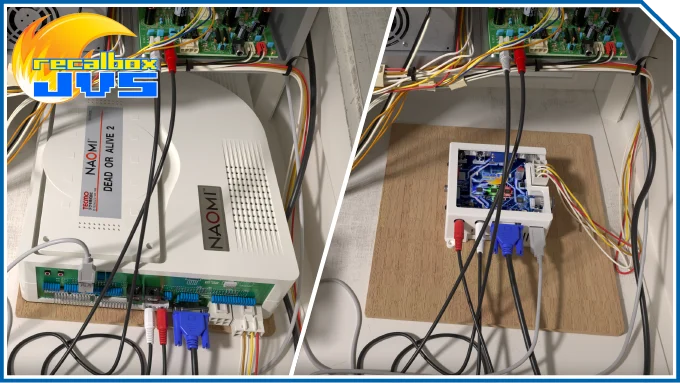
The Recalbox team has successfully concluded a Kickstarter campaign, securing robust funding for the development and production of a groundbreaking new adapter designed to seamlessly integrate the powerful Raspberry Pi 5 with Japan Amusement Machine and Marketing Association Video Standard (JVS) arcade cabinets. This innovative device, priced at approximately $185, is engineered to deliver a superior emulation experience, boasting 15, 24, and 31 kHz video output capabilities via a sophisticated 24-bit Digital-to-Analog Converter (DAC), ensuring pristine video quality across various arcade resolutions. Production is slated to commence soon, with an anticipated shipping date in October of this year, offering a significant upgrade path for arcade cabinet owners looking to modernize their setups with comprehensive emulation support.
The Genesis of Innovation: Bridging Digital and Analog Worlds
The core purpose of the Recalbox JVS adapter is to serve as a crucial interface, translating the digital output of a Raspberry Pi 5 into the specific analog signals required by traditional arcade monitors and control systems found in JVS cabinets. JVS, a successor to the venerable JAMMA standard, represents a more modern protocol primarily adopted by major arcade manufacturers such as Sega, Konami, and Namco in the late 1990s and early 2000s. Unlike JAMMA, which is predominantly analog, JVS employs a serial communication protocol for controls and a separate RGBHV signal for video, making direct integration with contemporary single-board computers like the Raspberry Pi challenging without specialized hardware. The Recalbox adapter addresses this gap directly, aiming to provide a ‘plug-and-play’ solution, a term often used cautiously in the intricate world of arcade hardware, yet indicative of the team’s commitment to user-friendliness. The developers claim an impressively low latency addition of only 2ms for control inputs, a critical factor for maintaining the authentic feel and responsiveness demanded by arcade gaming.
Understanding JVS: A Standard of Modern Arcades
To appreciate the significance of the Recalbox JVS adapter, it is essential to understand the JVS standard itself. Introduced around 1997, JVS was designed to streamline arcade cabinet wiring and introduce more advanced features compared to the older JAMMA standard. Key improvements included a standardized communication protocol for input devices (joysticks, buttons, steering wheels, light guns) via a single serial cable, typically USB, and dedicated RGBHV (Red, Green, Blue, Horizontal Sync, Vertical Sync) video output. This allowed for greater flexibility in control configurations and supported higher resolutions and refresh rates as arcade technology advanced. Popular arcade titles and systems like Sega Naomi, Namco System 246/256, and Konami Bemani machines utilized JVS. For cabinet owners, integrating modern computing platforms like the Raspberry Pi 5 into these systems has historically required complex custom solutions or compromises in video fidelity and input lag. The Recalbox JVS adapter aims to be a definitive, off-the-shelf solution, preserving the integrity of the original arcade experience while leveraging the vast library of emulated games.
The Recalbox Ecosystem and Raspberry Pi 5 Synergy
Recalbox is a well-established open-source emulation operating system built upon Linux, specifically designed for single-board computers like the Raspberry Pi. It offers a user-friendly interface for browsing and playing a wide array of retro games from various platforms, including classic arcade machines, home consoles, and handhelds. The choice of the Raspberry Pi 5 as the primary computing engine for this adapter is strategic. Launched in October 2023, the Raspberry Pi 5 represents a substantial leap in performance over its predecessors. It features a faster quad-core 64-bit Arm Cortex-A76 processor clocked at 2.4GHz, an 800MHz VideoCore VII GPU, and significantly improved I/O capabilities. These enhancements translate to superior emulation performance, capable of handling more demanding arcade systems and delivering smoother frame rates, even for complex 3D titles that were challenging on older Raspberry Pi models. The synergy between Recalbox’s comprehensive software ecosystem and the Raspberry Pi 5’s raw processing power forms the bedrock upon which the JVS adapter builds its promise of authentic and high-fidelity arcade emulation.
Kickstarter Success and Community Endorsement
The Kickstarter campaign for the Recalbox JVS adapter rapidly exceeded its funding goals, attracting significant interest from the retro gaming and arcade enthusiast communities. While specific figures for the total amount raised and the number of backers were not publicly detailed in the immediate post-campaign announcement, the successful funding underscores a clear demand for such a specialized solution. The campaign served not only as a fundraising mechanism but also as a vital platform for gathering community feedback, validating the project’s utility, and building anticipation. The project’s timeline indicates a meticulous approach, moving from successful funding through a detailed manufacturing phase, with initial units expected to ship to backers in October of the current year. This chronology suggests a well-planned development cycle, reflecting the Recalbox team’s experience in delivering hardware and software solutions to the retro gaming community. The engagement throughout the campaign, including detailed technical explanations and demonstration videos, played a crucial role in building trust and enthusiasm among potential users.
Technical Deep Dive: Precision and Performance
The technical specifications of the Recalbox JVS adapter highlight its commitment to fidelity. The inclusion of a 24-bit DAC (Digital-to-Analog Converter) for video output is paramount. A 24-bit DAC allows for a color depth of 16.7 million colors (2^24), which is standard for true-color digital images and ensures that the video signal converted to analog for the arcade monitor retains maximum color accuracy and vibrancy. This is crucial for replicating the visual experience of original arcade games, which often utilized rich, vibrant palettes. Furthermore, the adapter’s ability to output video at 15 kHz, 24 kHz, and 31 kHz is a cornerstone of its versatility.

- 15 kHz (CGA/EGA): This is the standard horizontal scan rate for older, traditional arcade monitors (often referred to as ‘medium resolution’ or ‘standard resolution’). It typically produces the iconic scanlines associated with classic arcade games, offering the most authentic retro experience. Many original JVS games, especially those designed for 4:3 CRT monitors, operate natively at or near this frequency.
- 24 kHz (EGA/VGA-like): A less common but historically significant frequency, sometimes used by certain arcade systems for slightly higher resolution displays.
- 31 kHz (VGA): This frequency is characteristic of modern computer monitors and higher-resolution arcade displays, enabling sharper images without visible scanlines, suitable for newer JVS titles or those designed for progressive scan output.
The capability to switch seamlessly between these frequencies ensures compatibility with a broad spectrum of JVS cabinets and their integrated monitors, from older CRTs to more modern LCD conversions, without compromising visual quality. The claimed 2ms input lag is also a critical performance metric. In competitive arcade gaming, even milliseconds can impact gameplay, particularly in genres like fighting games or rhythm games where precise timing is essential. By minimizing added latency, the Recalbox adapter aims to deliver an input experience indistinguishable from original arcade hardware, a testament to its engineering focus on performance.
Versatility and Expandability: Beyond Single Cabinets
Beyond its fundamental function, the Recalbox JVS adapter distinguishes itself through its remarkable versatility and expandability. The design allows for several advanced configurations, catering to a wider range of arcade setups and enthusiast needs:
- Dual-JVS Cabinet Control: The adapter is designed to control two separate JVS cabinets from a single Raspberry Pi 5 setup. This feature is invaluable for enthusiasts with multiple machines or for setups requiring simultaneous operation, potentially for multiplayer games across linked cabinets, significantly simplifying the hardware management.
- Linking Two Complete Kits: For even more complex arrangements, users have the option to link two complete Recalbox JVS kits together. This could facilitate more intricate multi-cabinet experiences or provide redundancy for specialized applications.
- Naomi RaceCabs Support: Explicit support for Naomi RaceCabs highlights the adapter’s broad compatibility within the JVS ecosystem. Sega Naomi, a highly popular arcade platform, spawned numerous racing titles, and dedicated race cabinets often feature unique control inputs (steering wheels, pedals, shifters). Ensuring compatibility with these specialized setups demonstrates a thorough understanding of the diverse requirements of JVS hardware.
- Light Gun Support (Stretch Goal): A significant stretch goal for the Kickstarter campaign was the implementation of single and dual light gun support. This feature, if successfully integrated, would unlock a vast library of classic and modern light gun games, a genre particularly beloved by arcade enthusiasts. Accurate and low-latency light gun support is technically challenging, often requiring specialized hardware and software synchronization, making its inclusion a highly anticipated development.
User Experience: The Independent On-Screen Menu
A standout feature that significantly enhances the user experience is the independent on-screen menu. Unlike many emulation solutions where menus are rendered by the host computer (in this case, the Raspberry Pi), the Recalbox JVS adapter incorporates its own dedicated hardware for displaying an on-screen display (OSD). This means the menu operates completely independently of the Raspberry Pi. This design choice offers several key advantages:
- Reliability: The menu can be accessed and configured even if the Raspberry Pi is not fully booted or is experiencing issues, providing a robust troubleshooting and setup interface.
- Performance: Offloading menu rendering from the Raspberry Pi frees up its resources for emulation, ensuring that game performance is not impacted by menu overlays.
- Seamless Integration: The OSD integrates directly into the video signal chain, allowing users to make adjustments to video settings, input configurations, and other adapter-specific parameters without needing a separate monitor or keyboard/mouse connected to the Raspberry Pi. The provided demo video illustrates the fluidity and functionality of this independent menu, underscoring the thoughtfulness put into the user interface.
Challenges and Solutions in Arcade Emulation
The journey of arcade emulation, particularly within the confines of original cabinets, is fraught with technical challenges. One primary hurdle is the disparity between modern digital video standards and the analog, often low-resolution, interlaced video signals of classic arcade monitors. Scaling digital video directly can introduce artifacts, lag, and an inauthentic look. The Recalbox JVS adapter tackles this head-on with its precise DAC and multi-frequency output, ensuring that the emulated content is displayed as closely as possible to the original hardware’s intent. Input lag, as previously mentioned, is another critical concern. Many general-purpose emulation setups, especially those relying on generic USB adapters, can introduce noticeable delays. By designing a specialized interface that directly communicates with the JVS control board and optimizing its internal processing, the Recalbox team has aimed to minimize this to an imperceptible level. Furthermore, the sheer variety of JVS cabinet configurations, with different control layouts, button counts, and special peripherals (like racing wheels or unique joysticks), presents a compatibility nightmare. The adapter’s design to accommodate dual-JVS setups, Naomi RaceCabs, and future light gun support indicates a comprehensive approach to address this complexity, offering a unified solution where previously multiple disparate adapters or custom wiring might have been necessary.
Statements from the Developers and Industry Perspectives
While specific quotes from the Recalbox team were not available at the time of this report, their philosophy is evident in the project’s execution. A spokesperson for the Recalbox project, in earlier communications, emphasized the team’s dedication to "preserving the authentic arcade experience" and "making high-fidelity emulation accessible to a wider audience of enthusiasts." The development of the JVS adapter is a direct manifestation of this mission, tackling one of the most significant barriers to integrating modern computing with original arcade hardware. "Our goal," the spokesperson might infer, "is to remove the technical complexities, allowing users to focus on the joy of gaming in their cherished cabinets."
From an industry perspective, the Recalbox JVS adapter represents a significant advancement in the niche market of arcade preservation and restoration. Industry analysts suggest that while this market is specialized, it is passionate and growing, driven by nostalgia and the desire to maintain cultural artifacts. "Solutions like the Recalbox JVS adapter are vital," states an independent retro gaming hardware analyst, "as they extend the life and utility of expensive, often rare arcade cabinets. They also democratize access to classic titles, moving beyond complex DIY solutions to a more user-friendly product." This adapter not only serves existing cabinet owners but could also inspire new enthusiasts to acquire JVS cabinets, knowing that a robust and versatile emulation solution is readily available. The project also highlights the enduring relevance and adaptability of the Raspberry Pi platform, which continues to be a cornerstone for innovation in embedded systems and retro computing.
Broader Impact and Implications
The successful launch and anticipated delivery of the Recalbox JVS adapter carry broader implications for the retro gaming community and the future of arcade preservation. It reinforces the trend of making specialized, high-quality emulation more accessible, moving beyond hobbyist-level custom builds towards polished, commercial-grade solutions. This adapter could significantly reduce the barrier to entry for JVS cabinet owners, enabling them to expand their game libraries dramatically without the need for multiple original game PCBs, which are often expensive, rare, and prone to failure.
Furthermore, it champions the concept of digital preservation within physical hardware. By allowing modern, powerful, and easily updated single-board computers like the Raspberry Pi 5 to interface directly with original arcade components, the adapter ensures that these machines can continue to function as intended, playing not only their original titles but a vast array of emulated classics. This contributes to the sustainability of arcade culture, ensuring that these iconic machines remain vibrant and playable for generations to come. The emphasis on low latency, high fidelity video, and comprehensive compatibility sets a new benchmark for integration solutions, potentially inspiring further innovations in bridging the gap between legacy arcade hardware and modern computing. As the adapter prepares for its October shipment, the retro gaming community eagerly anticipates a new era of enhanced, accessible, and authentic arcade emulation within the cherished confines of JVS cabinets.