
 Farhan hamdan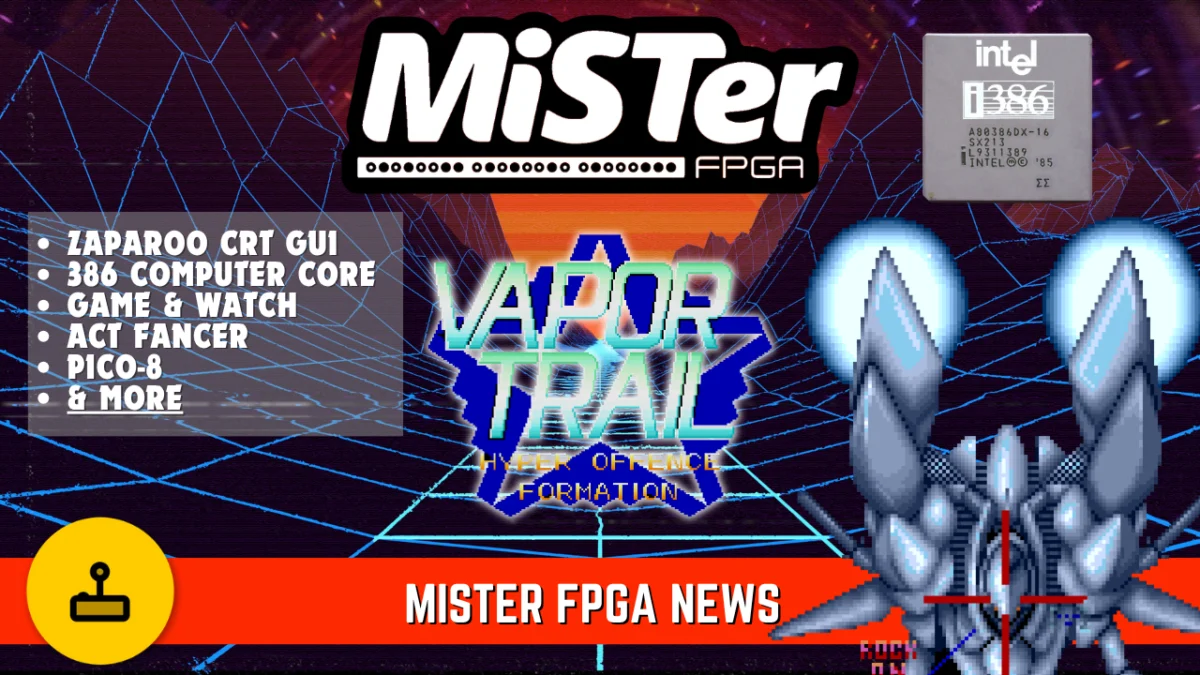
The MiSTer FPGA platform continues its rapid evolution, marking a significant period of development with the introduction of a new PC core, a host of arcade game implementations, and crucial updates to existing system emulations. These advancements underscore the vibrant activity within the MiSTer community, driven by dedicated developers committed to preserving classic computing and gaming experiences with unparalleled hardware accuracy. The recent announcements, detailed across various developer channels and community forums, highlight both the expansion of supported platforms and the refinement of the MiSTer’s core functionality, solidifying its position as a premier retro-gaming and computing solution.
Revolutionizing PC Emulation: The Emergence of the z386 Core
A standout development in the MiSTer FPGA ecosystem is the unveiling of the z386 core, meticulously crafted by developer nand2mario. This new core represents an unofficial yet highly anticipated PC core for the MiSTer platform, built upon the foundation of z386, an innovative 80386-compatible CPU design. The introduction of a dedicated 386-era core fills a critical gap, offering enthusiasts a more period-accurate experience for software and games designed specifically for the Intel 80386 processor, which dominated the personal computing landscape from the late 1980s to the early 1990s.
Historically, the Intel 80386, released in 1985, was a groundbreaking 32-bit microprocessor that ushered in a new era of personal computing. It allowed for true multitasking capabilities and the execution of more complex applications, moving beyond the 16-bit limitations of its predecessors like the 80286. Its architecture paved the way for modern operating systems like Windows 3.1 and early versions of Linux, and it was the minimum requirement for many iconic DOS games of the era. The z386 core on MiSTer aims to replicate this pivotal computing experience with hardware-level precision.
While still in its experimental phase, the z386 core currently offers a robust foundation, configured with 16 MB of RAM and delivering approximately 75% of the performance found in the more established ao486_MiSTer core. The ao486_MiSTer core, which emulates the Intel 80486 processor (released in 1989), has been a cornerstone for running a vast library of DOS-era software and games on MiSTer. The z386, though slightly less powerful than its 486 counterpart, provides a distinct advantage: authenticity for software specifically optimized for 386 machines or those that exhibit compatibility issues or performance anomalies on a 486 system. This distinction is crucial for preservationists and purists who seek to experience classic software in its original intended environment.
The developer, nand2mario, has publicly stated that the goal for z386 is continuous improvement. This commitment suggests ongoing optimizations for performance, enhanced hardware compatibility, and the eventual broadening of its feature set to fully encapsulate the nuances of the 386 architecture. The community eagerly anticipates these advancements, as a fully mature z386 core would significantly enrich the MiSTer’s capabilities as a historical computing platform, allowing users to delve deeper into the specific software and gaming libraries that defined the late 80s and early 90s PC landscape.
A Deluge of Arcade Classics: Expanding the MiSTer’s Coin-Op Library
The recent wave of updates has brought a substantial expansion to MiSTer’s arcade core collection, with several iconic titles making their debut or receiving significant enhancements. This focus on arcade preservation is a core tenet of the MiSTer project, aiming to recreate the authentic experience of coin-operated machines, often with higher accuracy than software-based emulation.
Vapor Trail (Data East, 1989): CoinOp Collection, a prolific developer group, has released a dedicated core for Data East’s "Vapor Trail," also known as "Kuhga – Operation Code ‘Vapor Trail’." This vertically scrolling shooter, released in 1989, immersed players in intense aerial combat, piloting a jet fighter against hordes of enemy aircraft and ground targets. Its fast-paced action, power-up system, and memorable soundtrack made it a staple in arcades. The MiSTer core brings this classic back to life, allowing one or two players to relive the challenge of navigating through its diverse environments. Data East, known for its innovative arcade titles, produced a wide array of games across genres, and the addition of "Vapor Trail" further enriches the representation of their legacy on the platform.
Space Firebird (Nintendo, 1980): Developer macro has contributed an arcade core for Nintendo’s early entry into the shooter genre, "Space Firebird." Released in 1980, this single-screen fixed shooter predates Nintendo’s global phenomenon, "Donkey Kong," showcasing the company’s early forays into arcade game development. Players controlled a spacecraft defending against alien "Firebirds" that emerged from a black hole, employing strategic movement and firing to eliminate threats. The game’s historical significance lies in its place within Nintendo’s developing arcade portfolio and its contribution to the burgeoning space shooter genre of the early 80s. The MiSTer core ensures that this piece of gaming history remains accessible and playable with original hardware fidelity.
Act-Fancer Cybernetick Hyper Weapon (Data East, 1989): Developer rmonic79 has revealed a work-in-progress core for another Data East classic, "Act-Fancer Cybernetick Hyper Weapon." This side-scrolling run-and-gun game, also released in 1989, casts players as a powerful cyborg battling grotesque alien creatures in a futuristic, dystopian setting. Known for its intense action, unique enemy designs, and challenging gameplay, "Act-Fancer" represents the vibrant creativity prevalent in late 80s arcade design. While not yet available for public download, rmonic79 has confirmed its functionality on real MiSTer hardware, signaling promising progress towards its eventual release. The anticipation for this core highlights the community’s desire to preserve and experience a broader spectrum of arcade titles, including those that might be less globally recognized but hold significant appeal for genre enthusiasts.
Boogie Wings (Data East, 1992): rmonic79 has also provided a glimpse into the development of a "Boogie Wings" core, sharing video footage of a very early build. This unique arcade side-scrolling shooter, released by Data East in 1992, stands out for its whimsical World War I setting and incredibly diverse gameplay mechanics. Players could maneuver not only biplanes but also commandeer automobiles, animals, and various other objects, using them as weapons or means of traversal. The game’s innovative physics and imaginative level design earned it a cult following. rmonic79’s update indicates substantial progress, with background rendering and scrolling nearing proper functionality, and critical hardware rotation effects now appearing on screen. The complexity of "Boogie Wings"’s graphical effects and physics makes its accurate FPGA implementation a significant technical achievement, promising a faithful recreation of its distinctive charm.
Darius 2 & The Ninja Warriors (Taito, 1989, 1987): A major triumph for arcade preservation comes with rmonic79’s release of the core supporting both "Darius II" (known as "SAGAIA" outside Japan) and "The Ninja Warriors." These two multi-monitor arcade games by Taito are legendary for their expansive visual presentation. "Darius II," a 1989 horizontal-scrolling shooter, continued the series’ tradition of colossal aquatic-themed bosses and innovative weapon systems, spread across two monitors for a panoramic view. "The Ninja Warriors," released in 1987, was a side-scrolling beat ’em up famous for its three-monitor setup, creating an incredibly wide playfield that immersed players in its futuristic ninja action. The ability to run these multi-monitor titles accurately on MiSTer, often requiring specific hardware configurations or software adaptations, is a testament to the platform’s advanced capabilities and the developers’ ingenuity. The core’s immediate availability via the standard ‘update all’ function underscores its readiness for broad adoption within the community.
Atari Star Wars (Atari, 1983): Developer Videodr0me has delivered a highly anticipated MiSTer FPGA core for Atari’s seminal 1983 arcade game, "Star Wars." This vector graphics masterpiece captivated players with its immersive 3D dogfights and iconic speech samples, faithfully recreating scenes from the original film. A key feature of the original arcade cabinet was its unique analog flight yoke, which provided an unparalleled sense of control and immersion. Recognizing this, the MiSTer core intelligently maps the yoke’s X and Y axes to the primary analog axes of a standard MiSTer controller. This thoughtful implementation ensures that players can experience the game as intended, translating the nuanced controls of the original into a modern input scheme while retaining the core gameplay feel. The "Star Wars" core is a significant addition, preserving a pivotal moment in arcade gaming history and allowing a new generation to experience its revolutionary design.
Refining Handheld and Core System Experiences
Beyond arcade titles, the MiSTer platform continues to enhance its support for various home systems and handhelds, ensuring a comprehensive retro-gaming experience.
Tamagotchi and Game & Watch Updates: TheJesusFish has undertaken a significant initiative to update several of agg23’s cores, making them more MiSTer-friendly and feature-complete. These updates specifically target the Tamagotchi and Game & Watch handheld systems. The Tamagotchi, a digital pet sensation of the mid-1990s, presented a unique challenge for emulation due to its real-time clock dependency and minimalist interface. The updated core likely refines timing, display accuracy, and user interface elements to more faithfully reproduce the original device’s operation. Similarly, the Game & Watch series, Nintendo’s pioneering handheld LCD games from the early 1980s, required precise timing and segment display replication. These updates from TheJesusFish ensure that the unique characteristics of these historical handhelds are accurately preserved and presented on the MiSTer platform, making them more accessible and enjoyable for enthusiasts.
Neo Geo Pocket Saves: Jotego’s team has announced a critical breakthrough for the Neo Geo Pocket Core: reliable game saving functionality. The Neo Geo Pocket and its color successor were celebrated for their unique blend of arcade-quality games in a portable format. However, ensuring stable and consistent game saving on FPGA hardware, which often requires intricate handling of non-volatile memory and system states, has historically been a complex task. Jotego’s statement indicates that significant development effort was invested to achieve this stability. The ability to reliably save progress is fundamental to the enjoyment and long-term playability of any handheld system’s library, making this update a substantial improvement for the MiSTer Neo Geo Pocket experience.
Zaparoo Frontend and Core Enhancements: The Zaparoo Frontend and Zaparoo Core have both received updates, signifying ongoing development for this important aspect of the MiSTer ecosystem. While the specifics of the updates were not detailed in the provided information, general improvements to frontends typically involve user interface refinements, better game organization, improved search capabilities, and enhanced visual presentation. Core updates for Zaparoo might include performance optimizations, bug fixes, or compatibility enhancements for the games it manages. These types of updates are crucial for improving the overall user experience and streamlining access to the vast library of games available on MiSTer.
Infrastructure and Quality of Life Improvements
Beyond new cores, significant work has been dedicated to improving the foundational aspects and user experience across the MiSTer platform.
Jotego Bug Fixes: Jotego’s team, renowned for their high-quality arcade core developments, has implemented a series of bug fixes across several of their existing cores. While the specific cores affected were not listed, such fixes are vital for maintaining the stability, accuracy, and playability of their extensive library. Bug fixes can address issues ranging from graphical glitches and sound inaccuracies to input lag or game-breaking crashes. This commitment to ongoing maintenance and refinement ensures that Jotego’s cores continue to provide a premium, authentic arcade experience, reflecting a dedication to quality that benefits the entire MiSTer community.
New Features for Arcade Cores by netbeui: Developer netbeui has introduced valuable new features to a selection of arcade cores, significantly enhancing their playability and user convenience. These features include the ability to flip video on both digital and analog boards, and a pause function for several titles. Video flipping is particularly useful for arcade games designed to be played in a vertical (tate) orientation, allowing users with rotating monitors to easily adjust the display. A pause function, often absent in original arcade machines, is a highly requested quality-of-life improvement for home users, providing flexibility during gameplay. The affected cores span a wide range of classics:
- Star Force
- Bagman
- Slap Fight
- MCR1 (Kick)
- MCR2 (Satan’s Hollow, Tron)
- MCR3 (Journey)
- Burning Rubber
- Tutankham
- Juno First
- Pooyan
- Ikari Warriors
- Galaga 3 / Gaplus
These additions underscore a user-centric development approach, making classic arcade titles more adaptable and enjoyable for modern home setups, bridging the gap between original arcade intent and contemporary player expectations.
Snow Bros Update: Coin-Op Collection has released a substantial update to the "Snow Bros" core, a beloved platformer by Toaplan. The developer’s description highlights a "much deeper pass" on the core, indicating a comprehensive overhaul rather than minor tweaks. Key improvements include the core now running on the current K3 framework, which often brings performance enhancements and better compatibility with the latest MiSTer system software. Furthermore, its OPL2 sound is now handled by the new x3812 implementation, promising more accurate and richer audio reproduction. Screen flip support has also been added, alongside numerous other smaller fixes. This level of revision ensures that "Snow Bros" on MiSTer offers an even more faithful and refined experience, demonstrating the ongoing commitment to perfecting existing core implementations.
The Broader Impact and Future Outlook
The recent flurry of updates and new core releases collectively paints a picture of a MiSTer FPGA ecosystem that is not only robust but continually expanding its horizons. The introduction of the z386 core signifies a deeper dive into the nuances of historical PC computing, offering users more granular control over the fidelity of their retro experiences. The consistent flow of new arcade cores, from culturally significant titles like "Atari Star Wars" to multi-monitor spectacles like "Darius II," reinforces MiSTer’s role as a leading platform for arcade preservation. These cores often represent complex engineering challenges, replicating custom hardware and timing intricacies that are difficult to achieve through software emulation alone.
The attention given to handheld systems like Tamagotchi and Game & Watch, alongside critical quality-of-life improvements such as reliable Neo Geo Pocket saves and enhanced features for arcade games (like video flipping and pausing), reflects a holistic development philosophy. This approach ensures that the MiSTer platform not only supports a vast library of titles but also makes them genuinely playable and enjoyable for a diverse user base. The ongoing bug fixes and framework updates, as seen with Jotego’s work and the Snow Bros core revision, are crucial for the long-term stability and accuracy of the platform.
Looking ahead, the continuous evolution of MiSTer FPGA, driven by a passionate and skilled developer community, promises even greater fidelity and breadth of coverage for classic systems. The platform stands as a beacon for hardware-level preservation, providing an authentic alternative to software emulation. These developments are not merely technical achievements; they are acts of cultural preservation, ensuring that the rich history of computing and video gaming remains accessible and vibrant for generations to come. The MiSTer FPGA project exemplifies the power of open-source collaboration and community dedication in safeguarding digital heritage.








