Vera Clarissa
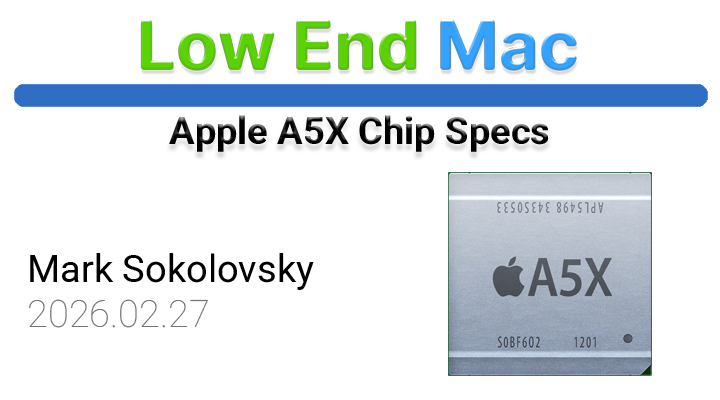
The Apple A5X System-on-Chip (SoC) represents a significant milestone in mobile processor architecture, specifically designed to power Apple’s third-generation iPad, launched on March 16, 2012. This comprehensive hardware profile details the intricate components and specifications that underpinned this pivotal device, offering insights into Apple’s design philosophy and the technological capabilities of its silicon at the time. Manufactured by Samsung, the A5X chip, codenamed APL5498 with part number S5L8945, was fabricated using a 45-nanometer process, a testament to the manufacturing advancements in the early 2010s. While the exact transistor count remains undisclosed, its architecture was built upon the ARMv7 (32-Bit) instruction set architecture (ISA), a standard for high-performance mobile processors.
Architectural Foundation and CPU Capabilities
At the core of the A5X SoC is its Central Processing Unit (CPU), featuring a dual-core design. Both cores are designated as "Performance Cores" (P-Cores) and operate at a clock speed of 1 GHz. The absence of dedicated "Efficiency Cores" (E-Cores) in this generation indicates a focus on raw processing power for demanding tasks, a departure from the heterogeneous core designs that would become more prevalent in later years. Each of these two performance cores is equipped with a 32 KB L1 instruction cache (P-L1i) and a 32 KB L1 data cache (P-L1d), totaling 64 KB for each cache type per core. This provides rapid access to frequently used instructions and data, crucial for maintaining high performance.
Further enhancing the CPU’s responsiveness, the A5X incorporates a shared 1 MB L2 cache for its performance cores. This larger cache serves as a buffer for data that is not immediately accessible from the L1 caches, significantly reducing memory latency and improving overall processing efficiency. The lack of specified L1 or L2 caches for efficiency cores, and the absence of a system-level cache, aligns with the dual-core performance-centric design of the A5X. This architecture was engineered to handle the graphical demands of the new Retina display introduced with the third-generation iPad, alongside the general-purpose computing tasks required by a tablet.
Graphics Processing Prowess
The graphical capabilities of the A5X were a key differentiator and a primary reason for its development. The SoC features a quad-core Graphics Processing Unit (GPU), a substantial upgrade over its predecessors. This GPU is equipped with 8 SIMD (Single Instruction, Multiple Data) Execution Units (EUs) and 64 FP32 (Floating-Point Single-Precision) Arithmetic Logic Units (ALUs). Operating at a clock speed of 200 MHz, the GPU delivered an estimated 25.6 Gigaflops (GFLOPs) of processing power. This was a significant leap, enabling smoother rendering of complex graphics, higher frame rates in games, and the seamless display of high-resolution content on the iPad’s Retina screen. The absence of dedicated AI cores or specified AI operations in the A5X’s architecture reflects the nascent stage of artificial intelligence integration in consumer electronics at the time of its release.
Memory Subsystem and Bandwidth
The memory subsystem of the A5X is meticulously designed to support its powerful CPU and GPU. It utilizes a 128-bit wide memory bus, enabling a substantial data transfer rate. This bus is configured with 4 total channels, each operating at 32 bits, and employs LPDDR2-800 memory technology, running at an effective frequency of 400 MHz. This configuration results in an impressive theoretical memory bandwidth of approximately 12.8 GB/s. The chip is equipped with 512 MB of RAM. This high bandwidth was critical for feeding the GPU with the vast amounts of data required to drive the high-resolution Retina display, which boasted a resolution of 2048 x 1536 pixels. The ability to quickly access and process this data was paramount to delivering a fluid user experience, especially in graphically intensive applications and multitasking scenarios.

Historical Context and Strategic Significance
The introduction of the A5X chip in March 2012 was not merely an incremental hardware update; it represented a strategic move by Apple to solidify its position in the burgeoning tablet market. The third-generation iPad was positioned as a device capable of delivering a desktop-class experience in a mobile form factor, and the A5X was the engine driving this ambition. The Retina display, with its four times the pixel count of the previous iPad’s screen, demanded a graphics processor with significantly enhanced capabilities. The A5X, with its quad-core GPU, was specifically engineered to meet this challenge, providing the visual fidelity and responsiveness expected by consumers.
Samsung’s role as the manufacturer of the A5X chip highlights the complex supply chain dynamics within the technology industry. While Apple designs its own silicon, it often relies on third-party foundries for the actual fabrication. This partnership allowed Apple to leverage Samsung’s advanced manufacturing capabilities at the time. The decision to use a 45-nanometer process, while cutting-edge for its era, also positioned the A5X within the technological landscape of 2012, where smaller nanometer processes were still being refined.
Broader Impact and Implications
The A5X chip had a profound impact on the mobile computing landscape. It set a new benchmark for tablet performance, influencing competitor designs and driving innovation in the industry. The successful integration of a powerful GPU capable of handling a high-resolution display demonstrated Apple’s foresight in anticipating consumer demand for richer multimedia experiences on mobile devices. The emphasis on raw graphical power for the A5X also foreshadowed the increasing importance of graphics processing in a wide range of applications, from gaming and media consumption to productivity and creative tools.

The performance gains offered by the A5X were not just about raw numbers; they translated into tangible user benefits. Applications ran smoother, games were more visually immersive, and the overall user interface felt more fluid and responsive. This enhanced experience contributed significantly to the continued success of the iPad and reinforced its status as a premium tablet device.
Furthermore, the development and deployment of the A5X underscored Apple’s vertical integration strategy. By controlling both the hardware and software design, Apple could optimize the performance of its devices to an extent that was difficult for competitors relying on off-the-shelf components. This control allowed for a more tailored and efficient user experience, a hallmark of Apple’s product philosophy.
Technical Specifications at a Glance
To summarize the key technical specifications of the Apple A5X SoC:

General Information:
- Name: Apple A5X
- Manufacturer: Samsung
- Release Date: March 16, 2012
- Codename: APL5498
- Part Number: S5L8945
- Fabrication Process: 45-Nanometer
- CPU ISA: ARMv7 (32-Bit)
CPU Information:
- Number of Performance Cores: 2
- Performance Core Clock Speed: 1 GHz
- Number of Efficiency Cores: Not specified (likely none)
- Overall Cores: 2
- L1 Instruction Cache (per core): 32 KB
- L1 Data Cache (per core): 32 KB
- L2 Cache (P-Core): 1 MB (Total for Performance Cores)
Graphics Information:

- GPU Cores: 4
- SIMD Execution Units: 8
- FP32 ALUs: 64
- GPU Clock Speed: 200 MHz
- Theoretical FP32 Performance: 25.6 GFLOPs
RAM Information:
- Memory Bus Width: 128-Bit
- Total Memory Channels: 4
- Bits per Channel: 32-Bit
- Memory Type: LPDDR2-800 (400 MHz)
- Theoretical Bandwidth: ~12.8 GB/s
- RAM Capacity: 512 MB
The A5X chip, while now superseded by more advanced Apple Silicon generations, remains a significant artifact in the history of mobile computing. Its detailed hardware profile reveals a sophisticated piece of engineering that was instrumental in defining the capabilities of high-end tablets in the early 2010s, laying the groundwork for the even more powerful processors that would follow. Its legacy is etched in the smooth performance and visual richness it brought to the third-generation iPad, a device that continued to shape the tablet market for years to come.