Vera Clarissa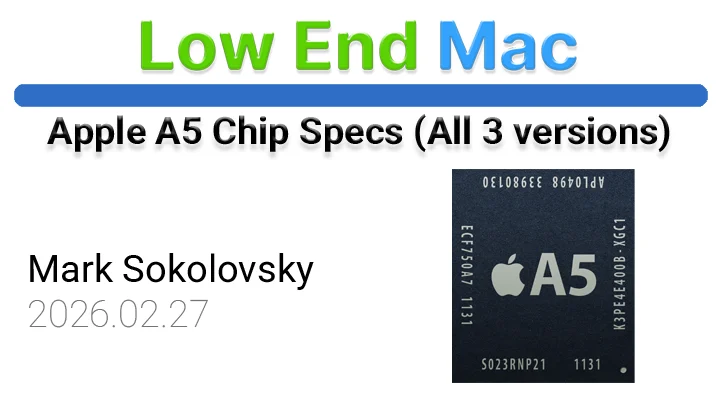
The Apple A5 chip, a significant evolution in Apple’s in-house silicon development, represents a pivotal moment in the company’s strategy of integrating custom hardware with its software ecosystem. This detailed examination delves into the comprehensive hardware profile of the A5 series, a family of processors that powered a generation of iconic Apple devices, demonstrating a leap in performance and efficiency that helped define the mobile computing landscape of the early 2010s.
Genesis of the A5: A Strategic Imperative
The introduction of the Apple A5 chip on March 11, 2011, was not an isolated event but a culmination of Apple’s long-standing commitment to vertical integration. By designing its own processors, Apple gained unparalleled control over the performance, power consumption, and feature set of its products. This strategic advantage allowed for a more cohesive user experience, where hardware and software were meticulously optimized to work in tandem. The A5 was manufactured by Samsung, leveraging their advanced semiconductor fabrication capabilities, and was a successor to the highly successful A4 chip. This partnership, while instrumental, also underscored Apple’s growing reliance on external foundries for mass production of its proprietary designs.
The A5 chip’s development was driven by the escalating demands of a rapidly evolving mobile market. As apps became more sophisticated and the capabilities of smartphones and tablets expanded, a more powerful and efficient processor was imperative. The A5 was engineered to meet these challenges, offering a substantial performance upgrade over its predecessor and laying the groundwork for future advancements in Apple’s silicon roadmap.
Architectural Breakdown: Dual-Core Powerhouse
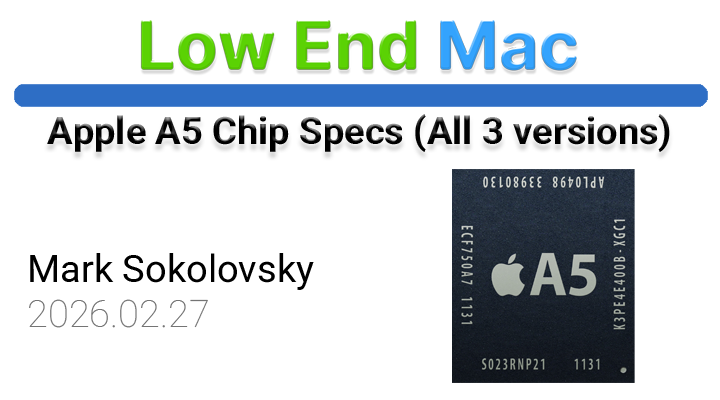
At its core, the Apple A5 chip is characterized by its dual-core CPU architecture, a significant departure from the single-core design of the A4. This dual-core configuration, utilizing ARMv7 architecture for 32-bit processing, was a critical factor in boosting the chip’s overall performance and multitasking capabilities.
CPU Specifications:
- Core Configuration: The A5 features two high-performance (P) cores. This dual-core setup allowed for more efficient handling of demanding tasks and improved responsiveness in everyday usage.
- Performance Core Clock Speed: The P-cores typically operated within a clock speed range of 800 MHz to 1 GHz, providing a substantial performance uplift for applications requiring significant processing power.
- Cache Hierarchy: The A5 incorporated a tiered cache system designed to minimize latency and maximize data access speed.
- P-Core L1 Instruction Cache (L1i): Each performance core was equipped with a 32 KB L1i cache, totaling 64 KB across both cores. This cache stores frequently accessed instructions, accelerating program execution.
- P-Core L1 Data Cache (L1d): Similarly, each performance core had a 32 KB L1d cache, also totaling 64 KB. This cache holds recently used data, speeding up data retrieval for the CPU.
- P-Core L2 Cache: A unified 1 MB L2 cache was shared between the two performance cores. This larger cache served as a crucial buffer, storing more data and instructions and further reducing the need to access slower main memory.
Variations and Considerations:
It is important to note that variations of the A5 chip existed to cater to specific product requirements. For instance, the Apple TV (3rd generation) utilized a variant of the A5 that featured a single processing core. This adaptation was likely driven by the specific performance needs and power constraints of the Apple TV platform, which did not demand the full dual-core capabilities of the mobile-focused versions. In this single-core configuration, the L1i and L1d caches were reduced to 32 KB per core, reflecting the scaled-down processing power.
The A5 chip was manufactured using a 45-nanometer fabrication process initially, with later revisions potentially utilizing a 32nm High-K dielectric metal gate process. This advancement in manufacturing technology allowed for greater transistor density, improved power efficiency, and enhanced performance compared to previous generations. While the exact transistor count for the A5 is not definitively published, the move to smaller process nodes generally indicates a significant increase in complexity and capability.
Memory and Bandwidth: Fueling the Performance
The performance of any processor is heavily reliant on its ability to access data quickly. The A5 chip was paired with LPDDR2 memory, a type of low-power double data rate synchronous dynamic random-access memory known for its energy efficiency and respectable performance.
RAM Specifications:
- Memory Type: LPDDR2-800 (operating at 400 MHz) provided a balance of speed and power consumption suitable for mobile devices.
- Memory Bus Width: A 64-bit memory bus width allowed for the transfer of more data per clock cycle, contributing to overall system responsiveness.
- Channels: The memory interface was configured with two channels, each 32 bits wide. This dual-channel architecture further enhanced memory bandwidth.
- Bandwidth: The combination of these factors resulted in a theoretical memory bandwidth of approximately 6.4 GB/s. This level of bandwidth was crucial for feeding the dual-core CPU and the integrated GPU with the data they needed to operate efficiently.
- Capacity: Devices equipped with the A5 chip typically featured 512 MB of RAM. This was a significant amount for mobile devices of that era and was essential for supporting multitasking and the increasingly complex applications being developed for iOS.
Graphics Capabilities: Powering Visual Experiences
Beyond its central processing capabilities, the Apple A5 chip also integrated a capable graphics processing unit (GPU). This GPU was responsible for rendering the user interface, accelerating graphics-intensive applications, and powering games.

Graphics Specifications:
- GPU Cores: The A5 featured a dual-core GPU, which significantly enhanced its graphical processing power compared to single-core GPUs found in earlier chips.
- Shader Architecture: The GPU included 4 SIMD (Single Instruction, Multiple Data) execution units. This architecture allows the GPU to perform the same operation on multiple data points simultaneously, a fundamental principle for efficient graphics rendering.
- Arithmetic Logic Units (ALUs): The GPU was equipped with 32 FP32 (32-bit floating-point) ALUs. These units are critical for performing the complex mathematical calculations required for shading, texturing, and lighting in 3D graphics.
- GPU Clock Speed: The GPU operated at a clock speed of 200 MHz. While seemingly modest by today’s standards, this clock speed, combined with the dual-core architecture and shader capabilities, provided sufficient performance for the visual demands of the devices it powered.
- Floating-Point Performance (FLOPS): The A5 GPU was capable of approximately 12.8 GFLOPS (Giga Floating-point Operations Per Second). This metric provides a measure of the GPU’s raw computational power for floating-point calculations, essential for modern graphics.
The graphical prowess of the A5 was instrumental in enabling the visually rich and interactive experiences that became synonymous with Apple’s mobile devices. It allowed for smoother animations, more detailed graphics in games, and a generally more polished user interface.
Devices Powered by the A5 Chip
The versatility and performance of the Apple A5 chip led to its integration into a range of highly successful Apple products, solidifying its status as a cornerstone of Apple’s mobile hardware strategy.
- iPad (2nd generation): Launched in March 2011, the iPad 2 was one of the first devices to feature the A5 chip. This provided a significant performance boost over its predecessor, enabling a smoother multitasking experience and the ability to run more demanding applications, including the iMovie and GarageBand apps which were optimized for the A5.
- iPhone 4S: Released in October 2011, the iPhone 4S showcased the A5 chip’s capabilities in a smartphone form factor. It delivered a noticeable improvement in speed, responsiveness, and graphics performance, making it a highly sought-after device.
- Apple TV (3rd generation): As mentioned earlier, a single-core variant of the A5 powered the third-generation Apple TV, released in March 2012. This iteration focused on delivering a fluid user interface and streaming experience for the living room.
- iPod Touch (4th generation): While the 4th generation iPod Touch was released in late 2010 and initially featured the A4, it’s worth noting that the A5’s technological advancements influenced subsequent iterations and the broader ecosystem. (Note: The 4th gen iPod Touch did not feature the A5, but the A5’s success paved the way for its inclusion in later models or similar performance profiles in other devices of that era). The A5’s impact was widespread, influencing the design and capabilities of a generation of personal electronics.
Broader Impact and Implications
The Apple A5 chip was more than just a collection of specifications; it was a catalyst for innovation and a testament to Apple’s forward-thinking hardware strategy.

Performance Leap and User Experience: The dual-core architecture and improved graphics provided a tangible performance leap for users. Apps loaded faster, games were more immersive, and the overall user experience on iOS devices became significantly smoother and more responsive. This enhanced user experience was a key differentiator for Apple in a competitive market.
Enabling Richer Applications: The increased processing power and graphics capabilities of the A5 allowed developers to create more complex and visually rich applications. This led to an explosion of innovative apps on the App Store, further cementing the iPhone and iPad as powerful computing platforms.
Foundation for Future Development: The A5 served as a crucial stepping stone in Apple’s silicon development journey. The lessons learned from its design, manufacturing, and integration into devices informed the development of subsequent generations of Apple Silicon, including the A6, A7, and eventually the M-series chips that power modern Macs. The architectural choices made for the A5, such as the dual-core design and the focus on power efficiency, set precedents for future Apple processors.
Manufacturing Partnerships and Supply Chain: The reliance on Samsung for manufacturing highlighted the complexities of the semiconductor supply chain. While this partnership was successful, it also underscored Apple’s eventual drive towards greater control over its manufacturing processes, leading to increased investment in its own silicon design and engineering teams.

Economic Impact: The success of devices powered by the A5 chip contributed significantly to Apple’s financial growth and market dominance. The widespread adoption of these devices created a vast ecosystem of developers, content creators, and service providers, generating substantial economic activity.
Conclusion: A Legacy of Innovation
The Apple A5 chip, with its dual-core processing, capable graphics, and efficient memory architecture, stands as a landmark achievement in mobile computing. Launched in 2011, it powered a generation of transformative Apple products, from the groundbreaking iPad 2 to the iconic iPhone 4S. Its detailed hardware profile reveals a carefully engineered system designed for performance, efficiency, and a seamless user experience. The A5 not only propelled Apple’s devices to new heights but also laid a critical foundation for the company’s ongoing leadership in custom silicon design, a legacy that continues to shape the future of personal technology. The story of the A5 is a testament to the power of integrated design and the relentless pursuit of innovation in the ever-evolving world of microelectronics.