Jia Lissa
The global amusement industry in 1980 stands at a critical juncture, transitioning from the mechanical era to the digital dominance of television-based games. At the forefront of this evolution is Sega Enterprises, Ltd., a company that has undergone significant structural changes following its integration into the American conglomerate Gulf & Western (G&W) Corporation. In a comprehensive disclosure regarding the company’s strategic direction, Hayao Nakayama, Executive Vice President and Representative Director of Sega, has outlined a vision that prioritizes technological synergy between Japanese and American manufacturing hubs, aggressive intellectual property protection, and a diversified approach to the leisure market. This strategic roadmap, detailed during the peak of the arcade "golden age," provides a window into the corporate maneuvers that are currently shaping the future of interactive entertainment.
Corporate Architecture and the Gulf & Western Synergy
The current organizational structure of Sega is a complex web of international subsidiaries designed to maximize market penetration in both the Eastern and Western hemispheres. Since 1974, Sega Enterprises, Ltd. has operated under the umbrella of the G&W Corporation, a New York-based powerhouse ranked 52nd in the United States with annual sales exceeding $5.3 billion. While G&W is traditionally associated with energy, automotive, and household manufacturing—as well as the ownership of Paramount Pictures—its leisure division has become a pivot point for high-growth technology sectors.
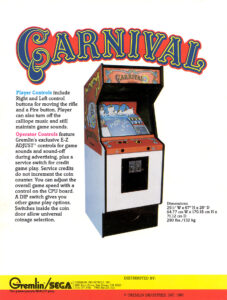
Nakayama clarified the "grandchild company" status of Sega’s Japanese operations. Technically, G&W owns Sega of America (Sega Enterprises Inc.), which in turn owns Sega of Japan. This hierarchy facilitates a streamlined flow of capital and innovation. The expansion accelerated in 1976 and 1979 when Sega of America acquired Gremlin Industries, a move complemented by Sega of Japan’s acquisition of Esco Trading. These acquisitions have effectively created a dual-engine manufacturing apparatus where Gremlin serves as the American production arm and Sega of Japan manages the domestic and Asian markets. This collaboration allows for the cross-pollination of titles; for instance, Japanese-developed games are rebranded and manufactured by Gremlin for U.S. audiences, while American innovations are adapted for the Japanese arcade landscape.

Financial Performance and Operational Scale
The fiscal health of Sega of Japan reflects the explosive growth of the television game sector. For the fiscal year ending in April 1979, the company reported total sales of 24 billion yen, yielding a declared income of 5.37 billion yen. This robust financial performance supports a massive infrastructure consisting of 1,200 employees and a network of three branch offices in Sapporo, Osaka, and Fukuoka. Beyond sales, Sega maintains a heavy presence in the field, managing 89 operational offices and four dedicated sales centers.
Nakayama emphasized that Sega’s dual identity as both a manufacturer and an operator is a legacy of the Japanese amusement industry’s unique history. Unlike the American market, where manufacturing and operation are often strictly partitioned, Japanese industry leaders like Sega began as operators. This heritage informs a "manufacturer-first" policy that remains sensitive to the needs of game center owners. Nakayama noted that the company’s operational philosophy relies on achieving the "greatest common denominator" in service, leveraging economies of scale to ensure long-term sustainability rather than short-term volatility.
Chronology of Market Expansion and Diversification
The timeline of Sega’s recent expansion reveals a deliberate move toward "lifestyle" leisure beyond the traditional arcade cabinet. The launch of the "Sega Center" game center chain in the United States and the introduction of "PJ Pizzazz," a pizza restaurant chain, signify a shift toward family-oriented entertainment complexes.
- 1974: Sega Enterprises, Ltd. is acquired by Gulf & Western.
- 1976: Acquisition of Gremlin Industries (U.S.) by Sega of America.
- 1979: Sega of Japan acquires Esco Trading; fiscal sales hit record 24 billion yen.
- 1979-1980: Launch of PJ Pizzazz and expansion of Sega Center divisions under Sega of America.
- August 1980: Nakayama announces that 70-80% of future R&D will be dedicated exclusively to television games.
This diversification into food service and dedicated family centers mirrors trends seen with competitors like Atari and Pizza Time Theatre, suggesting a broader industry belief that the future of coin-operated games lies in integrated social environments.

Product Strategy: The Table-Type Dominance and the Upright Dilemma
A significant portion of Nakayama’s strategic outlook involves the physical form factor of gaming hardware. In the wake of the "invader" boom, the Japanese market has shifted almost entirely toward table-type (cocktail) cabinets. These units allow for easier integration into cafes and small venues, a necessity given the high cost of real estate in Japanese urban centers.
However, Nakayama admitted that the company remains in a state of "trial and error" regarding the revival of upright machines. While titles like Head-On, Car Hunt, and Deep Scan were adapted into various formats, the market’s demand for table-type machines has forced Sega to prioritize screen-centric design over the elaborate cabinet aesthetics of upright models. Nakayama argued that upright machines offer higher "added value" through their physical presence, yet the company must remain flexible. The success of Mini Monaco in the U.S. and Europe—a hit that notably flopped in Japan—highlights the regional disparities in consumer preference. American operators value the efficiency and competitive two-player nature of small cabinets, whereas Japanese players have become accustomed to the table format.
Intellectual Property and the Legal Battle Against Clones
Perhaps the most aggressive stance taken by Nakayama concerns the rampant "copying" or cloning of television games. During the initial surge of the industry, a lack of clear copyright laws and a supply shortage led to a culture where cloning was often ignored or seen as a necessary evil. Nakayama signaled that this era of leniency is over.
The landmark legal case where Sega/Gremlin sued Exidy over the game Head-On serves as a turning point for the industry. Exidy’s eventual admission of fault has emboldened Sega to pursue copycats through a combination of trademark law, unfair competition prevention acts, and emerging copyright interpretations. Nakayama warned that the proliferation of cheap clones is a self-defeating cycle for operators; while clones may be cheaper in the short term, they degrade the product image and force legitimate manufacturers to increase prices to cover the costs of sophisticated anti-copying hardware. Sega is currently strengthening its regional distribution networks to ensure that only genuine, high-quality machines reach the market, thereby protecting the investment of legitimate operators.
Analysis of Global Market Trends and Future Outlook
The data provided by Nakayama suggests a bifurcated global market where Japan and the U.S. act as the primary suppliers for a "buyer’s market" in Europe. Sega’s ability to license products from other Japanese firms for overseas distribution—such as Astro Fighter—positions the company as a global gatekeeper of gaming technology.
The focus on TV games (70-80% of R&D) indicates a move away from purely electromechanical games, though Sega is not abandoning traditional sectors. The company continues to refine its medal games, such as Blackjack, Faro II, and Punto Banco, by improving existing stock to eliminate waste and offer lower price points to operators. Furthermore, despite the digital shift, Nakayama confirmed that Sega will continue to supply pinball machines, leveraging partnerships with established names like Williams and Stern to ensure a consistent flow of high-quality tables.
Broader Impact and Industry Implications
Nakayama’s 1980 directives reflect a sophisticated understanding of the maturing video game industry. By positioning Sega as a subsidiary of a major U.S. conglomerate, the company has secured the financial backing necessary to fight protracted legal battles over intellectual property and to invest in diverse leisure sectors. The emphasis on "novelty and entertainment value" through visual content suggests that Sega recognizes the software-driven nature of the business, even as it maintains a massive hardware manufacturing presence.
The move toward training regional distributors and reinforcing sales strategies indicates that Sega is preparing for a market that is no longer just a fad, but a permanent fixture of global commerce. As the industry moves further into the 1980s, the policies of "balance and harmony" between manufacturing and operation, coupled with a zero-tolerance approach to piracy, are likely to define the competitive landscape of the decade. Nakayama’s leadership suggests that Sega is not merely reacting to the current "boom" but is actively architecting a sustainable, global entertainment empire.