Chalid Lutfie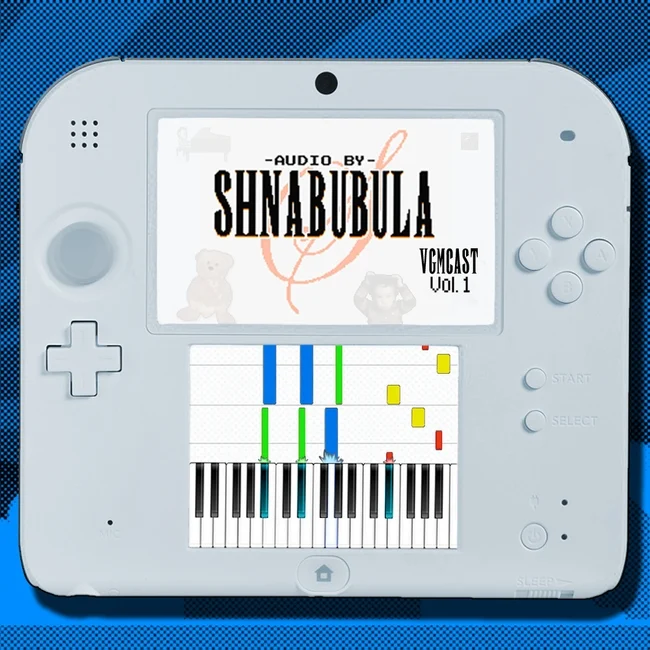
Samuel Ascher-Weiss, the prolific composer and virtuoso pianist known professionally as Shnabubula, has officially inaugurated a new experimental performance project designed to test the limits of musical improvisation, rapid transcription, and live audience engagement. Announced on May 18, 2015, the initiative represents a significant departure from traditional studio-based production, moving instead toward a transparent, process-oriented model of content creation hosted on the Hitbox streaming platform. By inviting viewers to submit requests and observing the real-time process of "learning" complex compositions, Ascher-Weiss is bridging the gap between technical pedagogy and high-level entertainment.
The Structural Framework of the Performance Challenge
The project is organized into a rigorous bi-weekly schedule that separates the acquisition of musical data from the final delivery of the performance. Every Friday, beginning at 12:00 PM EST and concluding at 8:30 PM EST, Ascher-Weiss hosts a marathon session on Hitbox. During this eight-and-a-half-hour window, he accepts requests from a live digital audience. These requests primarily focus on video game music (VGM), chiptune classics, and complex jazz or classical arrangements.
The primary objective of the Friday session is not merely to play known songs, but to learn unfamiliar material "on the fly." This involves transcribing melodies by ear, identifying harmonic structures, and arranging the pieces for solo piano in real-time. Following a 48-hour period of internalizing the material, Ascher-Weiss returns to the platform on Sunday at 4:00 PM EST to perform a curated setlist comprising all the songs requested and learned during the Friday session. This "recital" format provides a polished conclusion to the week’s pedagogical efforts, allowing the audience to see the finished product of the previous days’ labor.
Technical Analysis of the 14-Song Premiere
The initial proof of concept for this project was demonstrated during the first full cycle of the series. During the inaugural Friday session, Ascher-Weiss successfully learned 14 distinct compositions within the allotted time frame. The range of the material spanned several decades of gaming history and varied significantly in terms of rhythmic complexity and melodic density.
The transition from a raw request to a performance-ready arrangement requires a sophisticated understanding of music theory. For a pianist like Ascher-Weiss, who is noted for his "stride" piano style and ragtime influences, the challenge lies in translating multi-channel synthesized music—often composed for sound chips like the Ricoh 2A03 or the Yamaha YM2612—into a ten-finger piano arrangement. The recording of the first Sunday performance, which has since been archived for public viewing, showcases the successful synthesis of these 14 tracks, ranging from high-tempo action themes to atmospheric, ambient scores.
Historical Context: The 2015 Streaming Landscape and Hitbox.tv
To understand the significance of this project, one must consider the digital environment of mid-2015. At this time, the live-streaming industry was undergoing a period of intense competition and rapid diversification. While Twitch remained the dominant force in the market, alternative platforms like Hitbox.tv sought to capture niche audiences by offering lower latency and different community features.
Hitbox, founded in late 2013, was often favored by the speedrunning and high-level competitive gaming communities due to its technical infrastructure, which at the time often outperformed Twitch in terms of "delay"—the time elapsed between a streamer’s action and the audience’s perception of it. For a musician like Shnabubula, low latency is critical for real-time interaction, especially when taking live requests or engaging in "call-and-response" segments with a chatroom. The choice of Hitbox underscored a commitment to a high-fidelity, interactive experience that was, at the time, at the cutting edge of digital broadcasting.
The Evolution of Video Game Music as a Performance Art
The initiative by Ascher-Weiss arrives during a broader cultural shift regarding the legitimacy of video game music. Once dismissed as functional background noise, VGM has increasingly been recognized as a sophisticated genre capable of sustaining complex reinterpretation. Shnabubula has been a central figure in this movement for over a decade, contributing extensively to communities such as OverClocked ReMix (OC ReMix).
His work is characterized by a "virtuoso-chiptune" hybridity. By applying the techniques of Art Tatum, Fats Waller, and Sergei Rachmaninoff to the compositions of Koji Kondo or Nobuo Uematsu, Ascher-Weiss elevates the source material while maintaining its nostalgic core. This new streaming project serves as a live laboratory for this synthesis. It demystifies the "genius" of the performer by showing the grueling, repetitive, and analytical work required to master a piece of music in a matter of hours.
Chronology of the Project Launch
The development of the current series can be traced through the following timeline:
- Early May 2015: Ascher-Weiss begins conceptualizing a way to integrate his practice routine with his public-facing performance persona.
- May 15, 2015: The first "Learning Session" takes place on Hitbox. Over the course of 8.5 hours, 14 songs are selected by the audience and broken down by Ascher-Weiss.
- May 17, 2015: The first "Performance Session" occurs. The 14 songs are played back-to-back in a formal concert format.
- May 18, 2015: The project is officially announced to the wider public via news outlets and social media, with the inaugural performance uploaded to YouTube for archival purposes.
- May 18, 2015 (Evening): Digital distribution of the 14-song set is made available, allowing fans to download the recordings as a cohesive album.
Community and Critical Response
While formal reviews of streaming content are rare in traditional media, the VGM and independent music communities have responded with significant interest. Inferred reactions from the community highlight two primary areas of impact: the educational value for aspiring musicians and the sheer entertainment value of the "man vs. clock" challenge.
Observers have noted that Ascher-Weiss’s ability to maintain a high level of technical accuracy while interacting with a digital chatroom is a feat of cognitive multi-tasking. For the audience, the "Friday Learning" sessions act as a masterclass in ear training. By watching him struggle with a difficult passage and eventually overcome it, viewers gain insight into the mechanics of professional musicianship that is usually hidden behind the closed doors of a practice room.
Implications for Digital Content Creation
The broader implications of Shnabubula’s project suggest a new direction for independent musicians in the digital age. As traditional revenue streams from album sales continue to fluctuate, "process-as-content" provides a sustainable alternative. By monetizing the act of creation rather than just the final product, artists can build deeper, more loyal connections with their fanbases.
Furthermore, this model challenges the "perfectionist" paradigm of recorded music. In a live stream, mistakes are visible, and the process of correction is part of the narrative. This transparency fosters a sense of authenticity that resonates with modern audiences. Ascher-Weiss is not just providing a service (playing a song); he is providing an experience (the journey of learning that song).
Future Outlook and Sustainability
As the project continues, the primary challenge will be the physical and mental stamina required to sustain 12-plus hours of high-intensity performance every week. However, the modular nature of the series allows for a growing discography. Each week’s Sunday performance can be packaged as a "Live on Stream" album, creating a rapid-fire release schedule that few other artists can match.
The success of this initiative may encourage other virtuoso performers to adopt similar models. If the "Shnabubula" model proves viable, it could lead to a new sub-genre of "educational-performance" streams where the focus is as much on the how of music as the what. For now, Samuel Ascher-Weiss remains at the forefront of this niche, pushing the boundaries of what a solo pianist can achieve in the digital colosseum of live streaming.
With the first 14 songs already processed and performed, the series stands as a testament to the intersection of 21st-century technology and classical musical discipline. Fans and students of the craft alike are encouraged to tune in to the Hitbox channel to witness the next iteration of this ongoing musical experiment.