Farhan hamdan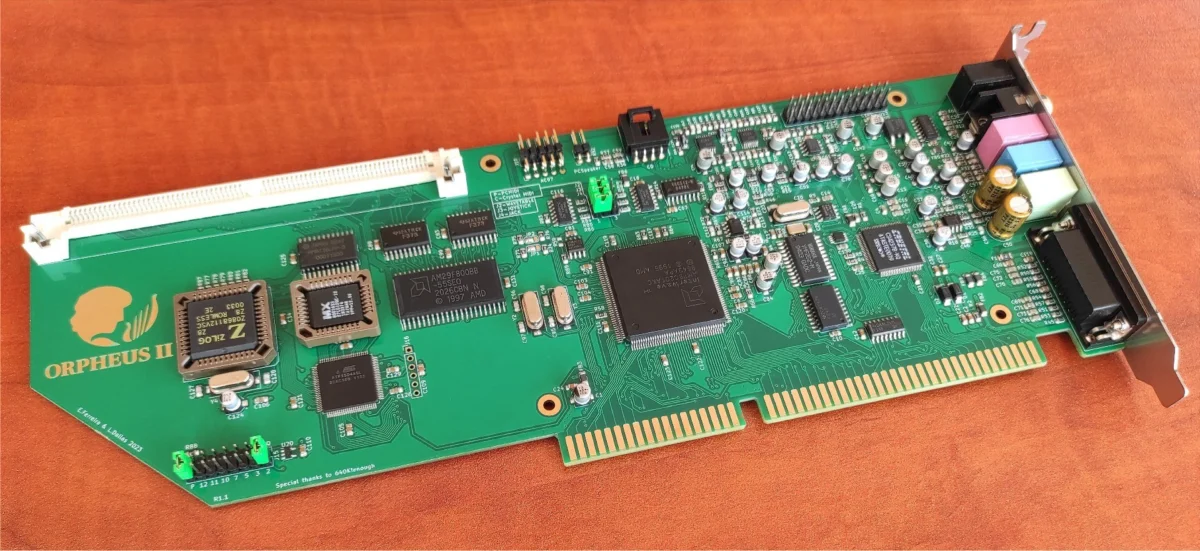
The Orpheus 2 ISA Soundcard development team has unexpectedly opened a new pre-order window for its critically acclaimed retro computing audio solution, a move that has generated significant interest within the vintage PC enthusiast community. Initially announced for a limited period, the pre-order opportunity has now been extended, offering a wider window for enthusiasts to secure what many consider to be the ultimate single-slot solution for authentic ISA-era sound experiences. This premium soundcard, priced at €340, consolidates multiple iconic audio capabilities into one meticulously hand-assembled unit, addressing the long-standing challenges of hardware compatibility and scarcity in the retro computing landscape.
The Orpheus 2: A Symphony of Retro Audio Engineering
At its core, the Orpheus 2 is engineered to deliver an unparalleled auditory experience for classic PC games and applications. Its comprehensive feature set is a testament to the developers’ deep understanding of the nuanced demands of retro audio fidelity. The card integrates several key components that, individually, defined distinct eras of PC sound, now harmoniously combined.
Unpacking the Sonic Arsenal
Central to the Orpheus 2’s appeal is its inclusion of a true onboard Yamaha OPL3 FM synthesis chip. This component is crucial for reproducing the iconic soundscapes of countless DOS-era games from the late 1980s and early 1990s. The OPL3 (Yamaha YMF262) was a staple of Sound Blaster 16 and AWE32 cards, providing the distinctive chiptune-like melodies and effects that are synonymous with titles like Doom, Commander Keen, and Wing Commander. Its authentic inclusion on the Orpheus 2 ensures perfect sonic compatibility and avoids the pitfalls of software emulation or less accurate clone chips, which can introduce subtle but noticeable discrepancies in timing and timbre.
Complementing the OPL3 is an onboard AMD Interwave chip, which unlocks the legendary Gravis Ultrasound (GUS) sampled capability. The Gravis Ultrasound, released in 1992, was a groundbreaking soundcard renowned for its ability to play back digital audio samples and utilize wave-table synthesis through software. While never achieving the market dominance of Creative Labs’ Sound Blaster series, the GUS carved out a significant niche among enthusiasts and developers for its superior audio quality, particularly in games designed to leverage its capabilities, such as Jazz Jackrabbit, One Must Fall 2097, and many tracker music compositions. The AMD Interwave chip, a later evolution of the GUS architecture, provides this functionality with enhanced compatibility and performance, offering a rich, multi-timbral sound that stands in stark contrast to the FM synthesis of the OPL3, providing a broader palette for game developers and a more immersive experience for players.
Further expanding its sonic horizons, the Orpheus 2 features a wavetable header. This industry-standard connector allows for the addition of daughterboards, such as the popular DreamBlaster X2GS from Serdashop. The DreamBlaster X2GS is particularly significant as it provides a licensed Roland GS soundbank, effectively emulating the revered Roland SC-55. The Roland Sound Canvas SC-55, released in 1991, set the gold standard for MIDI music playback in the 1990s, offering a vast array of high-quality instrument samples. Many classic PC games, including Descent, Myst, and Ultima VII, were composed with the SC-55 in mind, and its authentic sound reproduction dramatically elevates the experience of these titles. The Orpheus 2’s wavetable header ensures that users can tap into this premium sound without needing to acquire a separate, often expensive and fragile, vintage Roland module.
Beyond these primary sound engines, the Orpheus 2 also integrates other crucial onboard capabilities, including PCMIDI. This option provides Intelligent MPU-401 mode, which is essential for properly connecting external MIDI devices like the iconic Roland MT-32. The MT-32, a multi-timbral synthesizer module released in 1987, predated the SC-55 and was the definitive MIDI standard for early PC games from companies like Sierra On-Line and LucasArts. Its unique sound engine, with its distinct reverb and delay effects, is integral to the atmosphere of games like Monkey Island, King’s Quest V, and Wing Commander. The Orpheus 2’s MPU-401 implementation ensures perfect compatibility, allowing retro enthusiasts to connect their original MT-32 units or modern emulators and experience these classics as they were originally intended.
The Craftsmanship and Cost
The Orpheus 2 is not a mass-produced item; each unit is assembled by hand. This meticulous approach to manufacturing contributes significantly to its reputation for high quality and reliability, attributes often lacking in aging vintage hardware. This artisanal production method also inherently limits the production volume and contributes to the card’s premium price point of €340. While this figure may appear substantial, many in the retro computing community consider it a worthwhile investment. The cost is often contextualized by comparing it to the cumulative expense and effort involved in acquiring, restoring, and maintaining individual vintage soundcards—such as a true OPL3-based Sound Blaster, a functional Gravis Ultrasound, a Roland SC-55 module, and an MPU-401 interface—each of which can be rare, expensive, and prone to failure. The Orpheus 2 consolidates all these functionalities into a single, modern, and reliable ISA slot solution, offering unparalleled convenience and performance stability.
Chronology of a Highly Anticipated Release
The announcement of this new pre-order window followed a pattern of limited, highly sought-after production runs for the Orpheus 2. Such releases are characteristic of niche, enthusiast-driven hardware projects where demand often outstrips initial supply.
Initial Announcement and Community Engagement
The news of the pre-order window was first disseminated on May 12th by Keropi (Leo), a key figure in the Orpheus 2 development team, via a post on the renowned VOGONS forums. VOGONS (Vintage-computer.com) serves as a central hub for the retro computing community, where enthusiasts share knowledge, troubleshoot issues, and follow developments in new retro hardware. The initial announcement specified that the pre-order period would run until the end of May. RetroRGB, another prominent platform for retro gaming and computing news, subsequently picked up on the story. Recognizing the importance of timely information for this community, and acknowledging a slight delay in reporting, RetroRGB engaged directly with Keropi for an update.
Pre-Order Mechanics and Schedule
In a follow-up conversation with Keropi, it was confirmed that the pre-order window would be extended by an additional week into June. This extension, a welcome development for many, aligns with the practices of previous pre-order runs for the Orpheus 2, suggesting a responsiveness to community demand and an effort to accommodate as many interested parties as possible. To validate a pre-order, prospective buyers are required to deposit half the cost of the card upfront. This partial payment model helps manage production planning and ensures commitment from buyers for these hand-assembled units. Further detailed instructions and terms are available on the official PCMIDI.eu website.
Aesthetic Detail: The Green PCB
One minor but notable detail for this particular production run is the return to the standard green PCB color. While previous runs have occasionally offered alternative colors, such as red, the developers have confirmed that red will not be an option for this batch. This consistency in color might be attributed to streamlined manufacturing processes, component availability, or a preference for the classic aesthetic often associated with ISA cards.
The Broader Landscape of Retro Computing Audio
The existence and success of products like the Orpheus 2 are deeply rooted in the evolving landscape of retro computing and gaming. As vintage hardware ages, the challenges of preservation, functionality, and accessibility become increasingly pronounced.
Addressing the Vintage Hardware Challenge
Original ISA soundcards, while historically significant, are often temperamental. Capacitors dry out, chips fail, and finding compatible drivers and systems can be a labyrinthine task. Furthermore, many of these cards are now rare collectibles, fetching exorbitant prices on auction sites, making them inaccessible to the average enthusiast. The Orpheus 2 directly addresses these issues by offering a modern, reliable, and consolidated solution. It eliminates the need for multiple ISA slots, reduces power consumption compared to running several vintage cards, and provides a guarantee of functionality that aged hardware simply cannot.
The Orpheus 2’s Place in Preservation and Innovation
The Orpheus 2 represents a significant contribution to the preservation of retro computing heritage. By meticulously reproducing the functionality of classic audio chips and interfaces, it ensures that future generations of enthusiasts can experience classic software with authentic sound, even as original hardware becomes scarcer. It also embodies a form of innovation—not in creating entirely new audio standards, but in expertly integrating and modernizing existing ones into a highly functional and stable platform. This approach resonates strongly with a community dedicated to both nostalgia and technological appreciation.
Market Dynamics and Niche Appeal
The consistent demand for the Orpheus 2, despite its premium price and limited production runs, underscores the vibrancy of the niche retro computing market. Enthusiasts are often willing to invest significantly in high-quality solutions that offer genuine experiences. This market segment values authenticity, reliability, and the expertise of developers who understand their specific needs. The "surprise pre-order window" model, while perhaps not conventional for mainstream electronics, effectively serves this niche by creating anticipation and ensuring that production aligns closely with committed demand.
Statements and Community Reception
While direct quotes from Keropi beyond the pre-order extension confirmation were not provided in the original announcement, the consistent effort to offer new production runs and the extension of pre-order windows implicitly convey the development team’s commitment to the retro community. The high regard in which the Orpheus 2 is held, frequently cited as "the ultimate soundcard," speaks volumes about its reception. User testimonials on forums like VOGONS consistently praise its sound quality, compatibility, and the convenience of having multiple capabilities in a single card. The team’s responsiveness in extending the pre-order period further reinforces a positive relationship with its user base, demonstrating a desire to accommodate demand where possible.
Implications for Enthusiasts and the Future
The Orpheus 2’s continued availability, even in limited batches, has several positive implications for retro computing enthusiasts. Firstly, it lowers the barrier to entry for experiencing authentic vintage PC audio, as sourcing and configuring multiple vintage cards can be daunting. Secondly, it provides a reliable, long-term solution for building or maintaining period-accurate retro PCs, ensuring that the auditory dimension of classic software is not compromised by failing hardware. Finally, it reinforces the viability of niche hardware development, encouraging other creators to develop high-quality solutions for specific segments of the retro community. The model of hand-assembled, premium components for a dedicated audience suggests a sustainable path for specialized hardware that caters to deeply passionate users. The Orpheus 2 is not merely a soundcard; it is a meticulously crafted bridge to the past, preserving and enhancing the sonic heritage of PC gaming for years to come.
Accessing the Opportunity
For those interested in securing an Orpheus 2, the extended pre-order window provides a crucial opportunity. Prospective buyers are encouraged to visit the official PCMIDI website for comprehensive details on specifications, pricing, the required deposit, and the precise deadlines for placing an order. The VOGONS forum thread also remains an active source of information and community discussion. Given the card’s popularity and the nature of limited production runs, interested parties are advised to act promptly to avoid missing out on this chance to acquire what is widely considered one of the finest retro ISA sound solutions available today.
LINKS:
PCMIDI Website: https://pcmidi.eu/orpheus2.html
VOGONS POST: https://www.vogons.org/viewtopic.php?p=1422153#p1422153
Previous RetroRGB Article: https://retrorgb.com/launch-of-the-new-isa-soundcard-orpheus-ii.html