Retno Hari Mulyono
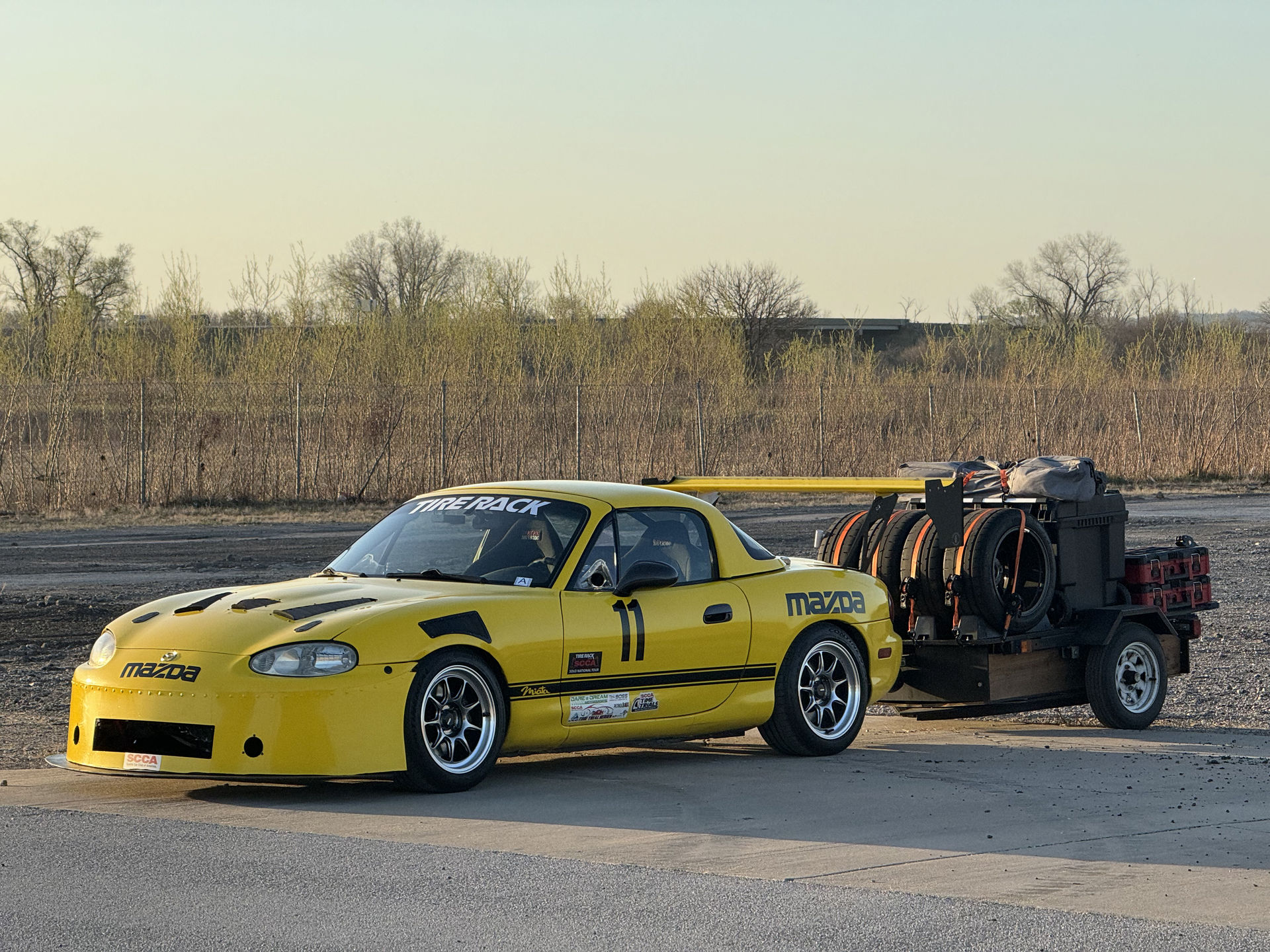
The evolution of grassroots motorsports has necessitated a shift in how amateur racers and track day enthusiasts manage their logistics, particularly regarding tire management and equipment transport. For drivers of compact sports cars, such as the Mazda Miata, the transition from standard street tires to high-performance 200-treadwear (TW) rubber presents a significant challenge: these specialized tires are prone to rapid wear, heat-cycle degradation, and compromised safety when used for extended highway transit. To bridge the gap between street drivability and track performance, many enthusiasts are turning to custom-engineered tire trailers. This solution allows drivers to transport a dedicated set of racing wheels, fuel, and tools without sacrificing the nimble nature of their primary vehicle or resorting to the high overhead of a truck and flatbed trailer.
The Technical Dilemma: 200TW Tires and Street Utility
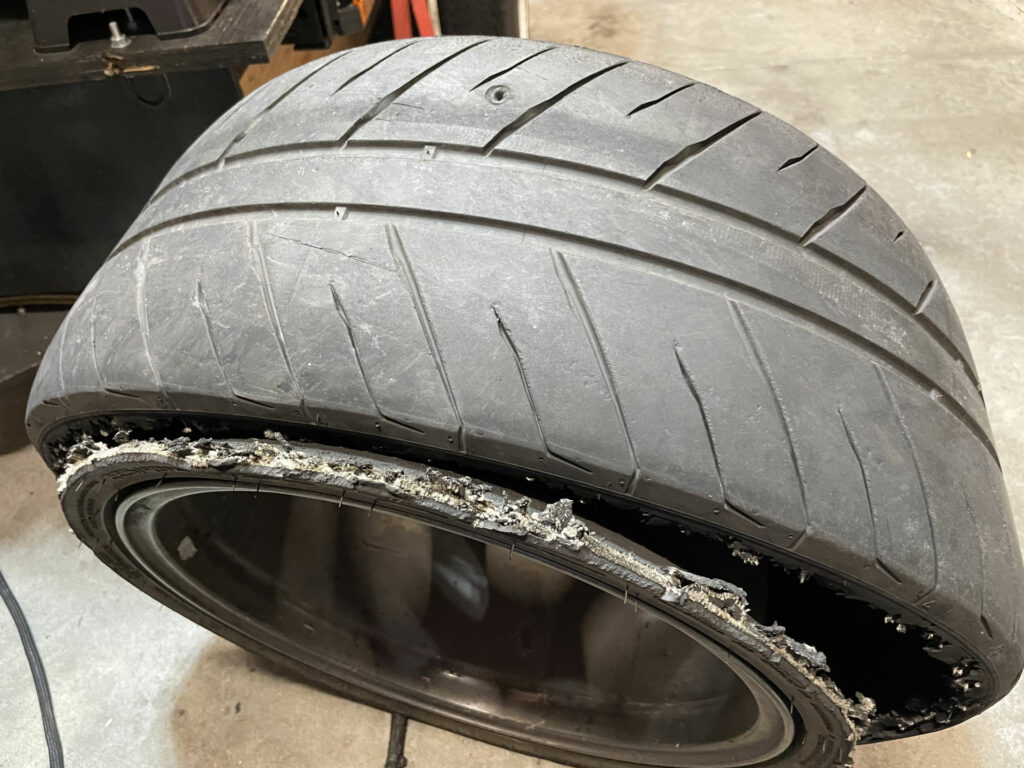
The primary catalyst for the adoption of tire trailers is the nature of modern "extreme performance" summer tires. While tires with a 200-treadwear rating—such as the Hankook Ventus RS4 or the Bridgestone Potenza RE-71RS—are technically DOT-approved for street use, they are engineered for a specific thermal window. On the track, these tires provide the lateral grip necessary for competitive lap times, but on the street, every mile driven represents a loss of valuable tread depth and a "heat cycle."
Heat cycling is a chemical process where the rubber compound hardens after being heated and cooled. For high-performance tires, the number of effective heat cycles is limited; once a tire has been "heat-cycled out," it may still possess visible tread but will lack the requisite grip for competitive driving. Furthermore, the specialized tread patterns of these tires are often optimized for dry conditions. In the event of a sudden downpour, the lack of deep siping can lead to hydroplaning, creating a hazardous situation for the driver. By utilizing a tire trailer, enthusiasts can maintain their street-friendly tires for the journey to the circuit, swapping to their "fast" rubber only when they arrive at the paddock.
Constraints of the Compact Sports Car Platform
The Mazda Miata has long been the benchmark for affordable track performance, yet its diminutive size creates a logistical bottleneck. Unlike larger grand tourers or sedans, which can often accommodate a spare set of wheels in the rear seating area or trunk, the Miata offers negligible cargo space. This physical limitation forces owners into a difficult choice: drive to the track on compromised tires, or invest in a secondary transport vehicle.
Market data suggests that the cost of maintaining a dedicated tow vehicle—including insurance, fuel, and maintenance—can exceed several thousand dollars annually. In contrast, a small utility trailer provides a cost-effective alternative that leverages the existing vehicle’s towing capacity, which, for many small cars, is sufficient for a light-load trailer weighing under 1,000 pounds.

Engineering the Custom Tire Trailer: A Development Chronology
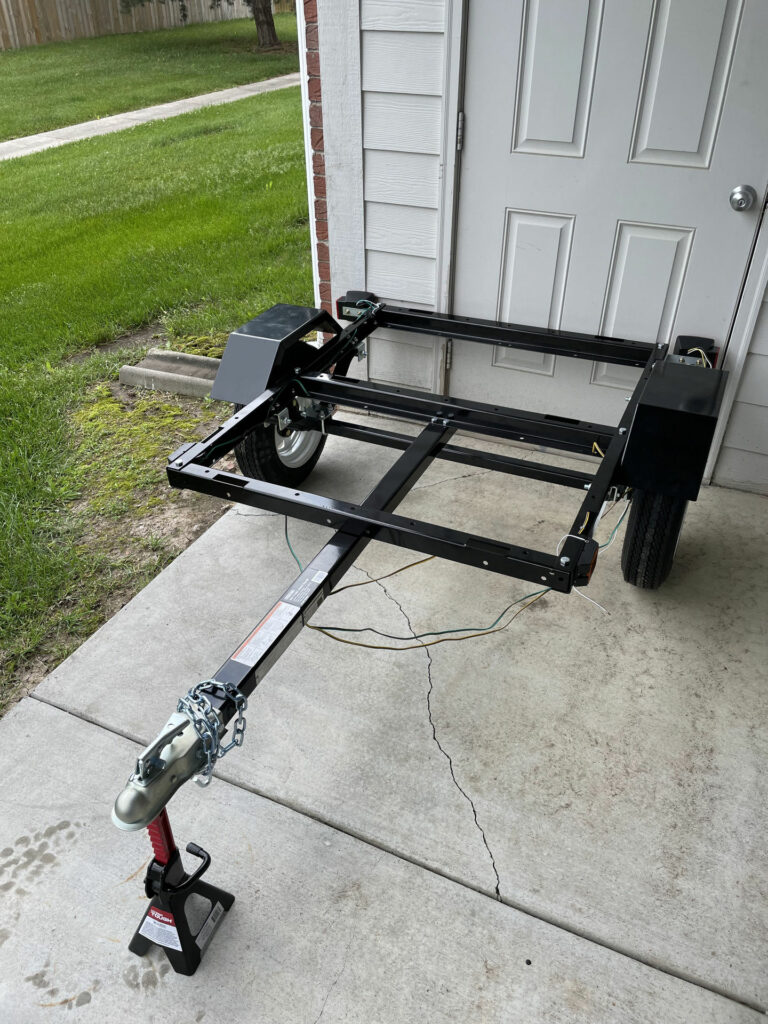
The construction of a bespoke tire trailer typically begins with a modular utility frame. A popular choice among the racing community is the 40-inch by 48-inch steel frame kit, often sourced from retailers like Northern Tool or Harbor Freight. These kits provide a lightweight, DOT-compliant foundation that can be assembled in a home workshop.
Phase One: Foundation and Structural Decking
The initial build phase involves the assembly of the steel frame and the installation of a durable deck. Professional-grade builds often utilize 3/4-inch plywood, treated with weather-resistant paint or bedliner spray. For maximum utility, builders often design the deck to overhang the frame slightly, expanding the usable surface area. In the case of a Miata-specific build, a deck measuring approximately 62 inches by 40 inches provides ample room for tires and a central toolbox while maintaining a low center of gravity.
Phase Two: Storage and Equipment Integration
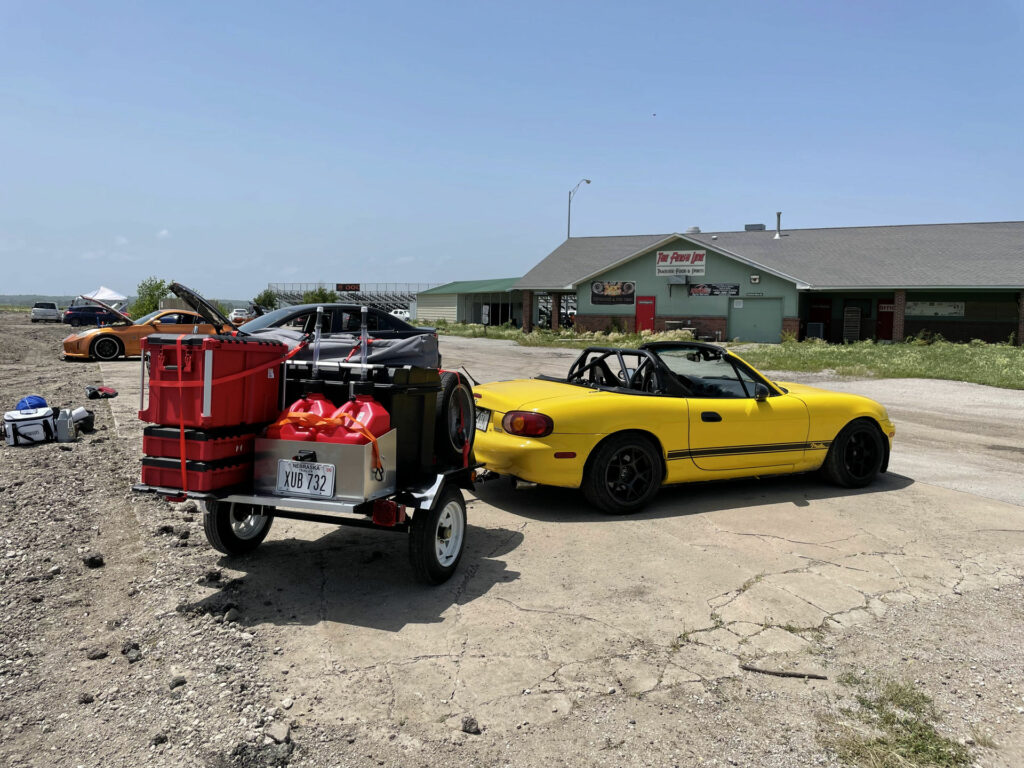
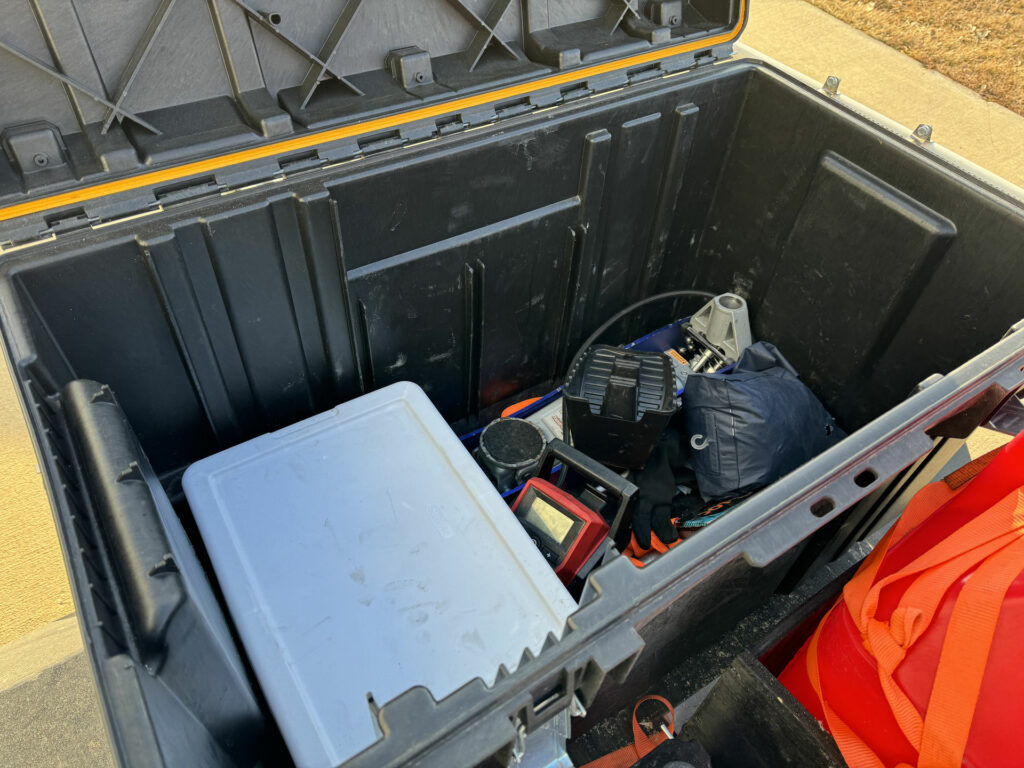
The centerpiece of a functional tire trailer is the weather-tight toolbox. Mounted directly over the axle to balance the load, these boxes house essential track-side equipment, including:
- Low-profile aluminum floor jacks.
- Torque wrenches and impact drivers.
- Tire pressure gauges and pyrometers.
- Portable air compressors and jump starters.
- Safety equipment such as fire extinguishers and first-aid kits.
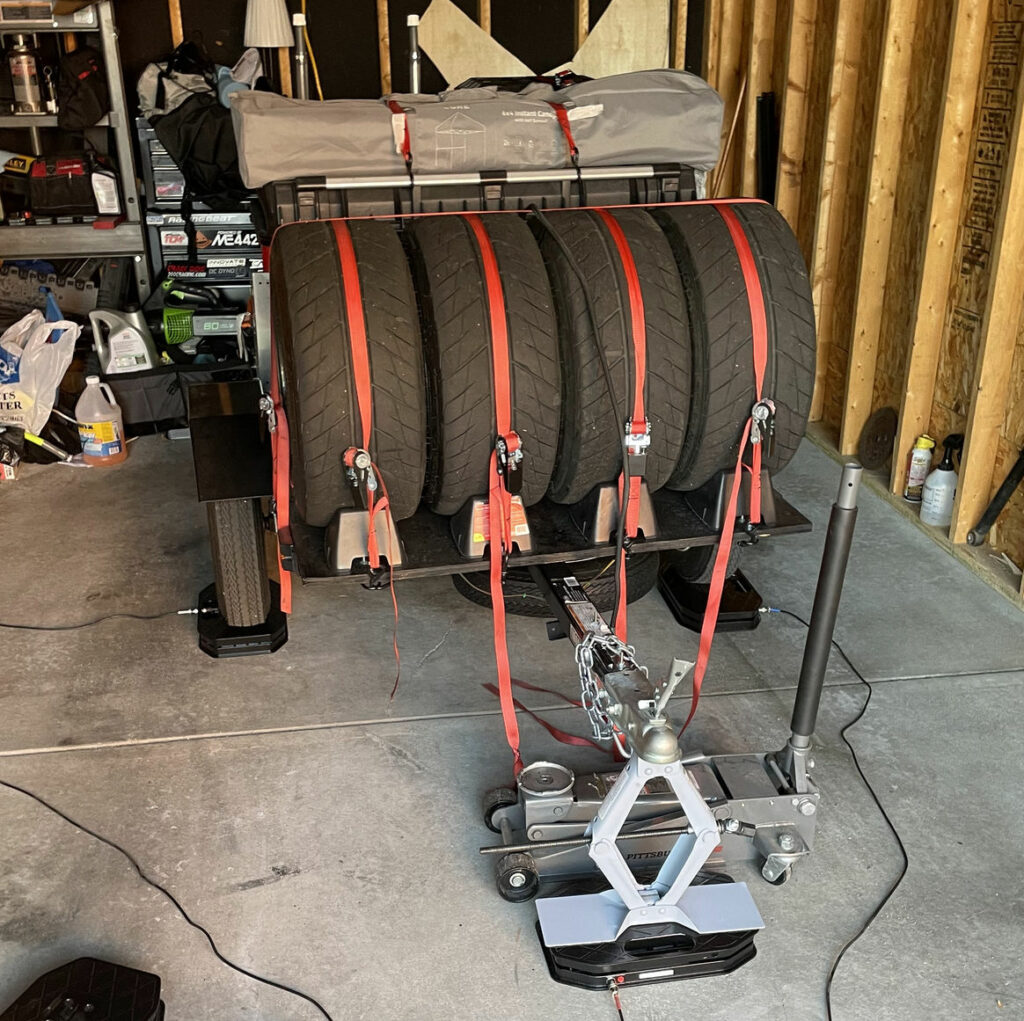
Tire storage is typically handled through a vertical or horizontal mounting system. A common configuration involves securing the four wheels at the front of the trailer to ensure adequate tongue weight—a critical factor in preventing trailer sway at highway speeds. Security is often achieved through a combination of a mounting bracket, a threaded steel rod passed through the wheel hubs, and heavy-duty ratchet straps.
Advanced Modifications and Iterative Upgrades
As enthusiasts gain experience with their trailers, many implement iterative upgrades to enhance performance and storage capacity.
Implementation of the Lower Deck
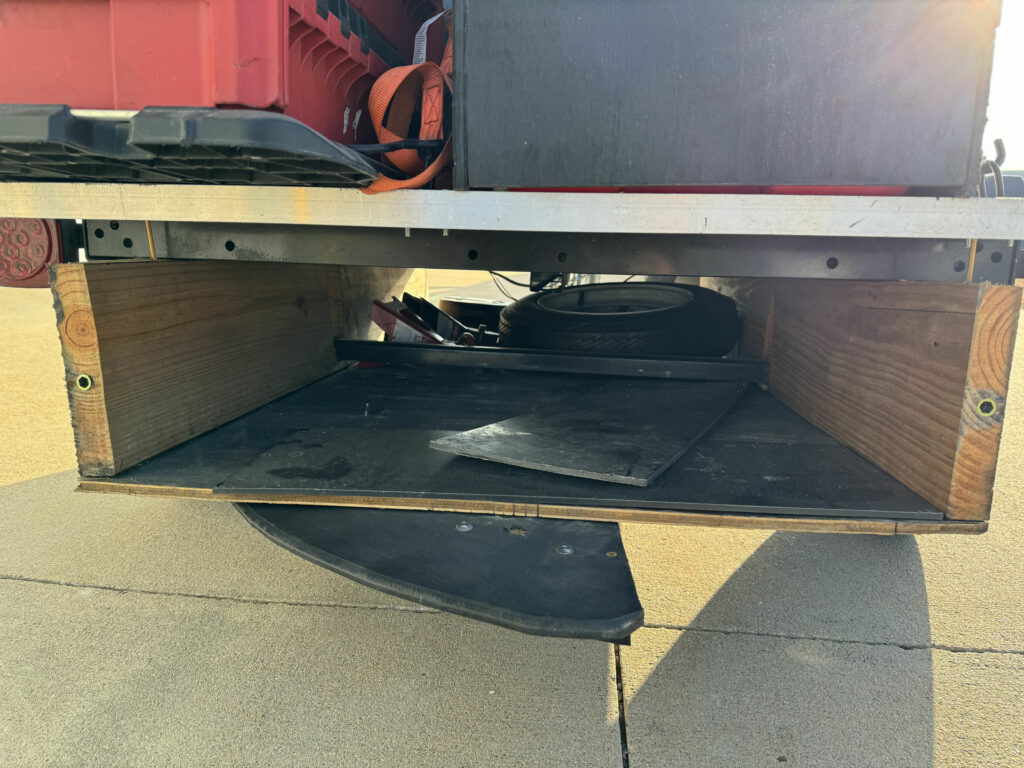
One significant engineering improvement involves the addition of a "sub-deck" or lower storage area. By mounting a secondary plywood floor beneath the main deck, builders can utilize the space around the axle for heavy, flat items such as jack stands, canopy weights, or even a spare tire for the trailer itself. This modification effectively doubles the storage volume without increasing the trailer’s footprint.
Fuel Management Systems
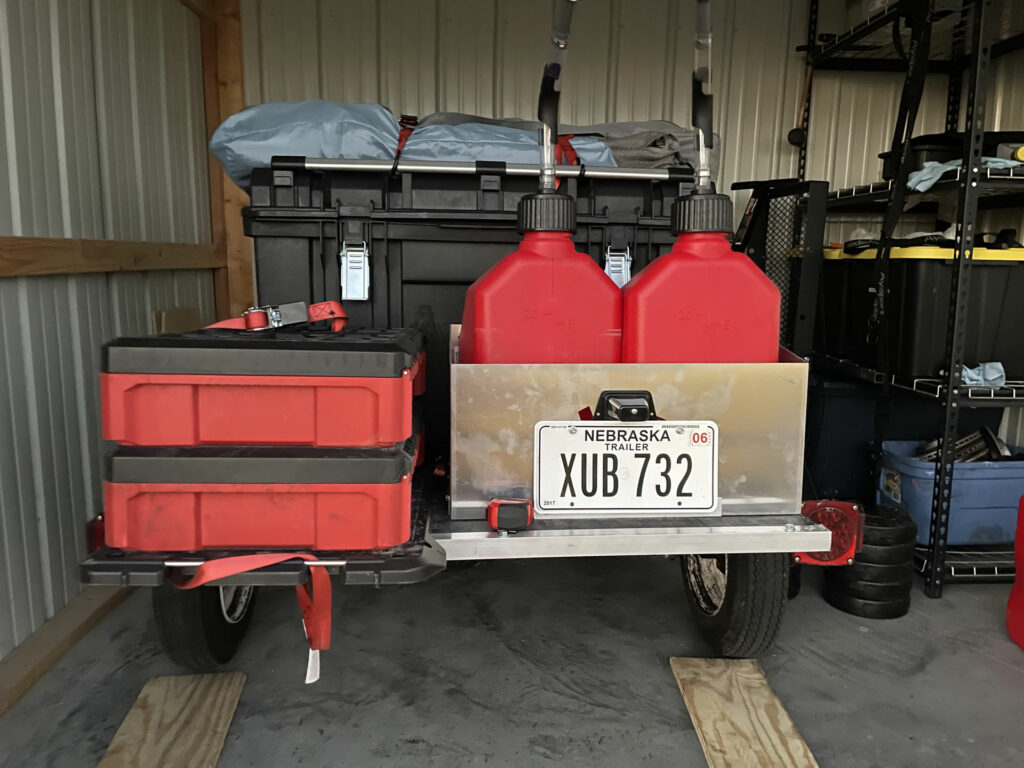
Range anxiety is a common issue for racers whose vehicles are tuned for high-octane or E85 ethanol fuel, which may not be available near rural race tracks. A sophisticated tire trailer build often includes dedicated fuel storage. While five-gallon jugs are standard, some builders have integrated 15-gallon "Flo-Fast" containers equipped with hand-crank pumps. This allows for rapid refueling in the paddock, ensuring the car remains at an optimal weight during sessions while having enough fuel for the return journey.
Transition to Radial Tires
Most entry-level utility trailers are sold with bias-ply tires, which are adequate for low-speed hauling but can struggle with the heat and stresses of long-distance, high-speed highway travel. A common upgrade is the installation of radial tires, such as the 145R12. Radial tires offer several advantages for the track enthusiast:
- Lower Operating Temperatures: The radial construction reduces internal friction, leading to cooler running temperatures.
- Increased Stability: Radials provide a more consistent contact patch, improving the tracking of the trailer behind the car.
- Durability: Radial tires generally offer a higher speed rating and longer tread life, providing peace of mind during 500-mile treks to regional circuits.
Safety and Regulatory Considerations
Towing with a small vehicle requires a disciplined approach to safety and weight distribution. Automotive engineers generally recommend that the tongue weight—the downward force exerted by the trailer coupler on the hitch—should be between 10% and 15% of the total trailer weight. A trailer that is too "tail-heavy" can induce dangerous oscillations, known as sway, which can lead to a loss of vehicle control.
Furthermore, the maintenance of the trailer’s wheel bearings is paramount. Small trailer wheels spin at significantly higher RPMs than the car’s wheels; at 70 mph, a 12-inch trailer tire may be spinning at nearly 1,000 RPM. High-quality marine-grade grease and regular inspections are essential to prevent bearing failure, which is the most common cause of trailer-related breakdowns.
Comparative Analysis: Tire Trailer vs. Full Vehicle Transport
The decision to use a tire trailer versus a truck and flatbed trailer involves a trade-off between convenience and cost.
| Feature | Tire Trailer | Truck & Flatbed |
|---|---|---|
| Initial Cost | $500 – $1,500 | $15,000 – $50,000+ |
| Maintenance | Minimal (Tires/Bearings) | High (Engine/Brakes/Tires) |
| Storage Space | Fits in a standard garage | Requires significant space |
| Fuel Economy | Minor impact on car’s MPG | Significant (Towing vehicle) |
| Risk Management | If the car breaks, you are stranded | Can tow a broken car home |
While the tire trailer is the superior economic choice, it offers no protection if the track car suffers a mechanical failure that renders it undriveable. For this reason, many tire trailer users also invest in premium roadside assistance memberships that cover towing for both the vehicle and the trailer.

Broader Impact on the Amateur Racing Community
The rise of the DIY tire trailer reflects a broader trend toward self-sufficiency in the amateur racing community. By engineering their own logistical solutions, drivers are able to participate in high-level events without the "barrier to entry" typically associated with professional-grade transport. This democratization of the sport has led to increased participation in organizations like the National Auto Sport Association (NASA) and the Sports Car Club of America (SCCA).
Furthermore, the tire trailer has become a symbol of the "drive-to-track" ethos. It represents a commitment to the mechanical purity of the sports car—maintaining its status as a road-going machine while acknowledging the specialized requirements of the modern racing circuit. As tire technology continues to advance, the gap between street and track performance will likely widen, ensuring that the tire trailer remains a vital tool for the weekend warrior.
Conclusion
The tire trailer is more than a simple utility haul; it is a calculated engineering response to the logistical challenges of modern motorsports. For the Mazda Miata owner or the compact sports car enthusiast, it provides a pathway to peak performance by preserving the integrity of racing rubber and expanding the vehicle’s utility. Through careful construction, load balancing, and iterative upgrades, the DIY tire trailer stands as a testament to the ingenuity of the grassroots racing community, allowing drivers to pursue their passion for speed with efficiency and safety.