Farhan hamdan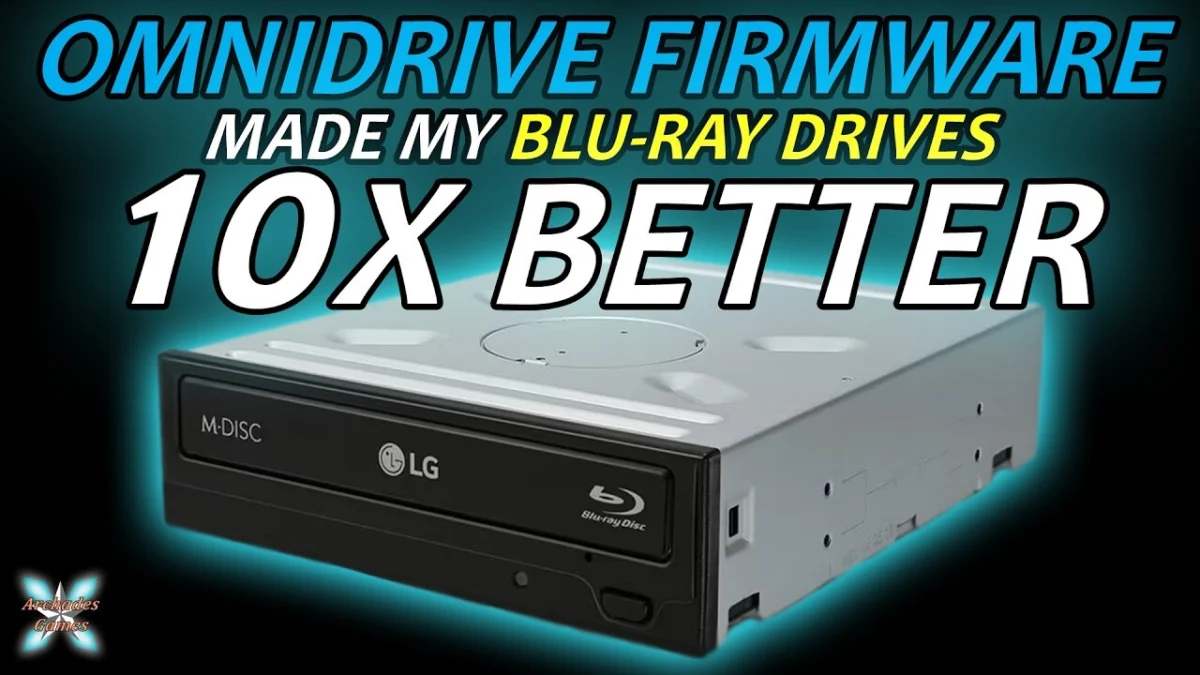
A significant development in the realm of digital preservation and retro gaming has emerged with the introduction of OmniDrive, a pioneering homebrew firmware designed to dramatically expand the disc reading capabilities of standard PC optical drives. Ryan from Archades Games recently highlighted this innovative solution in a comprehensive video tutorial, demonstrating its capacity to transform compatible drives into multi-format powerhouses. The firmware, developed by RibShark and available on GitHub, targets drives built upon the popular MT1959 platform, which has long been a favorite among enthusiasts for its robust performance in UHD and Blu-ray ripping. OmniDrive elevates these drives to a new level, enabling them to read an extensive array of previously incompatible disc types, including those from legacy gaming consoles such as the Nintendo Wii, GameCube, original Xbox, and Xbox 360, alongside numerous other formats critical for comprehensive media archiving. This breakthrough promises to democratize access to disc dumping, offering a cost-effective and highly versatile tool for individuals and institutions dedicated to preserving physical media in an increasingly digital world.
The Genesis of OmniDrive: A Community-Driven Innovation
The creation of OmniDrive is rooted in the vibrant and often necessity-driven homebrew community, where enthusiasts and developers collaborate to unlock the full potential of hardware beyond its original manufacturer specifications. For years, the digital preservation community has faced a growing challenge: the accelerating obsolescence of proprietary hardware and the increasing difficulty and expense of acquiring specialized optical drives capable of reading obscure or console-specific disc formats. Many older game consoles, for instance, utilize unique physical disc structures or proprietary file systems that render them unreadable by conventional PC optical drives. This limitation has historically necessitated the use of original console hardware or highly specialized and often costly drives for accurate data extraction, known as "dumping."
The MT1959 platform, found in many Blu-ray drives, particularly those from manufacturers like Asus, LG, and Pioneer, gained prominence within the archiving community due to its inherent capabilities for reading and accurately ripping high-definition media. However, even these capable drives were limited to standard PC disc formats (CD, DVD, Blu-ray, UHD Blu-ray). The vision behind OmniDrive was to transcend these limitations by developing custom firmware that could interpret and process the data structures of a much broader spectrum of optical discs. RibShark’s work on OmniDrive represents a culmination of intricate reverse engineering and low-level programming, effectively reprogramming the drive’s internal logic to recognize and handle the unique characteristics of various console and proprietary disc formats. This effort transforms a general-purpose optical drive into a universal reader, significantly streamlining the archiving process.
Unlocking a Universe of Discs: Expanded Compatibility and Technical Implications
The list of disc types now readable by OmniDrive-flashed MT1959 drives is extensive, encompassing a vast swathe of the gaming and multimedia landscape. Beyond the standard CD, DVD, Blu-ray, and UHD Blu-ray formats, the firmware adds support for Nintendo GameCube and Wii discs, Microsoft Xbox and Xbox 360 discs, Sega Dreamcast GD-ROMs, and various other formats that previously required dedicated, often hard-to-find, and expensive hardware. This expanded compatibility is not merely a convenience; it is a critical enabler for projects like Redump.org, a collaborative initiative dedicated to creating verified, bit-perfect copies of optical discs for preservation purposes. By making a wider range of discs accessible to a common, relatively affordable hardware platform, OmniDrive significantly lowers the barrier to entry for new contributors to such archiving efforts, thereby accelerating the pace of digital preservation.
From a technical standpoint, firmware is the low-level software that controls a device’s basic functions. Flashing custom firmware like OmniDrive involves replacing the manufacturer’s original code with a modified version. This process is inherently risky; an incorrect or interrupted flash can "brick" a drive, rendering it permanently inoperable. Therefore, the detailed instructions provided on the Redump wiki and Ryan’s tutorial video are crucial, emphasizing the necessity of careful adherence to the steps. The fact that the process has been streamlined and documented for public use speaks to the dedication of the community developers. The underlying complexity involves manipulating the drive’s optical pickup unit (OPU) and its internal controller to adjust laser power, focus, tracking, and rotation speed in ways optimized for different disc geometries and data densities, something the original firmware never anticipated for non-PC formats.
The Economic and Practical Advantages for Archivists
One of the most compelling aspects of OmniDrive is its potential to significantly reduce the financial burden associated with comprehensive disc archiving. Historically, acquiring the necessary hardware to dump various console formats could involve purchasing multiple dedicated drives or even entire consoles, often incurring substantial costs as these items become rarer and more sought after. For instance, specialized Blu-ray drives known for their UHD ripping capabilities, such as certain Asus or LG models, can command premium prices, sometimes exceeding $200-$300, especially as new production dwindles. Add to that the cost of older console-specific drives or modded consoles, and the expenses quickly escalate.

OmniDrive offers a powerful alternative: users can leverage a single, relatively common MT1959-based drive, flash it with the custom firmware, and achieve multi-platform compatibility. This strategy not only saves money but also simplifies the hardware setup required for a comprehensive archiving station. The article’s author, for example, successfully tested OmniDrive on an Asus BW-16D1HT, confirming its ability to dump a PlayStation 2 game while retaining its original UHD ripping capabilities. This "complete win" scenario underscores the firmware’s ability to enhance functionality without compromising existing features.
Furthermore, the author’s observation regarding the cost-effectiveness of slim, laptop-style optical drives—which often use the same MT1959 chipsets—points to an even more accessible entry point. These slim drives are typically much cheaper than their full-sized internal counterparts, often available for under $50. Paired with an inexpensive external USB enclosure or a slimline-to-standard SATA adapter, these drives become highly portable and versatile archiving tools, further democratizing the process. The author’s plan to acquire additional slim drives and document their setup provides valuable practical guidance for others looking to replicate this cost-effective strategy.
The Broader Impact: Preservation, Accessibility, and the Future of Physical Media
The implications of OmniDrive extend far beyond individual enthusiasts. In an era where digital distribution is increasingly dominant and physical media is slowly fading, the long-term preservation of games, movies, music, and software stored on optical discs has become a critical concern. Publishers often discontinue support for older titles, and digital storefronts can disappear, taking purchased content with them. Physical media, while seemingly more robust, is susceptible to degradation, loss, and hardware obsolescence. Initiatives like OmniDrive ensure that the data encoded on these discs remains accessible and can be migrated to more stable, modern storage formats.
- Enhancing Digital Libraries and Archives: Cultural institutions, libraries, and universities often grapple with vast collections of optical media. OmniDrive provides a standardized, economical method for digitizing these collections, contributing to robust digital archives that can be accessed by future generations.
- Supporting Retro Gaming Communities: For retro gaming enthusiasts, OmniDrive is a boon. It allows them to create personal backups of their game libraries, ensuring that their beloved titles remain playable even as original discs wear out or consoles fail. It also facilitates the development of emulators and compatibility layers by providing accurate data dumps.
- Challenging Hardware Monopolies: By enabling standard hardware to perform specialized tasks, OmniDrive implicitly challenges the need for proprietary, expensive, or hard-to-find hardware for specific preservation tasks. This fosters a more open and accessible environment for digital heritage.
- Ethical and Legal Considerations: While OmniDrive facilitates the creation of disc images, it is crucial to acknowledge the ethical and legal frameworks surrounding copyright. The primary stated purpose of such tools within the preservation community is to create verified backups for personal use or for archival purposes by legitimate institutions. Users are generally advised to respect intellectual property rights and use these tools responsibly within the bounds of fair use and applicable laws in their respective jurisdictions.
The timeline of optical media itself underscores the urgency of such projects. From the widespread adoption of CDs in the 1980s, followed by DVDs in the late 1990s, Blu-rays in the mid-2000s, and UHD Blu-rays in the 2010s, each format brought new challenges for preservation. As manufacturing of older drives ceases and existing units fail, community-driven solutions like OmniDrive become indispensable for bridging the gap between legacy media and modern archival practices.
Key Resources and the Collaborative Ecosystem
The success and utility of OmniDrive are inextricably linked to a collaborative ecosystem of resources and community support. The primary points of reference include:
- OmniDrive GitHub Page (https://github.com/RibShark/OmniDrive): This is the central repository for the firmware itself, providing direct access to the code, releases, and development updates from RibShark, the principal developer. It serves as the authoritative source for the firmware.
- Redump Wiki (http://wiki.redump.org/index.php?title=OmniDrive): The Redump.org community is at the forefront of optical media preservation. Their wiki page for OmniDrive offers detailed, step-by-step instructions for flashing the firmware, troubleshooting tips, and a list of compatible drives. This resource is vital for users attempting the process, emphasizing the "do this at your own risk" warning due to the potential for bricking a drive if steps are not followed precisely.
- Media Preservation Frontend (MPF) (https://github.com/SabreTools/MPF): Developed by SabreTools, MPF is a crucial companion tool. It provides a user-friendly graphical interface that simplifies the often complex process of dumping optical discs, especially when dealing with various formats and ensuring data integrity. MPF can automate many of the steps involved in reading discs, verifying dumps against known databases, and organizing files, making the entire workflow more efficient and less error-prone. This frontend greatly enhances the accessibility of OmniDrive for users who may not be comfortable with command-line interfaces.
The visibility provided by content creators like Ryan from Archades Games, and the ongoing support from platforms like Patreon (as highlighted by Bob from RetroRGB for various community projects), are essential for disseminating information, providing tutorials, and sustaining the development efforts behind such innovative tools. These individuals and platforms serve as vital conduits between developers and the wider community, ensuring that cutting-edge solutions reach those who can benefit most from them.
In conclusion, OmniDrive represents a significant leap forward for digital preservation, particularly for the vast libraries of content stored on optical media. By transforming common PC optical drives into highly versatile, multi-format readers, it dramatically lowers the cost and complexity of archiving, making it accessible to a much broader audience. This homebrew firmware is a testament to the power of community-driven innovation in safeguarding our digital heritage against the relentless march of technological obsolescence. Its emergence ensures that countless games, films, and software applications encoded on physical discs can be accurately preserved and enjoyed for generations to come, securing a vital piece of our collective digital history.