Chalid Lutfie
On April 25, 2017, the independent record label Ubiktune officially announced the release of The Frequency Modulators Orchestra, Vol. 1, the debut label project from Juan Irming, performing under the moniker Amplitude Problem. The album represents a rigorous exploration of the intersection between rigid digital synthesis and the fluid, improvisational structures of jazz and funk. Composed exclusively using Frequency Modulation (FM) synthesizers and complemented by lo-fi drum textures, the record serves as both a technical exercise in sound design and a conceptual homage to the aesthetic of the 1980s and early 1990s. The release marks a pivotal moment for Amplitude Problem, an artist whose career spans decades across the European demoscene and the Los Angeles professional music production industry.
Technical Composition and Artistic Vision
The core premise of The Frequency Modulators Orchestra, Vol. 1 lies in its self-imposed technical constraints. By utilizing FM synthesis—a method of synthesis popularized by the Yamaha DX7 and the Sound Blaster Pro sound cards of the late 20th century—Irming sought to challenge the traditional perception of digital audio. Historically, FM synthesis has been characterized by its "cold," "glassy," and "metallic" timbres, often contrasted with the perceived warmth of subtractive analog synthesis. Irming’s objective was to subvert these characteristics, utilizing the complex harmonic structures of FM to create "warm, human grooves" and the nuanced, improvised language typically associated with live jazz performance.
The album is described by the label as a "synth-funk soundtrack" and a "zany chiptune adventure." This hybridity is a hallmark of the Ubiktune catalog, which frequently bridges the gap between traditional video game music (VGM) and contemporary electronic genres. By pairing these digital leads with lo-fi drum samples, Irming evokes the grit of early hip-hop and the rhythmic complexity of fusion jazz, creating a soundscape that is simultaneously nostalgic and forward-looking.

The Evolution of Amplitude Problem: From Demoscene to Los Angeles
Juan Irming’s professional trajectory provides essential context for the sophisticated sound design found on the new record. His origins trace back to the European demoscene of the late 1980s, a computer art subculture focused on pushing the technical limits of hardware. Operating under the SYNC crew on the Atari ST platform, Irming established himself as a prominent composer. The Atari ST, notable for its built-in MIDI ports and the Yamaha YM2149 sound chip, was a foundational tool for early electronic musicians, and Irming’s success in various demo music contests during this era laid the groundwork for his future explorations in digital synthesis.
In the early 1990s, Irming transitioned from the hobbyist demoscene to formal musical education, attending the Musicians Institute in Los Angeles. This move facilitated a shift from purely technical programming to a deeper understanding of music theory, keyboard performance, and production. Over the following two decades, Irming diversified his portfolio, contributing to a wide array of projects including synthwave, hip-hop, and video game soundtracks.
Prior to the release of The Frequency Modulators Orchestra, Vol. 1, Irming was credited on ten LPs and had collaborated with several high-profile artists in the retro-electronic scene. His work appeared alongside notable figures such as Mitch Murder, Lazerhawk, and GUNSHIP. Additionally, his contributions to the "geek rap" subgenre are significant; he produced a substantial portion of YTCracker’s cyberpunk-themed album, Introducing Neals (2014). His live performances have spanned major cultural events, including Comic-Con and the Game On Expo, where he shared stages with acts like The Minibosses and The Gothsicles.
Chronology of the Project: 2014–2017
The conceptual seeds for The Frequency Modulators Orchestra were planted during the production of the YTCracker track "Feel Like Leisure Suit Larry" in 2014. While working on that instrumental, Irming rediscovered the percussive and "zany" qualities of FM synthesis. This interest was further solidified in 2015 with the track "Funky Mustache" from his album Blue Bots Dots. By late 2015, the concept for a dedicated FM jazz-funk project had fully crystallized.
The production of the album was a ten-month creative undertaking. Irming deliberately chose to focus on instrumental music to allow for maximum musical expression, noting that without vocals to convey meaning, the responsibility fell entirely on the instrumentation to maintain listener engagement. A critical component of the production was the heavy use of improvisation. By jamming on the keys in his studio, Irming ensured that the tracks retained a "spontaneous and in-the-moment" quality, which is essential to the jazz tradition.
To ensure the album met high-fidelity standards despite its lo-fi inspirations, Irming enlisted the services of Grammy Award-winning mastering engineer Don Grossinger. Grossinger’s involvement is a testament to the album’s professional ambitions; his previous credits include legendary jazz figures such as Miles Davis. This collaboration suggests a bridge between the niche world of chiptune and the broader history of recorded jazz.
Visual Identity and Collaborative Art
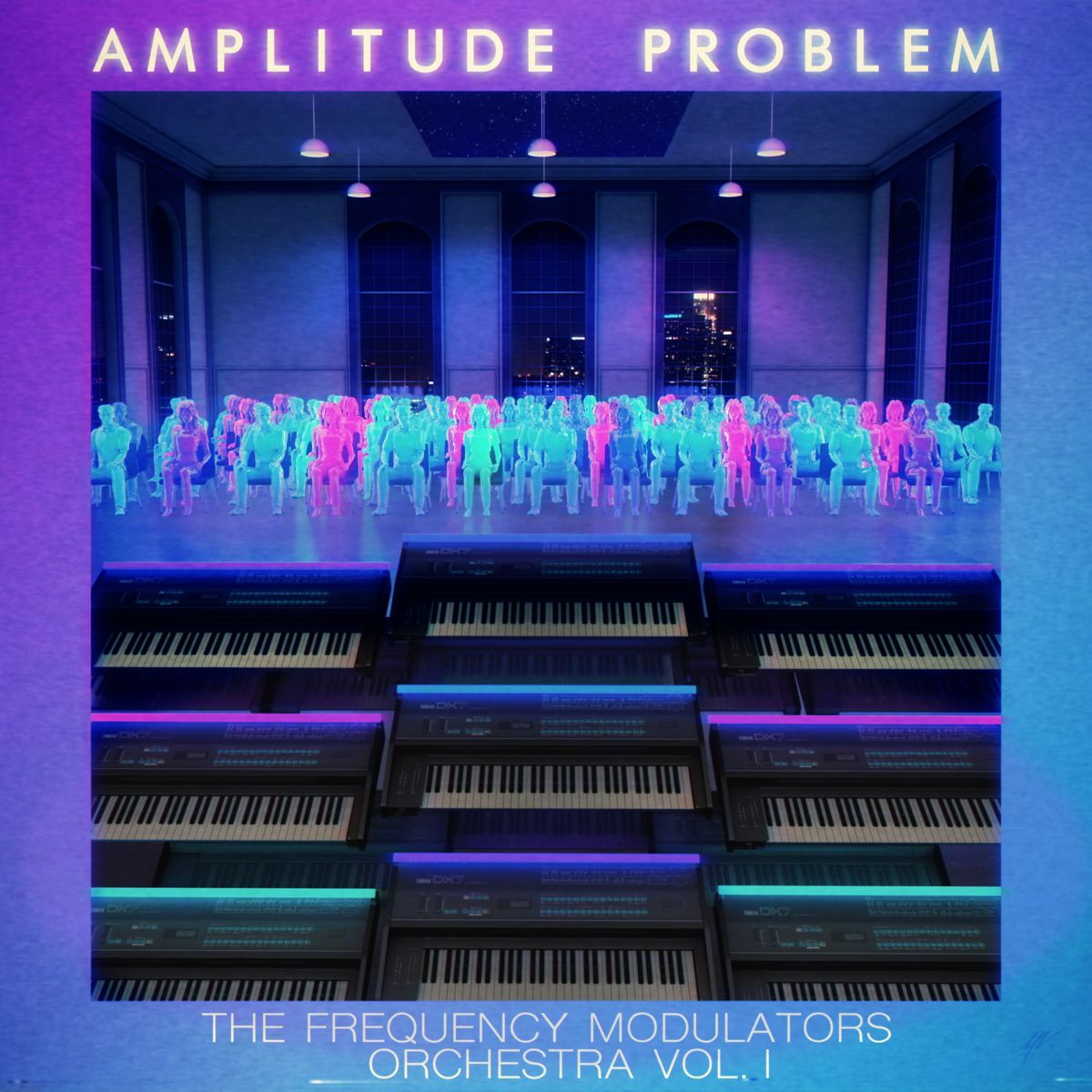
The aesthetic presentation of The Frequency Modulators Orchestra, Vol. 1 is as meticulously crafted as its audio. The front cover artwork was provided by Mythical Vigilante, whose style aligns with the "retro-electro" themes of the music. Additionally, the project features art and animation by Valenberg, a renowned pixel artist known for his detailed and atmospheric depictions of cyberpunk and retro-futuristic environments.
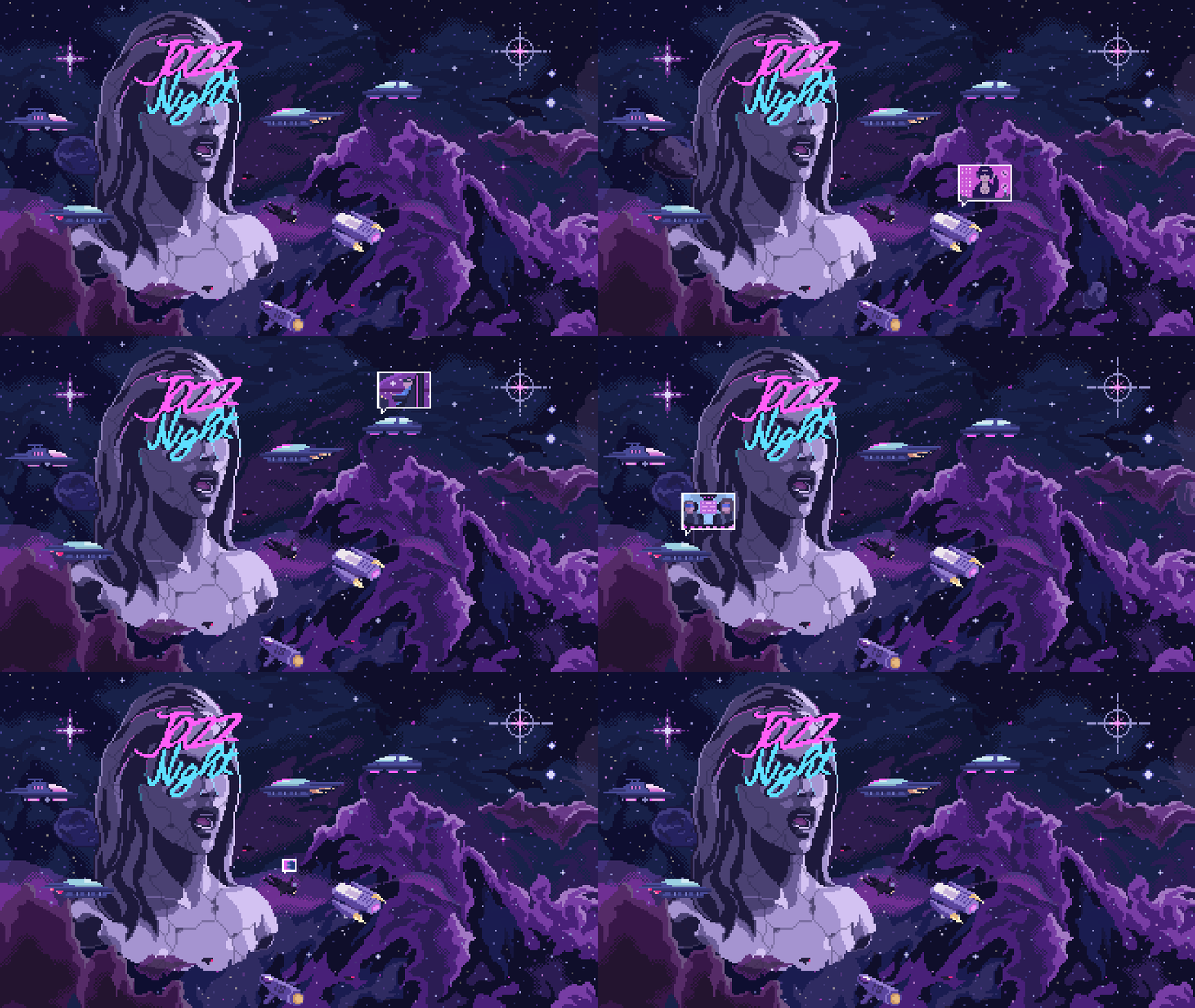
Valenberg’s contribution includes the "Jazz Night" pixel-art animation, which serves as a visual counterpart to the album’s themes. The collaboration between Irming and Valenberg is a continuation of their work on previous projects, emphasizing a cohesive visual-audio brand for the Amplitude Problem project. The use of pixel art reinforces the album’s connection to the 80s and 90s computing era, providing a nostalgic frame for the modern jazz-funk compositions.

Thematic Depth and Track Analysis
While the album is heavily rooted in technical experimentation, Irming has stated that it is a deeply personal work. The tracklist is structured to provide an emotional narrative, with the first four tracks serving as an "introspective" journey and the final three tracks offering commentary on "life and the universe."
Irming highlights the track "Ghosts in My Medicine Cabinet" as an example of the "all-in" approach required for this project. He asserts that the track’s complexity and unconventional sound required total conviction, moving beyond the constraints of commercial expectations. This "no apologies" philosophy allowed Irming to create a "Frequency Modulators" persona—a fictional band where each FM instrument is treated as a full member with the "privilege to improvise."
Broader Impact and Industry Implications
The release of The Frequency Modulators Orchestra, Vol. 1 arrives at a time of renewed interest in vintage hardware and "outdated" synthesis methods. The mid-2010s saw a significant resurgence in synthwave and retro-style soundtracks, fueled by popular media and a nostalgic longing for the aesthetics of the 1980s. However, Irming’s work distinguishes itself by moving beyond the simple "neon" tropes of synthwave, instead focusing on the complex musicality of jazz fusion and the specific technical limitations of FM synthesis.
For Ubiktune, the release reinforces the label’s position as a curator of high-quality, technically proficient electronic music that honors its video game roots while appealing to a broader audience of audiophiles. By bridging the gap between the demoscene, the gaming world, and the professional jazz circuit, Amplitude Problem provides a template for how retro technology can be used to create sophisticated, modern art.
The involvement of a mastering engineer of Don Grossinger’s caliber further signals a shift in the "chip" and "synth" music scenes. It suggests that these genres are increasingly being treated with the same technical respect as mainstream jazz and pop releases. As digital synthesis continues to evolve, projects like The Frequency Modulators Orchestra serve as a reminder of the "human" potential within the machine, proving that even the most "cold" digital algorithms can produce warmth when guided by an experienced hand.
The Frequency Modulators Orchestra, Vol. 1 is currently available across all major digital distribution platforms and streaming services, marking a significant milestone in Juan Irming’s storied career and a unique contribution to the contemporary electronic music landscape.