
 Jia Lissa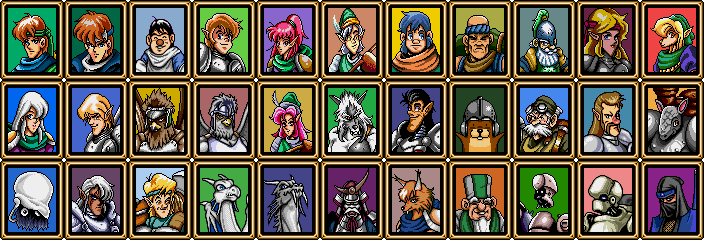
When Shining in the Darkness debuted in March 1991, it secured a pivotal victory for Sega, validating the company’s investment in the developer Climax and establishing a franchise that would endure for decades. While the gaming community anticipated a direct sequel, Climax chose to expand the series’ horizons with Shining Force, a title that would depart from the first-person dungeon-crawling mechanics of its predecessor in favor of a tactical, turn-based strategy framework. Though not a direct chronological continuation, Shining Force significantly enriched the lore of the Shining universe, eventually becoming the flagship line of the series and spawning a legacy of sequels across the Game Gear, Sega CD, and Saturn platforms.
The narrative of Shining Force’s development is as much a story of technical innovation as it is of corporate maneuvering. Behind the scenes, the project was marked by internal creative divisions within Climax and a deteriorating relationship between the studio and Sega. This friction eventually led to a slowdown in releases, culminating in the fragmented Western release of the Shining Force III trilogy on the Saturn and the Dreamcast’s notable status as the only major Sega platform to never host an entry in the franchise.
Sega’s Strategic Pivot Toward the RPG Market
At the dawn of the 1990s, the role-playing game (RPG) genre was a secondary priority for Sega, particularly in the North American market. This changed with the commercial success of titles like Phantasy Star III and Shining in the Darkness. High sales figures prompted Sega of Japan to aggressively target the RPG demographic to compete with Nintendo’s dominance in the sector. This strategy included the release of Sword of Vermilion by the AM2 unit and the elevation of Climax as a premier developer.

As RPGs grew in complexity, the hardware demands increased exponentially. Phantasy Star II had set a record at six megabits, and Shining in the Darkness pushed the limit to eight megabits. To manage the growing scale of these projects, Hiroyuki Takahashi, a lead visionary at Climax, proposed a collaborative partnership with Sega. This resulted in the June 1991 founding of Sonic Co., Ltd., a joint venture tasked with software planning, market research, and marketing for the Genesis and Game Gear. Sega held an 85 percent stake in the 40-million-yen venture, while Climax and Takahashi held the remainder.
The new company was named after Sega’s emerging mascot, Sonic the Hedgehog, following a trend set by Nintendo’s character-themed affiliates like Mario Inc. and Ape Inc. Beyond branding, Sonic Co. was designed to streamline production by recruiting specialists from outside the traditional gaming sphere. Director Kenji Orimo, a veteran of the manga industry, leveraged his connections to bring professional artists and storytellers into the development process, ensuring that the visual and narrative elements of the Shining series would remain industry-leading.
Redefining the Strategy Genre: The Takahashi Vision
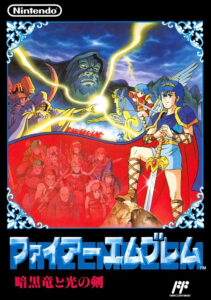
The conceptual foundation of Shining Force did not begin with a desire to make a strategy game. Hiroyuki Takahashi had been contemplating a new RPG format since his time at Enix. He sought to marry the deep storytelling of Dragon Quest with a more engaging combat system that avoided the perceived monotony of traditional turn-based encounters. Takahashi was largely unimpressed by contemporary strategy titles like Fire Emblem and Famicom Wars, criticizing their slow pacing and their literal translation of board game mechanics to the screen.
Takahashi’s perspective shifted after playing the 1988 PC88 title Silver Ghost by Kure Software Koubou. The game’s management of multiple characters inspired him to consider "distance" as a primary tactical element. By introducing spatial positioning, formations, and terrain advantages, Takahashi believed he could evolve the RPG genre.
Work on Shining Force officially moved to the Mega Drive in March 1991. Initially conceived as a smaller project for the Game Gear, the scope quickly expanded as the team realized the limitations of portable hardware. Despite the risk of alienating fans of the first game, Takahashi and his team committed to a 12-megabit cartridge—the largest for the console at that time—to accommodate the ambitious vision of an animated, tactical war drama.
Internal Friction and Technical Hurdles
The transition to a strategy-RPG hybrid was not met with universal approval within Climax. Directors Kenji Orimo and Yasuhiro Taguchi were initially skeptical, preferring a traditional RPG focus. However, as the project progressed, the synergy between tactical combat and overworld exploration became undeniable.
While Takahashi led the Shining Force team, Kan Naito focused on developing Landstalker and its proprietary Diamond Shaped Dimension System (DDS520). This internal division meant that many staff members, including graphic designer Hiroto Nakashima and character artist Yoshitaka Tamaki, had to divide their time between multiple high-stakes projects.
Tamaki, in particular, was tasked with a massive workload. He shifted the art style from the "Western fairy tale" aesthetic of Shining in the Darkness to a more realistic, Japanese-influenced design for Shining Force. This shift reflected the game’s darker themes, which replaced dungeon exploration with a narrative centered on international warfare, political betrayal, and the consequences of loss.
The World of Rune and the Lore of the Force
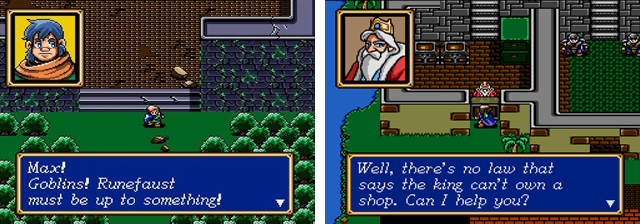
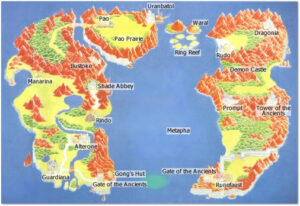
Shining Force was established as a prequel to the original game, set on the dual continent of East and West Rune. The plot followed Max, a silent protagonist and knight of Guardiana, as he assembled the "Shining Force" to prevent the sorcerer Darksol from resurrecting the Dark Dragon.
The narrative depth was unprecedented for the time. Takahashi drafted extensive backstories for nations and locations that never even appeared in the final game, such as Alterone and Beagle Mountain Pass, to ensure the world felt lived-in and historically grounded. The villainous Darksol served as a crucial connective thread; later games would reveal him to be the father of the antagonist from Shining in the Darkness, creating a generational saga that rewarded long-term fans.
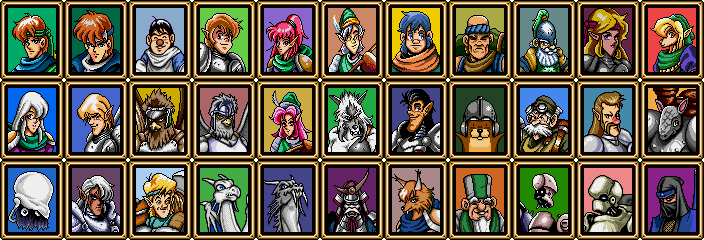
Tamaki’s character designs became a hallmark of the series. He created over 30 playable characters across ten races, including centaurs, birdmen, and giants. The inclusion of the "promotion" system—where characters could evolve into advanced classes with new visual designs—added a layer of progression that incentivized players to engage deeply with the combat system.
Technical Innovation: Compression and AI
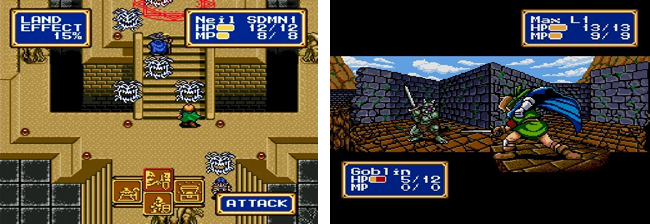
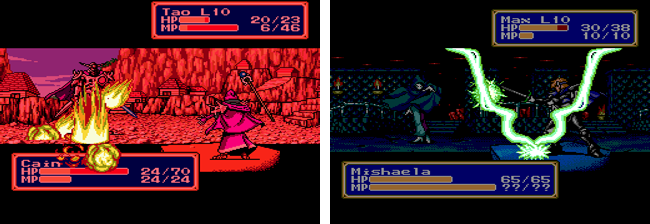
To fit the massive amount of animation and data into a 12-megabit cartridge, Climax developed sophisticated compression routines. While standard industry compression usually reached a 50 percent reduction, Climax achieved an impressive 22 percent. This allowed for full-screen, cinematic battle animations that featured unique sprites for every angle of attack.

The development team also focused on enemy artificial intelligence. Takahashi sought to eliminate the "sluggish" feel of strategy games by ensuring enemies could calculate their moves in under a second. The AI was programmed to prioritize attacking weaker units and targeting Max, whose defeat resulted in an immediate "Game Over," raising the stakes of every encounter.
Launch, Reception, and Market Realities
Shining Force was a central focus of Sega’s presentation at the 1992 Winter Consumer Electronics Show (CES) in Las Vegas. To meet the production deadlines, Climax entered a "state of emergency" crunch period, with staff working through the night for months. The game launched in Japan on March 27, 1992, supported by a heavy marketing campaign that included a televised commercial featuring high-end miniature models and a manga adaptation by Toshihiro Ono.
Despite its critical acclaim and enduring legacy, Shining Force sold approximately 200,000 units worldwide upon its initial release—a figure lower than that of its predecessor. Analysts suggest the shift in gameplay style and the niche appeal of strategy games in the West at the time may have limited its initial commercial reach. However, its long-term impact was undeniable. The game has since been recognized as a seminal title of the 16-bit era, earning spots on numerous "best of" lists and seeing multiple re-releases on modern digital storefronts.
The Legacy of the Shining Series
Shining Force did more than just provide a sequel; it established a template for the tactical RPG genre that influenced future titles like Final Fantasy Tactics and Fire Emblem’s later iterations. It proved that complex strategic depth could coexist with accessible, character-driven storytelling on home consoles.
The fracture between Climax and Sega, fueled by budgetary constraints and management changes at Sega of Japan, eventually led to the end of their collaboration. Takahashi’s desire to create a fourth mainline entry remains unfulfilled due to Sega’s ownership of the intellectual property. Nevertheless, the trilogy of games released during the early 90s—Shining in the Darkness, Shining Force, and Landstalker—represents a golden age of creative independence and technical mastery.
Today, Shining Force stands as a testament to a time when developers were willing to risk established brand identity to pursue innovation. By merging the intimacy of the RPG with the scale of the strategy game, Climax created a world that continues to resonate with gamers, ensuring that the legacy of the Force remains as bright as its namesake.








