
 Jia Lissa
In the early 1990s, the landscape of Japanese role-playing games (RPGs) was defined largely by top-down perspectives and menu-driven combat. However, at Climax Entertainment, a small but ambitious studio that had already secured success with the first-person dungeon crawler Shining in the Darkness and the tactical masterpiece Shining Force, a new vision was taking shape. This vision, led by co-founder and lead programmer Kan Naitō, sought to transcend the flat planes of 16-bit gaming. The result was Landstalker: The Treasures of King Nole, a title that would not only push the Sega Mega Drive to its technical limits but also spark decades of debate regarding its branding, difficulty, and unique isometric perspective.
The Genesis of the Isometric Diorama
The development of Landstalker began in March 1991, at a time when Climax Entertainment was restructuring its business. The success of their debut titles had led to the formation of Sonic Co., Ltd, a joint venture with Sega intended to streamline RPG production. While Hiroyuki Takahashi focused on expanding the Shining franchise, Kan Naitō became obsessed with creating a "3D diorama world." Naitō’s fascination with three-dimensionality was not a new development; he had previously experimented with the concept in 1986 with Midnight Brothers on the MSX and refined it within the corridors of Shining in the Darkness.
The specific inspiration for Landstalker’s perspective arrived unexpectedly. While gazing from his 10th-floor apartment window, Naitō observed the diagonal movement of traffic and pedestrians below. He realized that an oblique, 45-degree angle could provide a cinematic sense of depth and height that traditional top-down views lacked. He envisioned a game that felt like a miniature model come to life—an "electronic diorama" inspired by the intricate dollhouses of his youth and the adventure-laden films of the Indiana Jones series.

Technical Architecture: The DDS520 Engine
Translating this vision to the Sega Mega Drive was a monumental task. At the time, isometric games were rare on Japanese consoles due to the inherent limitations of Video Random Access Memory (VRAM). Console hardware was designed for horizontal and vertical tile alignment; oblique rendering was considered data-inefficient and prone to slowdown. Naitō spent months in isolation, attempting to engineer a solution that would allow for smooth diagonal scrolling and complex height data.
The breakthrough came with the creation of the Diamond-Shaped Dimension System (DDS). Initially referred to as DDS520, the engine utilized 64×64 pixel diamond-shaped panels as the foundational unit of the game world. To maintain performance, Naitō developed specialized formulas to represent these diamonds as vectors, reducing the processing load on the Mega Drive’s Motorola 68000 CPU.
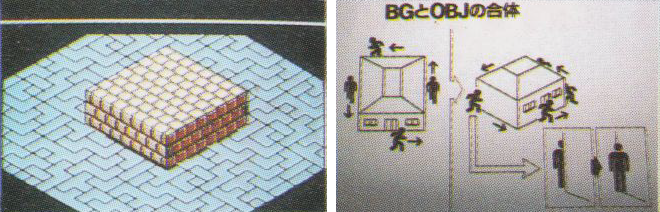
The complexity of the engine grew exponentially during development. While Naitō initially promised his map designers a capacity for 200 maps, the final product eventually utilized a staggering 850 interconnected maps. If laid out side-by-side, Naitō estimated the game world would occupy the physical footprint of the Tokyo Dome. This technical feat allowed for unprecedented verticality, enabling characters to jump onto platforms, hide behind buildings, and navigate multi-layered dungeons where objects possessed actual volume data, even on surfaces the player could not see.
Artistic Direction and Character Evolution
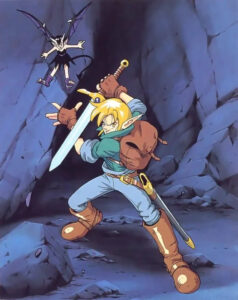
As the technical foundation solidified, Graphic Designer Yoshitaka Tamaki was tasked with populating this world. Tamaki, who had been instrumental in the aesthetic success of the Shining series, initially proposed a "beastman wizard" as the protagonist. However, Naitō requested a character more in line with a free-spirited adventurer. This led to the creation of Nigel (known as Lyle in Japan), a forest elf and professional treasure hunter.

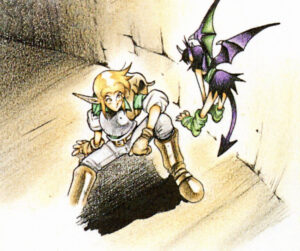
Nigel was designed to be a "romantic" adventurer who operated outside the traditional "hero" archetype. To avoid direct comparisons to Nintendo’s The Legend of Zelda, Tamaki introduced Friday, a palm-sized nymph who served as Nigel’s partner. Friday was more than a cosmetic companion; she was integrated into the gameplay mechanics as the source of Nigel’s revival via the "Eke Eke" plant.
The animation process was equally rigorous. Unlike standard side-scrollers, every character in Landstalker required four-directional animation frames. Nigel alone possessed dozens of animation cycles for walking, jumping, rope-climbing, and attacking, all of which had to be hand-drawn to ensure fluidity. This work was managed through a proprietary tool called Mirage III, which allowed designers to visualize map structures as wireframes before applying Tamaki’s detailed pixel art.

The Branding Shift: From Shining Spirit to Landstalker
One of the most persistent mysteries in Climax’s history involves the game’s separation from the Shining franchise. Early in development, the project was titled Hero Lancelot: Legend of Shining and later Shining Spirit. Concept documents reveal that the game was originally intended to be a direct sequel to Shining in the Darkness, with Nigel belonging to the same elven race as the character Pyra.
However, by the time of the official press reveal on June 11, 1992, at the Tokyo Prince Hotel, the game had been rebranded as Landstalker. Naitō justified the change by stating the gameplay was so fundamentally different from previous Climax titles that it deserved to be its own franchise. Internal accounts from staff, including composer Motoaki Takenouchi, hinted at "internal frictions" within the studio, suggesting a creative split between Naitō and Takahashi. This divergence saw Takahashi continue with the Shining series under the Sonic! Software Planning banner, while Naitō took full control of Climax to pursue his isometric ambitions.

Sonic and Orchestral Landscapes
The auditory experience of Landstalker was crafted by Motoaki Takenouchi, a protégé of the legendary Koichi Sugiyama. Takenouchi joined the project in early 1992 and was challenged by the increasing scope of the game, eventually composing 40 tracks.
Takenouchi’s score was notable for its blend of rhythmic adventure themes and complex orchestral arrangements. He famously pushed for a two-minute piano ballad for Princess Loria (Lara), instructing players to put down their controllers and simply listen. This dedication to musical storytelling reflected the studio’s broader philosophy of treating video games as high-art dioramas. Takenouchi would later depart the industry in 1996, expressing frustration with how music was often tied to the perceived quality of a game’s commercial success rather than its artistic merit.
Production Culture and the "Greenmaze"
The final months of development were characterized by an intense "training camp" culture. The team frequently stayed at the Yomiuri Land Hotel, holding 24-hour meetings to finalize dungeon traps and event scenarios. When the core design team became mentally exhausted near the 80% completion mark, they opened a company-wide call for map ideas.
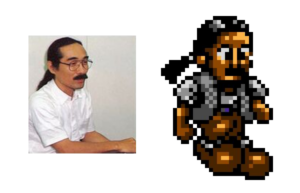
This led to the inclusion of some of the game’s most iconic locations, such as the "Greenmaze" (proposed by Ryushiro Miyazaki) and the "Tibor Tree" (proposed by Hiroto Nakashima). These late-stage additions pushed the ROM size to 16Mb, a significant investment for a Mega Drive cartridge in 1992.
Launch, Reception, and Legacy
Landstalker was released in Japan on October 30, 1992, and was an immediate commercial success, selling approximately 35,000 units in its first week. Critics praised its visual innovation and the complexity of its puzzles, though some noted the inherent difficulty of diagonal platforming without the aid of character shadows. Naitō famously defended the lack of shadows, explaining that the processing power required to render them for every moving object and trap would have halved the game’s frame rate and reduced the number of on-screen NPCs.
The game eventually reached Western markets in 1993, where it earned a reputation as one of the Mega Drive’s premier titles. Despite its success, a direct sequel never materialized. A spiritual successor, Dark Savior, was released for the Sega Saturn in 1996, and a spin-off titled Ladystalker appeared on the Super Famicom, but neither captured the specific charm of Nigel’s original adventure.

A 2005 attempt to remake Landstalker for the PlayStation Portable (PSP) was unveiled at the Tokyo Game Show, promising a full 3D environment while retaining the isometric perspective. However, the project was quietly canceled, and Climax Entertainment eventually ceased operations in 2014.
Today, Landstalker remains a landmark in technical engineering. It represents a moment in time when developers were willing to reinvent the geometry of gaming to provide players with a sense of wonder and discovery. Through numerous re-releases on digital platforms and the Mega Drive Mini, the treasures of King Nole continue to be sought by new generations of adventurers, cementing Kan Naitō’s "electronic diorama" as a permanent fixture in the history of the medium.








