
 Farhan hamdan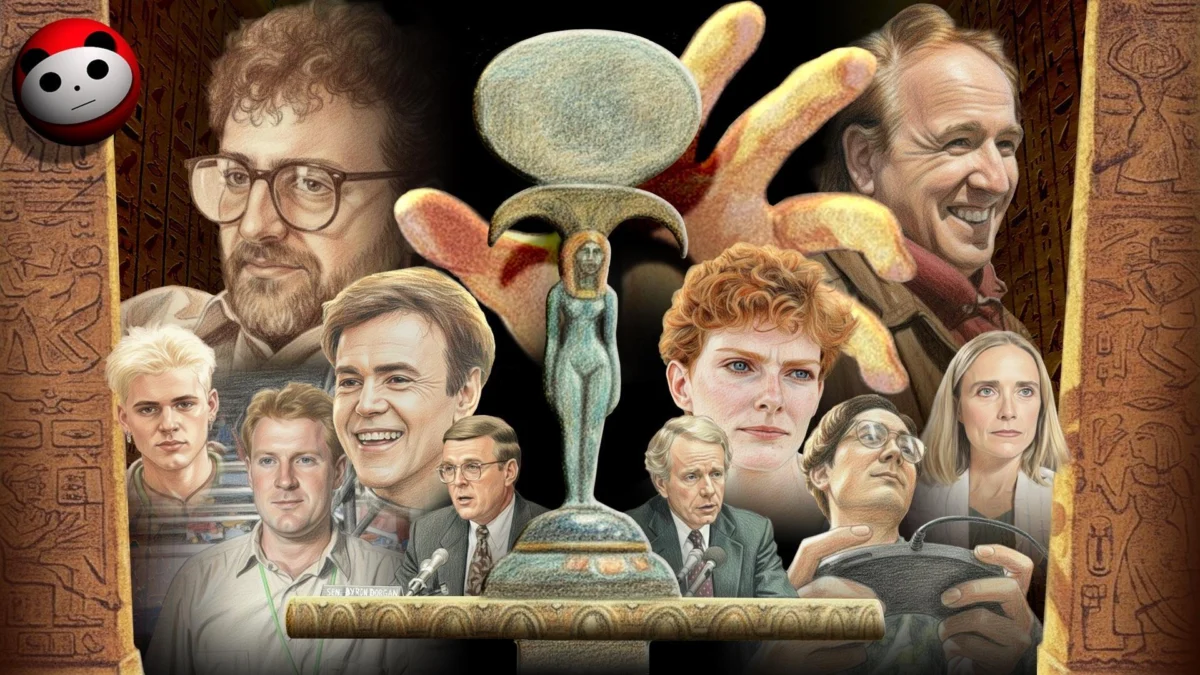
The digital media landscape is currently abuzz with the release of "Digging for Isix: A Digital Pictures History," an monumental docuseries by Nick from PandaMonium Reviews. Spanning nearly eight hours, this meticulously researched production offers an exhaustive examination of Digital Pictures, the pioneering company synonymous with Full Motion Video (FMV) gaming, alongside an unprecedented deep dive into one of its most iconic titles, "Double Switch." The series has been lauded for its comprehensive scope, revealing previously unknown details and offering fresh perspectives on a pivotal, often misunderstood, era in video game history.
The Genesis of Full Motion Video and Digital Pictures
To fully appreciate the significance of "Digging for Isix," one must understand the technological and cultural context that gave birth to Full Motion Video games. The early 1990s marked a period of rapid innovation in the nascent home console market, with manufacturers constantly seeking ways to differentiate their offerings. Traditional sprite-based graphics and early 3D polygons were the norm, but the promise of integrating live-action footage directly into gameplay captivated developers and players alike. This was the era of FMV, a genre characterized by its use of pre-recorded video clips and interactive cinematic sequences, often presented as branching narratives or puzzle-solving challenges.
At the forefront of this movement was Digital Pictures, founded by Tom Zito in 1991. Zito, a former journalist and veteran of the video game industry, envisioned a future where interactive entertainment could rival the production values of Hollywood films. His company capitalized on emerging technologies, particularly the burgeoning CD-ROM format, which offered vastly superior storage capacity compared to traditional cartridges. This allowed for the inclusion of lengthy video sequences, albeit often heavily compressed and low-resolution by modern standards. Digital Pictures quickly became a dominant force, producing a string of titles that pushed the boundaries of what was technically feasible and creatively imagined for interactive media. Their early work often involved converting existing film footage into interactive experiences, but they soon began to produce original content, employing actors, directors, and film crews to create bespoke gaming experiences.
A Comprehensive Chronology of Digital Pictures’ Innovations
The docuseries meticulously chronicles Digital Pictures’ journey, from its ambitious inception to its eventual dissolution. Key to its narrative is a detailed timeline of the company’s output, highlighting the evolution of FMV technology and design.
- 1992 – The Sega CD Launch: Digital Pictures made an immediate impact with the launch of the Sega CD, releasing "Sewer Shark" as a pack-in title. This rail-shooter, featuring live-action segments, showcased the potential of FMV, albeit with limitations. Its success solidified the company’s position as a leader in the emerging genre.
- 1992 – Night Trap: Perhaps Digital Pictures’ most famous, or infamous, title, "Night Trap" was initially developed for Hasbro’s cancelled NEMO system before finding a home on the Sega CD. This interactive horror game, where players monitored surveillance cameras to protect teenagers from vampiric creatures, would later become the focal point of a national controversy.
- 1993 – Expanding Horizons: As FMV gained traction, Digital Pictures expanded its portfolio. Titles like "Double Switch" (which receives a dedicated deep dive in the docuseries) and "Corpse Killer" further refined the interactive movie formula, incorporating more complex branching paths and puzzle elements. The company also experimented with different genres, including the instructional "Kids on Site" and the mystery "Ground Zero Texas."
- Mid-1990s – Peak and Decline: The mid-90s saw FMV’s widespread adoption across multiple platforms, including the 3DO, PC, Sega Saturn, and even the PlayStation. Digital Pictures continued to innovate, but the genre’s inherent limitations – constrained interactivity, often criticized acting, and the rapid advancement of 3D graphics – began to surface. As traditional 3D polygon-based games offered increasingly immersive and dynamic gameplay, the static nature of FMV started to feel dated.
- Late 1990s – Legacy and Dissolution: Despite efforts to adapt, including titles like "Quarterback Attack with Mike Ditka," the market for pure FMV games waned. Digital Pictures eventually ceased operations, but its legacy as a pioneer of interactive storytelling and its influence on later cinematic gaming experiences remained.
The "Night Trap" Controversy: A Defining Moment for the Industry
No discussion of Digital Pictures or FMV gaming is complete without acknowledging the "Night Trap" controversy, an event that profoundly shaped the video game industry. In late 1993, "Night Trap" became a central exhibit in highly publicized U.S. Senate hearings on video game violence and indecency. Senators Joseph Lieberman and Herb Kohl spearheaded these hearings, fueled by concerns from parent groups and media watchdogs about the perceived graphic content and sexual themes in games like "Night Trap" and "Mortal Kombat."
"Night Trap" was singled out for its scene depicting a "drainage system" where a young woman in a nightgown is captured by "Augers" (vampire-like creatures) who attempt to drain her blood. While the scene was largely implied rather than explicitly graphic, and the game itself carried an MA-17 rating, it was presented as evidence of the industry’s moral failings. The hearings ignited a national debate about censorship, media responsibility, and the protection of minors in the context of burgeoning interactive entertainment.
The docuseries, according to initial reports, includes a "bombshell" revelation about this "Night Trap ban," suggesting new details that challenge or expand upon the widely accepted narrative. This fresh perspective is crucial for a complete historical understanding of an event that directly led to the establishment of the Entertainment Software Rating Board (ESRB) in 1994. The ESRB, an industry-funded self-regulatory body, implemented a standardized rating system for video games, a direct response to the threat of government regulation. This move was a critical turning point, allowing the industry to self-govern content classification and avoid potential federal intervention, thereby safeguarding its creative freedom while addressing public concerns.

"Double Switch": A Deeper Dive into Interactive Storytelling
While "Night Trap" captured headlines, "Double Switch" stands as a testament to Digital Pictures’ more ambitious design aspirations. The docuseries’ dedicated exploration of this title provides invaluable insights into the complexities of FMV production. Released in 1993 for the Sega CD and later for other platforms, "Double Switch" placed players in a multi-camera surveillance role within an old mansion, tasked with protecting its inhabitants from intruders by activating various traps.
The game featured a more intricate narrative than many of its contemporaries, boasting a cast that included Corey Haim, Debbie Harry (of Blondie fame), and R. Lee Ermey. Its non-linear structure and emphasis on observation and quick decision-making represented a significant step forward for the genre. The docuseries delves into the extensive filming process, the challenges of editing disparate video clips into a cohesive interactive experience, and the technical hurdles of compressing hours of footage onto limited storage media. Understanding the production of "Double Switch" offers a window into the creative and technical ingenuity required to produce FMV games, often with budgets that, while significant for the time, were modest compared to traditional film productions. The series likely highlights how Digital Pictures attempted to balance cinematic quality with engaging gameplay, a constant struggle for FMV developers.
PandaMonium Reviews: Setting a New Standard for Gaming Documentaries
Nick from PandaMonium Reviews has established a reputation for meticulously researched and deeply engaging video game documentaries. His previous work, including a highly acclaimed documentary on "Sega Rally," demonstrated a commitment to historical accuracy and comprehensive storytelling. "Digging for Isix" elevates this standard further, drawing comparisons to critically lauded productions like "The Last Dance," the ESPN miniseries on Michael Jordan and the Chicago Bulls. This comparison is not made lightly; it underscores the docuseries’ ambition to treat video game history with the same gravitas and exhaustive detail typically reserved for mainstream sports or historical events.
The format, described as a "multi-part docu-series" akin to Netflix productions, is crucial. It allows for the exploration of an immense amount of content without feeling rushed or repetitive. The original article highlights that, unlike some commercial docuseries, "Digging for Isix" maintains a clear, continuous narrative without stretching content unnecessarily. This speaks to Nick’s dedication to quality over quantity, ensuring that every minute of the nearly eight-hour runtime contributes meaningfully to the overall story. The inclusion of new interviews with key figures from Digital Pictures, actors, and industry insiders, alongside never-before-seen footage and internal documentation, underscores the unprecedented access and research that went into this project.
The Significance of Historical Preservation and Broader Implications
"Digging for Isix: A Digital Pictures History" is more than just a retrospective; it is an invaluable act of historical preservation. The FMV era, while often viewed with a degree of irony or dismissed as a technological dead end, represents a crucial experimental phase in interactive entertainment. It explored early concepts of narrative choice, cinematic presentation, and the blurring of lines between film and game. Documentaries like Nick’s ensure that these efforts, successes, and failures are not forgotten but are instead thoroughly documented and analyzed.
The docuseries’ new revelations, particularly concerning the "Night Trap" controversy, have the potential to reframe historical narratives and provide a more nuanced understanding of an event that had profound implications for the video game industry’s self-regulation and public perception. By bringing to light previously untold stories and perspectives, it encourages a reappraisal of Digital Pictures’ contributions and the broader legacy of FMV.
Furthermore, the work of independent creators like Nick from PandaMonium Reviews fills critical gaps in institutional archives. Often, the history of video games, especially from smaller studios or niche genres, can be fragmented or lost. These dedicated, fan-driven archival efforts ensure that a comprehensive and accurate record is maintained for future generations of historians, developers, and enthusiasts. The influence of FMV can still be seen in modern gaming, from quick-time events to highly cinematic narrative-driven titles and interactive dramas. Understanding its origins and evolution, as presented in this docuseries, provides essential context for appreciating contemporary game design.
The release of "Digging for Isix" serves as a powerful reminder of the rich and complex history of video games. It underscores the importance of supporting independent creators who dedicate themselves to such exhaustive and vital historical documentation. Viewers are encouraged to watch the docuseries, available freely, and to consider supporting Nick via his Patreon at https://www.patreon.com/pandamoniumnick, thereby enabling the continuation of such invaluable projects that illuminate the lesser-known, yet equally significant, chapters of gaming’s past.








