Retno Hari Mulyono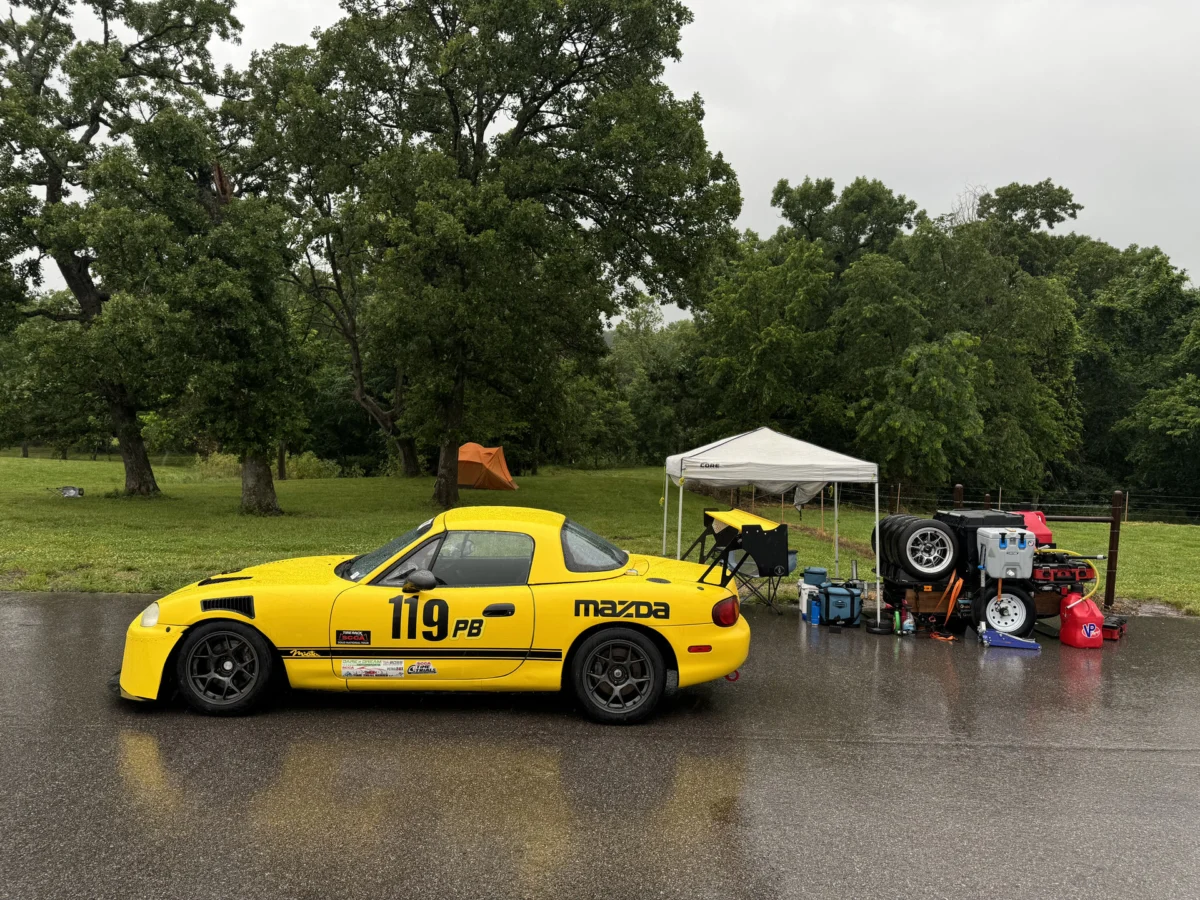
The rise of grassroots motorsports and the increasing accessibility of track day events have necessitated a logistical revolution for enthusiasts who drive compact sports cars. As drivers transition from novice categories to intermediate and advanced levels, the limitations of standard street tires become a primary bottleneck for performance. The solution for many has shifted toward "Extreme Performance Summer" tires, typically rated with a 200 Treadwear (TW) grade or lower. However, the specialized nature of these compounds creates a significant challenge: they are optimized for the thermal demands of a race track but are ill-suited for the rigors and unpredictability of daily street use. For owners of small-displacement, compact vehicles like the Mazda Miata, which lack the internal volume to transport a spare set of wheels, the emergence of the custom tire trailer has become a vital piece of engineering for the weekend warrior.
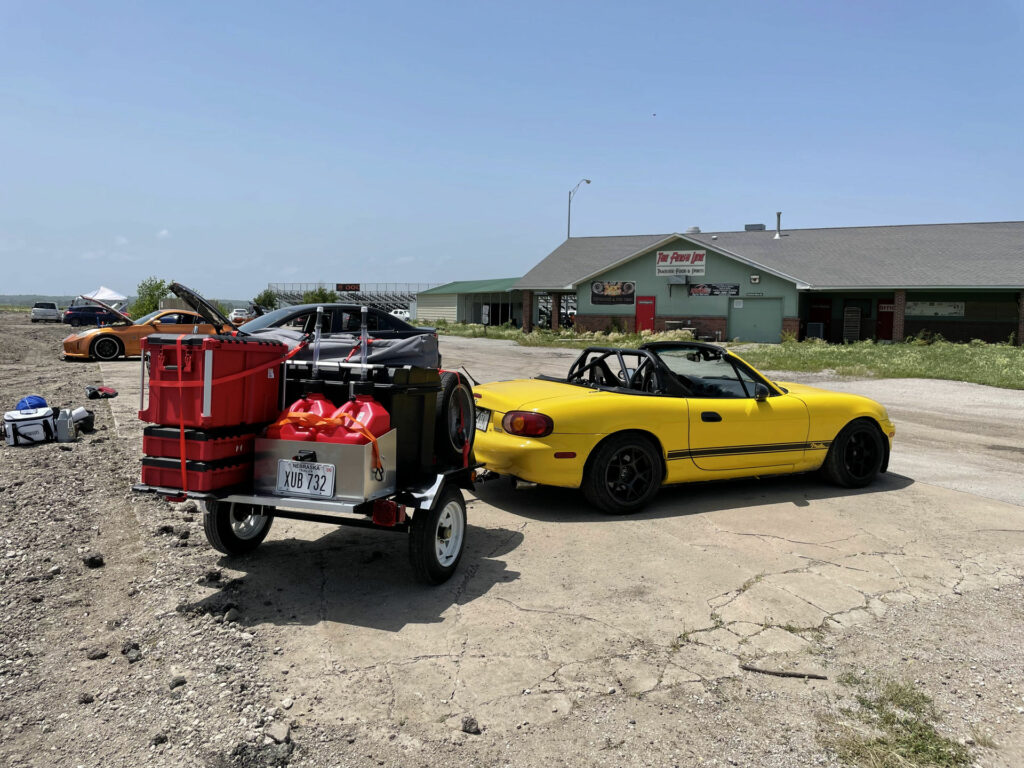
The Technical Conflict: Track Performance vs. Street Durability
The automotive industry distinguishes between high-performance street tires and dedicated track rubber through chemistry and construction. Tires such as the Hankook Ventus RS4 or the Bridgestone Potenza RE-71RS are designed to provide maximum lateral grip once they reach a specific operating temperature. However, this performance comes at a cost. Most track-oriented tires are rated for a limited number of "heat cycles"—the process of heating the tire through aggressive driving and allowing it to cool.
Driving track tires on public highways subjects them to unnecessary heat cycles and abrasive wear that can prematurely harden the rubber compound, effectively "greasing out" the tires before their tread is even depleted. Furthermore, the specialized tread patterns on 200TW tires are designed for dry-weather grip, often featuring minimal siping. This leads to a high risk of hydroplaning during sudden rainstorms, a scenario that has led to numerous documented incidents of loss of vehicle control on public roads.
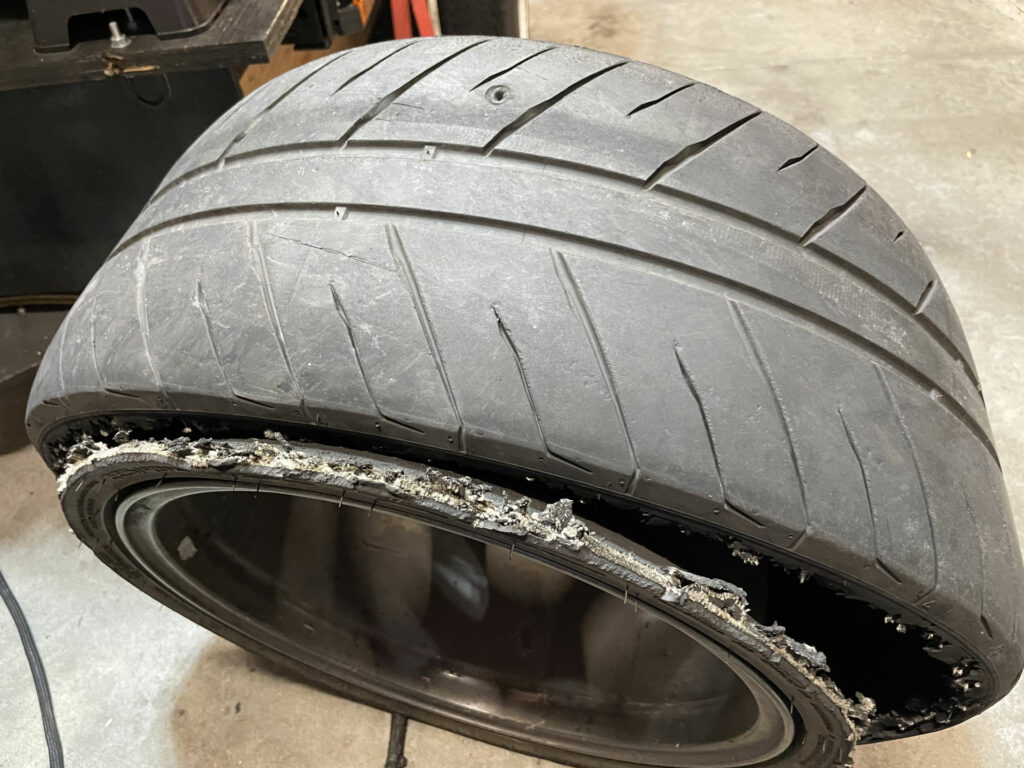
Industry data suggests that high-performance tires can lose up to 15% of their effective grip after a dozen heat cycles, even if the tread depth remains legal. For an enthusiast traveling 200 miles to a circuit like Ozarks International Raceway or Heartland Motorsports Park, the round-trip journey can inflict more degradation than the actual track sessions. Additionally, the risk of road debris—such as nails or glass—causing a blowout on an expensive set of track rubber provides a financial incentive to keep these tires off the highway.
Chronology of a Custom Utility Build
For many enthusiasts, the journey toward a dedicated tire trailer begins with the realization that a support vehicle is not always financially or logistically feasible. The development of a custom trailer typically follows a phased approach, evolving from a basic frame to a sophisticated mobile paddock.

Phase I: Foundation and Assembly
The most common starting point in the North American market is a lightweight utility frame, such as the 40"x48" steel kits provided by Northern Tool or Harbor Freight. These kits arrive as flat-packed components requiring manual assembly. While these frames are rated for capacities between 700 and 1,000 pounds, they provide a blank canvas for customization.
In the initial build phase, a deck—often constructed from 3/4-inch Sande plywood—is bolted to the frame using recessed carriage bolts to ensure a flush mounting surface. For a Mazda Miata, the deck is often extended slightly (approximately 62 inches in width) to accommodate the car’s footprint and provide extra surface area without compromising the turning radius or aerodynamic profile of the tow vehicle.
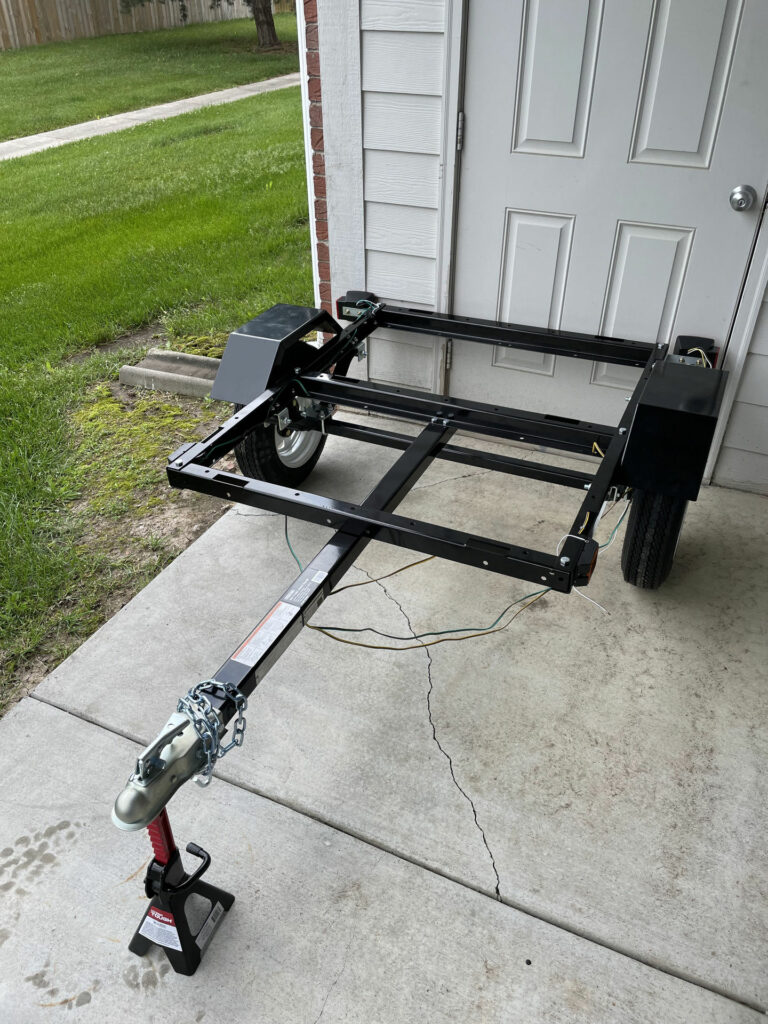
Phase II: Utility Integration and Weight Distribution
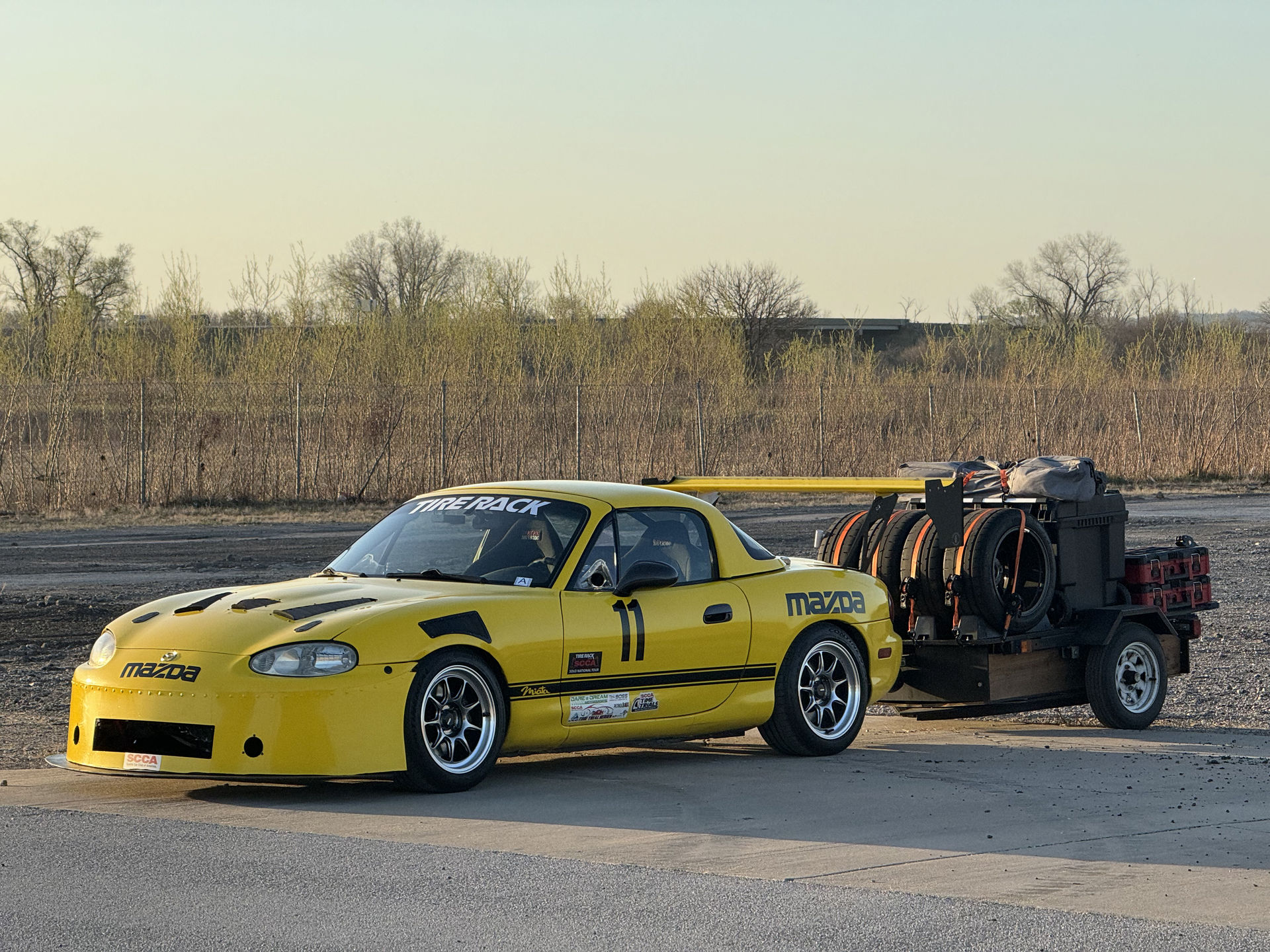
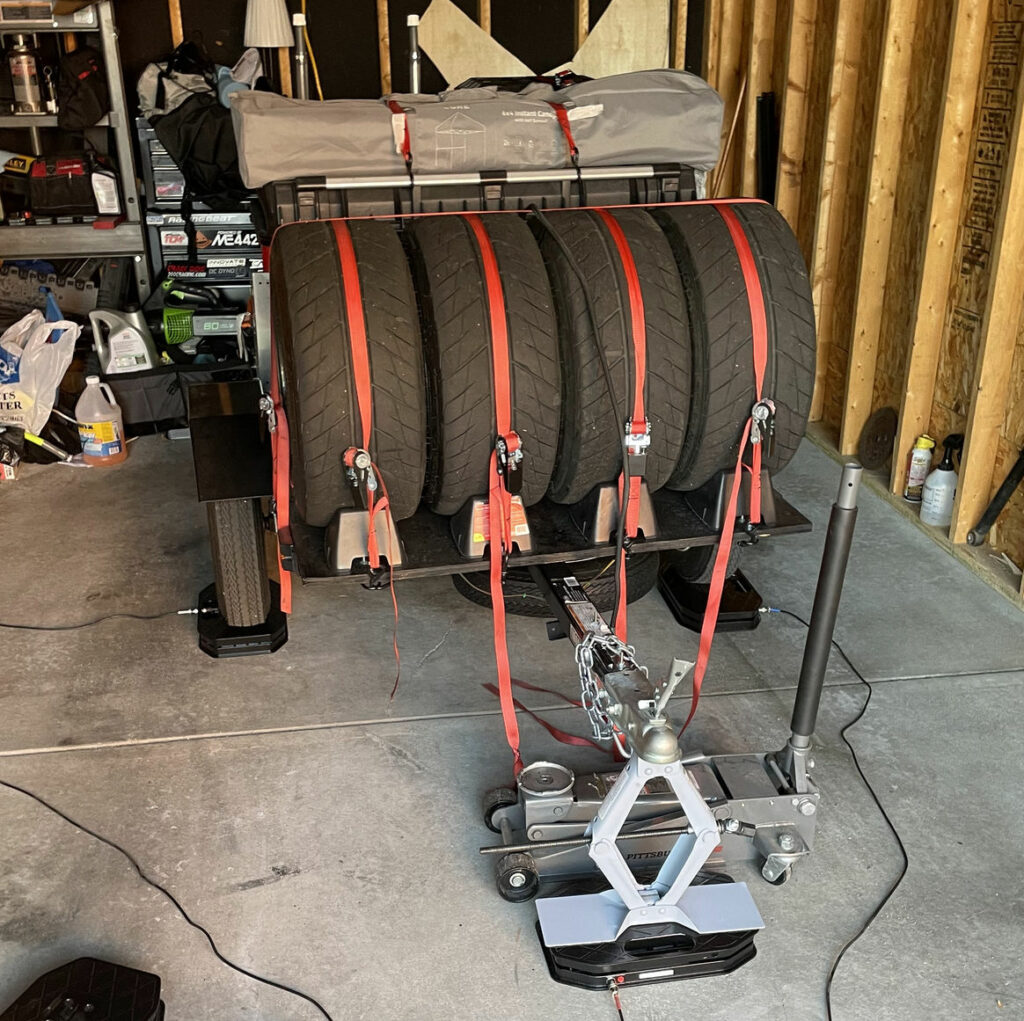
The primary goal of a tire trailer is the secure transport of four wheels and tires. Engineering best practices dictate that the heaviest items—the tires—be positioned at the front of the trailer to ensure proper tongue weight. A trailer with insufficient tongue weight is prone to high-speed swaying, which can be catastrophic when towed by a lightweight vehicle.
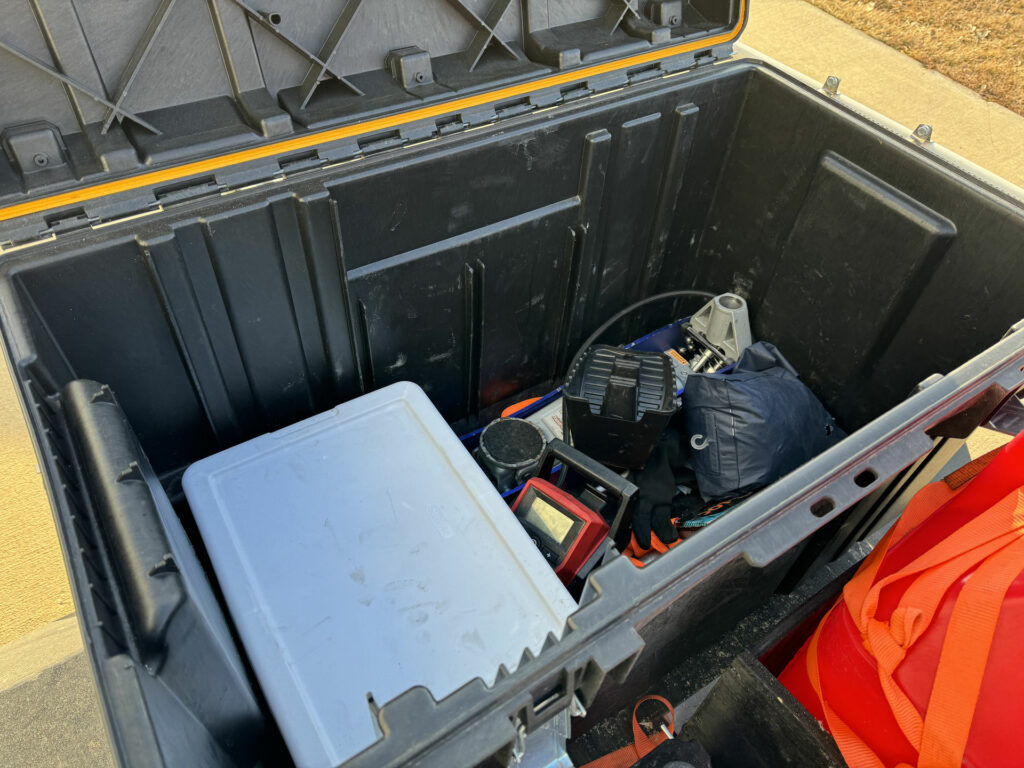
To complement the tires, builders often integrate weather-tight storage solutions. The DeWalt DWST38000, a heavy-duty rolling toolbox, has become a staple in the community due to its aluminum rails and locking mechanisms. This allows for the organized storage of essential track tools:
- Torque wrenches and impact guns
- Long-reach low-profile floor jacks
- Air compressors and digital pressure gauges
- Pyrometers for measuring tire temperatures
- Consumables such as brake fluid, spare sensors, and fuses
Phase III: The "Version 2.0" Advanced Upgrades
As enthusiasts gain experience, the limitations of basic trailer designs become apparent. The evolution of a trailer often includes a "lower deck" modification. By mounting a secondary plywood tier beneath the main axle, drivers can store flatter items such as jack stands, canopy weights, or even a spare aerodynamic splitter. This lowers the overall center of gravity and maximizes the volumetric efficiency of the trailer.
Overcoming the Infrastructure Gap: Fuel and Fluid Management
One of the most significant hurdles for track enthusiasts is the availability of specialized fuels. Many modern track builds are tuned for E85 (85% ethanol), which offers superior cooling and knock resistance but is notoriously difficult to find near rural race tracks.
The integration of high-capacity fuel systems into tire trailers has become a critical modification. While standard 5-gallon VP Racing jugs are common, advanced builds now utilize 15-gallon Flo-Fast fuel containers. These systems often include integrated hand-crank pumps, allowing drivers to refuel in the paddock without the physical strain of lifting heavy jugs. This logistical independence allows drivers to attend multi-day events at remote facilities without the "range anxiety" associated with high-consumption track driving.
The Physics of Small-Scale Towing: Radial vs. Bias-Ply
A critical point of failure in many entry-level trailers is the tire and bearing system. Most budget trailer kits come equipped with bias-ply tires, which are adequate for short-distance utility hauling but struggle with the heat dissipation required for sustained highway speeds (70+ mph).
Technical analysis of trailer failures shows that bias-ply tires are more susceptible to sidewall overheating and tread delamination. Upgrading to radial tires, such as the 145R12 specification, offers several advantages:
- Thermal Stability: Radial construction allows for better heat dissipation, resulting in lower operating temperatures for both the rubber and the wheel bearings.
- Load Distribution: Radials provide a more consistent contact patch, reducing the "bouncing" effect common with lightweight trailers on uneven pavement.
- Longevity: Community data indicates that radial trailer tires can last upwards of 10,000 miles, compared to the 3,000-mile lifespan often seen with budget bias-ply alternatives.
Safety Regulations and Community Response
The use of DIY tire trailers has drawn attention from track safety officials and organizations like the Sports Car Club of America (SCCA) and the National Auto Sport Association (NASA). While these trailers are generally street-legal under state Department of Transportation (DOT) guidelines for "light utility trailers," safety inspectors emphasize the importance of secondary safety chains, functioning LED lighting, and regular bearing lubrication.
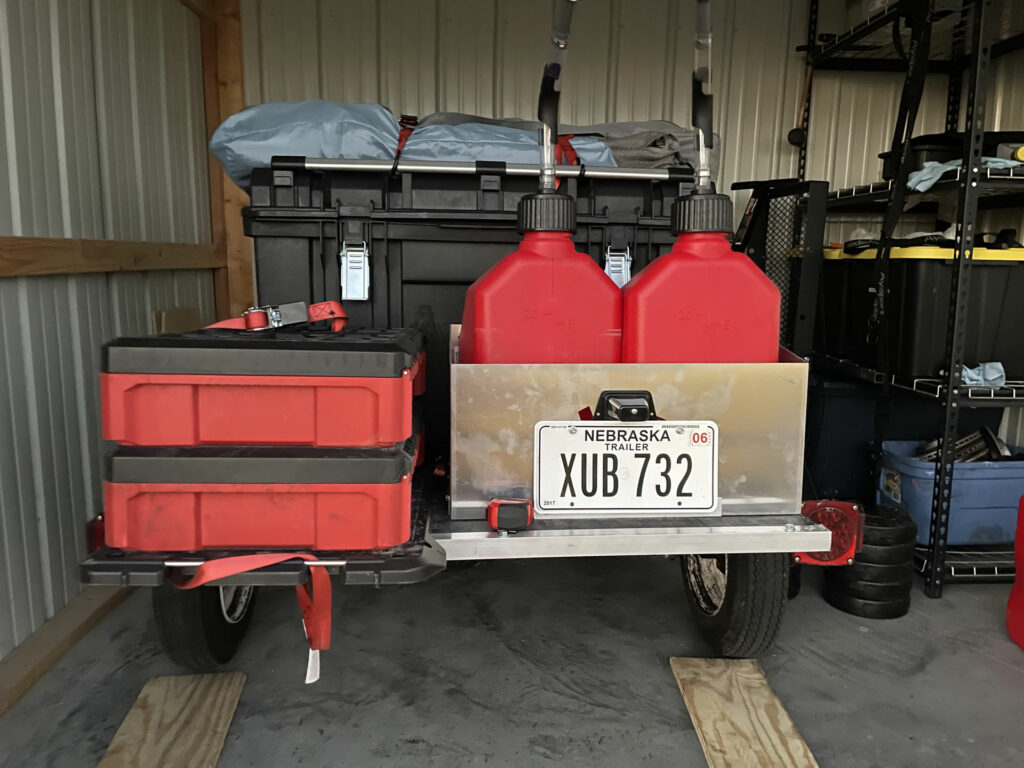
Reaction from the track community has been overwhelmingly positive, with many viewing the tire trailer as a "badge of honor" for the self-supported racer. "The tire trailer represents the ultimate expression of the grassroots spirit," says one regular at Ozarks International Raceway. "It’s about the engineering challenge of fitting a weekend’s worth of racing infrastructure into a 16-square-foot footprint."
However, there is a growing trend toward "upscaling." As enthusiasts move into more expensive vehicle platforms, many eventually transition to a full truck-and-trailer setup. While a dedicated car hauler offers the ultimate protection for the vehicle, the tire trailer remains the most cost-effective solution, with total build costs typically ranging from $500 to $1,500, compared to the $40,000+ investment required for a modern tow rig.

Broader Impact and Market Implications
The popularity of these custom builds has influenced the aftermarket industry. Companies like Leroy Engineering have emerged to fill the gap between DIY kits and professional trailers, offering high-end "paddock trailers" featuring independent suspension and custom paint matching. This niche market highlights a shift in consumer behavior: track day participants are no longer just drivers; they are amateur logistics managers who value modularity and efficiency.
In conclusion, the tire trailer is more than a simple utility tool; it is a sophisticated response to the logistical bottlenecks of grassroots motorsports. By allowing compact sports cars to transport specialized tires, tools, and fuel, these trailers have extended the reach of the hobby, enabling drivers to tackle premier circuits across the country without compromising the safety or longevity of their equipment. As tire technology continues to diverge between street and track applications, the role of the dedicated support trailer will only become more central to the track day experience.