Farhan hamdan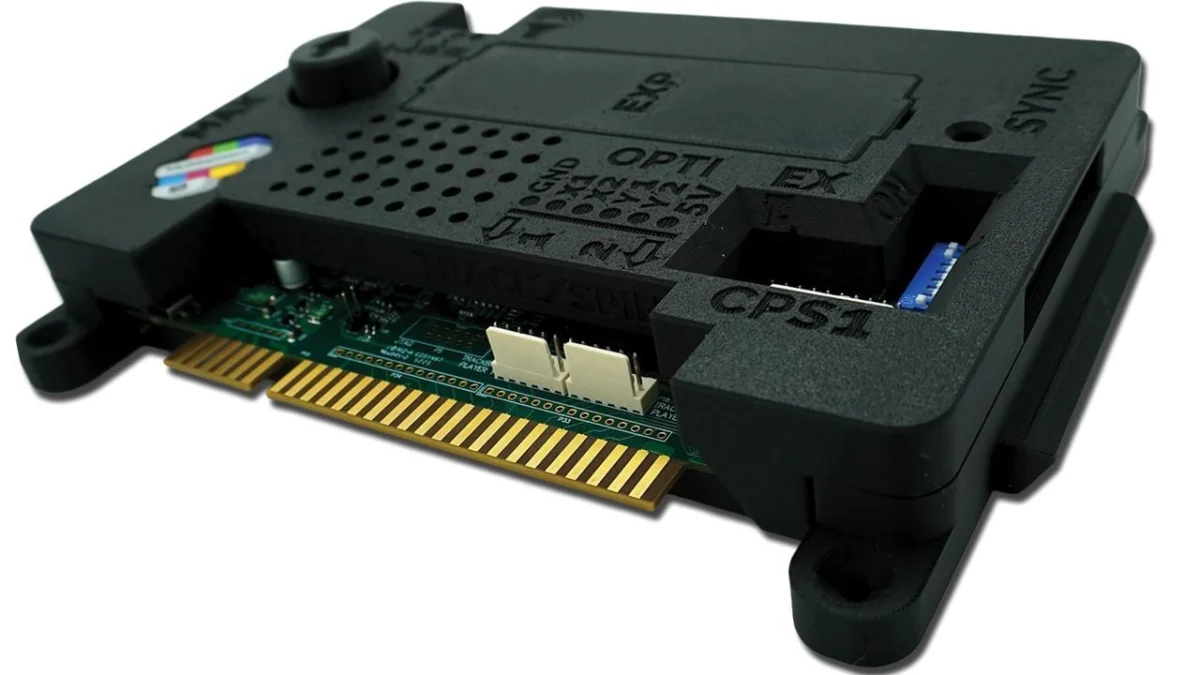
The MiSTer Multisystem team has officially announced the release of their second JAMMA-based MiSTer kit, a significant development poised to enhance the accessibility and functionality of FPGA-driven retro gaming within traditional arcade cabinets. This new integrated system, dubbed the MiSTer Multisystem 2 Arcade (JAMMA), represents a complete MiSTer solution engineered to plug directly into existing arcade machines, facilitating authentic FPGA gaming experiences directly on their original Cathode Ray Tube (CRT) displays and utilizing the arcade’s built-in joysticks and buttons. Breaking from the conventional MiSTer setup that necessitates a separate DE-10 Nano development board, this innovative kit integrates the FPGA and all essential circuitry directly onto its main board, offering a streamlined, plug-and-play experience. Priced at approximately $350, the units are slated for shipment in August, with pre-orders currently open via Heber.co.uk.
This introduction marks a pivotal moment for arcade enthusiasts and preservationists, offering a robust, cost-effective, and user-friendly method to breathe new life into vintage arcade cabinets. The integrated design addresses common barriers to entry associated with the MiSTer project, making sophisticated FPGA emulation more approachable for a wider audience. The product launch, accompanied by a comprehensive informational page and a demonstration video, underscores the team’s commitment to delivering high-quality, specialized hardware solutions for the retro gaming community.
The MiSTer Project: A Cornerstone of Retro Gaming Preservation
To fully appreciate the significance of the MiSTer Multisystem 2 Arcade (JAMMA), it is crucial to understand the foundational MiSTer project and the broader landscape of Field-Programmable Gate Array (FPGA) technology in retro gaming. The MiSTer FPGA project, initiated by Alexey Melnikov, is an open-source initiative aimed at hardware-level recreation of classic computing and gaming systems. Unlike software emulation, which simulates hardware functions, FPGA technology reconfigures a chip to become the original hardware at a transistor level. This distinction is critical, as it virtually eliminates the latency, timing inaccuracies, and graphical glitches often associated with software emulators.
The core of the MiSTer project traditionally revolves around the Terasic DE-10 Nano, an off-the-shelf development board featuring an Intel Cyclone V SE FPGA. Community developers, leveraging the open-source nature of the project, create "cores" – hardware descriptions that configure the FPGA to replicate specific consoles, arcade machines, and home computers. This approach delivers unparalleled accuracy, often achieving cycle-accurate reproductions of original hardware, which is paramount for competitive gaming and historical preservation. The MiSTer platform has rapidly expanded its library, now boasting hundreds of cores for iconic systems ranging from the NES, SNES, Genesis, and Neo Geo to a vast array of classic arcade cabinets like Pac-Man, Donkey Kong, Street Fighter II, and countless others.
The journey of the MiSTer project began in the late 2010s, with early adopters piecing together various components: the DE-10 Nano, an I/O board for video and audio output, a USB hub for peripherals, and a specialized SDRAM module. While highly effective, this modular approach could be daunting for newcomers due to the multiple components, wiring, and configuration steps involved. This complexity created a niche for third-party developers and manufacturers to design integrated solutions, simplifying the user experience while maintaining the core benefits of FPGA technology.
The Evolution of Integrated MiSTer Solutions
The demand for more streamlined MiSTer setups led to the emergence of "all-in-one" or "integrated" MiSTer boards. These solutions combine the functionality of the DE-10 Nano and its essential peripherals onto a single, custom-designed Printed Circuit Board (PCB). The primary goals behind this integration are severalfold: reducing overall cost by optimizing component sourcing, enhancing reliability by minimizing inter-component connections, and significantly improving user-friendliness through a more compact and self-contained unit.
The MiSTer Multisystem team has been at the forefront of this integration trend. Their previous releases, including the original MiSTer Multisystem and the subsequent MiSTer Multisystem 2 (which offered enhanced analog video capabilities but was not specifically JAMMA-focused), demonstrated a clear commitment to simplifying the MiSTer experience. These earlier versions successfully integrated the FPGA, memory, and I/O functionalities into a single board, requiring users only to add an SD card with their desired cores and ROMs. These products were well-received by the community, particularly those seeking a more polished and less DIY-intensive entry into FPGA gaming for home console setups.
The development of a JAMMA-specific integrated solution was a natural progression. The arcade market, characterized by its standardized JAMMA interface, presented a unique opportunity for a plug-and-play MiSTer system. Traditional arcade PCBs are often prone to failure due to age, heat, and component degradation, making their repair increasingly challenging and costly. The MiSTer Multisystem 2 Arcade (JAMMA) offers a modern, reliable, and versatile alternative, allowing classic cabinets to host a library of games far exceeding their original single-game or limited multi-game configurations.
Deep Dive: MiSTer Multisystem 2 Arcade (JAMMA) Technical Specifications and Features
The MiSTer Multisystem 2 Arcade (JAMMA) distinguishes itself through a suite of features tailored specifically for the arcade environment. Its most prominent characteristic is the absence of a separate DE-10 Nano. Instead, the core FPGA (likely an Intel Cyclone V SE, similar to the one found on the DE-10 Nano, or a functionally equivalent part) is directly integrated onto the main PCB. This design choice not only reduces the physical footprint but also streamlines the manufacturing process and potentially lowers the bill of materials, contributing to the competitive $350 price point.
JAMMA Standard Compatibility: The cornerstone of this device is its full adherence to the JAMMA standard. JAMMA, short for Japan Amusement Machine and Marketing Association, is a widely adopted wiring standard for arcade games established in 1985. It defines pinouts for power, video (RGB), audio (mono/stereo), and player controls (joysticks, buttons 1-3 for each player). Direct JAMMA compatibility means the MiSTer Multisystem 2 Arcade can be effortlessly inserted into virtually any standard JAMMA arcade cabinet without requiring custom wiring harnesses or adapters. This is a significant advantage for arcade operators and home users alike, drastically reducing setup time and potential for error. The board outputs standard 15kHz RGB video signals, perfectly compatible with the native CRTs found in most JAMMA cabinets, ensuring an authentic visual experience complete with scanlines and correct aspect ratios.
Video and Audio Output: Beyond basic JAMMA compliance, the system delivers high-fidelity video and audio. The integrated design prioritizes a clean 15kHz RGB signal, essential for pristine image quality on arcade CRTs. Unlike modern displays that often struggle with low-resolution analog signals, CRTs render these images flawlessly, capturing the true aesthetic of classic arcade games. The audio output is designed to connect directly to the cabinet’s sound system, providing clear stereo sound, a notable upgrade for many older mono-only JAMMA boards. Some integrated designs also include onboard audio amplifiers, further simplifying the setup by directly driving cabinet speakers.
Control Integration: The MiSTer Multisystem 2 Arcade maps directly to the arcade cabinet’s controls. Player one and player two joysticks and buttons are recognized natively, providing a responsive and authentic gameplay experience. The FPGA’s near-zero latency, combined with direct hardware control mapping, ensures that inputs are registered instantaneously, a critical factor for precision-based arcade titles. This direct integration avoids the input lag sometimes associated with USB adapters or software layers.
Connectivity and Storage: The board typically includes essential connectivity options. While the primary interface is JAMMA, it will feature an SD card slot for loading MiSTer cores, firmware, and game ROMs (referred to as "RBF" files for cores and "MRA" files for games). An Ethernet port is usually present for network connectivity, allowing for easy firmware updates, core downloads, and potentially network play features for compatible cores. USB ports are also expected, providing flexibility for connecting additional peripherals such as keyboards for system configuration, extra gamepads for multi-player games beyond the standard JAMMA controls, or even USB storage devices.
Robust Enclosure: The pre-order page specifies a "black enclosure," indicating that the system will ship as a complete, protected unit. This enclosure not only safeguards the sensitive electronics from dust, debris, and accidental damage within the cabinet but also provides a professional finish, contrasting with the often exposed PCBs of traditional arcade boards or DIY MiSTer setups.

Market Position and Competitive Landscape
The MiSTer Multisystem 2 Arcade (JAMMA) enters a burgeoning market for retro gaming hardware, positioning itself as a premium yet accessible solution for a specific niche: arcade cabinet owners. Its primary competition comes from two main areas:
-
Traditional MiSTer Setups: A standard MiSTer build involves purchasing a DE-10 Nano, an I/O board, an SDRAM module, a USB hub, and various cables. While this modular approach offers maximum flexibility and often a slightly lower initial component cost if sourced carefully, it demands technical proficiency in assembly and configuration. The MiSTer Multisystem 2 Arcade’s integrated design significantly reduces this complexity, justifying its slightly higher price point for the convenience and reliability it offers.
-
Other Integrated JAMMA MiSTer Solutions: The retro gaming community has seen other innovators develop integrated JAMMA MiSTer solutions, such as the MiSTercade v2 kit. These alternatives also aim to simplify MiSTer integration into arcade cabinets. The MiSTer Multisystem 2 Arcade will compete by offering its unique blend of features, build quality, and potentially a more optimized internal design. Factors like specific FPGA choice, additional port availability, enclosure design, and regional distribution channels will play a role in distinguishing these offerings. Users are advised to meticulously compare the specifications of each product to determine which best fits their existing cabinet and desired functionality. The fact that the MiSTer Multisystem 2 Arcade does not require a separate DE-10 Nano is a key differentiator, as it means the entire core MiSTer functionality is included in the single unit price.
-
Multi-Game PCBs (e.g., Pandora’s Box): While not FPGA-based, multi-game PCBs like Pandora’s Box are popular alternatives for arcade cabinet owners seeking a vast library of games. However, these systems rely on software emulation, which often suffers from input lag, inaccurate emulation, and scaling artifacts when displayed on CRTs. The MiSTer Multisystem 2 Arcade, with its hardware-level FPGA accuracy, offers a superior, authentic experience that appeals to purists and competitive players.
The $350 price point positions the MiSTer Multisystem 2 Arcade as a significant investment for a single component, but one that replaces the need for numerous original arcade PCBs, each potentially costing hundreds or thousands of dollars. When viewed through the lens of game preservation and accessibility to a vast library, the cost becomes highly competitive.
Implications for Arcade Preservation and Revival
The release of integrated JAMMA MiSTer solutions like the MiSTer Multisystem 2 Arcade has profound implications for the preservation and revival of arcade gaming.
Extending Cabinet Lifespan: Many classic arcade cabinets are still mechanically sound, but their original PCBs are fragile, prone to failure, and difficult to repair due to scarce components. By replacing the original game board with a modern, reliable FPGA system, these cabinets can continue to function as intended for decades to come. This transforms a single-game machine into a versatile platform capable of playing hundreds of titles.
Enhanced Accessibility and Versatility: For arcade operators, this means the ability to quickly swap between a massive library of games without changing physical boards, allowing for greater variety and catering to diverse player preferences. For home arcade enthusiasts, it democratizes access to an unparalleled collection of arcade classics, all playable on authentic hardware with original controls and displays. This makes setting up a home arcade more feasible and less reliant on finding specific, often expensive, original game boards.
Authenticity and Accuracy: The MiSTer FPGA’s commitment to hardware-level accuracy ensures that games play exactly as they were designed, preserving the developer’s original intent. This is critical for competitive play, historical research, and simply enjoying games as they were meant to be experienced. The direct 15kHz RGB output to CRTs maintains the pixel-perfect display characteristics, avoiding the scaling issues and visual compromises common with modern LCDs and software emulators.
Community-Driven Development: The MiSTer ecosystem is built on a vibrant, open-source community that continuously develops new cores and refines existing ones. This ensures long-term support and expansion of the platform, meaning the MiSTer Multisystem 2 Arcade will likely gain new capabilities and game compatibility over time, further increasing its value proposition.
Chronology of MiSTer Integrated Solutions and Key Milestones
The trajectory leading to the MiSTer Multisystem 2 Arcade (JAMMA) has been marked by several key developments within the MiSTer ecosystem:
- 2017-2018: The MiSTer project gains significant traction, with initial cores for consoles and arcade games emerging, primarily utilizing the Terasic DE-10 Nano with external I/O boards.
- 2019-2020: The community sees a surge in custom I/O board designs and accessories, indicating a desire for more refined and specialized MiSTer setups. Early concepts for integrated boards begin to surface.
- 2021: The first MiSTer Multisystem board is released, offering an integrated solution for home console gaming, consolidating many components onto a single PCB and simplifying the setup process for non-JAMMA applications.
- Late 2023 / Early 2024: The MiSTer Multisystem 2 is introduced, building upon its predecessor with further refinements, particularly in analog video output quality, though still primarily focused on home console integration rather than direct JAMMA.
- May 2024: The MiSTer Multisystem 2 Arcade (JAMMA) is officially announced, specifically targeting arcade cabinet integration with direct JAMMA compatibility and an integrated FPGA, removing the need for a separate DE-10 Nano. Pre-orders commence.
- August 2024: Expected shipping date for the MiSTer Multisystem 2 Arcade (JAMMA) units, making the product available to the general public.
This timeline illustrates a clear progression from modular, DIY-focused solutions to increasingly integrated and user-friendly products, driven by community demand and the innovative efforts of teams like MiSTer Multisystem.
Community Reception and Future Outlook
Initial reactions from the retro gaming community, particularly among arcade enthusiasts and MiSTer users, have been overwhelmingly positive. Key figures within the retro gaming media, such as Bob from RetroRGB, have championed integrated MiSTer solutions for their ability to lower the barrier to entry and simplify the user experience. The plug-and-play nature of the MiSTer Multisystem 2 Arcade (JAMMA) is frequently cited as a major advantage, making it an attractive option for those who want the accuracy of FPGA without the complexities of a multi-component build.
Developers involved in the MiSTer project often express satisfaction with integrated designs, as they provide a stable and consistent hardware platform for their cores. The robustness and dedicated design for arcade use cases are expected to contribute to the device’s longevity and reliability. Analysts suggest that such products could further accelerate the adoption of MiSTer FPGA in commercial arcade environments, potentially appearing in retro arcades or entertainment centers that seek to offer a wide variety of classic games with minimal maintenance overhead. The pre-order demand is anticipated to be strong, indicating a significant market appetite for high-quality, specialized retro gaming hardware.
In conclusion, the launch of the MiSTer Multisystem 2 Arcade (JAMMA) represents a significant milestone in the ongoing evolution of retro gaming hardware. By offering a complete, integrated FPGA solution that directly interfaces with the established JAMMA standard, the MiSTer Multisystem team has created a powerful tool for arcade preservation, accessibility, and authentic retro gameplay. This product not only streamlines the MiSTer experience for arcade cabinet owners but also reinforces the vital role of FPGA technology in ensuring that the rich history of arcade gaming remains vibrant and playable for generations to come. As these units begin shipping in August, they are poised to revolutionize how enthusiasts interact with their classic arcade machines, solidifying MiSTer’s position as a cornerstone of the retro gaming movement.