Chalid Lutfie
Following a three-year hiatus since the collaborative success of Parallel Processing, acclaimed musician Danimal Cannon has officially announced the upcoming release of his latest solo studio album, Lunaria. This project marks a significant milestone in the artist’s career, representing the culmination of a five-year developmental cycle focused on the seamless integration of Game Boy-based chiptune synthesis and high-performance electric guitar. While Danimal Cannon—the stage name for Buffalo-based musician Dan Burke—has long been a staple of the chiptune and video game music (VGM) communities, Lunaria is positioned as his most ambitious foray into the progressive metal and industrial genres to date.
The announcement comes at a time when the chiptune genre continues to evolve from a niche hobbyist movement into a sophisticated medium for contemporary composition. By blending the 8-bit limitations of legacy hardware with the expansive textures of modern progressive music, Burke aims to bridge the gap between retro-digital aesthetics and organic instrumental virtuosity. The album is scheduled for a global release on March 11, with pre-orders currently available through digital and physical distribution channels.
The Evolution of the Chiptune-Guitar Hybrid
The stylistic foundation of Lunaria is rooted in a long-standing challenge within the chiptune community: the successful marriage of the Nintendo Game Boy’s internal sound chip (the Sharp LR35902) with traditional rock instrumentation. Burke first explored this intersection in his 2011 release, Roots, where he experimented with adding guitar tracks to chiptune compositions. However, the artist has noted that the initial attempts often felt disparate, as the sharp, square-wave frequencies of the Game Boy frequently clashed with the harmonically rich distortion of the electric guitar.
Over the last four years, Burke has refined his compositional and engineering techniques to ensure that the two mediums function as a cohesive ensemble. This process involved a deep dive into frequency management and arrangement, treating the Game Boy not merely as a novelty backing track, but as a primary rhythmic and melodic lead that shares the sonic space with the guitar. The result, as showcased in the lead single "Behemoth," is a dense, polyrhythmic soundscape that aligns with the complexities of progressive metal.
The technical proficiency required for this integration is substantial. Chiptune production typically involves "tracking," a method of music sequencing where notes are entered into a grid-based interface on the original hardware. Synchronizing these rigid, clock-based sequences with the fluid, expressive nature of live guitar performance requires a meticulous approach to timing and production. In Lunaria, this synergy is reported to be "mastered," providing a "band-like" feel where the digital and the analog components are indistinguishable in their importance to the arrangement.
Conceptual Framework: The Giant Impact Hypothesis
Beyond its technical achievements, Lunaria is built upon a sophisticated conceptual narrative inspired by planetary science. Burke, a self-described enthusiast of scientific lectures and astrophysics, centered the album’s theme on the "Giant Impact Hypothesis." This scientific theory posits that approximately 4.5 billion years ago, a Mars-sized protoplanet named Theia collided with the early Earth (Gaia). The resulting debris from this cataclysmic event eventually coalesced to form the Moon.
In Lunaria, this celestial event is personified through the titular character, representing both the impactor and the resulting satellite. The name itself serves as a double entendre; while it references the lunar cycle, it also functions as a portmanteau of "Lunar" and "Aria"—the latter being a self-contained piece for one voice, typically found in opera. This linguistic choice reflects the album’s dramatic, narrative structure and its inclusion of operatic vocal elements. By framing a geological and astronomical event through a character-driven lens, Burke adds a layer of emotional resonance to an album that is otherwise defined by its technical rigidity.
Collaborative Efforts and Artistic Contributions
To achieve the "Lunar-aria" aspect of the project, Burke enlisted the talents of professional opera singer Emily Yancey. A former neighbor of Burke, Yancey’s classically trained timbre provides a stark contrast to the aggressive, distorted tones of the guitar and the digital chirps of the Game Boy. Her contributions are featured on two tracks, where she portrays the celestial persona of Lunaria. The decision to use a trained operatic voice was intentional; Burke sought a vocal quality that felt "celestial" and "god-like," moving away from the standard pop or rock vocals often found in electronic crossovers.
The album also features a significant contribution from Samuel Ascher-Weiss, better known in the experimental and VGM communities as Shnabubula. Ascher-Weiss, a frequent collaborator who also appeared on the 2011 album Roots, provided a piano rendition of the track "Axis." According to Burke, "Axis" represents the most technically demanding composition on the record. By reinterpreting a complex Game Boy and guitar piece for the piano, the collaboration highlights the underlying compositional depth of the music, proving that the melodies and rhythms hold artistic merit regardless of the instrument used for playback.
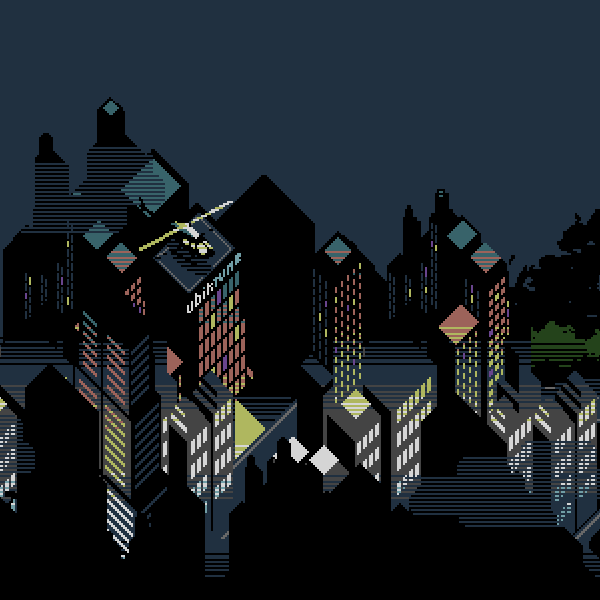
Visual representation for the project was handled by artist Minerva Mopsy, whose artwork aims to capture the ethereal and destructive nature of the album’s central theme. The physical release of the album will include a poster featuring this artwork, emphasizing the importance of visual storytelling in independent music releases.
Diverse Musical Influences and Stylistic Breadth
While Lunaria is primarily categorized within the metal and chiptune spheres, the album draws from a remarkably wide array of influences. Burke has cited several key inspirations that informed the writing process:
- Video Game Music (VGM): Specifically the soundtrack to Shovel Knight (composed by Jake Kaufman), which is celebrated for its modern application of 8-bit limitations.
- Indie Rock: The experimental duo Buke and Gase, known for their use of handmade instruments and unconventional polyrhythms.
- Industrial Music: The rhythmic aggression and sound design of Nine Inch Nails and KMFDM.
- Classical and Choral Music: The structural complexity of Mozart and the lush, atmospheric choral arrangements of contemporary composer Eric Whitacre.
This eclectic mix of influences suggests that Lunaria will appeal to a broad demographic, from fans of technical death metal to enthusiasts of electronic sound design and classical theory. The inclusion of industrial elements, in particular, complements the "machine-like" nature of the Game Boy’s sound chip, while the classical influences dictate the melodic movements and harmonic progressions.
Industry Context and Release Information
The release of Lunaria comes at a time when independent artists are increasingly utilizing platforms like Bandcamp to reach a global audience without the need for traditional label gatekeeping. Danimal Cannon has leveraged this model to build a dedicated fanbase that has transitioned from his early work in the "chiptune-core" scene to his current, more mature progressive compositions.
The album is set for release on March 11. It will be available in several formats:
- Digital Download: Available through Bandcamp and other major streaming platforms.
- Compact Disc (CD): A physical edition that includes an artwork poster by Minerva Mopsy.
- Lead Single: "Behemoth" is currently available for streaming, serving as a preview of the high-energy, complex arrangements found throughout the record.
Industry analysts note that Danimal Cannon’s work represents a growing trend of "hybridization" in independent music. As technology becomes more accessible, the barriers between genres—and between "high" and "low" tech—continue to dissolve. The use of a 1989 handheld gaming console as a professional synthesizer, paired with virtuosic guitar work and operatic vocals, exemplifies the creative freedom inherent in the modern independent music landscape.
Broader Impact and Implications
The release of Lunaria is likely to have a lasting impact on the chiptune and progressive metal communities. For chiptune artists, it provides a blueprint for how to integrate live instrumentation without sacrificing the unique characteristics of the 8-bit sound. For the metal community, it introduces a new palette of textures and sounds that challenge the standard tropes of the genre.
Furthermore, the album’s focus on scientific concepts and classical structures elevates the discourse surrounding video-game-adjacent music. By treating the Game Boy with the same reverence as a piano or a violin, Burke contributes to the ongoing legitimization of digital instruments in formal musical contexts.
As the release date of March 11 approaches, the anticipation within the community suggests that Lunaria will not only satisfy the long-standing requests of Danimal Cannon’s existing fanbase but will also attract new listeners interested in the intersection of science, technology, and progressive artistry. The five-year development period indicates a level of craftsmanship and intentionality that is rare in the fast-paced digital music market, positioning Lunaria as a potentially definitive work in the career of Dan Burke.