Retno Hari Mulyono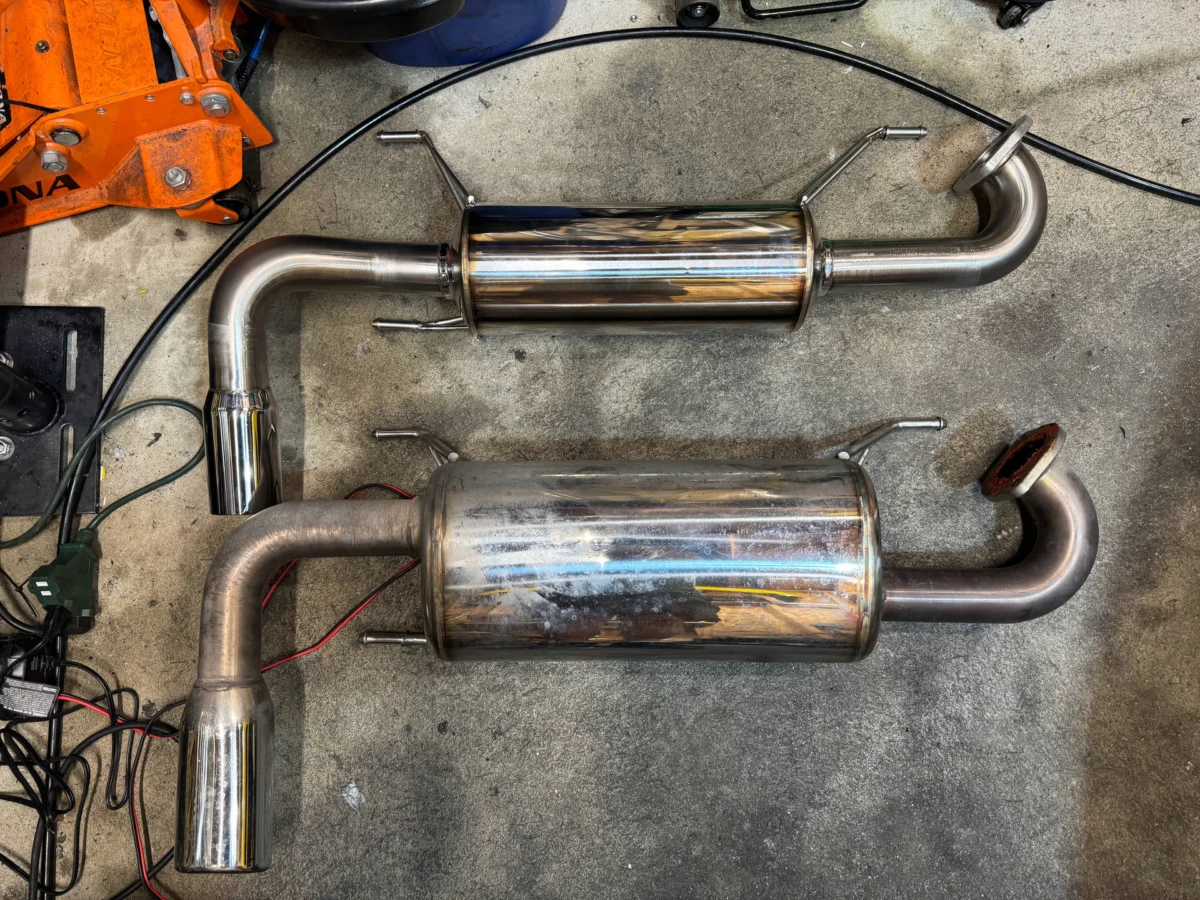
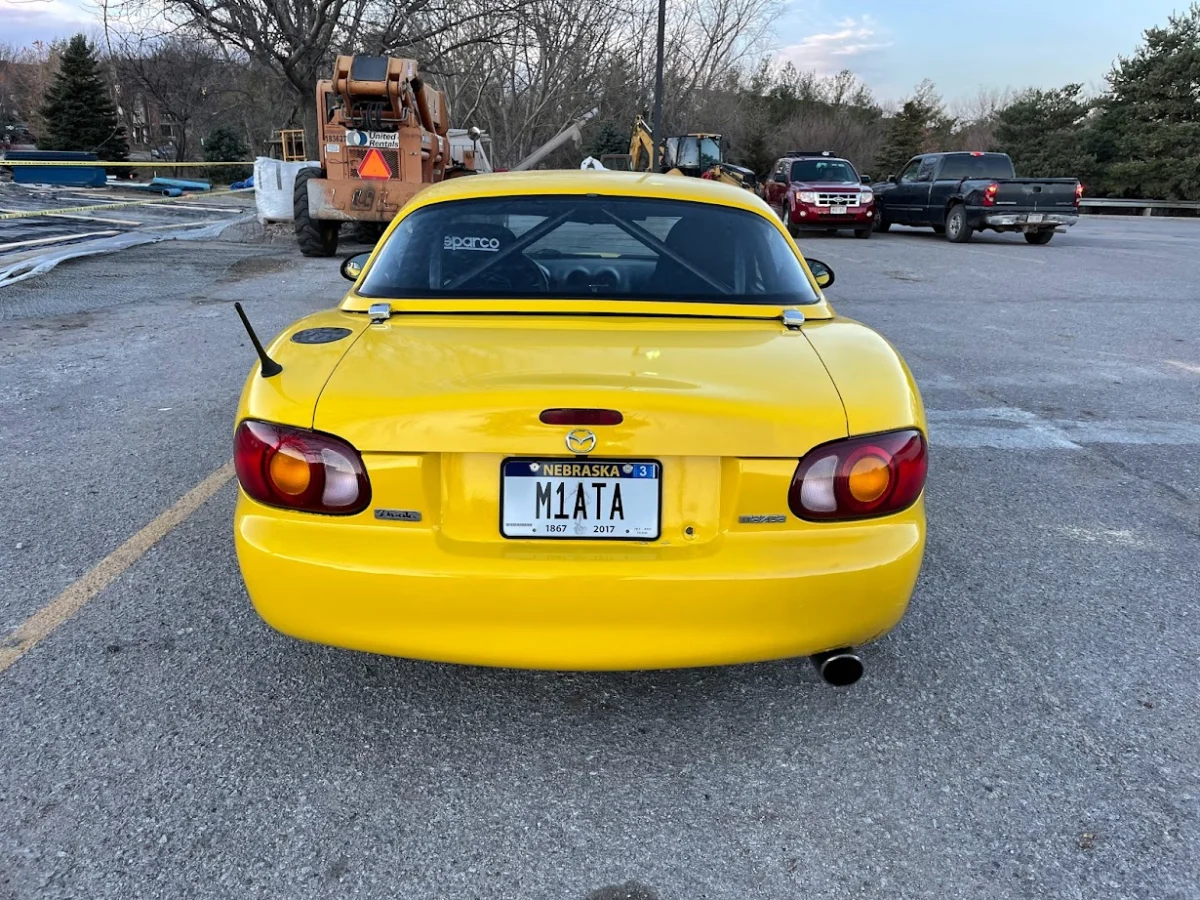
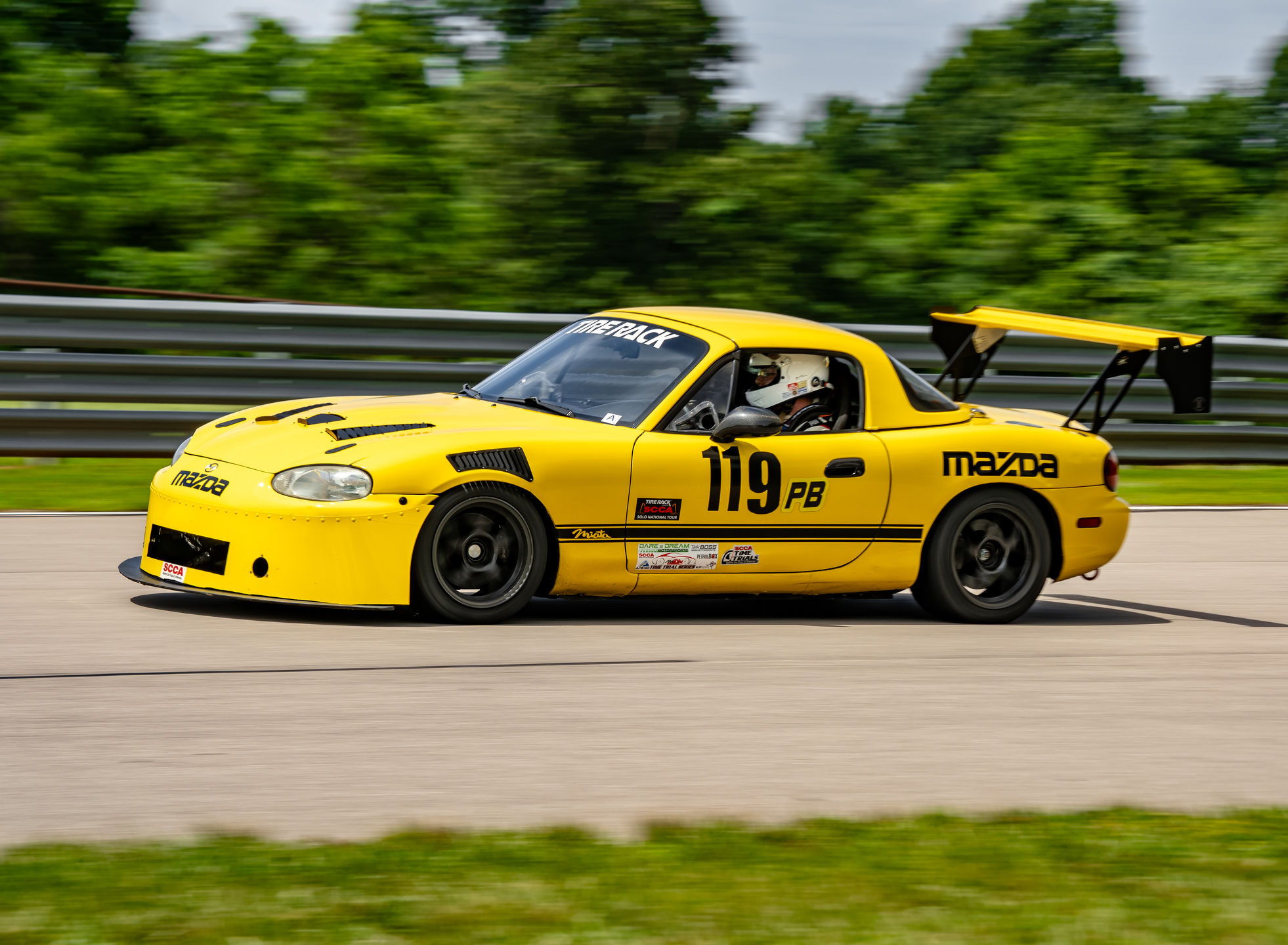
The fourth year of a comprehensive Mazda Miata NB development project has concluded, marking a significant transition from a dual-purpose street and autocross vehicle to a dedicated time-trial platform. Spanning from March 2024 through February 2025, the development cycle focused on three primary pillars: powertrain optimization, thermal management, and the professionalization of track-side logistics. Over the course of 16 track days and nearly 400 laps, the vehicle underwent rigorous testing at premier North American circuits, including Ozarks International Raceway and Motorsports Park Hastings. This period was characterized by high-stakes mechanical experimentation, including a Variable Valve Timing (VVT) engine conversion and the implementation of sophisticated communication and telemetry systems.
Powertrain Evolution and Mechanical Resilience
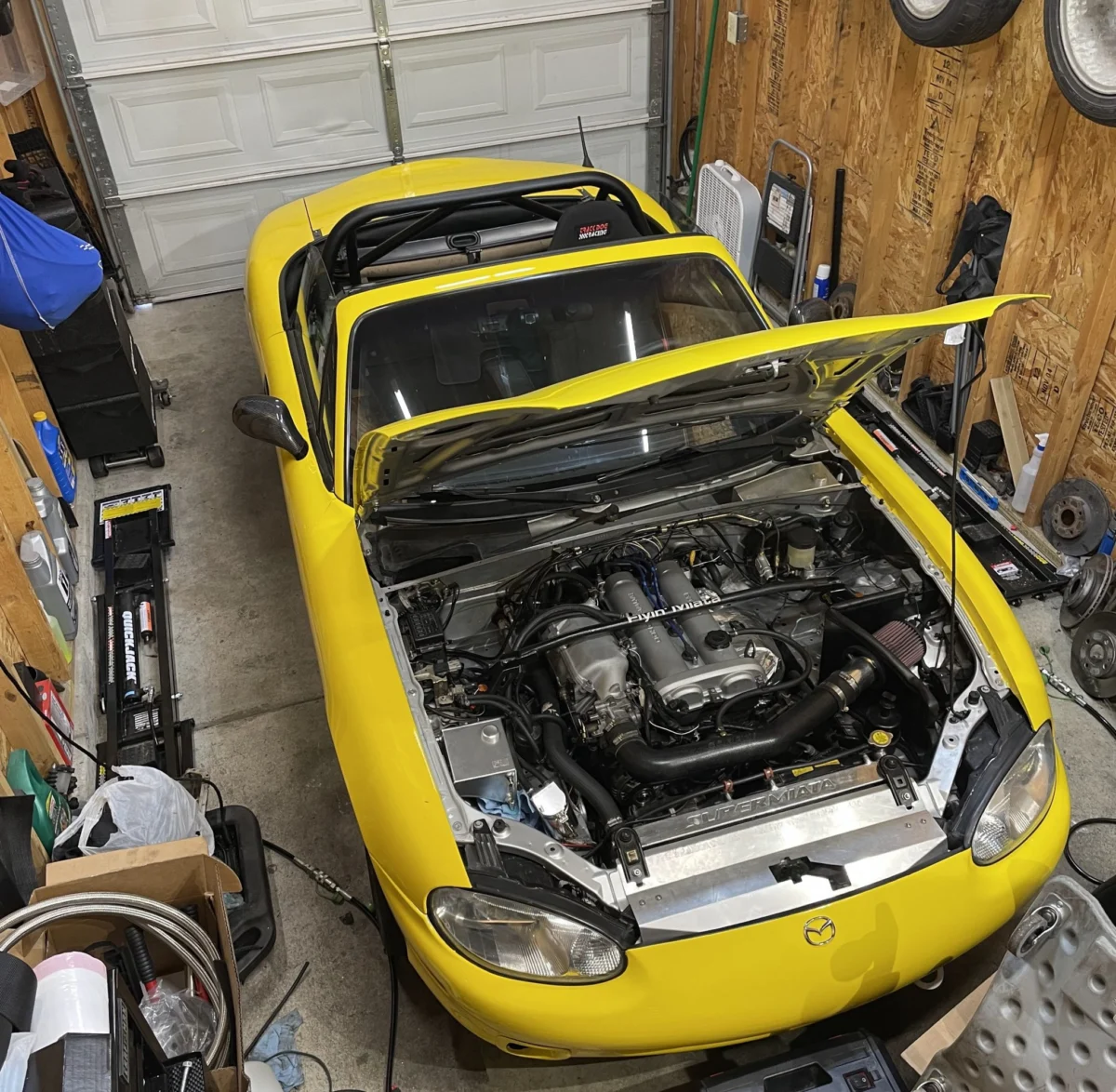
The development year commenced in March 2024 with a high-ambition engine swap. The goal was to replace the factory-original BP4W engine with a rebuilt BP6D VVT motor sourced from a later-model NB2 Miata. The BP6D is highly regarded in the Mazda tuning community for its variable valve timing, which offers a broader torque curve compared to the fixed-cam timing of earlier iterations. During the winter preparation phase, the cylinder head was fully rebuilt after diagnostic tests revealed inadequate valve sealing. The bottom end received a "DIY hone" with new Original Equipment Manufacturer (OEM) rings and aftermarket pistons.
To complement the increased power potential, the drivetrain was upgraded from a five-speed to a six-speed manual transmission. However, the initial deployment faced immediate challenges. During an early-season autocross event, the cooling system experienced a critical failure. The high-RPM demands of competitive driving led to a head gasket breach, causing internal pressure to spike and ejecting a freeze plug—the path of least resistance in the cooling circuit.
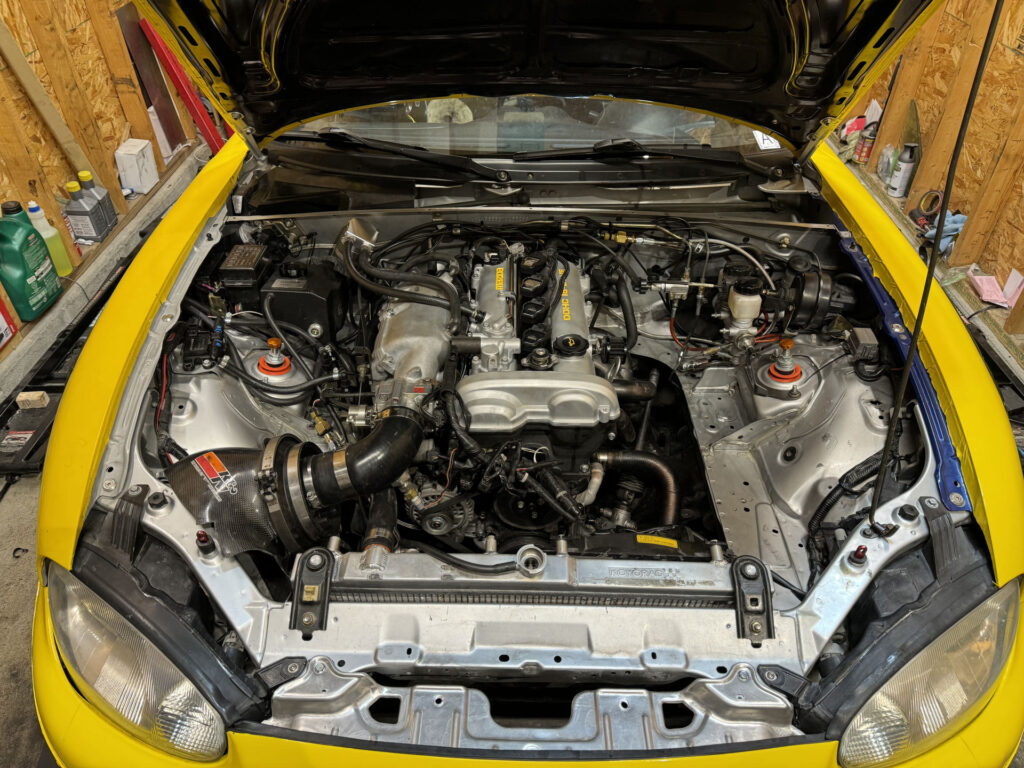
Faced with a minor but persistent head gasket leak and a full season of scheduled track events, the decision was made to revert to the reliable BP4W motor while retaining the newly installed six-speed transmission. This hybrid configuration served as the primary powertrain for the remainder of the 2024 season, providing a stable baseline for chassis and aerodynamic testing.
Thermal Management and Braking Efficiency
In April 2024, the project shifted focus toward thermal management, specifically regarding the braking system. The vehicle utilizes a Supermiata BX11 brake kit, which offers significant stopping power but suffers from accelerated pad wear due to the relatively thin profile of the pads. Data suggested that high operating temperatures were the primary driver of this premature degradation.
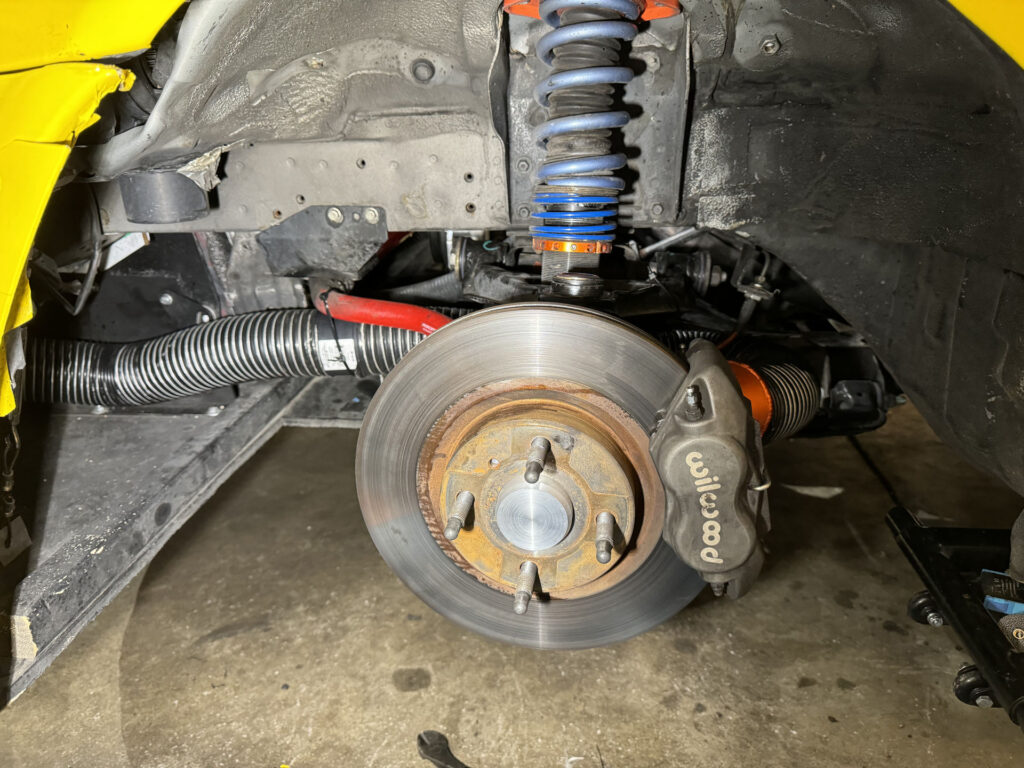
To mitigate this, custom brake cooling ducts were installed. The engineering solution utilized a modular two-section hose design connected by a central coupler. This approach was implemented to facilitate cost-effective repairs; should a section of the hose be damaged by road debris or tire rub, only the affected segment requires replacement. Analysis following several months of track use indicated that the cooling ducts approximately doubled the lifespan of the brake pads, representing a significant reduction in seasonal maintenance costs and improved consistency during long-duration sessions.
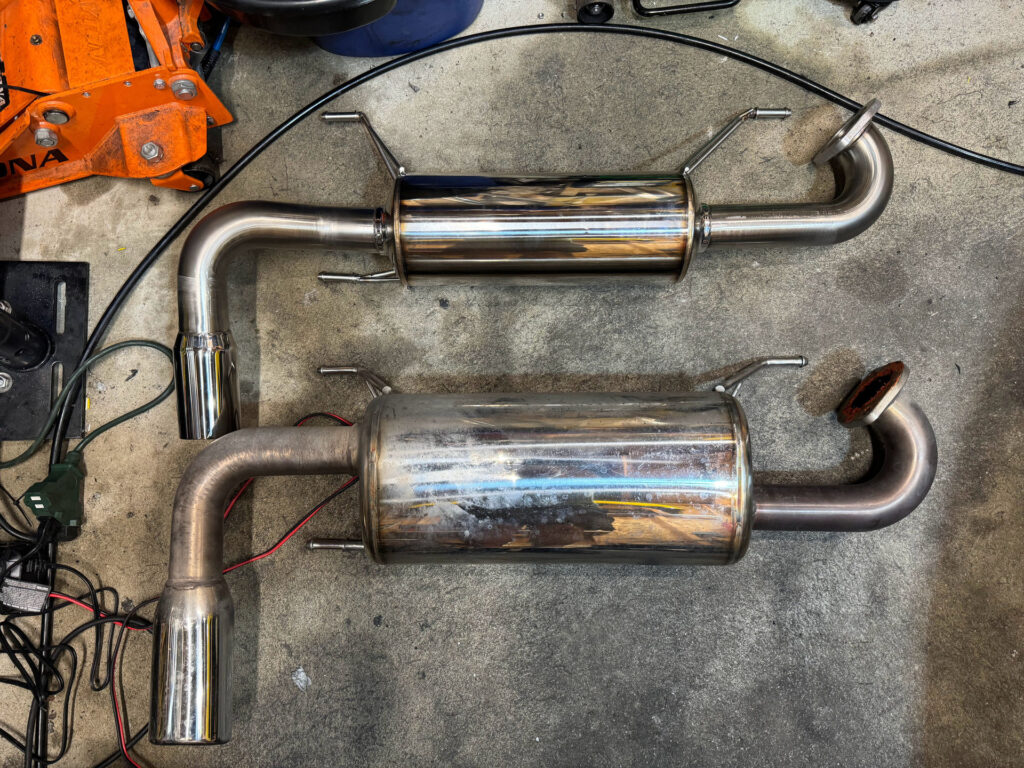
Exhaust modifications followed in May 2024. The existing Racing Beat Power Pulse muffler was replaced with a Racing Beat Race Muffler. This change was motivated by a dual requirement for weight reduction and enhanced auditory feedback for the driver. The final exhaust configuration—comprising a Raceland header, a Racing Beat Race resonated midpipe, and the Race muffler—was tested to ensure compliance with strict noise-limit regulations enforced at various permanent road courses, striking a balance between performance and regulatory adherence.
Competitive Benchmarking and Circuit Analysis
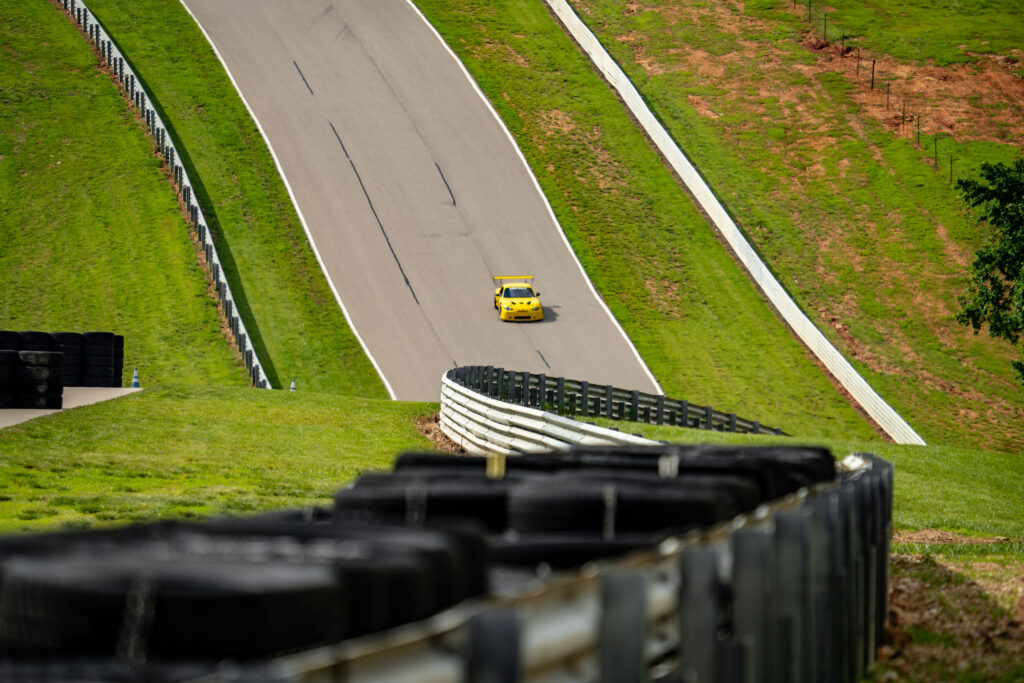
The summer months of 2024 served as the primary data-collection period for lap time improvements. In June, the vehicle was campaigned at Ozarks International Raceway, a highly technical 3.97-mile circuit known for its dramatic elevation changes and blind corners. Despite the inherent difficulty of the track, the driver reported significant year-over-year gains in velocity, attributing the progress to increased familiarity with the circuit’s complex topography.
August 2024 marked a high-water mark for the vehicle’s competitive standing. At Motorsports Park Hastings (MPH), during an SCCA Time Trials event, the Miata recorded a peak lap time of 1:39.19. This represented a 3.59-second improvement over the previous year’s best. To provide context for this performance, the time was faster than the established NASA Spec Miata record (1:40.415) and the NASA TT6 record (1:39.625) for the facility. While the car did not yet reach the NASA TT5 record of 1:34.110, its performance metrics place it firmly in the upper echelon of naturally aspirated regional competitors.
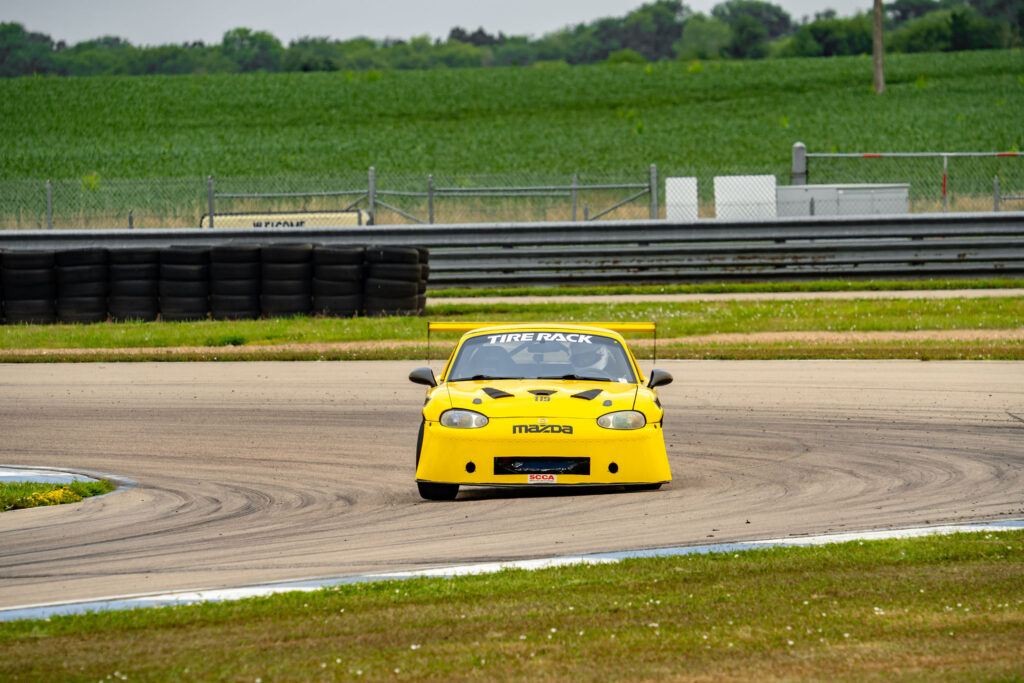
The season concluded at the Hallett Motor Racing Circuit in November 2024. This event was notable for its format, which required competitors to race in both clockwise and counter-clockwise directions on the same day. Despite tire fatigue and rear-wheel lockup issues toward the end of the event, the vehicle secured first-in-class positions in several sessions, validating the chassis setup and the driver’s consistency.
Logistics and Track-Side Infrastructure
A significant portion of the fourth year was dedicated to the "supporting cast" of racing: transportation and lodging. In June 2024, the acquisition of a dedicated tow vehicle allowed for a transition away from the "tire trailer" method, where the Miata was driven to the track while towing its own spares. The shift to a truck-and-trailer setup allowed for a 900-mile round trip to High Plains Raceway in July, providing the driver with a more controlled and less fatiguing transit environment.
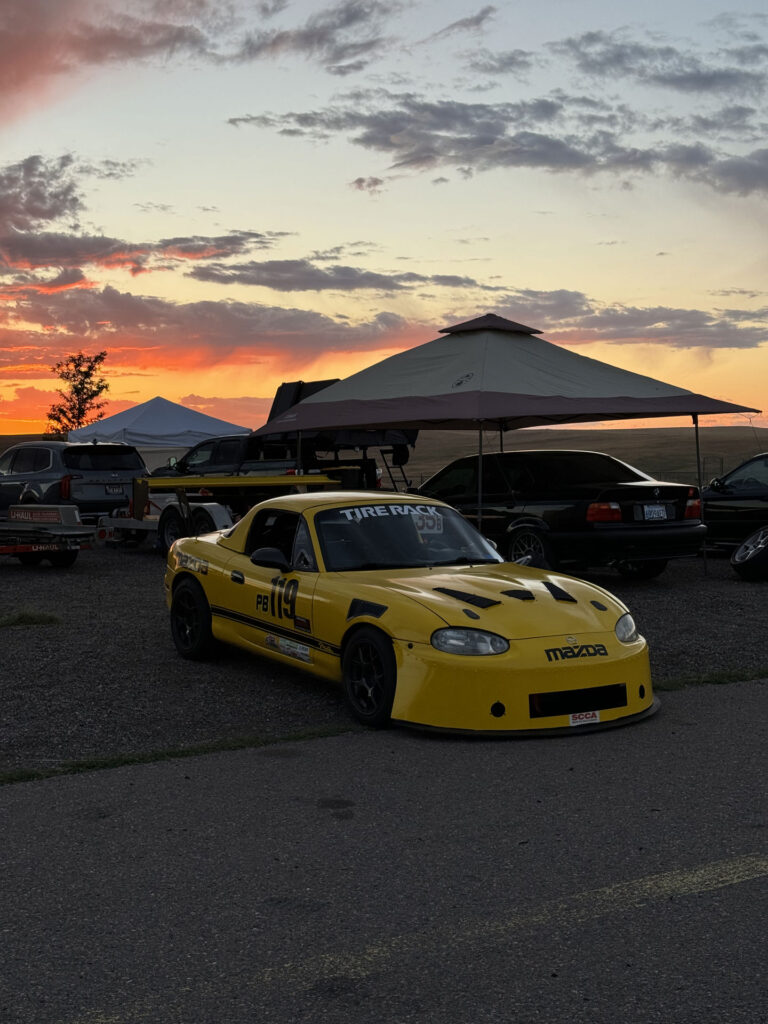
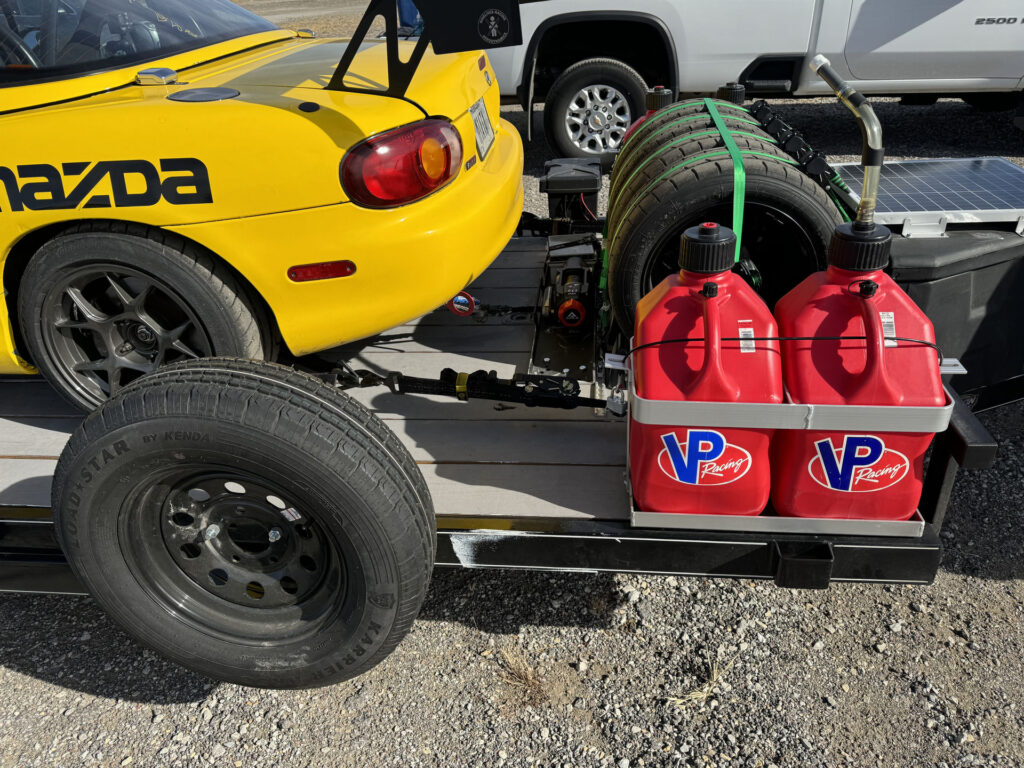
The logistics suite was further enhanced through the purchase and modification of an 18-foot open car hauler. Between July and October, the trailer underwent a series of industrial-grade upgrades, including:
- The installation of a front-mounted toolbox for secure tool storage.
- A 9,500-lb capacity winch for vehicle recovery.
- A dedicated battery system with a solar charging maintainer.
- The addition of a tire rack capable of holding two full sets of track wheels.
- Auxiliary lighting for night loading and deck-mounted D-rings for standardized strapping.
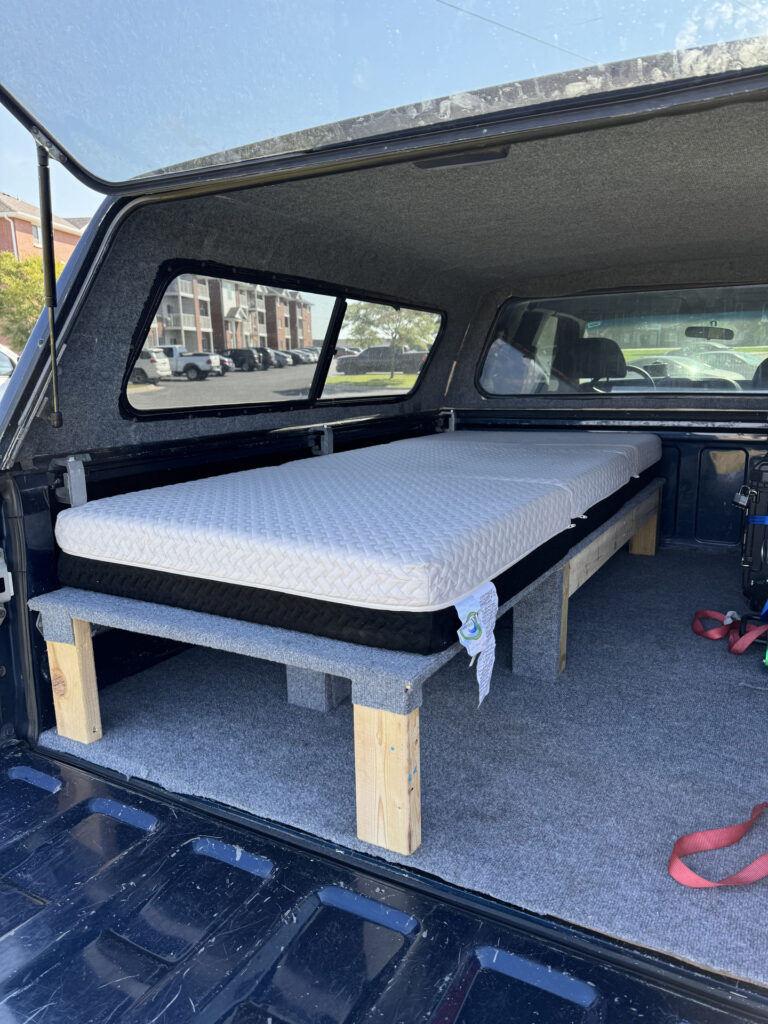
Simultaneously, the tow vehicle was converted into a mobile living space. A color-matched camper shell was fitted with a MaxxFan Deluxe RV roof vent and solar panels to power internal electronics. A custom-built wooden platform was engineered to house a memory foam mattress while preserving storage space for track equipment. This "truck bed camping" setup was successfully deployed during the November Hallett event, eliminating the setup and teardown times associated with traditional tent camping and providing a climate-controlled environment for the driver.
Final Technical Refinements and 2025 Outlook
As the project entered the winter of 2024-2025, attention returned to the powertrain. A forensic teardown of the failed VVT motor in December revealed minor head scratches but no definitive evidence of catastrophic failure. However, observations of the cylinder walls suggested potential out-of-round issues or improper piston-to-wall clearances from the previous DIY hone.
In January 2025, the owner opted to install a Skunk2 intake manifold on the existing BP4W engine. While the "Squaretop" manifold previously used is highly efficient, the Skunk2 unit is theorized to provide a 1-4 wheel horsepower gain at the top end of the power band (above 7,000 RPM). Given that track driving necessitates sustained high-RPM operation, even marginal gains in the upper registers are considered valuable.
The final modification of the cycle was the integration of a GMRS (General Mobile Radio Service) communication system. Utilizing Baofeng UV-5R units and a Nerdy Racing NASCAR-style harness, the system allows the driver to communicate with pit crews in real-time. This addition addresses a critical data gap identified in 2024, where the driver was often unaware of live timing gaps during a session.
Conclusion and Cumulative Statistics
The fourth year of ownership has solidified the NB Miata’s status as a specialized racing instrument. By the end of February 2025, the vehicle’s cumulative track data reached a significant milestone:
- Annual Track Time: 12.1 hours.
- Annual Laps: 392.
- Career Total Laps: 1,023+.
- Career Track Time: 34.6+ hours.
A notable strategic shift occurred this year as the owner officially ceased autocross participation. The decision was based on a cost-benefit analysis of "seat time," with track days offering significantly more high-speed experience per hour spent at the venue. As the project moves into its fifth year, the focus remains on incremental power gains and the potential re-introduction of a professionally machined VVT power plant, ensuring the vehicle remains a benchmark for naturally aspirated performance in regional time-trial competition.