Cecilia Chamidah Nur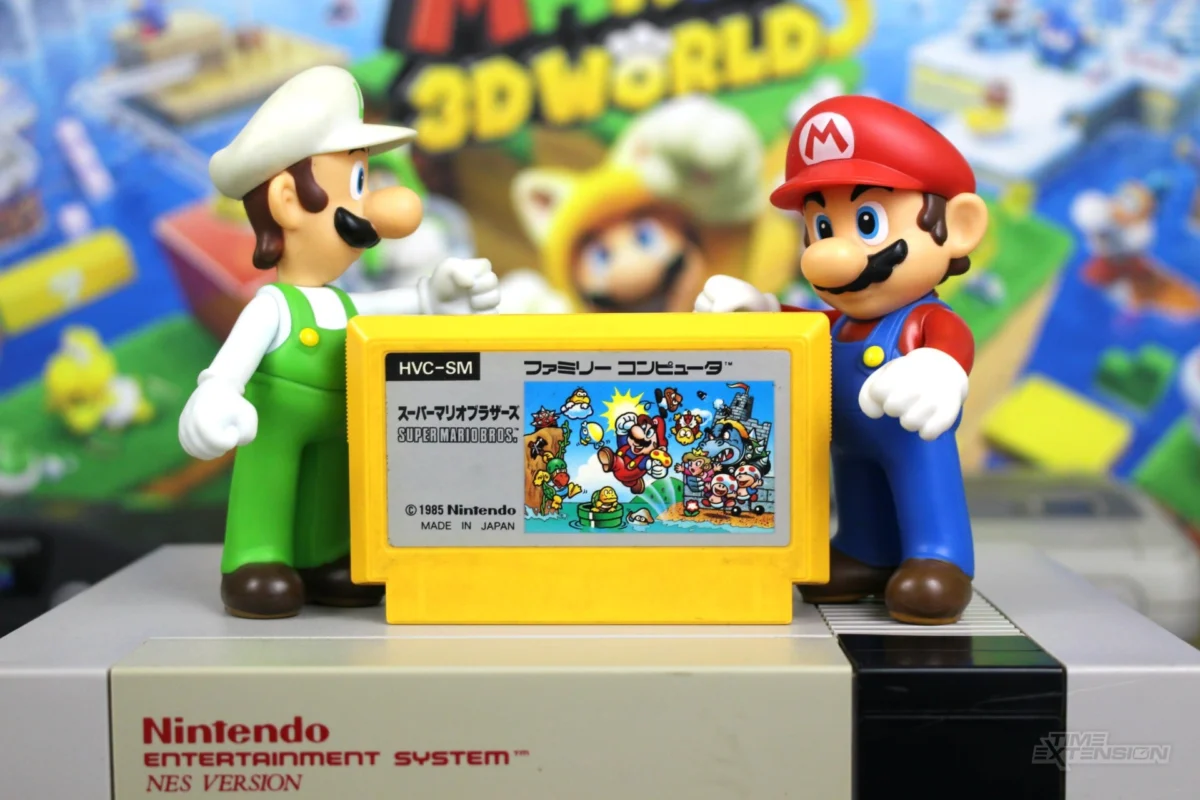
The seemingly exhaustible depths of Super Mario Bros., a title that has captivated generations of players since its release nearly 40 years ago, have once again been proven to hold undiscovered secrets. In a monumental breakthrough for the retro gaming and speedrunning communities, a method to achieve Arbitrary Code Execution (ACE) has been successfully demonstrated in the original Nintendo Entertainment System (NES) classic. This discovery, building upon a similar exploit found in its Japanese-exclusive successor, Super Mario Bros.: The Lost Levels, allows players to effectively reprogram the game in real-time, opening up a universe of previously unimaginable possibilities within the game’s iconic 8-bit architecture.
The Genesis of a Groundbreaking Discovery: A Glitch in The Lost Levels
The journey to this profound revelation began not with the original Super Mario Bros., but with its notoriously difficult sequel, Super Mario Bros.: The Lost Levels. Released in Japan in 1986 as Super Mario Bros. 2 for the Famicom Disk System, this game shared much of its underlying code with the first Super Mario Bros. but introduced significantly harder levels and new mechanics. Despite its age and the intense scrutiny it has received from dedicated players over decades, a new and startling glitch was recently brought to light.
In a report by Polygon, the discovery was credited to Twitter user @LuigiSidekick, who stumbled upon a peculiar game crash during a castle level in The Lost Levels. While game crashes might typically be dismissed as mere system errors, for experienced glitch hunters and programmers, they often serve as crucial indicators. A repeatable crash can signal an underlying vulnerability or an unhandled exception in the game’s code, which, if understood and manipulated, can lead to powerful exploits. This particular crash proved to be precisely that—a gateway.
Further investigation into @LuigiSidekick’s finding revealed that the crash could be exploited to achieve Arbitrary Code Execution within The Lost Levels. ACE represents the pinnacle of game manipulation, allowing a player to inject and execute their own custom code directly into the game’s memory during active gameplay. Imagine being able to rewrite the rules of the game on the fly, transforming its very essence without external hacking tools or modifications. This profound capability immediately sparked fervent discussion and curiosity: if ACE was possible in The Lost Levels, a game derived directly from the original Super Mario Bros. engine, could the same be true for the foundational title itself?
Understanding Arbitrary Code Execution: A Deep Dive into Game Manipulation
To fully grasp the magnitude of this discovery, it is essential to understand what Arbitrary Code Execution truly entails. In essence, ACE is a software vulnerability that allows an attacker (in this case, a player) to run arbitrary machine code on a target system. For video games, this means a player can force the game’s processor to execute instructions that were not part of the original programming. This is achieved by carefully manipulating game states, memory addresses, or input sequences to overwrite specific areas of the game’s RAM or even ROM data with custom instructions.
The implications of ACE are vast and transformative. With ACE, players are not merely exploiting existing game mechanics; they are actively dictating new ones. This could manifest in a multitude of ways: teleporting to any level, spawning any item, altering character properties, bypassing entire sections of the game, or even loading entirely new mini-games or custom content within the existing game framework. The level of control granted by ACE is so comprehensive that it fundamentally changes the definition of what is "possible" within a game’s boundaries. It moves beyond simple glitches that offer shortcuts or minor advantages and delves into a realm of real-time, in-game reprogramming.
Historically, ACE has been found in numerous games, often through incredibly intricate setups. Its discovery typically represents a landmark achievement for a game’s technical community, often revitalizing interest and spawning new speedrunning categories or creative challenges. The concept relies on a deep understanding of a game’s assembly language, memory map, and processor behavior, making its execution a testament to highly specialized reverse engineering and programming skills.
The Quest for Super Mario Bros. ACE: A Collaborative Endeavor
The theoretical possibility of ACE in the original Super Mario Bros. immediately galvanized the elite echelons of the speedrunning and glitch-hunting communities. Leading the charge was Kosmic, a prominent and highly respected Super Mario Bros. speedrunner known for his technical prowess and dedication to pushing the boundaries of the game. Recognizing the immense potential and the technical challenge, Kosmic assembled a dedicated research team, pooling expertise from various corners of the retro gaming community. Their objective was clear: to systematically dismantle the original Super Mario Bros. code, identify similar vulnerabilities, and devise a precise method to achieve ACE.
The task was anything but trivial. Super Mario Bros., despite its apparent simplicity, is a masterclass in efficient 8-bit programming. Its code has been meticulously studied, disassembled, and optimized by countless enthusiasts over four decades. Finding a new, high-level exploit like ACE in such a thoroughly picked-apart game is akin to discovering a new fundamental law of physics in a long-established scientific field. It required an unparalleled level of patience, collaboration, and forensic analysis of the game’s internal workings.

The research team delved into the intricacies of the NES’s Ricoh 2A03 processor, the game’s memory management, sprite rendering, collision detection, and input handling. They meticulously analyzed how various in-game actions affected memory states, searching for exploitable overflows, underflows, or unexpected code execution paths. The goal was to find a sequence of in-game events – precise jumps, enemy interactions, item pickups, or specific screen transitions – that could be chained together to force the game to execute data as code.
A Game Under Constant Scrutiny: The Enduring Legacy of Super Mario Bros.
To appreciate the significance of this ACE discovery, one must consider the unparalleled history of Super Mario Bros. Since its release in 1985, it has sold over 58 million copies worldwide, cementing its place as one of the most influential and best-selling video games of all time. Its design principles laid the groundwork for countless platformers, and its characters became global icons. But beyond its commercial and cultural success, Super Mario Bros. has also been a perpetual playground for technical exploration.
For decades, players have uncovered a myriad of glitches and secrets. The most famous, perhaps, is the "Minus World," an infinite, unwinnable water level accessed by a precise sequence of actions in World 1-2. Other glitches include the "firebar glitch" for infinite lives, the "wall jump" (though not an intentional mechanic, it became a staple in later Mario games), and countless minor visual anomalies. These discoveries have fostered a vibrant community of glitch hunters, speedrunners, and ROM hackers who treat the game not just as entertainment, but as a complex system to be understood, optimized, and ultimately, mastered.
The sheer volume of analysis already conducted on Super Mario Bros. makes any new, major discovery incredibly rare. Each new finding reaffirms the depth of ingenuity in its original programming, where seemingly minor oversights or design choices can lead to monumental exploits when viewed through a modern lens of technical understanding. The discovery of ACE, therefore, isn’t just a new trick; it’s a testament to the persistent human drive to explore, understand, and ultimately conquer complex systems, even those designed four decades ago.
The Technical Hurdles and Triumphs: A Complex Setup
The breakthrough came after weeks of intensive research and experimentation. As Kosmic articulated to Polygon, the setup required to achieve ACE in the original Super Mario Bros. is "incredibly complex." Unlike simpler glitches that might require a few precise button presses, ACE in this context often demands a meticulously choreographed sequence of actions that manipulate dozens of memory addresses and game states. This could involve triggering specific enemies, collecting particular power-ups, aligning sprites in exact positions, and executing precise movements across multiple screens, all while avoiding any unintended game state resets or crashes.
The difficulty lies in transforming arbitrary game data into executable instructions. This often involves carefully positioning specific byte values in memory that, when executed as code, perform the desired function. For instance, a player might need to manipulate the score, coin count, or timer in a specific way, causing these values to spill over into a buffer that then gets interpreted as a command by the game’s processor. The precise timing and execution of these steps are paramount, making the successful demonstration of ACE a monumental feat of technical understanding and manual dexterity.
The process of finding such an exploit is iterative: hypothesize a vulnerability, design a test, execute the test, observe the results, and refine the hypothesis. It involves countless hours of trial and error, often using emulators with debugging tools that allow for real-time memory inspection and state manipulation. The success of Kosmic’s team underscores the power of collaborative problem-solving within the gaming community, where shared knowledge and diverse skill sets can overcome seemingly insurmountable technical barriers.
Initial Reactions and Implications for Speedrunning
Upon the successful demonstration of ACE in Super Mario Bros., the immediate reactions from the speedrunning community were a mix of awe, excitement, and practical consideration. Kosmic himself tempered expectations regarding its immediate impact on existing speedrunning categories. As he explained to Polygon, "in its current form, the glitch’s impact is quite limited — in fact, from a speedrunning perspective, it takes longer to set up ACE than it does to beat the game normally."
This assessment is crucial for understanding the practical implications. Current Super Mario Bros. Any% speedruns (which aim to complete the game as fast as possible, using any means) are measured in minutes, with the world record hovering around 4 minutes and 54 seconds. If setting up the ACE exploit takes significantly longer than this, it won’t replace the current optimal routes. However, this does not diminish its long-term significance.
The discovery of ACE will undoubtedly lead to the creation of entirely new speedrunning categories. These "ACE categories" will challenge runners not just to complete the game, but to master the incredibly complex setup required to execute the arbitrary code. This shift in focus — from pure speed to technical mastery of an exploit — could open up new competitive avenues and attract a different type of speedrunner. It also poses a fascinating new puzzle: how to optimize the ACE setup itself to be as fast as possible.

Beyond Speedrunning: The Broader Impact and Future Potential
While the immediate speedrunning applications might be niche, the broader implications of ACE are far more profound. As Kosmic succinctly put it, "It’s a glitch that makes anything possible." This statement encapsulates the true power of the discovery.
- Creative Exploration and Modding: ACE opens the door for players to effectively "mod" the game in real-time without needing external software. Imagine players designing and implementing custom mini-games within Super Mario Bros., creating entirely new levels, or even spawning enemies and items in ways never intended by the original developers. This could lead to a resurgence of creative content generation for a game nearly four decades old.
- Deepening Game Understanding: The process of discovering and perfecting ACE requires an incredibly deep understanding of the game’s internal architecture. This knowledge contributes invaluable data to the field of retro game preservation and emulation, helping to document and understand classic software in unprecedented detail. It serves as a living archive of how these games were built and how their systems can be pushed to their absolute limits.
- Educational Value: The complexity of ACE setups can serve as a powerful educational tool, demonstrating principles of computer science, assembly language, memory management, and reverse engineering in an engaging, interactive context. Aspiring programmers and game developers can learn valuable lessons from analyzing these exploits.
- The Spirit of Discovery: Perhaps most importantly, the ACE discovery reinforces the enduring human desire for exploration and problem-solving. As Kosmic noted, "It’s more so about the achievement of making it possible and solving it." This sentiment resonates deeply within the gaming community, where the challenge of unraveling a game’s deepest secrets often outweighs the practical benefits. It’s about pushing boundaries, proving what’s possible, and adding another chapter to the rich, ongoing story of Super Mario Bros.
The ability to access "not just the Minus World, but any world or level you want. With no hacks or cheats" fundamentally changes the player’s relationship with the game. It transforms a fixed experience into a malleable canvas, limited only by the player’s ingenuity in manipulating the code. This level of control represents the ultimate triumph of player agency over the designed limitations of a software system.
The Enduring Legacy of Super Mario Bros.
The discovery of Arbitrary Code Execution in the original Super Mario Bros. stands as a testament to the game’s incredible longevity and the unwavering dedication of its player base. In an era where games are often quickly consumed and forgotten, Super Mario Bros. continues to yield new secrets, proving that even the most thoroughly scrutinized digital artifacts can hold surprises. This exploit is not merely a technical achievement; it is a cultural landmark, reaffirming the game’s status as a living, breathing piece of software that continues to inspire and challenge generations.
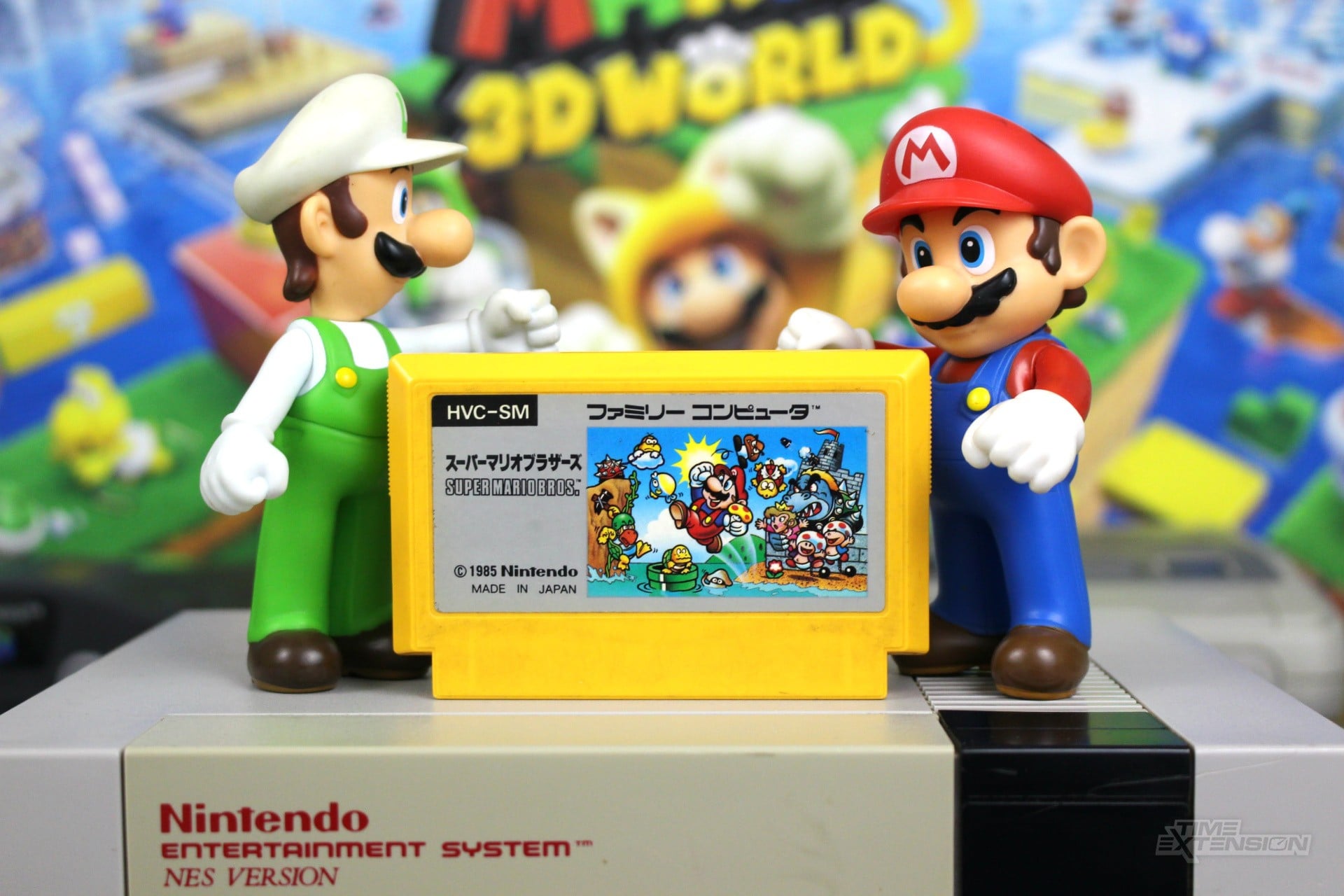
As the community delves deeper into the potential of this ACE, new forms of play, competition, and creativity are sure to emerge. The iconic NES cartridge, once thought to have surrendered all its mysteries, has once again proven that its digital heart beats with an unexpected capacity for innovation, ensuring that the legacy of Super Mario Bros. will continue to evolve in unforeseen and exciting ways for years to come.