Farhan hamdan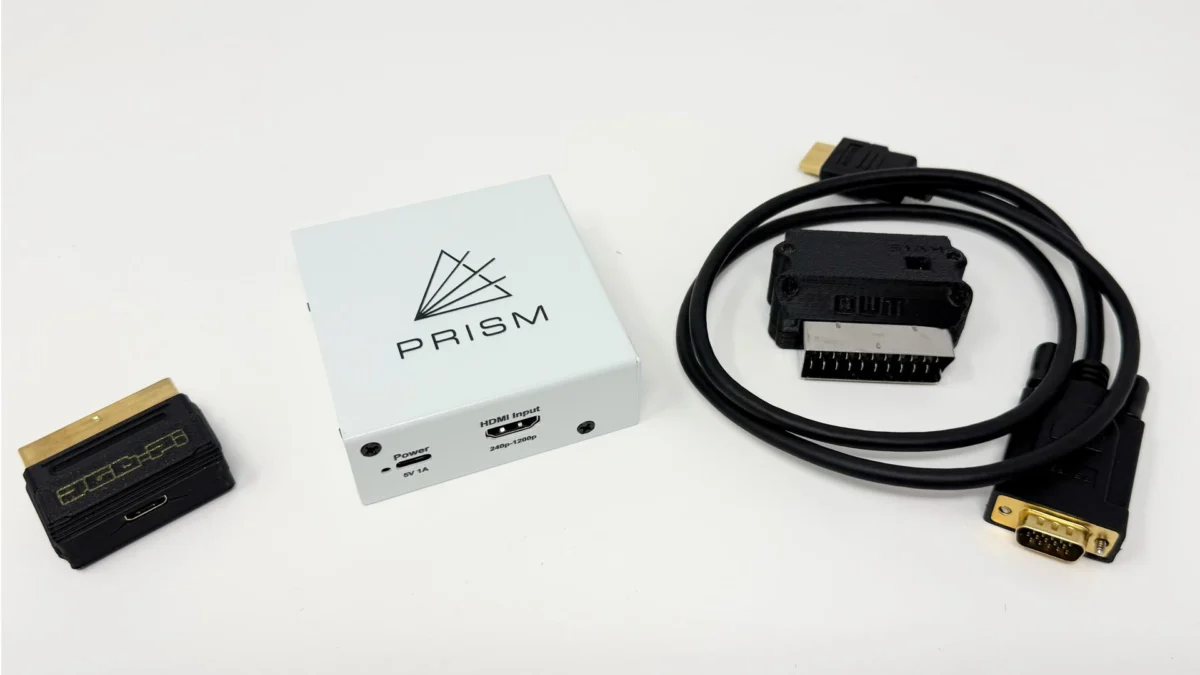
A recent livestream event provided an in-depth evaluation of two newly released HDMI Digital-to-Analog Converters (DACs), the RGB-Pi 2 and the Reflex Prism, alongside a well-established, cost-effective alternative comprising an $8 VGA DAC paired with an HD15-2-SCART adapter. The rigorous testing demonstrated that all three solutions effectively facilitate the connection of modern HDMI-outputting devices to vintage Cathode Ray Tube (CRT) displays, each offering a distinct balance of features and price points. Notably, the Reflex Prism distinguished itself by successfully supporting 15KHz Component Video, a crucial feature that has become increasingly scarce in contemporary budget YPbPr DACs.
The Enduring Appeal of CRT Technology in Modern Gaming
The resurgence of interest in retro gaming has brought renewed attention to CRT displays, which many enthusiasts consider indispensable for an authentic vintage gaming experience. Unlike modern LCD or OLED screens, CRTs inherently render pixel art with crisp, defined scanlines and possess near-instantaneous pixel response times, virtually eliminating motion blur. This characteristic is particularly vital for fast-paced action games and light gun titles, where input lag and display artifacts can significantly detract from gameplay. However, a fundamental challenge arises when attempting to connect contemporary gaming hardware or emulation platforms, which predominantly output digital HDMI signals, to these analog-only displays. The need for high-quality, lag-free HDMI DACs is therefore paramount, acting as crucial bridges in the retro gaming ecosystem.
The Technical Imperative: Lag-Free HDMI to Analog Conversion
The core function of these devices is to convert a digital HDMI signal into an analog signal compatible with CRTs (e.g., RGB, Component, S-Video, Composite). A critical distinction for retro gaming applications is that these DACs perform a direct signal conversion without any form of scaling or buffering. This "zero lag" attribute is vital, as any processing delay can introduce noticeable input lag, undermining the precision required for classic titles. Consequently, the source device must be configured to output video at the exact resolution and refresh rate expected by the target CRT display. This requirement often necessitates specialized software, such as RePlayOS for Raspberry Pi devices, which can automatically generate the precise timings needed for various CRT standards, or specific configurations within FPGA-based systems like the MiSTer. These DACs are not downscalers; they merely translate the signal format.
A Detailed Examination of the Tested HDMI DAC Solutions

The livestream meticulously assessed each device’s performance, features, and suitability for different user scenarios.
1. The Benchmark: The Economical VGA DAC + HD15-2-SCART Solution
- Description and Functionality: This established setup serves as an affordable baseline. It consists of a generic, low-cost HDMI to VGA converter, which outputs an RGBHV signal, paired with an HD15-2-SCART adapter. The adapter then converts the RGBHV signal into RGBs (RGB with composite sync) and reconfigures the pinout for SCART connectivity.
- Performance and Capabilities: Despite its minimal cost (approximately $8 for the VGA DAC), this converter has proven remarkably robust. It has been thoroughly vetted and successfully handles a wide range of retro gaming signals, including 240p and 480i, as well as higher resolutions like 480p60. Furthermore, it demonstrated compatibility with specialized timings such as 480p72 and 1080p72, crucial for displaying 24p video content with proper cadence on PC CRTs.
- Limitations: The primary drawback is its video-only output; it offers no integrated audio solution. Additionally, it exclusively outputs RGBHV, which is ideal for PC VGA monitors (typically 480p and above) but requires the HD15-2-SCART adapter for compatibility with European SCART equipment.
- Implications: With a combined cost of around $40 (excluding audio solutions), this option remains highly recommended for users who already have a separate means of handling audio or whose primary need is VGA output. For those requiring integrated audio and SCART, other solutions might prove more cost-effective.
2. The RGB-Pi 2: Compact SCART Integration
- Description and Design: The RGB-Pi 2 is a compact, dedicated device designed for direct SCART output. It accepts a MiniHDMI input and delivers RGB SCART with integrated audio. Its footprint is remarkably small, even more so than the HD15-2-SCART adapter alone.
- Performance and Features: Testing confirmed flawless operation across a spectrum of resolutions, from 240p up to 480p72. When used in conjunction with custom operating systems like RePlayOS, the RGB-Pi 2 offers advanced features, including alternative sync combining options. This capability can enhance compatibility with particularly sensitive or "picky" CRT displays, ensuring a stable signal. The device also includes a dedicated port for light guns, a feature slated for future testing, highlighting its potential as a comprehensive solution for retro gaming setups.
- Implications: This device presents an elegant, integrated solution for users prioritizing SCART output and minimal form factor. The inclusion of audio and advanced sync options makes it a compelling choice for Raspberry Pi-based retro gaming systems.
3. The Reflex Prism: The Feature-Rich Powerhouse
- Description and Versatility: The Reflex Prism stands out as the most feature-packed and consequently, the most expensive, of the tested DACs. It offers an extensive array of output options, including VGA (configurable for RGBs, RGBHV, or YPbPr Component Video via its built-in transcoder) and a Sega Saturn-style MiniDIN port for RGB and S-Video output. While technically capable of composite video, this mode is considered unsupported due to the lack of fine-tuning for dot crawl. Both the MiniDIN and a separate 3.5mm audio jack provide audio output.
- Key Innovation: 15KHz Component Video Support: A significant highlight of the Reflex Prism is its robust support for 15KHz Component Video. This addresses a critical gap in the market, as many generic HDMI to YPbPr converters have ceased supporting these lower resolution, interlaced signals, which are common for older consoles and arcade boards. For enthusiasts seeking high-quality YPbPr output for their 15KHz CRTs, the Reflex Prism offers a reliable solution.
- Configuration and Flexibility:
- Standard DAC Mode: When used as a standard HDMI DAC, the Reflex Prism generally operates as plug-and-play, requiring minimal configuration unless switching the VGA output to YPbPr mode.
- MiSTer FPGA Integration: For users integrating the device with the MiSTer FPGA’s Direct Video mode, configuration can be achieved either by toggling internal switches or, more conveniently, by modifying the
MiSTer.inifile. Specificinitweaks, such asvga_mode=rgbandcomposite_sync=0, ensure seamless compatibility with current MiSTer updates. - Internal Hardware Settings: The device also houses a suite of internal jumpers and DIP switches for advanced customization. These include an NTSC/PAL jumper for S-Video output, a "hidden" switch for toggling sync from the HD15 port, and DIP switches for various sync combining modes and a passthrough mode. An accompanying image from the original testing details the layout of these internal switches.
- Design Feedback: The sole critique of the Reflex Prism’s design concerned the accessibility of these internal DIP switches and jumpers. Requiring the user to open the casing to make adjustments, while not a deal-breaker for most, could be cumbersome for those who frequently reconfigure their setup across multiple source and target environments. Easier external access or a dedicated "door" for these controls would enhance user experience.
- Implications: The Reflex Prism is tailored for users demanding maximum flexibility and a comprehensive range of analog output options. Its support for 15KHz YPbPr fills a significant void, making it an invaluable tool for complex retro gaming setups involving diverse CRT types.
Performance Analysis and Key Findings
The overall assessment concluded that all three tested HDMI DACs performed exceptionally well within their respective design parameters. A universal characteristic across all devices was their "zero lag" operation, which is paramount for the target audience of retro gamers. The pricing of each solution was deemed fair and commensurate with its feature set, catering to a wide spectrum of user needs and budgets.
The most impactful finding from the testing was the Reflex Prism’s ability to reliably output 15KHz Component Video. For years, the retro gaming community has struggled to find consistent, affordable solutions for converting HDMI to YPbPr that support these specific low-resolution interlaced signals. The Reflex Prism effectively resolves this long-standing issue, offering a high-quality and reliable alternative to increasingly scarce or unreliable generic converters.

It is crucial to reiterate that none of these devices perform video scaling. This means the source device (e.g., Raspberry Pi, MiSTer) must generate a signal that precisely matches the native resolution and refresh rate capabilities of the target CRT display. This requirement underscores the importance of intelligent source software and user understanding of CRT display specifications.
Market Trends and Broader Implications
The release and successful testing of devices like the RGB-Pi 2 and Reflex Prism signify a maturing ecosystem for retro gaming hardware. They highlight the vibrant community-driven development that continues to innovate and fill critical gaps in the market. As platforms like the Raspberry Pi and MiSTer FPGA gain widespread adoption, the demand for high-quality, lag-free analog output solutions will only intensify.
The particular success of the Reflex Prism in providing 15KHz YPbPr support is a testament to addressing a specific and persistent pain point for enthusiasts. This development not only provides a practical solution but also fosters greater accessibility for a broader range of retro consoles and arcade systems to be enjoyed on their intended display medium. The continuous refinement of these conversion technologies ensures that the unique visual and tactile experience of CRT gaming remains accessible and vibrant for future generations of players.
Conclusion
The recent livestream and subsequent analysis provided compelling evidence that the new RGB-Pi 2 and Reflex Prism, alongside the established VGA DAC + HD15-2-SCART combination, represent excellent solutions for bridging the gap between modern digital sources and classic analog CRT displays. Each device offers a distinct value proposition, ranging from highly economical to extensively feature-rich, ensuring that virtually all use cases within the retro gaming community are addressed. While a dedicated, inexpensive YPbPr-only solution for 15KHz signals remains a potential future market opportunity, the Reflex Prism has effectively provided a robust and reliable answer to a critical need. This advancement significantly enhances the ability of retro gaming enthusiasts to enjoy authentic experiences on their beloved CRT hardware. The full technical demonstration and detailed insights are available for review via the comprehensive livestream recording, which served as the foundation for these findings.