
 Farhan hamdan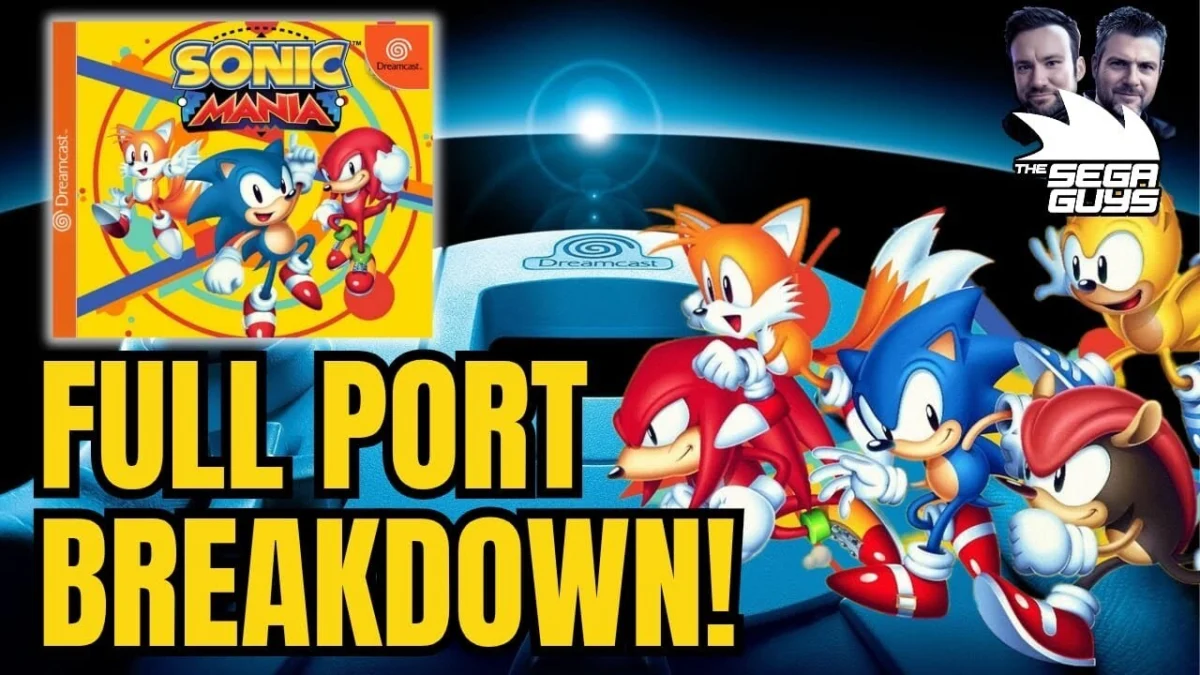
A groundbreaking fan-driven initiative to port the critically acclaimed Sonic Mania to the Sega Dreamcast is nearing a significant milestone, with developers showcasing advanced progress on what has been described as a "massive undertaking years in the making." Spearheaded by a collective known as "The Sega Guys" and primarily developed by SonicFreak94, this ambitious project aims not merely to achieve functionality but to deliver an optimized experience that fully leverages the Dreamcast’s unique hardware architecture. While a public release remains pending, recent preview footage and detailed technical updates have ignited considerable excitement within the retro gaming and homebrew communities, signaling the imminent arrival of a truly anachronistic yet perfectly fitting gaming experience.
The Genesis of a Dream: Reimagining Sonic Mania for Vintage Hardware
The concept of bringing a modern classic like Sonic Mania, originally released in 2017, back to a console from the late 1990s might seem paradoxical. However, for a dedicated cadre of developers and enthusiasts, it represents the ultimate fusion of nostalgia and technical prowess. Sonic Mania, celebrated for its faithful return to the classic 2D Sonic gameplay style, vibrant pixel art, and original zones alongside reimagined classics, resonated deeply with fans who grew up with the Sega Genesis. The Dreamcast, Sega’s final foray into the console hardware market, launched in 1998 in Japan and 1999 in North America and Europe, holds a special place in gaming history as a system ahead of its time, albeit one with an abbreviated lifespan. This port is not a simple emulation or a quick conversion; it is a meticulous reconstruction, designed from the ground up to operate natively on the Dreamcast. The project’s ethos, as articulated by the development team, transcends mere compatibility, aspiring instead to create the "best possible experience" that feels intrinsically at home on the console. This commitment involves deep dives into the Dreamcast’s unique graphical capabilities, sound hardware, and processing power, ensuring that the final product feels like an authentic Sega-published title from the era.
Technical Marvel: Bridging Eras with Decompilations and Custom Code
The technical underpinnings of this port are complex and represent a significant achievement in reverse engineering and homebrew development. According to lead developer SonicFreak94, the project has been built exclusively on real Dreamcast hardware, a testament to its authenticity and a challenging development constraint. This approach ensures that all optimizations and features are genuinely compatible and performant on the target system, avoiding the pitfalls often associated with emulator-centric development.
Central to this endeavor are the decompilations of Sonic Mania and the underlying Retro Engine (RSDKv5). Decompilation is the process of converting machine code back into a higher-level programming language, which allows developers to understand, modify, and recompile software for different platforms. In this case, the Sonic-Mania-Decompilation and RSDKv5-Decompilation projects, specifically the sf94/dreamcast-kallistios-pvr branches on GitHub, have provided the essential framework. These decompiled sources offer a critical pathway to adapt the game’s logic, assets, and rendering pipeline to the Dreamcast’s architecture.
The Dreamcast’s hardware, while powerful for its time, presents distinct challenges. Its CPU, a Hitachi SH-4 RISC processor clocked at 200 MHz, and its GPU, a NEC PowerVR2 (PVR2DC) clocked at 100 MHz, require careful optimization. The port is specifically designed to be GPU-accelerated, harnessing the PowerVR2’s tile-based deferred rendering capabilities. This choice is crucial for achieving the targeted performance: a rock-solid 60 frames per second (fps). Maintaining a consistent 60fps, particularly in a fast-paced 2D platformer like Sonic Mania with its dynamic environments and numerous on-screen sprites, is a demanding feat on hardware from over two decades ago. It speaks volumes about the optimization efforts, leveraging direct hardware access provided by the KallistiOS development environment, a comprehensive open-source toolkit for Dreamcast homebrew development.
Beyond raw performance, the developers are also meticulously crafting the visual presentation to evoke a true Dreamcast-era aesthetic. Plans include support for both 240p and 480p output modes. The 240p mode caters to enthusiasts using CRT televisions, offering the crisp, scanline-rich visuals synonymous with classic console gaming. The 480p mode, typically achieved via VGA output on the Dreamcast, provides a sharper image for modern displays while still retaining the original pixel art integrity. Crucially, the game has also been converted to a 4:3 aspect ratio. While Sonic Mania originally supported widescreen, a 4:3 presentation aligns perfectly with the standard television formats of the Dreamcast’s commercial lifespan, further cementing the port’s commitment to an authentic retro experience. This deliberate choice impacts level design visibility and requires careful adjustment of the game’s camera and UI elements to ensure optimal playability within the narrower frame.
A Journey Years in the Making: Project Timeline and Milestones
The journey to bring Sonic Mania to the Dreamcast has been a prolonged endeavor, spanning "years in the making." While a precise public timeline for the project’s inception isn’t fully detailed, the existence of dedicated decompilation branches on GitHub and the complexity of the task imply a deep, sustained commitment from the development team.
- 2017: Original release of Sonic Mania on modern platforms, garnering widespread critical acclaim and reigniting interest in classic Sonic gameplay.
- Early Stages (Inferred): Commencement of the Sonic Mania and RSDKv5 decompilation projects, laying the groundwork for platform-agnostic development. The specific Dreamcast branches (
sf94/dreamcast-kallistios-pvr) would have been initiated as a dedicated porting effort. - Ongoing Development (Years in the Making): The core work of adapting the game engine, assets, and logic to KallistiOS and the Dreamcast’s unique hardware. This period would involve extensive debugging, optimization, and feature implementation (e.g., GPU acceleration, framerate targeting, resolution modes, aspect ratio conversion).
- Recent Teaser Video (Current): "The Sega Guys" released a teaser video, "Sonic Mania on Sega Dreamcast … It Just Feels Right," providing the first public glimpse of the game running on Dreamcast hardware. This video served as a proof-of-concept and a demonstration of the significant progress achieved.
- Social Media Updates (Ongoing): Developer SonicFreak94 has been providing regular technical updates, often showcasing specific optimizations and visual adjustments. A recent Bluesky post, for instance, detailed "tile skewing," a graphical technique used in classic 2D games, illustrating the meticulous attention to detail in replicating era-appropriate visual effects. These updates build anticipation and offer transparency into the development process.
- Public Release (Forthcoming): While no firm date has been announced, the current advanced state of the project suggests that a publicly available version or demo is a distinct possibility in the near future. The community eagerly awaits this milestone.
The Dreamcast Legacy and the Thriving Homebrew Scene
The Sega Dreamcast, despite its premature discontinuation in 2001, left an indelible mark on the gaming landscape. It pioneered online console gaming with its built-in modem, pushed graphical boundaries with titles like Soulcalibur and Shenmue, and fostered a vibrant arcade-style gaming culture. Its open architecture and relative ease of development, particularly compared to later consoles, cultivated a robust homebrew and independent development scene that has continued to flourish decades after its commercial demise. This community is driven by a passion for preservation, a desire to explore the console’s full potential, and the sheer joy of creating new experiences for beloved hardware.

The Sonic Mania Dreamcast port stands as a shining example of this enduring legacy. It joins a pantheon of fan-made games, emulators, and utility software that have kept the Dreamcast alive and relevant. Projects like this demonstrate the extraordinary capabilities of dedicated enthusiasts to extend the life of classic consoles, offering new reasons for owners to dust off their old hardware. The availability of open-source tools like KallistiOS and the collaborative nature of online communities have been instrumental in fostering such ambitious undertakings.
Sonic Mania’s Enduring Appeal and the Perfect Fit
Sonic Mania was not just a nostalgic trip; it was a masterclass in 2D platforming design. Developed by a team primarily drawn from the Sonic fan game community, it captured the essence of the Mega Drive/Genesis era Sonic titles while introducing fresh ideas and impeccable polish. Its critical success, often hailed as one of the best Sonic games ever made, cemented its status as a modern classic.
The game’s pixel art aesthetic and emphasis on fluid, high-speed movement make it a natural fit for the Dreamcast. While the Dreamcast was known for its 3D prowess, it also hosted excellent 2D titles and arcades ports that showcased its ability to handle intricate sprite work and fast scrolling. Bringing Sonic Mania to the Dreamcast feels like a homecoming, a game that could have theoretically existed on the system had Sega continued its 2D platforming tradition more strongly into the 32/64-bit era. The conversion to a 4:3 aspect ratio further enhances this sense of authentic integration, allowing the game to blend seamlessly with the visual language of its new, retro home.
Community Reaction and Broader Implications
The announcement and subsequent updates regarding the Sonic Mania Dreamcast port have been met with overwhelming enthusiasm from the retro gaming community. Dreamcast owners, Sonic fans, and homebrew enthusiasts alike have expressed excitement over the prospect of playing a contemporary classic on vintage hardware. The "It Just Feels Right" sentiment captured in "The Sega Guys’" teaser title perfectly encapsulates the community’s perception of this project – a harmonious blend of past and present.
This project carries significant implications beyond mere entertainment. It highlights:
- The Power of Decompilation: It demonstrates how decompilation projects, often contentious in their legal gray areas, can be leveraged for highly creative and preservative purposes, breathing new life into older hardware.
- Console Preservation: By actively developing for and supporting older consoles, projects like this contribute directly to the preservation of gaming history. They keep the hardware relevant, encourage maintenance, and provide new content for systems that might otherwise fade into obsolescence.
- Fan Dedication and Technical Skill: It underscores the extraordinary talent and dedication within the fan community, often surpassing what official development teams can achieve for legacy systems. The ability to optimize a modern game for a decades-old console is a testament to exceptional technical skill.
- Potential for Future Homebrew: The success of such a high-profile port could inspire further ambitious homebrew projects for the Dreamcast and other classic consoles, pushing the boundaries of what’s possible on vintage hardware.
- Sega’s Implicit Stance: While Sega has not officially endorsed this unofficial port, their general stance towards fan projects has historically been more permissive than some other publishers. The very public nature of this project, without overt legal challenges, suggests a tacit acknowledgment or at least a hands-off approach, which is crucial for such endeavors to thrive.
Looking Ahead: Release and Future Prospects
The immediate future for the Sonic Mania Dreamcast port hinges on its eventual public release. The developers’ commitment to quality over speed means that enthusiasts will need to exercise patience, but the regular updates and polished preview footage suggest that the wait will be worthwhile. Once released, the port is expected to be distributed through community channels, likely as a disc image (CDI or GDI format) that can be burned to a CD-R or loaded onto an SD card via a Dreamcast SD card adapter. This will make it accessible to a wide audience of Dreamcast owners and collectors.
The impact of this port could extend beyond its initial release. Its technical achievements could serve as a blueprint for other ambitious retro-porting projects. Furthermore, it reinforces the notion that true gaming innovation and dedication are not solely confined to official studios but thrive within passionate fan communities, continually redefining the boundaries of what’s possible on beloved, yet aging, hardware. The journey of Sonic Mania to the Dreamcast is more than just a game port; it is a celebration of gaming history, technical ingenuity, and the enduring power of community.
The development of such intricate and demanding homebrew projects often relies on the sustained support of the community. Individuals and groups who champion console preservation and independent development frequently seek patronage to fund their efforts, cover hardware costs, and dedicate the extensive time required for these ambitious undertakings. Supporting these creators directly contributes to the vibrant ecosystem of retro gaming and ensures that projects like the Sonic Mania Dreamcast port can reach their full potential.








