
 Farhan hamdan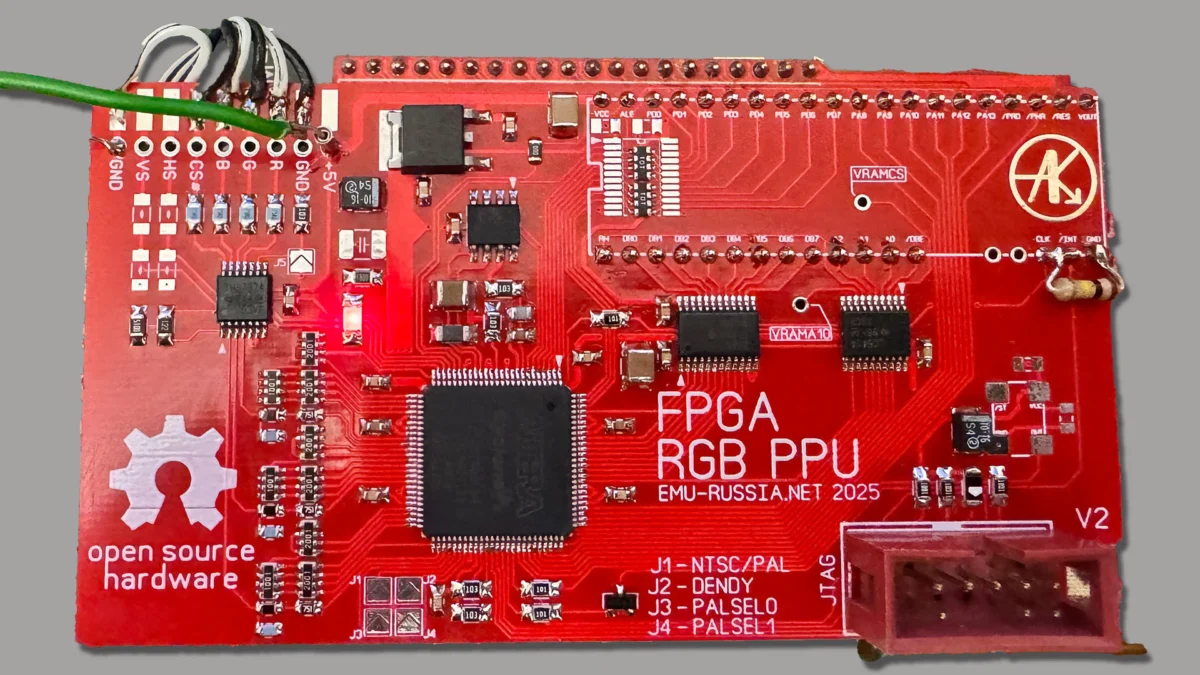
In a significant development for the retro gaming community, independent developer andkorzh has officially released an open-source Picture Processing Unit (PPU) for the Nintendo Entertainment System (NES) and Famicom, dubbed PPU-LITE. This ambitious project, meticulously engineered through gate-level reverse engineering, aims to provide an exceptionally accurate hardware recreation of the original NES PPU, offering a vital solution for console restoration and enhancement. The primary objective behind PPU-LITE’s design was cost-effectiveness, achieved by utilizing a straightforward 2-layer PCB and an inexpensive Field-Programmable Gate Array (FPGA). This design choice democratizes access to high-quality retro hardware solutions, allowing enthusiasts to replace a potentially defunct original PPU without the need for a functioning vintage chip, a common hurdle in console repair and modding. While not yet commercially available, all necessary design files and code have been made publicly accessible on GitHub, empowering individuals and small businesses to manufacture their own units.
Understanding the PPU and its Critical Role in Retro Consoles
To fully appreciate the impact of PPU-LITE, it is essential to understand the function and significance of the Picture Processing Unit within the architecture of the NES and Famicom. The PPU is the dedicated graphics chip responsible for rendering all visual elements displayed on the screen. This includes managing background layers, sprites (movable objects like characters and enemies), color palettes, and scrolling effects. Without a functional PPU, an NES console is incapable of displaying any graphics, effectively rendering it inoperable for gaming.
Over the decades since the NES’s initial release in 1985 (1983 for the Famicom), many original PPU chips have suffered from degradation or outright failure. Like any complex integrated circuit from that era, PPUs are susceptible to a range of issues, including thermal stress, electrical overloads, and general aging of components. The scarcity of donor consoles with working PPUs, coupled with the increasing demand for console restoration and preservation, has driven up the cost and difficulty of repairing NES systems. Furthermore, the original PPU outputs composite video, which, while authentic to the period, results in a relatively blurry image on modern high-definition displays. This has led to a vibrant community dedicated to improving the video output of classic consoles, often through complex modifications.
The Genesis of PPU-LITE: Precision Through Reverse Engineering
andkorzh’s PPU-LITE distinguishes itself through its foundational methodology: gate-level reverse engineering. This process involves painstakingly analyzing the internal logic gates and transistors of the original PPU chip to replicate its exact behavior at the most fundamental hardware level. Unlike software emulation, which simulates the chip’s functions using algorithms, gate-level recreation attempts to rebuild the chip’s internal structure as closely as possible. This meticulous approach is crucial for achieving high fidelity, ensuring that the PPU-LITE behaves identically to an original chip, even in edge cases or obscure graphical quirks that might be missed by higher-level emulation.
The reverse engineering effort typically involves physically decapping (removing the protective casing) an original integrated circuit and then using specialized microscopy and imaging techniques to map out the intricate network of gates. This data is then translated into a hardware description language (HDL), such as VHDL or Verilog, which can then be programmed onto an FPGA. The complexity of this task cannot be overstated; it requires deep expertise in digital electronics, chip architecture, and the specific quirks of vintage hardware. The commitment to such a detailed replication underscores the project’s dedication to authenticity, aiming to reproduce the subtle nuances of the original PPU’s video output, including its characteristic timing and color processing.
Design Philosophy: Affordability Meets Accuracy
A core tenet of the PPU-LITE project is its emphasis on affordability without compromising accuracy. By opting for a 2-layer Printed Circuit Board (PCB) and a cost-effective FPGA, andkorzh has significantly lowered the financial barrier to entry for enthusiasts. Many advanced retro hardware projects often utilize multi-layer PCBs and high-end FPGAs to achieve complex functionalities, which can drive up manufacturing costs substantially. The choice of an inexpensive FPGA, while potentially limiting the overall complexity of what can be implemented compared to more powerful FPGAs, demonstrates a pragmatic approach focused on the essential function of the PPU. This strategic decision makes PPU-LITE accessible to a wider audience, from individual hobbyists looking to repair their consoles to small-scale modding services seeking a reliable and affordable replacement part.
The open-source nature of the project further contributes to its affordability and accessibility. By releasing all design files and firmware on GitHub, andkorzh has eliminated proprietary licensing costs and encouraged community-driven manufacturing. Individuals with the necessary skills and equipment can fabricate their own boards, source components, and flash the FPGA, effectively creating a PPU replacement for the cost of materials and labor alone. This model fosters innovation and ensures that the project’s longevity is not tied to a single manufacturer or commercial entity.
Installation and Accessibility: A New Lease on Life for Consoles
One of PPU-LITE’s most compelling features is its straightforward installation method. The design allows for the direct replacement of the existing NES/Famicom PPU. This means that even consoles with a completely dead original PPU can be brought back to life, circumventing the need to find a rare and potentially unreliable working donor chip. The ease of installation is further enhanced by the board’s intentional physical resemblance to the popular NESRGB modification board. The NESRGB, developed by Tim Worthington, is a widely adopted solution for upgrading the NES’s video output to RGB, providing a much cleaner and sharper image. By mirroring the physical dimensions and installation points of the NESRGB, PPU-LITE leverages established and "tried and true" installation procedures and guides already familiar to the retro modding community. This thoughtful design choice reduces the learning curve for installers and makes integration into existing console modification setups more seamless.
The ability to directly replace a non-working PPU is a game-changer for console preservation. Many vintage consoles are discarded or left unrepaired due to the difficulty and expense of sourcing replacement parts for critical components like the PPU. PPU-LITE offers a viable, modern alternative that extends the lifespan of these classic machines, ensuring that future generations can continue to enjoy the original hardware experience.

Distinguishing PPU-LITE from Existing Solutions
It is crucial to differentiate PPU-LITE from other prominent retro gaming solutions, particularly the NESRGB and full FPGA-based console recreations like the MiSTer FPGA or Analogue consoles. While PPU-LITE shares a physical form factor with the NESRGB, it serves a fundamentally different purpose. The NESRGB is an upgrade board that typically requires a working original PPU to function, taking the composite video output from the PPU and converting it into a superior RGB signal. It enhances the existing PPU’s output. In contrast, PPU-LITE is the PPU. It replaces a potentially non-functional PPU entirely, generating the video signal from scratch based on its FPGA implementation. This distinction is vital: NESRGB improves the video quality of a working PPU, while PPU-LITE restores or upgrades the core graphics functionality itself.
Furthermore, PPU-LITE is not a complete FPGA-based console recreation in the vein of the MiSTer FPGA project or Analogue’s line of consoles (e.g., Analogue Nt, Super Nt, Mega Sg). These platforms use FPGAs to recreate the entire console architecture – CPU, PPU, sound chip, memory controllers, etc. – often offering a wide range of features, high-definition output, and multi-system compatibility. PPU-LITE, by design, focuses solely on replacing the PPU component within an original NES/Famicom console. It integrates with the existing CPU and other components of the vintage hardware, providing a hybrid solution that maintains a connection to the original console’s core while upgrading a critical, often failing, part. This targeted approach makes PPU-LITE a highly specialized and valuable tool for hardware enthusiasts and restorers.
The Open-Source Advantage and Community Collaboration
The decision by andkorzh to release PPU-LITE as an open-source project underpins its potential for long-term impact and community-driven improvement. Open-source hardware benefits from the collective intelligence and efforts of a global community. Developers can inspect the code, identify potential bugs, suggest optimizations, and even contribute new features. This collaborative model ensures transparency, fosters innovation, and enhances the project’s resilience, as its evolution is not solely dependent on the original developer.
A prime example of this collaborative spirit is the developer’s explicit call for assistance with color palette conversion. The project currently includes a set of color palettes, but the developer acknowledges that these "aren’t the most up to date." This presents an immediate opportunity for the community to contribute. The accuracy of color palettes is a deeply debated and highly personalized aspect of retro gaming. Different emulators, display technologies (CRT vs. LCD), and even regional console variations (NTSC vs. PAL) can result in subtle differences in how colors are rendered. Retro purists often have strong preferences for specific palettes that they believe best represent the "intended" look, whether that’s a perfectly sharp pixel representation or one that mimics the "composite blur" of original CRTs. Community contributions of various accurate and popular palettes would significantly enhance PPU-LITE’s appeal, allowing users to customize their visual experience to their exact preferences.
The Nuance of Color Palettes: A Quest for Visual Authenticity
The discussion around color palettes is more profound than it might initially seem, highlighting the project’s commitment to delivering a truly authentic experience. The NES PPU was designed with a specific set of colors in mind, but how these colors are interpreted and displayed can vary significantly. Factors such as the console’s regional version (NTSC vs. PAL), the display technology used (CRT televisions, LCD monitors, modern upscalers), and even the calibration of those displays can influence the final visual output. The "correct" NES color palette is a subject of ongoing debate among enthusiasts, with various interpretations aiming to replicate the original artistic intent or the commonly perceived look from the era.
For instance, some enthusiasts prefer palettes that are derived from careful analysis of the NES’s NTSC signal on specific CRT monitors, attempting to capture the subtle color bleeding and blending that was characteristic of composite video output. Others seek palettes that are "pixel-perfect," aiming for a clean, sharp representation of each individual pixel with accurate RGB values. The default palettes included with PPU-LITE may be functional but might not align with the diverse preferences of the broader retro gaming community. By enabling users to upload their favorite custom palettes, PPU-LITE offers an unprecedented level of control over the visual presentation, allowing each user to fine-tune their experience to match their ideal of NES authenticity. This feature would position PPU-LITE not just as a replacement component, but as a highly customizable visual engine for the NES.
Anticipating Adoption and Future Developments
The immediate future of PPU-LITE hinges on community engagement and the emergence of practical implementations. The developer’s statement that they will "post if anyone starts selling these, or does an installation video" underscores the project’s current stage. For broader adoption, clear and comprehensive installation guides, preferably in video format, will be crucial. These resources will demystify the installation process for those less experienced with soldering and hardware modification, making PPU-LITE accessible to a larger segment of the retro gaming community.
Furthermore, independent reviews and comparative analyses will be vital for validating PPU-LITE’s performance against original PPUs and other existing solutions. Reviewers will likely focus on aspects such as color accuracy, timing precision, compatibility with various games (including those known for pushing the PPU’s limits), and overall video quality. Positive reviews and robust community support could lead to small-scale commercial ventures, where individuals or boutique shops offer pre-assembled PPU-LITE boards or installation services. This would provide a ready-made solution for those who lack the time, tools, or expertise to build their own. The anticipation for these reviews reflects the excitement surrounding a project that promises to address a long-standing need in the retro hardware space.
Broader Impact: Sustaining the Legacy of Retro Gaming
The release of PPU-LITE has significant implications for the broader retro gaming ecosystem, particularly in the realm of hardware preservation and accessibility. By providing a modern, open-source replacement for a critical and often failing component, PPU-LITE directly contributes to the sustainability of original NES/Famicom hardware. It allows enthusiasts to keep their vintage consoles operational for decades to come, ensuring that the authentic gaming experience on original hardware remains accessible. This is paramount for video game history and cultural preservation, allowing museums, archives, and individual collectors to maintain functional examples of these iconic systems.
Moreover, PPU-LITE strengthens the growing open-source hardware movement within the retro tech community. This movement advocates for transparency, collaboration, and user empowerment, allowing individuals to understand, modify, and improve the technology they own. By embracing this philosophy, andkorzh’s project fosters a culture of sharing knowledge and resources, which benefits everyone involved. The affordability and accessibility of PPU-LITE also have a democratizing effect, making high-quality repairs and upgrades available to a wider audience, rather than being restricted to those with deep pockets or access to scarce original parts. This project exemplifies how innovation, fueled by passion and precision engineering, can breathe new life into beloved vintage technology, ensuring its legacy endures for generations.








