Farhan hamdan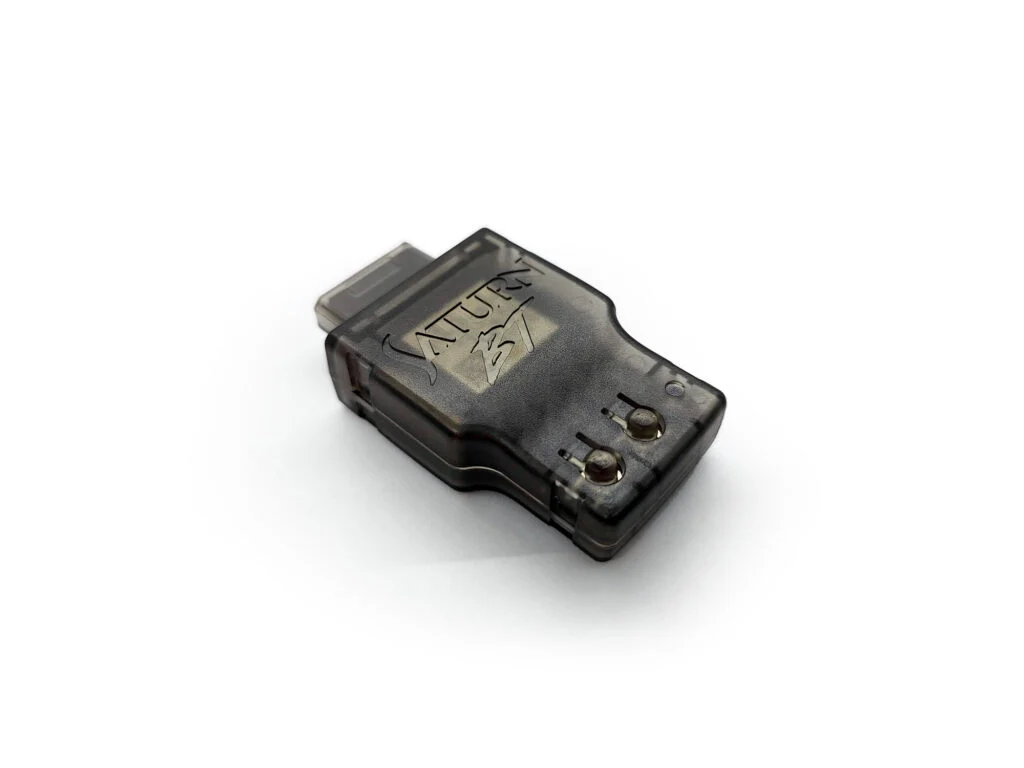
A project to develop a wireless Bluetooth adapter for the iconic Sega Saturn 3D controller, which had been in a state of dormancy, has been officially revived, according to a recent blog post by its creator. Dave, the proprietor of Humble Bazooka, a respected online retailer specializing in retro game accessories, announced on March 7, 2026, that this particular adapter, dubbed the BLE Shift 3D, is now "the first project back on the bench" following a period in which new product development had been paused. This news marks a significant development for enthusiasts of the Sega Saturn, particularly those who cherish the console’s unique analog controller and seek to modernize their gaming setup.
The journey of the BLE Shift 3D has been characterized by both innovation and unforeseen challenges. Dave acknowledged the extended hiatus, stating, "This one took a longer break than I planned." The primary cause for the delay was the discovery of a critical bug within the adapter’s original soft-latching power button circuit during advanced testing phases. While not posing a catastrophic or safety risk, the issue was identified as an "edge case that would eventually show up and annoy someone." Committed to delivering a high-quality product, Dave made the strategic decision to halt progress and dedicate the necessary time to meticulously rework the design, rather than releasing a product he was not entirely satisfied with. This commitment to quality assurance underscores the meticulous approach often observed in the niche market of retro gaming hardware modifications, where user experience and reliability are paramount.
Resolution of Technical Hurdles and Current Development Status
According to Dave, the technical issues uncovered during the rigorous testing of the BLE Shift 3D have now been successfully resolved, and the device is reportedly performing well in its current testing iterations. The project has moved beyond mere functionality fixes and is now in a crucial "polishing" phase. This involves a comprehensive refinement of various aspects, including "cleaning up firmware behavior, tightening battery life, and making sure everything feels like a production ready device." This stage is critical for transitioning a functional prototype into a consumer-grade product, ensuring stability, optimal performance, and a seamless user experience. The emphasis on firmware behavior suggests ongoing optimization of the Bluetooth communication protocols and controller input processing, aiming for minimal latency and maximum compatibility with various modern Bluetooth-enabled gamepads, which are increasingly diverse in their internal architectures and signal handling.
One of the key considerations currently under review is the choice of manufacturing process for the adapter’s enclosure. Dave is weighing the pros and cons of using a 3D printed enclosure versus an injection-molded one. While 3D printing offers the distinct advantage of speed and flexibility, allowing for "small batches quickly," it often results in a less refined aesthetic and tactile feel compared to mass-produced items. Conversely, injection molding, though it would inevitably "push the release back" due to the significant lead times involved in mold creation and production, promises a "more professional look and feel." This decision is not trivial, as it directly impacts both the product’s market entry timeline and its perceived value and durability. Dave elaborated in an interview on Tuesday, explaining that injection molding processes can typically take "three to four months but can be longer depending on complexity," highlighting the substantial commitment of time and resources this option entails.
Recognizing the importance of community input in such enthusiast-driven projects, Dave has actively sought feedback from potential customers regarding the enclosure choice. This engagement strategy is common among independent developers in the retro gaming scene, fostering a sense of shared ownership and ensuring the final product aligns with user expectations. Feedback channels include Humble Bazooka’s official presence on Bluesky, X/Twitter, YouTube, and Facebook, providing multiple avenues for the community to voice their preferences.
Another critical aspect currently being finalized is the battery life of the BLE Shift 3D. While still subject to change, Dave provided an update on Tuesday, stating, "I’ve spent a good amount of time working around battery life and I’m shooting for 6+ [hours]." He further noted that his "current prototype is getting like 7-8 [hours]," but cautiously added, "I don’t want to quote that until the final adapter is ready. With that said, TBA." This transparency regarding battery performance targets and ongoing optimization efforts provides valuable insight into the development process and sets realistic expectations for prospective users. Achieving robust battery life is crucial for a wireless peripheral, enhancing convenience and reducing the frequency of recharging, thereby improving the overall gaming session experience.
A Chronology of Delays and Resumption
The path to the BLE Shift 3D’s current state has been fraught with unforeseen obstacles, leading to significant delays from its initially projected release timeline. The last major update on Dave’s adapter from SHIRO! was in October 2024. At that time, optimism was high, with Dave indicating that the design was "90 to 95% finished." He had expressed confidence, telling SHIRO! that "What’s left is basically fine tuning, testing and manufacturing," and had tentatively aimed for a release to resellers by the end of Q1 2025.
However, circumstances conspired against these plans. The year 2025 brought a series of economic and logistical challenges that significantly impacted Humble Bazooka, a U.S.-based operation. Dave detailed these setbacks in his recent blog post, citing the detrimental effect of "tariffs enacted in 2025." These governmental levies had a cascading negative impact, causing "component prices kept climbing, shipping costs went up," thereby eroding profit margins and increasing the cost of production. Such external economic pressures can disproportionately affect smaller businesses and independent developers who often operate on tighter budgets and have less leverage with suppliers.

Adding to the economic headwinds, Dave also undertook a substantial personal and professional transition: relocating his entire workshop. This arduous process involved "tearing down the whole workspace and setting it up again from scratch," a time-consuming endeavor that inevitably diverted focus and resources away from product development. The combined effect of these economic and logistical challenges meant that development work and restocking of existing products were "basically on hold for months," bringing the BLE Shift 3D project to a standstill.
Fortunately, these periods of disruption have now passed. With his workshop fully re-established and a steady influx of new components, Dave has been able to return his full attention to project development. The revival of the BLE Shift 3D is a testament to his perseverance and dedication to seeing the project through despite considerable setbacks.
Project Origins and Technical Evolution
The BLE Shift 3D project boasts a rich developmental history, tracing its roots back to 2022. It began as a fork of an earlier initiative by Drew Kenaz, known in the community as GamingNJncos, who had been working on a wireless 3D pad mod. Dave’s initial foray into the project involved extensive "trial and error with game compatibility" throughout 2022, a common hurdle when adapting modern wireless technology to older, proprietary hardware interfaces. Despite the dedication, the project eventually had to be placed on the backburner as Dave prioritized other Humble Bazooka projects and his full-time employment.
The decision to revisit the Saturn adapter in 2024 proved to be a pivotal moment. Dave described this return as "a really good thing because I was able to look at the whole project with fresh eyes." This period of renewed focus allowed for a critical re-evaluation of the entire design, leading to a comprehensive overhaul. He meticulously "planned out its features, branding and design," ensuring a cohesive and well-thought-out product vision.
The re-engagement also led to significant technical advancements. Dave recounted to SHIRO! at the time, "I threw out a ton of my original code and refactored what was left." This aggressive refactoring implies a commitment to cleaner, more efficient, and robust software architecture. Crucially, he designed "an efficient power circuit that not only toggles the adapter on and off with a single tactile button but also completely shuts off the ESP32 so it won’t draw power when it’s off." This innovation addresses a common pain point in wireless accessories: parasitic power drain when the device is seemingly off. Furthermore, he "reworked my sleep system so if you leave the device alone for two minutes, it completely shuts off, extending the battery life when the adapter is sitting around." These power management features are critical for maximizing the usable time between charges and enhancing user convenience.
Broader Context: The Sega Saturn 3D Controller and the Retro Gaming Market
The Sega Saturn 3D controller, for which the BLE Shift 3D is designed, holds a significant place in video game history. Released in 1996 alongside the groundbreaking Nights into Dreams…, it was Sega’s answer to the burgeoning demand for analog control in 3D gaming, a trend popularized by Nintendo 64’s controller. Its distinctive design, featuring both a traditional D-pad and an analog stick, along with an ergonomic grip, made it a favorite for specific titles that leveraged its unique capabilities. Games like Panzer Dragoon Saga, Burning Rangers, and Daytona USA CCE truly shone with the precision offered by the 3D controller.
However, as with all retro hardware, using the Saturn 3D controller in a modern gaming environment presents challenges. Wired connections can be cumbersome, especially with contemporary entertainment setups that prioritize minimalism and wireless connectivity. Furthermore, the aging hardware itself is susceptible to wear and tear, and finding compatible, high-quality replacements can be difficult. This is where independent creators and aftermarket modders like Dave play a crucial role. They bridge the gap between classic gaming experiences and modern technological conveniences, ensuring that beloved hardware remains usable and enjoyable for new generations of players and seasoned enthusiasts alike.
The demand for such retro-compatible accessories is a testament to the enduring popularity of the Sega Saturn and the broader retro gaming market. This market has seen substantial growth, driven by nostalgia, game preservation efforts, and the desire to experience classic titles on original hardware or with enhanced features. Projects like the BLE Shift 3D not only improve the quality of life for retro gamers but also contribute to the longevity and accessibility of vintage consoles. The ability to use modern, high-quality Bluetooth controllers, or even the original 3D controller wirelessly, significantly elevates the gaming experience, making it more akin to contemporary console setups without sacrificing authenticity.
Humble Bazooka’s Ecosystem and Dave’s Track Record

This is not Dave’s first foray into creating wireless Bluetooth adapters for the Sega Saturn. Humble Bazooka previously launched the highly successful Saturn BT in August 2023. This adapter serves a complementary purpose, enabling modern Bluetooth controllers to be used with original Saturn hardware. The Saturn BT leverages the widely acclaimed BlueRetro platform, an open-source project coded by Jacques Gagnon, known as Darthcloud, which provides robust Bluetooth connectivity for various retro consoles.
The Saturn BT received overwhelmingly positive reviews from the retro gaming community. SHIRO!’s own SaturnDave conducted an early hands-on review of the device before its public release, putting it through rigorous testing. His assessment was glowing: "I admit it. I did NOT expect this receiver to perform as well as it does," SaturnDave remarked. He further elaborated on its impressive performance, stating, "This Saturn BT adapter basically feels like using a 2.4Ghz receiver, when paired with a reasonably modern Bluetooth controller." This comparison is significant, as 2.4Ghz wireless technology is often lauded for its low latency and direct connection, making it ideal for competitive gaming where input lag can be critical. The fact that a Bluetooth adapter could achieve a similar feel speaks volumes about the quality of the Saturn BT’s implementation and the BlueRetro platform.
Beyond these sophisticated wireless solutions, Humble Bazooka also caters to other practical needs of Saturn owners. The shop offers a high-quality replacement battery door for the Sega Saturn, a small but essential item for maintaining the console’s integrity and aesthetic. These diverse offerings solidify Humble Bazooka’s reputation as a reliable and innovative provider of retro game accessories, demonstrating Dave’s deep understanding of the community’s needs and his technical prowess in addressing them. His proven track record with the Saturn BT lends significant credibility to the renewed BLE Shift 3D project, assuring customers of the potential for another high-quality product.
Implications and Future Outlook
The revival of the BLE Shift 3D project carries significant implications for the Sega Saturn community. Foremost among these is the promise of enhanced playability and convenience for a console that, despite its age, continues to command a passionate following. The ability to use the beloved 3D controller wirelessly will undoubtedly breathe new life into classic titles, making them more accessible and enjoyable in modern living rooms. This development supports the broader movement of game preservation by making older hardware more user-friendly and compatible with contemporary gaming habits. It could also potentially attract new players to the Saturn, lowering the barrier to entry by offering a more streamlined setup.
In the wider retro gaming market, the project’s journey—from initial development to unforeseen delays due to economic factors and logistical challenges, and finally to its resurgence—serves as a compelling case study. It highlights the dedication required by independent creators to bring specialized products to niche markets. The transparent communication from Dave, detailing both the technical hurdles and the external pressures, fosters trust within the community, even amidst extended timelines.
Looking ahead, the primary challenge for Humble Bazooka will be the manufacturing decision regarding the enclosure. The choice between 3D printing and injection molding represents a critical juncture that will dictate both the product’s final aesthetic and its release schedule. While 3D printing offers speed, the community’s likely preference for a "professional look and feel" could push Dave towards injection molding, requiring careful management of expectations regarding potential further delays. The estimated 3-4 month lead time for injection molding, potentially longer, means that a firm release date remains elusive, categorized as "TBA" for now.
Despite these remaining hurdles, the enthusiasm surrounding the BLE Shift 3D’s return is palpable. It represents not just a new accessory but a continuation of the effort to preserve and enhance the Sega Saturn experience, ensuring that this cherished console remains a vibrant part of the retro gaming landscape for years to come. The project underscores the ingenuity and passion that drive the retro gaming community, constantly seeking to innovate and improve upon the foundations of gaming history.
This story originally appeared on Sega Saturn SHIRO!