Farhan hamdan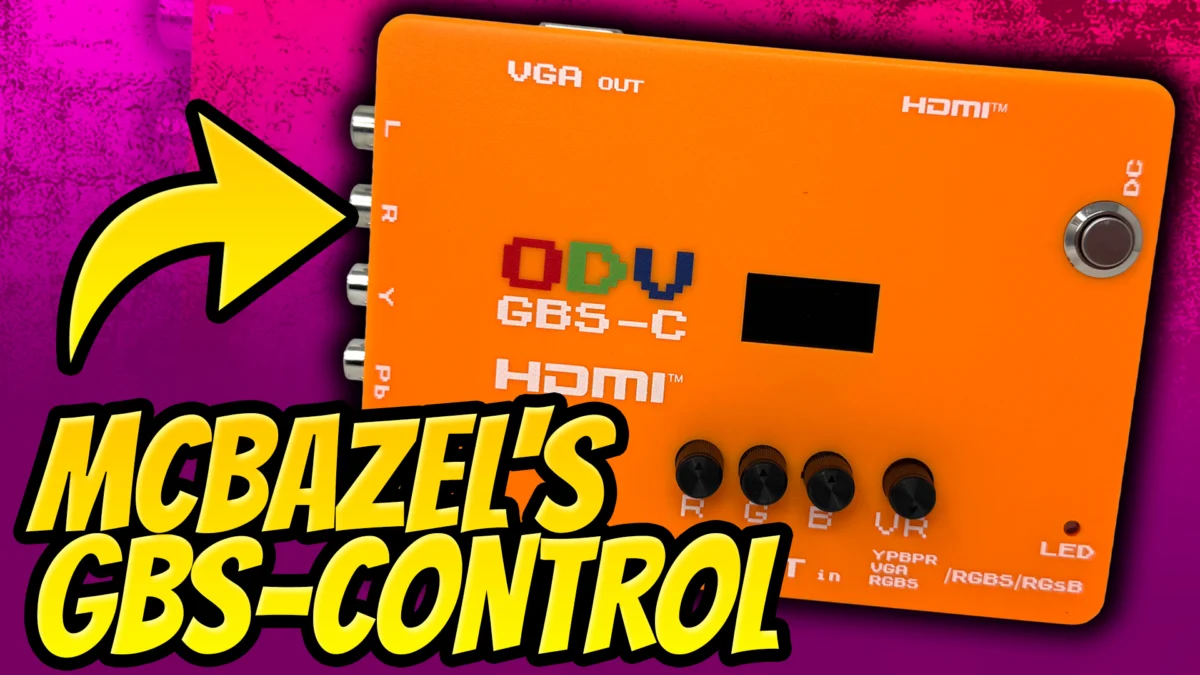
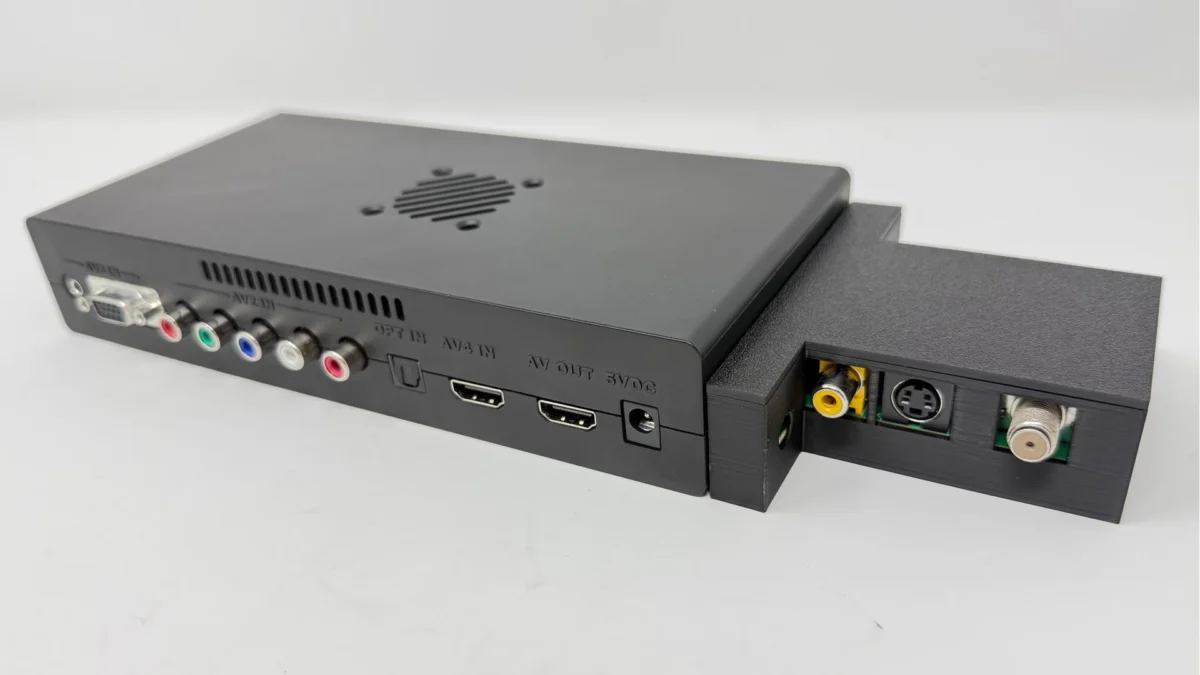
The company Mcbazel has introduced a pre-made, fully integrated version of the renowned GBS-Control scaler, consolidating all necessary components onto a single motherboard encased within a robust injection-molded shell. This new product is positioned as a highly effective entry-level video scaler for a wide array of pre-HD gaming consoles, demonstrating particular excellence in handling 480i signals from iconic systems such as the Sega Dreamcast, Microsoft Xbox, Nintendo Wii, and especially the Sony PlayStation 2. This commercial offering significantly streamlines the adoption of a sophisticated scaling solution for retro gaming aficionados, moving beyond the traditionally DIY nature of the GBS-Control project. The review conducted on Mcbazel’s specific hardware iteration provides crucial insights into its performance, while also offering sufficient background for individuals less familiar with the broader GBS-Control initiative to grasp its fundamental importance in the contemporary retro gaming landscape.
The Genesis of GBS-Control: An Open-Source Revolution
To fully appreciate Mcbazel’s contribution, it is essential to understand the origins and significance of the GBS-Control project. The GBS-Control is an open-source video scaler firmware and hardware modification based on the venerable GBS-8200 arcade VGA converter board. Originally designed for connecting arcade JAMMA boards to standard VGA monitors, the GBS-8200 was a low-cost, readily available piece of hardware. However, its native capabilities were limited, and it suffered from various shortcomings, including poor deinterlacing, significant input lag, and a lack of advanced scaling features.
The retro gaming community, driven by a desire to connect their cherished classic consoles to modern digital displays (which inherently lack analog inputs and often poorly handle lower-resolution, interlaced signals), saw potential in the GBS-8200’s hardware. This led to the development of the GBS-Control project, spearheaded by community developers such as Rama. The project involved creating custom firmware and auxiliary hardware modifications that transformed the rudimentary GBS-8200 into a highly capable, low-latency video scaler. The primary objective was to provide an affordable, high-quality solution for upscaling analog video signals (Component YPbPr, RGBHV, RGBS) to modern HDMI outputs, with a particular emphasis on superior deinterlacing of 480i signals. This community-driven effort addressed a critical void in the market, as commercial solutions capable of high-quality deinterlacing without introducing significant lag were often prohibitively expensive.
Mcbazel’s Commercial Realization: Bridging the Gap
Mcbazel’s pre-made GBS-Control unit represents a significant milestone in the project’s evolution, transitioning it from a niche DIY endeavor to a commercially accessible product. Historically, implementing GBS-Control required users to source a GBS-8200 board, purchase an ESP32 microcontroller, perform soldering, and potentially 3D print a case. This presented a barrier to entry for many enthusiasts lacking the technical skills or time for such a project. Mcbazel has effectively removed these obstacles by offering a plug-and-play solution.
The integrated design means all necessary components, including the core GBS-8200 variant, the ESP32 microcontroller, and requisite input/output ports, are factory-assembled onto a single, purpose-built printed circuit board. This board is then housed within a professionally manufactured injection-molded case, ensuring durability, aesthetic appeal, and protection for the internal electronics. This commercialization effort significantly broadens the potential user base, making the benefits of GBS-Control accessible to a wider demographic of retro gamers who prioritize convenience and reliability without compromising on performance. The availability of such a unit through mainstream channels like Amazon, complete with direct affiliate links for purchase, underscores its readiness for mass consumption.
Technical Prowess: Mastering the Art of 480i Deinterlacing
One of the standout features of the GBS-Control, and consequently Mcbazel’s integrated unit, is its exceptional handling of 480i signals. Many classic consoles, particularly during the late 90s and early 2000s, outputted their video in 480i (interlaced) format. Modern displays are predominantly progressive scan, meaning they expect 480p, 720p, 1080p, or 4K signals. When a modern TV receives an interlaced signal, it must deinterlace it to progressive scan. Standard TV deinterlacers are often optimized for broadcast television, not gaming, leading to noticeable input lag, motion artifacts (like "jaggies" or "combing" effects), or a soft, blurry image.
The GBS-Control employs motion-adaptive deinterlacing, a sophisticated technique that analyzes consecutive frames to determine areas of motion versus static background. It then applies different processing algorithms: line doubling for static areas and more complex blending or interpolation for moving areas. This results in a much cleaner, sharper image with significantly reduced motion artifacts and minimal input lag, making fast-paced games on consoles like the PlayStation 2 or Dreamcast far more enjoyable on modern displays. This capability is a critical differentiator for the GBS-Control, especially given its sub-$100 price point, as high-quality motion-adaptive deinterlacing is often a feature reserved for much more expensive dedicated video processors. The review highlights its status as a "great choice for anything with 480i," directly attesting to this technical strength.
Navigating the Retro Scaler Landscape: A Competitive Analysis

The market for retro video scalers has diversified significantly, offering solutions across a wide range of price points and technical capabilities. Mcbazel’s GBS-Control enters a competitive landscape populated by established players, each with distinct strengths and target audiences.
-
The High-End Contenders: RetroTINK and OSSC
At the pinnacle of consumer-grade retro video scaling are devices like the RetroTINK 5x Pro and the newer RetroTINK 4K, developed by Mike Chi. These devices represent the state-of-the-art, offering unparalleled image quality, extremely low latency, extensive input compatibility (SCART, Component, S-Video, Composite), and highly advanced features such as arbitrary resolution scaling, sophisticated processing pipelines, and comprehensive customizability. They are capable of pixel-perfect line doubling, robust deinterlacing, and complex aspect ratio management, making them the preferred choice for discerning enthusiasts and content creators. However, their advanced capabilities come at a premium price, typically ranging from several hundred dollars.Another prominent open-source solution is the Open Source Scan Converter (OSSC). Developed by Marqs, the OSSC excels at pixel-perfect line doubling, offering virtually zero input lag for progressive scan signals (240p/480p). It supports a wide array of input types, including SCART RGB, Component, and VGA, and outputs to HDMI. While the OSSC is a formidable device, particularly for 240p content and precise pixel rendering, its deinterlacing for 480i signals is generally less sophisticated than the GBS-Control’s motion-adaptive approach. The OSSC primarily uses simple line doubling for interlaced signals, which can introduce "bob" deinterlacing artifacts, making it less ideal for heavy 480i game libraries unless combined with external post-processing. Priced comparably or slightly higher than the Mcbazel GBS-Control, the OSSC often serves a different niche, emphasizing raw pixel fidelity for specific signal types.
-
GBS-Control’s Niche: Value and Specific Strengths
The Mcbazel GBS-Control, as emphasized by the reviewer, occupies a unique and valuable position within this ecosystem. At a sub-$100 price point, it provides motion-adaptive deinterlacing that rivals solutions costing significantly more, especially for 480i content. While it may not offer the sheer flexibility, input options, or advanced scaling algorithms of a RetroTINK 5x Pro or 4K, its performance for its target use case—primarily 480i consoles—is exceptional for its cost. The reviewer explicitly states, "This isn’t going to replace a RetroTINK 5x/4K. And the OSSC is close in price and a better choice in many scenarios." This honest assessment highlights that "context is key." The GBS-C is not a universal panacea but rather a strategic choice for specific scenarios, particularly for budget-conscious gamers whose primary need is to clean up 480i signals from consoles like the PS2, Wii, or Xbox. Its ability to perform respectable downscaling to SCART further adds to its versatility in certain setups.
The Evolving Retro Gaming Market: Accessibility and Growth
The emergence of products like Mcbazel’s GBS-Control reflects broader trends within the retro gaming market. The global retro gaming market has seen substantial growth, driven by nostalgia, the increasing availability of classic games through digital storefronts, and a burgeoning community of collectors and enthusiasts. Analysts estimate the market to be worth billions of dollars, with a steady compound annual growth rate projected for the coming years. A significant aspect of this growth is the demand for hardware solutions that bridge the gap between vintage gaming equipment and modern display technologies.
Initially, this demand was met by niche hobbyists and DIY communities. However, as the market matures, there’s a clear trajectory towards commercialization and greater accessibility. Companies like Mcbazel, by productizing open-source projects, play a crucial role in this transition. They provide ready-made, user-friendly devices that cater to a wider audience, including those who are less technically inclined but still desire a high-quality retro gaming experience. This shift helps democratize access to advanced video processing, ensuring that more gamers can enjoy their classic consoles without the frustration of poor image quality or input lag. The availability of accessories like dedicated PS2 Component cables and low-lag monitors, as highlighted in the article, further indicates a robust ecosystem supporting enhanced retro gaming experiences.
Community Reception and Market Implications
The community’s reaction to integrated GBS-Control units has generally been positive. The GBS-Control project itself garnered significant praise for its technical achievements, and the availability of commercial, pre-built versions is seen as a welcome development. It lowers the barrier to entry, allowing more people to benefit from the project’s innovations. While purists might still prefer the DIY route for maximum control or the top-tier solutions for ultimate performance, the Mcbazel offering caters to a substantial segment of the market that prioritizes value, convenience, and solid performance for common use cases.
The implications for the retro gaming hardware market are multifaceted. Firstly, it creates a robust mid-tier segment for video scalers, offering a compelling alternative between basic, often poor-performing budget scalers and premium, high-cost options. Secondly, it validates the power of open-source development within the hardware space, demonstrating how community projects can be successfully commercialized to meet consumer demand. Thirdly, it likely puts pressure on other manufacturers to innovate or offer more competitive pricing, fostering a healthier market for consumers. The fact that a reputable source like RetroRGB is reviewing and recommending such a device speaks volumes about its perceived quality and value within the expert community. The reviewer’s call to "think about your total setup and see what’s best for you" encapsulates the nuanced decision-making process required when choosing retro gaming hardware, emphasizing that no single solution fits all.
In conclusion, Mcbazel’s integrated GBS-Control scaler is more than just a new product; it is a significant development for the retro gaming community. It brings a highly effective, budget-friendly solution for high-quality video output, particularly for challenging 480i signals, to a broader audience. By simplifying access to a sophisticated open-source project, Mcbazel has solidified GBS-Control’s position as a vital tool in the modern retro gamer’s arsenal, proving that excellent performance doesn’t always have to come with a premium price tag.