Chalid Lutfie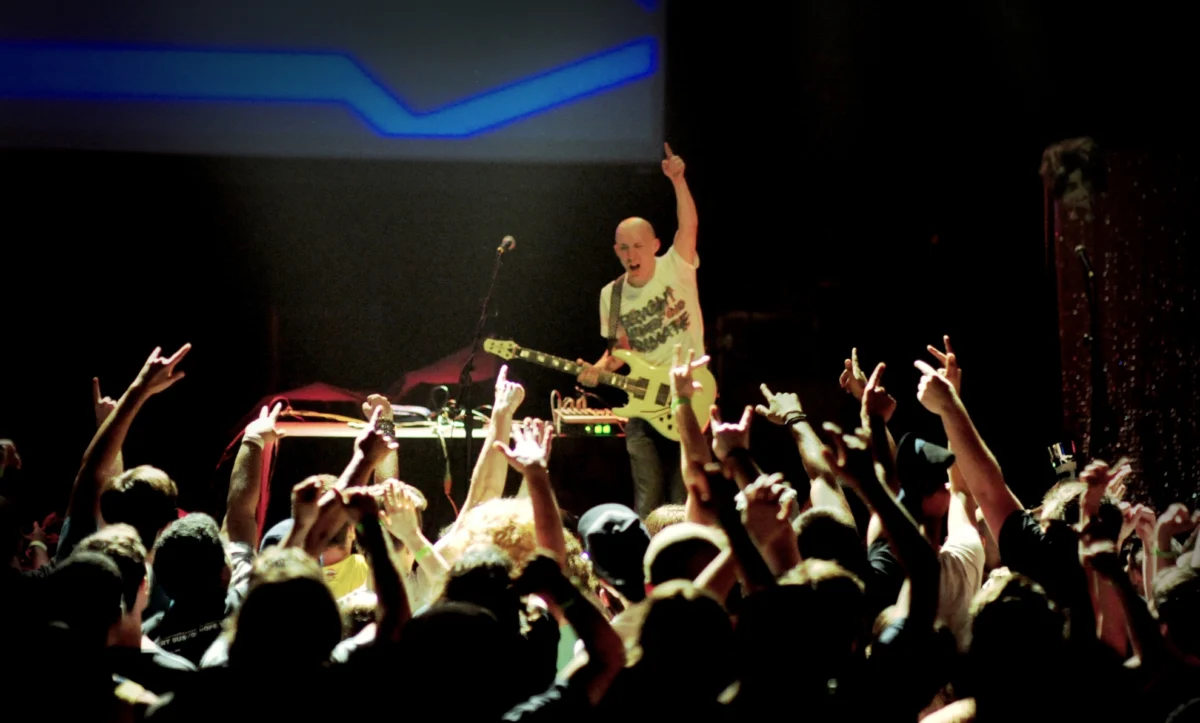
The landscape of contemporary electronic music is witnessing a significant evolution as Dan Behrens, the artist known professionally as Danimal Cannon, prepares for the launch of his latest studio album, Lunaria. This release marks a pivotal moment in the artist’s career, arriving three years after his critically acclaimed collaboration with Zef on the album Parallel Processing. More importantly, Lunaria serves as the culmination of a half-decade of technical refinement and conceptual development, aiming to solve a long-standing challenge in the niche but growing genre of chiptune: the seamless integration of vintage 8-bit synthesis with high-performance progressive metal guitar.
The album, scheduled for a worldwide release on March 11, represents a departure from the traditional boundaries of the bitpop and chip-metal scenes. While Behrens has long been recognized for his virtuosic live performances that feature a Game Boy synchronized with an electric guitar, his previous studio recordings often separated these elements. Lunaria is the first project where this "full force" combination is the central architectural pillar of the sound. This stylistic shift is expected to resonate with both the retro-gaming community and fans of technical progressive rock, providing a bridge between the digital constraints of the 1980s hardware and the expansive possibilities of modern metal production.
The Evolution of the Chiptune-Guitar Fusion
To understand the significance of Lunaria, one must examine the chronological progression of Behrens’ work. In 2011, his album Roots introduced the world to his specific brand of Game Boy-driven composition. At that time, Behrens experimented with adding guitar to select tracks, but he faced significant technical hurdles. The primary challenge lay in the frequency spectrum; the square waves and white noise generated by the Nintendo Game Boy’s internal sound chip (the Sharp LR35902) often occupy the same sonic space as distorted electric guitars. In a studio environment, this frequently resulted in a "muddy" mix where the two instruments competed for dominance rather than complementing one another.
Following the release of Roots, Behrens spent several years performing live, using these shows as a laboratory to test how high-gain guitar riffs could coexist with the 4-channel limitations of the Game Boy. The feedback from his audience was consistent: listeners wanted the energy of the live performance captured on a record. This demand set the stage for a four-year period of intense technical mastery. Behrens focused on "marrying" the two instruments, treating the Game Boy not as a backing track or a novelty, but as a core member of a band lineup. The result is a cohesive sound where the digital "bleeps" and "bloops" of the chiptune era are woven into the complex rhythmic structures and melodic sweeps characteristic of progressive metal.
Technical Composition and Diverse Influences
The sonic palette of Lunaria is remarkably broad, drawing from a variety of genres that extend far beyond the confines of video game music. Behrens has cited a wide array of influences that informed the writing process, ranging from the industrial grit of Nine Inch Nails and KMFDM to the neoclassical structures of Mozart and the contemporary choral arrangements of Eric Whitacre. This eclectic mix of inspirations suggests that Lunaria is not merely a "video game music" album, but a sophisticated work of modern composition.
From a technical standpoint, the album utilizes the limitations of the Game Boy to its advantage. By using software such as Little Sound DJ (LSDJ), chiptune artists are restricted to two pulse wave channels, one custom wave channel for samples or bass, and one noise channel for percussion. Behrens overlays these digital constraints with the infinite sustain and harmonic complexity of the electric guitar. This creates a unique juxtaposition: the rigid, clock-synced precision of the 8-bit hardware against the fluid, emotive nuances of human performance.
Furthermore, the influence of modern indie rock and game soundtracks is evident. Behrens noted the impact of the Shovel Knight original soundtrack, composed by Jake Kaufman, which is widely regarded as a benchmark for modern chiptune excellence. Additionally, the rhythmic experimentation of indie rock duo Buke and Gase provided a template for the unconventional time signatures and polyrhythms found throughout the record.
Conceptual Framework: The Giant Impact Hypothesis
Beyond its technical achievements, Lunaria is a concept album rooted in astrophysical theory. Behrens, a self-described "science geek," utilized the "giant impact hypothesis" as the narrative foundation for the project. This theory suggests that approximately 4.5 billion years ago, a Mars-sized celestial body named Theia collided with the early Earth (Gaia). The resulting debris from this catastrophic event eventually coalesced to form the Moon.
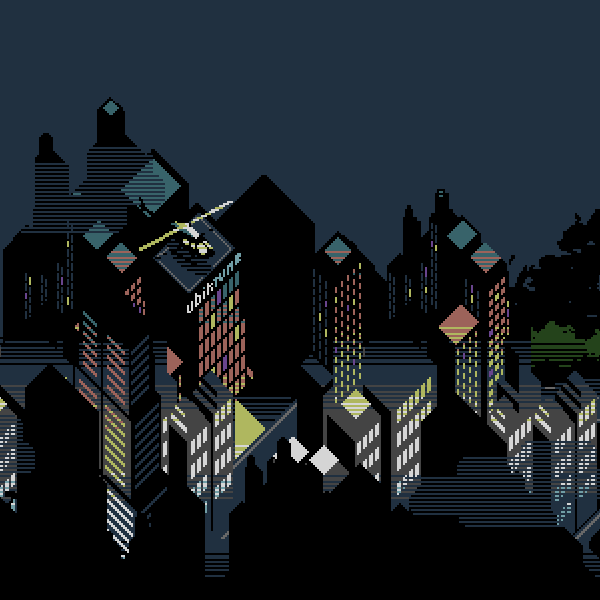
In a creative turn, Behrens personified this cosmic event, creating a character named Lunaria to represent the impactor and the resulting lunar body. The title itself is a linguistic play on words, combining "Lunar" with "Aria"—the latter being a self-contained piece for one voice, typically found within an opera. This personification allows the album to explore themes of collision, creation, and celestial beauty, providing a lyrical and emotional depth that complements the aggressive nature of the music.
The personification of the moon is further realized through the inclusion of guest vocalists. Emily Yancey, a professionally trained opera singer and former neighbor of Behrens, provides the "voice" of the celestial goddess. Her contribution is intended to offer a "vocal timbre" that matches the scale of the astronomical narrative. By incorporating operatic vocals into a chiptune-metal framework, Behrens further pushes the boundaries of the genre, moving it toward a "space opera" aesthetic.
Collaborative Contributions and Artistic Vision
The production of Lunaria involved several key collaborators who helped bring Behrens’ vision to life. In addition to Emily Yancey’s vocal performances, the album features a significant contribution from Samuel Ascher-Weiss, known in the music community as Shnabubula. Ascher-Weiss, a virtuoso pianist who previously collaborated with Behrens on Roots, was tasked with performing a piano rendition of the track "Axis."
According to Behrens, "Axis" was selected for this treatment because it represented the most challenging composition on the record. The decision to translate a complex chiptune piece into a traditional piano arrangement was an intentional effort to provide contrast. It highlights the underlying compositional strength of the music, proving that the melodies and rhythms can stand independently of their digital or electronic origins. This "breathtaking" version serves as a bridge between the avant-garde digital world and the classical tradition.
The visual identity of the album was entrusted to artist Minerva Mopsy. The artwork is not merely a cover but a central part of the Lunaria experience, with the physical CD release featuring a poster of the artwork. This emphasis on physical media and visual storytelling reflects a broader trend in the independent music scene, where fans value tangible artifacts that complement the digital listening experience.
Market Context and Broader Implications
The release of Lunaria comes at a time when chiptune music is undergoing a professionalization phase. No longer relegated to the fringes of internet forums or "lo-fi" hobbyist circles, artists like Danimal Cannon are demonstrating that 8-bit hardware can be used as a legitimate tool for high-level musical expression. The successful pre-order campaign on Bandcamp and the production of physical CDs indicate a robust and dedicated fanbase willing to support experimental genre-blending.
From an industry perspective, Lunaria illustrates the power of niche communities to sustain complex artistic projects. The album’s successful synthesis of disparate elements—metal, opera, piano, and 8-bit synthesis—suggests a future where genre labels become increasingly fluid. For the progressive metal community, Behrens offers a fresh set of textures and a new way to approach technicality. For the chiptune community, he provides a roadmap for integrating live instrumentation without sacrificing the unique character of the Game Boy’s sound.
As the March 11 release date approaches, the anticipation within these intersecting communities remains high. The lead single, "Behemoth," has already offered a glimpse into the album’s high-energy, sophisticated sound. With its combination of scientific rigor, technical mastery, and collaborative depth, Lunaria is poised to be a landmark release in the evolution of independent electronic and heavy music.
Chronology of the Project
- 2011: Release of Roots. Danimal Cannon begins experimenting with guitar and Game Boy fusion but finds the technical integration difficult.
- 2012-2015: Extensive live touring. Behrens uses live performances to refine the "interplay" between his guitar and the Game Boy hardware.
- 2013: Release of Parallel Processing, a collaboration with Zef, which maintains a high profile for Behrens in the chiptune scene.
- 2015: Writing and recording for Lunaria intensifies. Behrens incorporates influences from industrial music and orchestral composition.
- Late 2015: Collaboration with Emily Yancey and Samuel Ascher-Weiss is finalized. Artwork by Minerva Mopsy is commissioned.
- Early 2016: "Behemoth" is released as the lead single. Pre-orders open on Bandcamp.
- March 11, 2016: Official release of Lunaria in digital and CD formats.
The trajectory of this project suggests that the "wait" of five years mentioned by fans was a necessary period of growth. By taking the time to master the technical nuances of his craft, Danimal Cannon has moved beyond the "quirky" reputation of chiptune to create a work of genuine progressive merit. Lunaria stands as a testament to the idea that even the most limited technology, when handled with expertise and vision, can contribute to a grand, celestial narrative.