 Retno Hari Mulyono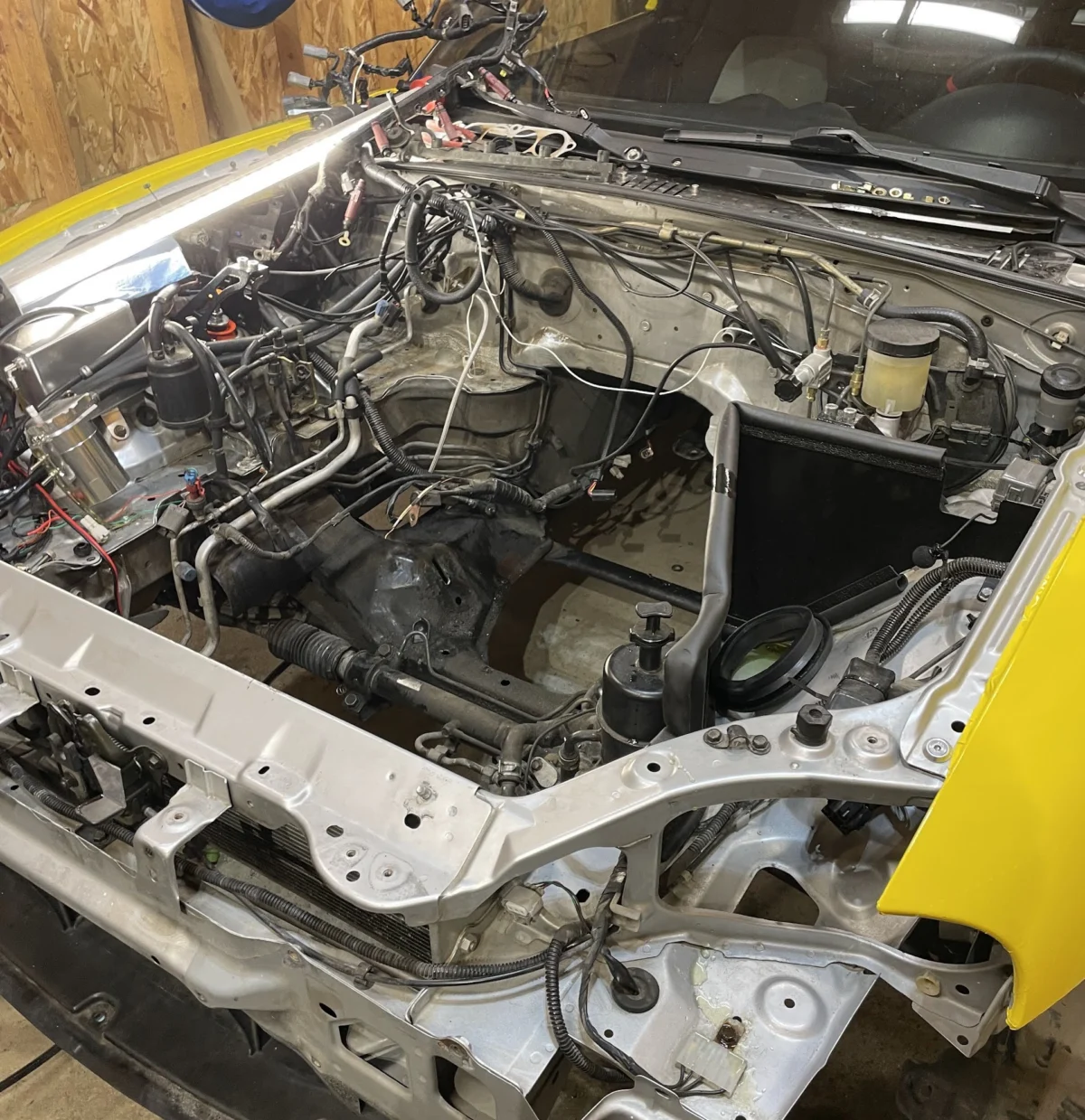
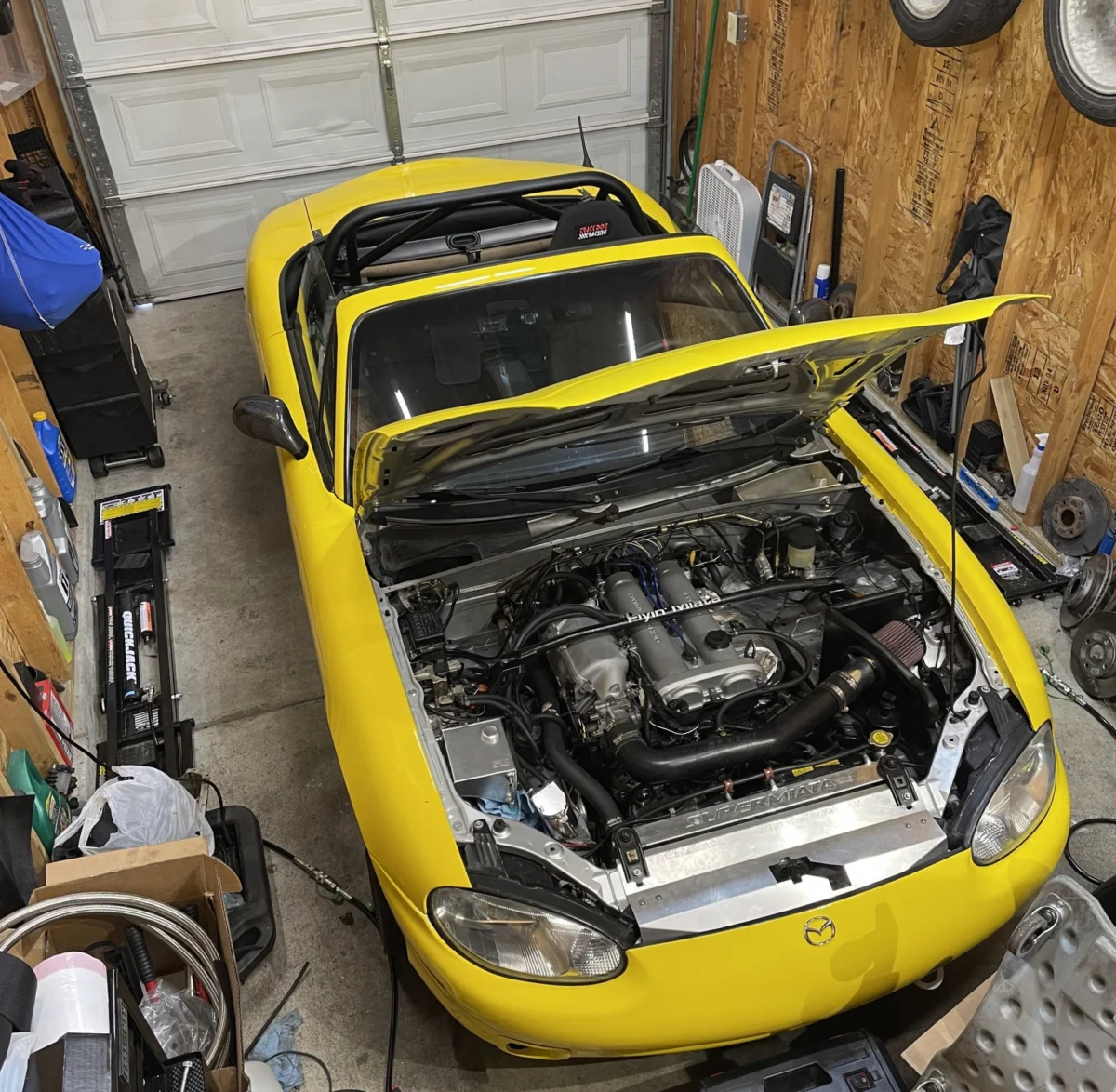
The annual winter maintenance window often prompts automotive enthusiasts to undertake comprehensive mechanical overhauls that would otherwise be impractical during peak driving seasons. For one MX-5 enthusiast, the off-season provided an ideal opportunity to address a growing accumulation of mechanical grievances on a 2000 Mazda MX-5 Miata. What began as a targeted effort to resolve an increasingly severe rear main oil seal leak quickly escalated into a full-scale powertrain extraction. This extensive winter project encompassed not only the removal and resealing of the 1.8-liter BP engine and transmission assembly but also the integration of several high-performance aftermarket components, including an upgraded sport clutch, a lightweight aluminum flywheel, a customized coolant reroute system, and an imported European-spec intake manifold. While the ambitious undertaking successfully modernized several vintage subsystems and enhanced overall throttle responsiveness, subsequent operational testing revealed lingering fluid retention challenges that underscore the persistent complexities of maintaining high-mileage sports cars.
Background Context And The Decision To Extract The Powertrain
Mazda’s legendary MX-5 platform—specifically the first-generation (NA) and second-generation (NB) models produced from 1989 through 2005—has long earned praise for its lightweight chassis, near-perfect weight distribution, and exceptional handling dynamics. However, the powertrain architecture, which traces its lineage back through decades of automotive engineering, has also developed an infamous reputation for weeping oil from nearly every conceivable gasket and mating surface. Industry analysts and long-term owners frequently draw comparisons between the Mazda B-series engine and classic British roadster powerplants regarding their propensity for lubricant loss.
For the owner of this particular 2000 NB Miata, the primary catalyst for the winter overhaul was a failing rear main seal. Over preceding months, oil consumption had steadily worsened, creating an unsightly mess underneath the chassis and threatening to obscure more serious internal mechanical issues. In automotive diagnostics, accurate assessment of true engine oil consumption—distinguishing between internal burning via piston rings or valve seals and external leakage—requires a completely dry engine block. Consequently, attempting to measure oil loss while fighting active external leaks is rendered virtually impossible.
Faced with this diagnostic hurdle, automotive technicians generally weigh the labor-intensive nature of powertrain removal against the alternative of performing piecemeal repairs underneath a jacked-up vehicle. Although dropping the transmission independently is a recognized shortcut for addressing rear crankshaft seals, the presence of secondary maintenance items tipped the scale in favor of a complete engine-and-transmission extraction. With multiple fluid leaks, a questionable clutch assembly, a compromised oil pan, and thermal management concerns associated with high-performance track driving, pulling the entire assembly from the top emerged as the most efficient path forward.
Chronology Of The Powertrain Removal And Reinstallation
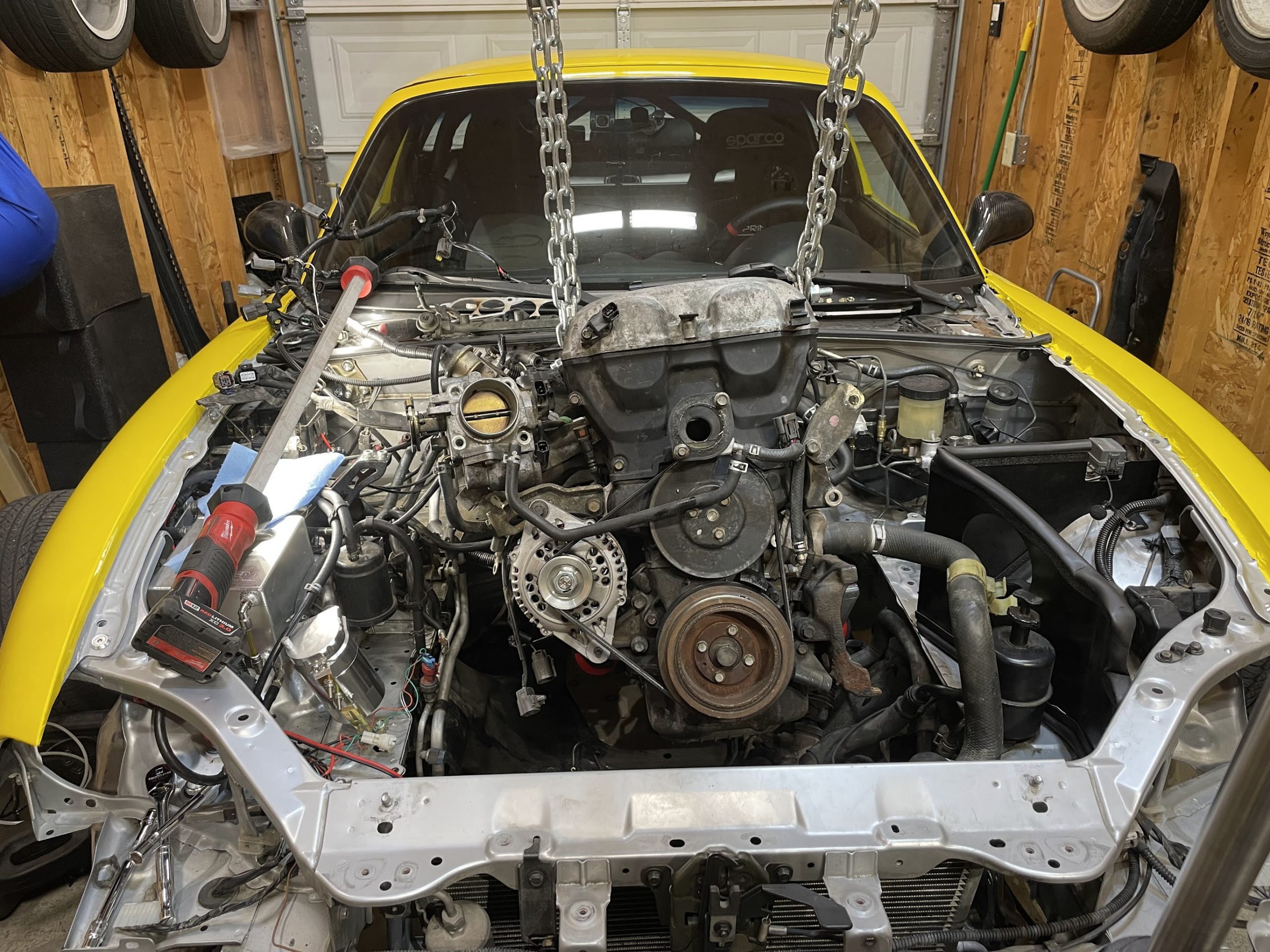
The extraction phase of the project commenced in the dead of winter, utilizing standard home garage equipment centered around an engine hoist and basic hand tools. Contrary to the apprehension often felt by amateur mechanics undertaking a first-time engine pull, the removal process proved remarkably straightforward. Disconnecting the necessary electrical harnesses, fuel lines, cooling hoses, and structural support members allowed the engine and five-speed manual transmission to be hoisted out of the bay as a single, unified unit without encountering major structural resistance.
Reinstallation, however, presented distinct physical challenges. Unlike the unobstructed path of extraction, dropping the heavy assembly back into the engine bay required precise spatial alignment to ensure the hydraulic and rubber engine mounts seated correctly onto their respective subframe mounting points. Automotive maintenance experts note that hoisting an engine and transmission simultaneously demands meticulous angle adjustment to prevent damage to the firewall and surrounding peripheral components.
Reflecting on the procedure, the mechanics of the operation highlighted several efficiency lessons for future overhauls. Notably, extracting the engine and transmission as a single integrated assembly streamlined the timeline of the teardown phase, though future iterations may benefit from specialized alignment fixtures during the drop-back phase to reduce installation friction.
Powertrain Upgrades: Clutch, Flywheel, And Transmission Sealing
With the powertrain liberated from the chassis, the scope of work expanded organically to prevent future mechanical failures. Industry best practices dictate that whenever a transmission is separated from an engine to service a rear main seal, the clutch disc, pressure plate, and flywheel should be thoroughly inspected or replaced. Given that the components currently installed showed age consistent with factory-original hardware, preventative replacement was deemed mandatory to avoid repeating the labor-intensive extraction process prematurely.
To balance daily street drivability with future horsepower-enhancing modifications, the builder selected a Supermiata organic sport clutch kit paired with a nine-pound forged aluminum flywheel. Standard factory flywheels prioritize smooth, inertial low-end momentum, whereas lightweight aftermarket flywheels drastically reduce rotational mass. This reduction allows the engine to rev much more freely, significantly improving throttle response and facilitating precise rev-matching during aggressive downshifts.
Initial post-installation feedback indicated a characteristic break-in period. During the first few operational cycles, the clutch engagement point was notably low, and pedal modulation felt stiff. Furthermore, observers noted an initial thermal scent—commonly associated with the curing of organic clutch friction material against a freshly machined flywheel—which steadily dissipated over the first several hundred miles. By the conclusion of the break-in window, the clutch returned to a predictable, factory-like pedal feel while offering superior clamping force capable of handling outputs well beyond the thermal and torque thresholds of the stock five-speed transmission.
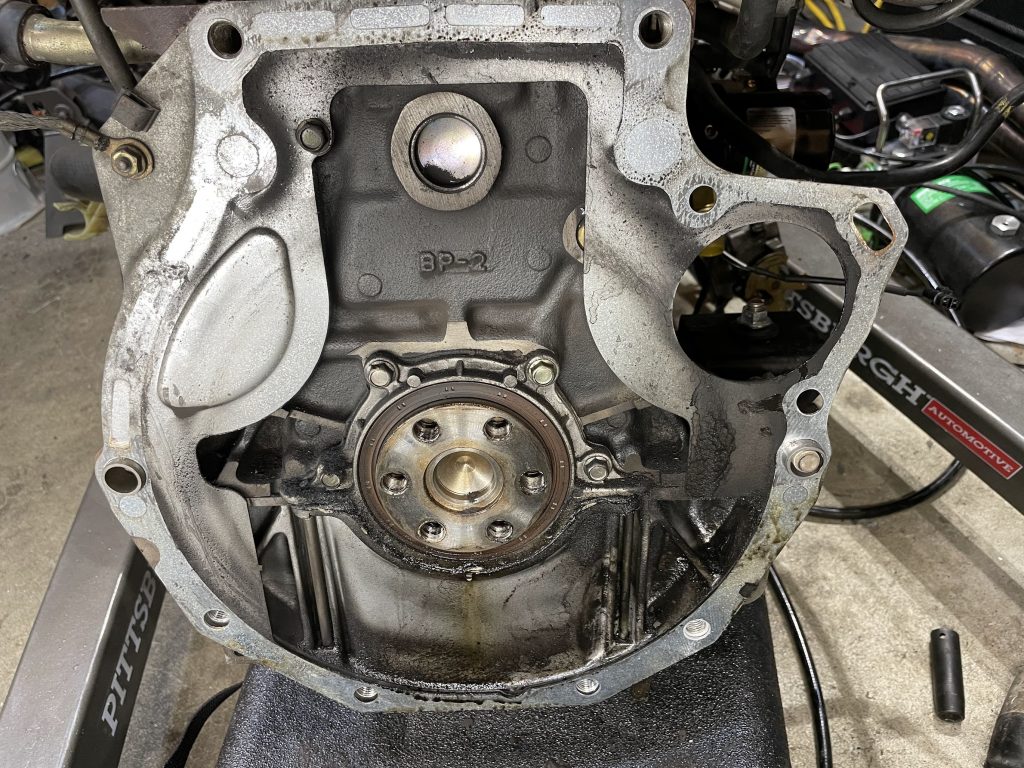
Concurrently, transmission maintenance was addressed by replacing both the input and output shaft seals. Inspection revealed minor seepage at the rear transmission output shaft, a common wear point that, if ignored, contributes significantly to driveline fluid loss over extended mileage intervals. For the critical rear main crankshaft seal, the technician utilized a specialized installation tool manufactured by Flyin Miata. Industry professionals widely endorse such dedicated tooling, as improper seating depth during rear main seal installation is a primary cause of recurring oil leaks in Mazda BP engines.
Oil Pan Remediation And Structural Complications
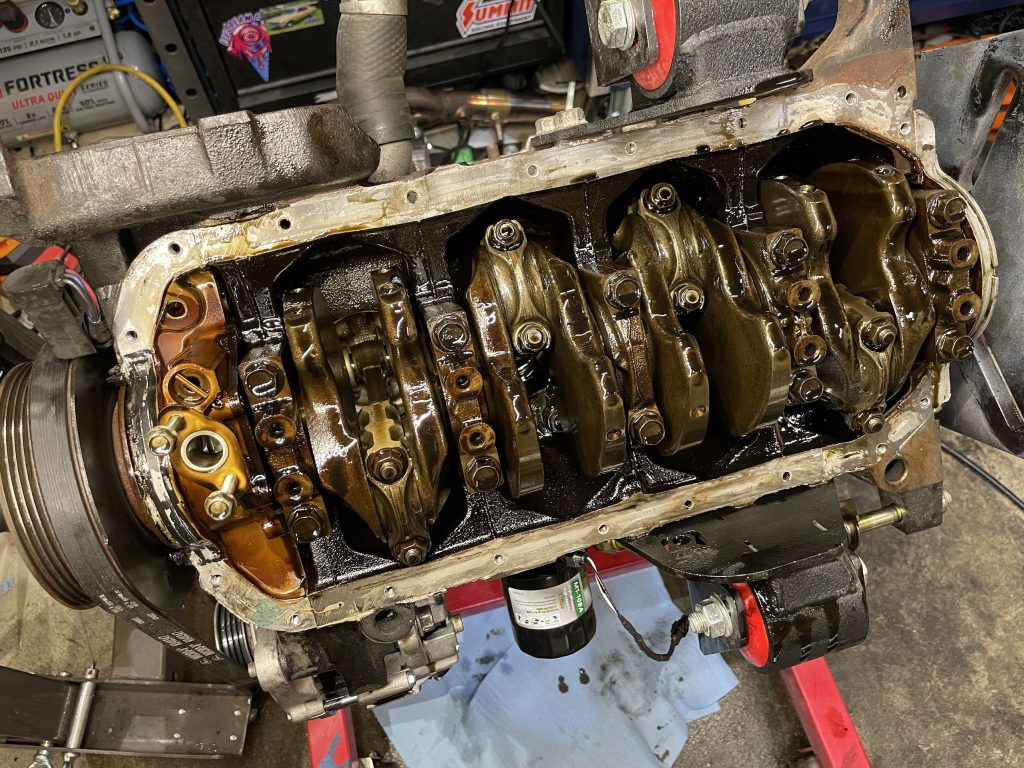
Another major target of the winter overhaul was the engine’s oil pan. The vehicle had previously suffered from stripped threads within the aluminum oil pan drain plug aperture, a damage scenario typically resulting from over-torquing during routine fluid changes. To remedy this, a previous owner had forced a conical tapered drain plug into the housing—a temporary band-aid that stopped active leaking but posed long-term risks to the integrity of the pan.
Procuring a structurally sound, undamaged used replacement oil pan, the builder set about replacing the compromised unit. Removing a Mazda BP oil pan is notoriously tedious due to the presence of a structural baffle plate sandwiched directly between the engine block and the oil pan flange, with the oil pickup tube bolted securely to the baffle. Misunderstanding this sandwich construction can lead to structural damage; during the initial teardown, the baffle plate was inadvertently bent due to excessive prying force applied before completely separating the adhered silicone gasket material (RTV sealant).
Following the cleanup of all mating surfaces and the application of fresh high-temperature RTV sealant, the replacement pan was successfully bolted into position alongside a new oil pickup tube gasket. However, a latent complication emerged shortly after the engine was reinstated in the vehicle. Inspection following initial test drives revealed a hairline crack along the front oil pan flange where it mates to the engine block, resulting in a slow external weep during engine operation. Because the fracture was located above the resting oil level, catastrophic fluid loss was averted, but the minor leak necessitated immediate chemical remediation.
Applying a high-grade structural epoxy successfully arrested the leakage in the short term. Nevertheless, as a contingency against future thermal expansion and structural fatigue, the owner procured a secondary backup oil pan to ensure long-term mechanical reliability if the epoxy patch fails under sustained operating temperatures.
Thermal Management: The Hawley Performance Coolant Reroute
Addressing thermal efficiency represented one of the most critical engineering modifications executed during the winter project. The Mazda B6 and BP engine family was originally engineered for transverse placement in front-wheel-drive vehicle applications, where the thermostat housing and water pump were situated on opposite ends of the motor. When Mazda adapted this powerplant for rear-wheel-drive configurations in the MX-5 Miata, packaging constraints forced both the water pump and thermostat to be relocated to the front of the engine, directly adjacent to the radiator.
While this configuration is entirely adequate for standard commuting and low-stress street driving, automotive engineers note that high-performance track usage exposes a fundamental flaw in the factory cooling path. Coolant enters the front of the engine block, flows longitudinally toward the rear, and exits. Consequently, the rearmost cylinders (cylinders three and four) experience significantly higher operating temperatures than cylinders one and two, increasing the risk of localized detonation, accelerated wear, and head gasket failure.
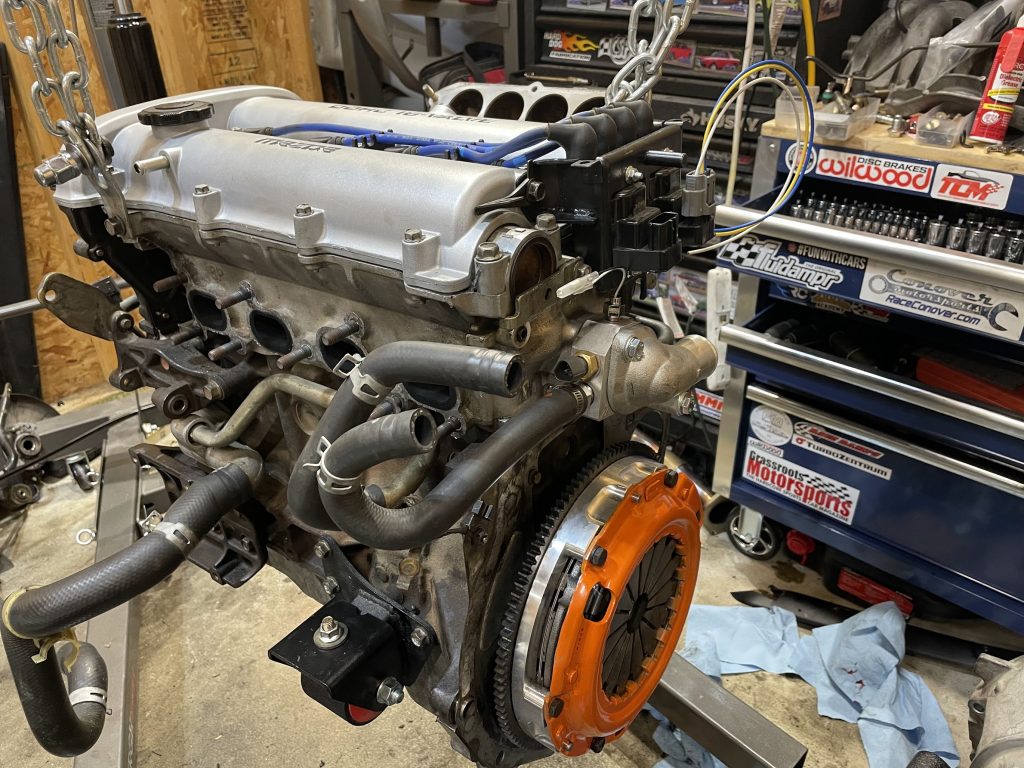
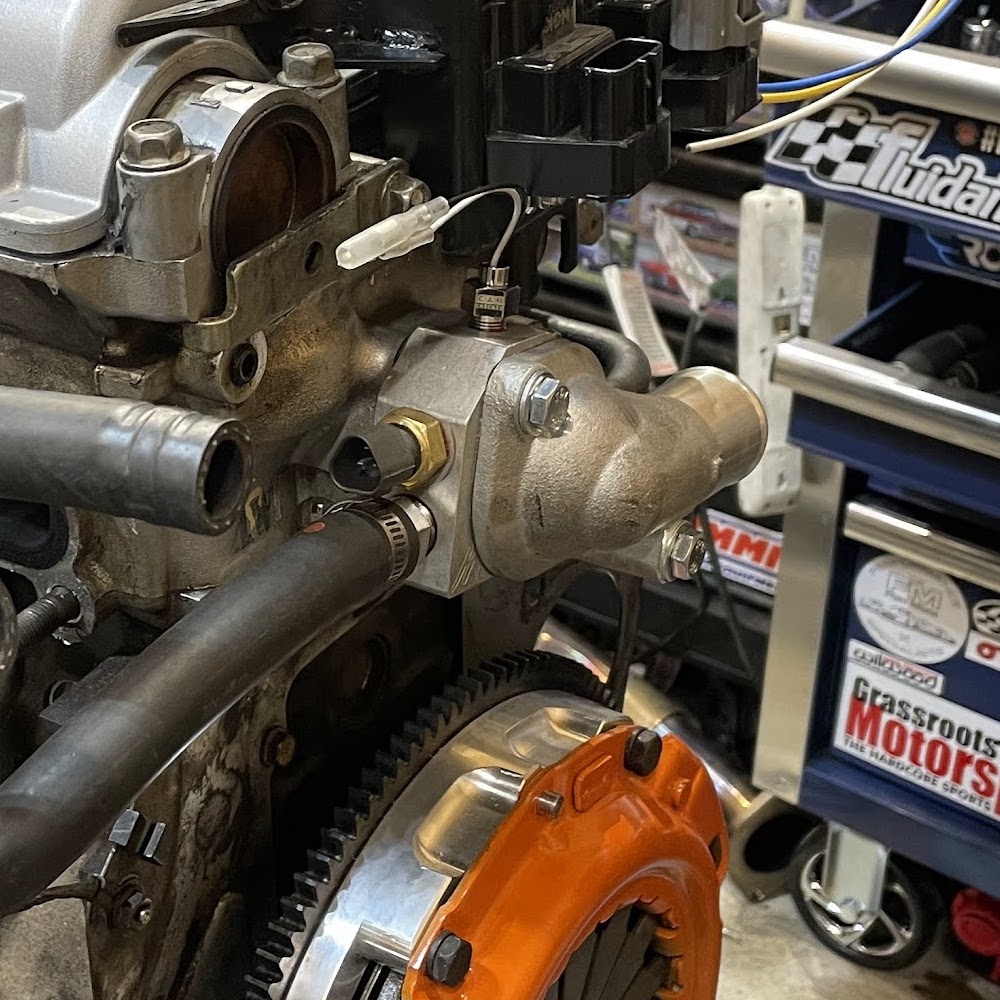
To resolve this thermal imbalance, the builder installed a coolant reroute kit sourced from Hawley Performance. This aftermarket modification relocates the thermostat housing back to the rear of the engine block, forcing coolant to circulate evenly across all four cylinders before exiting toward the radiator. Industry reviews suggest that coolant reroutes drastically stabilize cylinder head temperatures under heavy track loads.
The installation of the Hawley Performance kit utilized off-the-shelf plumbing components married to a custom middle adapter plate, representing a cost-effective alternative to more complex proprietary kits. Post-installation observations confirmed a noticeable drop in both steady-state coolant temperatures and overall engine oil operating temperatures during street driving. However, bleeding air from the newly reconfigured cooling system proved exceptionally difficult due to the elevated plumbing loops at the rear firewall. Utilizing an elevated, spill-proof coolant funnel eventually resolved the vapor lock issues, though the experience prompted reflection regarding alternative market options. The builder noted that premium kits, such as the Supermiata Qmax system, feature integrated bleed nipples and one-piece housings that simplify the initial bleeding procedure and offer superior port integration for auxiliary electronic sensors.
Induction Optimization With The EUDM/JDM Flattop Manifold
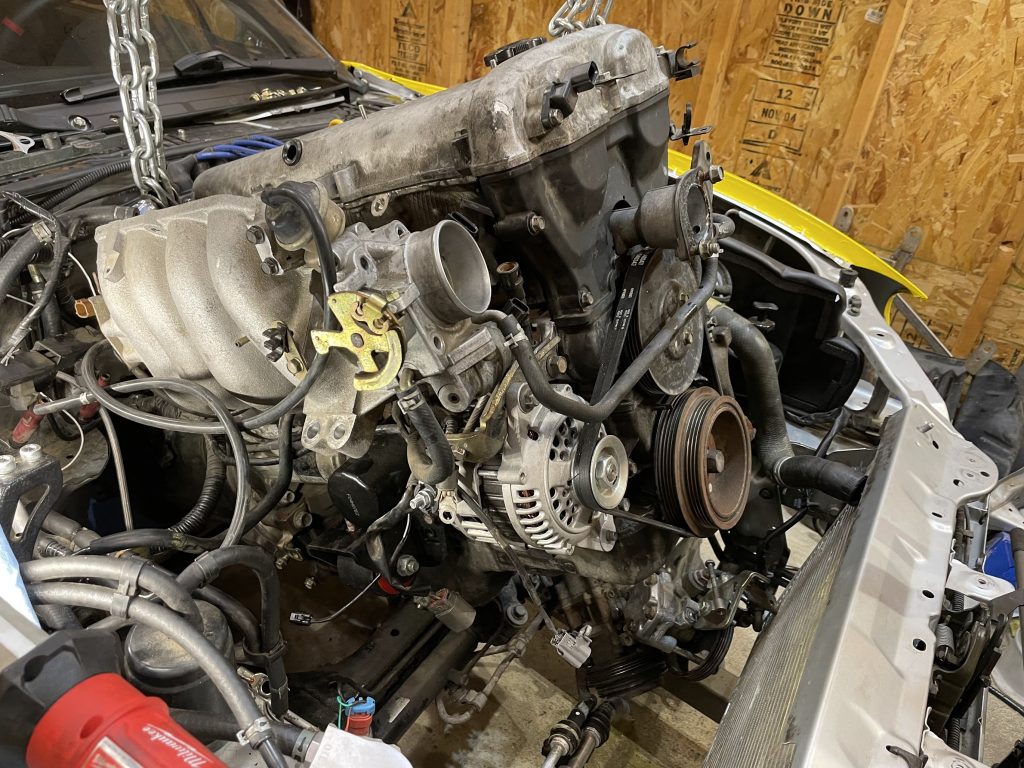
Airflow efficiency was similarly upgraded through the adoption of a European Domestic Market (EUDM) and Japanese Domestic Market (JDM) high-compression intake manifold, commonly referred to in the enthusiast community as the "flattop" manifold. Throughout the production run of the NB Miata, Mazda utilized three distinct intake manifold designs: the early non-VICS (Variable Inertia Charging System) manifold, the mid-production VICS manifold found on 1999–2000 models, and the later sequential VTCS (Variable Tumble Control System) manifold introduced for 2001–2005 models.
Because the project vehicle was a year-2000 model, it originally featured the VICS manifold, an electronically actuated dual-runner system designed to optimize low-end torque. However, for sustained high-RPM performance—such as that experienced during competitive track driving—the high-rpm plenum volume and runner geometry of the EUDM flattop manifold offer superior volumetric efficiency. Furthermore, adopting the flattop manifold eliminated the need to wire and calibrate the factory VICS actuator solenoid through an aftermarket standalone engine management computer, simplifying engine bay architecture.
Complementing the mechanical updates, both the aluminum valve cover and the newly acquired intake manifold underwent thorough cosmetic restoration. Stripped, cleaned, and painted in a factory-spec silver finish, the components mimic clean original equipment manufacturer (OEM) aesthetics. Opting for a standard OEM color finish rather than a mirror-polished chrome aesthetic provided practical benefits; standard paint successfully masks minor surface chips, scratches, and chemical staining accumulated during routine maintenance and trackside servicing.
Analysis, Implications, And Future Outlook
The comprehensive winter overhaul of the NB Miata powertrain highlights both the rewards and the inherent frustrations of DIY automotive restoration. By extracting the engine, the owner successfully executed critical preventative maintenance, upgraded crucial driveline components for enhanced durability, modernized the thermal cooling architecture, and optimized induction breathing for improved high-RPM efficiency.
However, operational data collected during the immediate 500-mile post-rebuild window reveals the unpredictable nature of mechanical overhauls. Despite meticulous seal replacement and torque sequencing, minor oil weeping reappeared near the rear of the engine block. While the volumetric loss is significantly reduced compared to the pre-rebuild baseline, the development necessitates further diagnostic intervention.
Automotive analysts note that recurring rear crankshaft seal leaks on high-mileage blocks can frequently be attributed to micro-scoring on the crankshaft mating surface, subtle crank endplay movement, or assembly variance rather than seal failure alone. Facing the prospect of another premature teardown, the owner has adopted a pragmatic monitoring strategy. By securing a deposit on an imported, low-mileage replacement BP4W engine block from a specialized supplier in the United Kingdom (Prestige Spares), arriving early in the spring, the builder has insulated the project against catastrophic downtime.
This contingency plan allows for two distinct operational paths: continuing to monitor the existing minor leak as long as fluid loss remains within acceptable parameters, or utilizing the imported spare motor as a foundation for a completely blueprinted bench rebuild. Ultimately, the project serves as a case study in modern enthusiast maintenance—balancing ambitious mechanical upgrades with the persistent, charmingly stubborn eccentricities of vintage Mazda engineering. Future documentation from the garage is expected to focus on chassis safety enhancements and a comprehensive retrospective evaluating the first full year of MX-5 ownership.