 Retno Hari Mulyono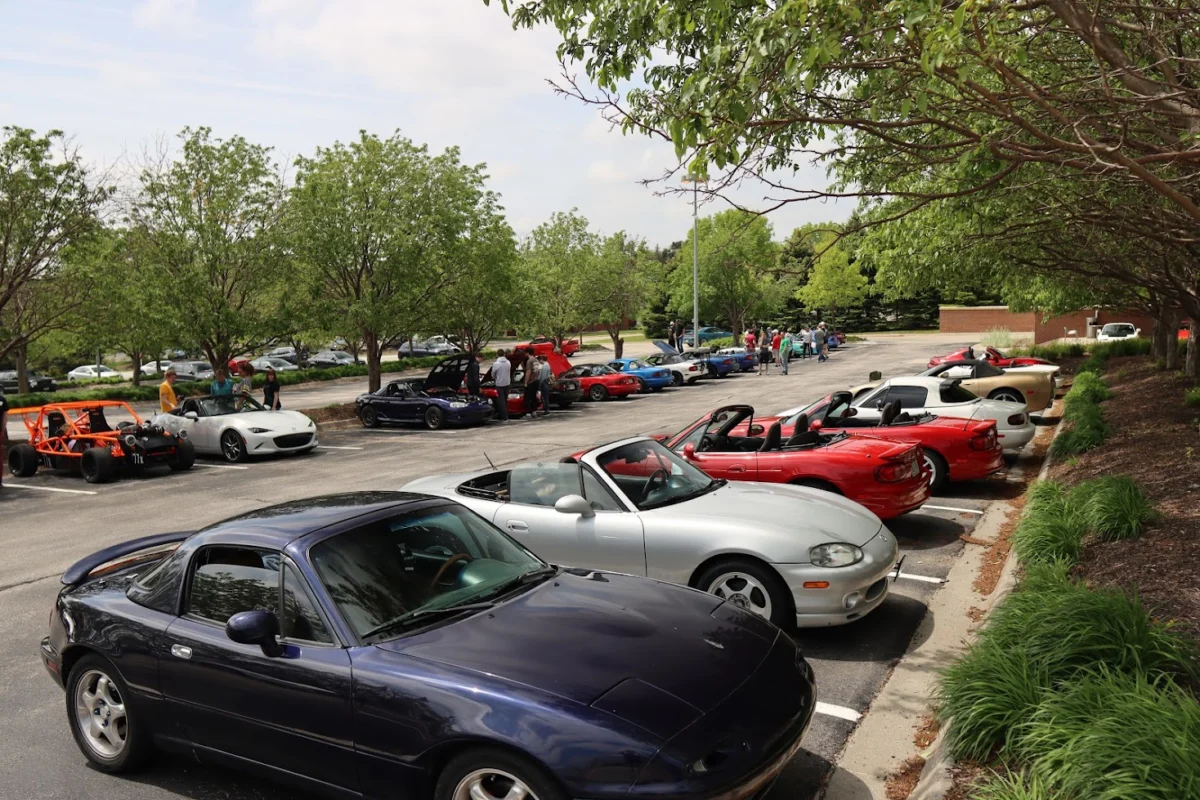
Automotive enthusiasts often debate the ultimate entry point for accessible motorsports, but few platforms generate as much universal consensus as the Mazda MX-5 Miata. Originally introduced to revive the traditional British lightweight roadster market, the second-generation model—designated the NB—has firmly established itself as a staple of grassroots racing, autocross, and project car culture. Spanning a rigorous twelve-month timeline from March 2001 to February 2022, one thorough documentation project highlights the realities of acquiring, maintaining, and competitively preparing a high-mileage, vintage sports car.
This comprehensive review explores the mechanical interventions, aesthetic transformations, and safety compliance upgrades undertaken during the first year of ownership of a 2000 Mazda Miata, offering a detailed case study in budget-friendly automotive passion and engineering restoration.
Acquisition and Initial Assessment
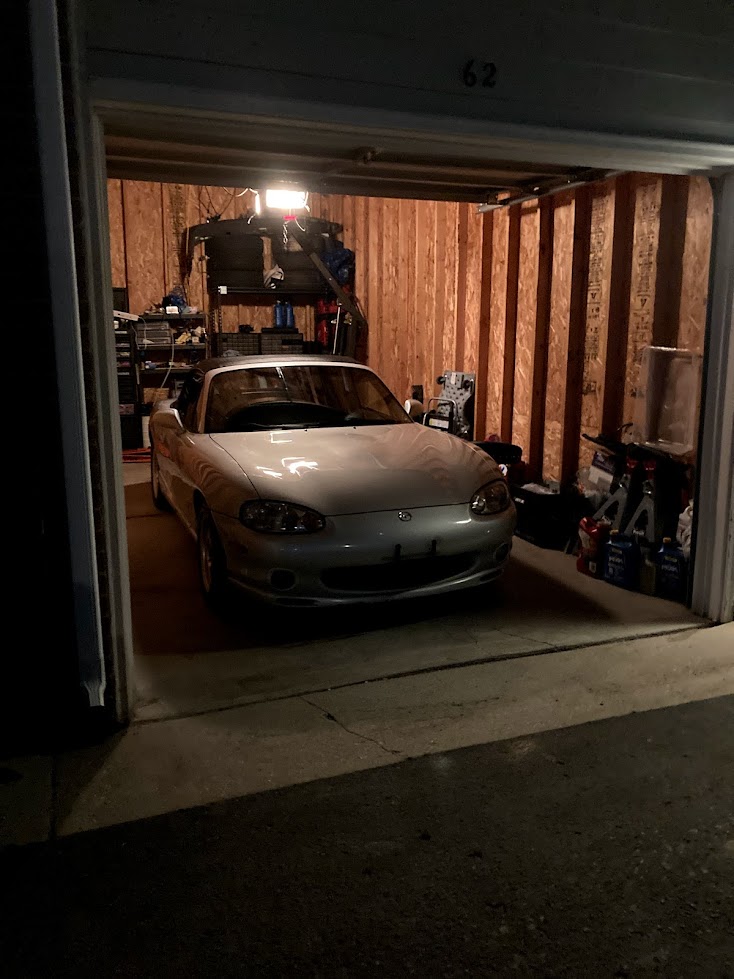
The journey commenced on March 19, 2021, with the acquisition of a silver 2000 Mazda MX-5 Miata. While the vehicle lacked a comprehensive service history, its underlying mechanical architecture presented a viable foundation for a dedicated enthusiast build. Powered by the naturally aspirated BP4W 1.8-liter inline-four engine, the car delivers modest straight-line performance by modern standards, yet its appeal has never relied on raw horsepower.
Automotive analysts frequently attribute the enduring popularity of the NB Miata to its exceptionally low curb weight, balanced chassis dynamics, and mechanical simplicity. Spanning the generational gap between analog classic cars and heavily computerized modern vehicles, the NB chassis retains a raw, communicative driving experience while omitting the extreme reliability hurdles and parts scarcity associated with vehicles from earlier decades. However, acquiring an unserviced example necessitates immediate baseline maintenance to ensure operational longevity, particularly before subjecting the vehicle to high-stress environments such as closed-circuit track days or timed autocross competitions.
Baseline Mechanical Intervention and Preventive Maintenance
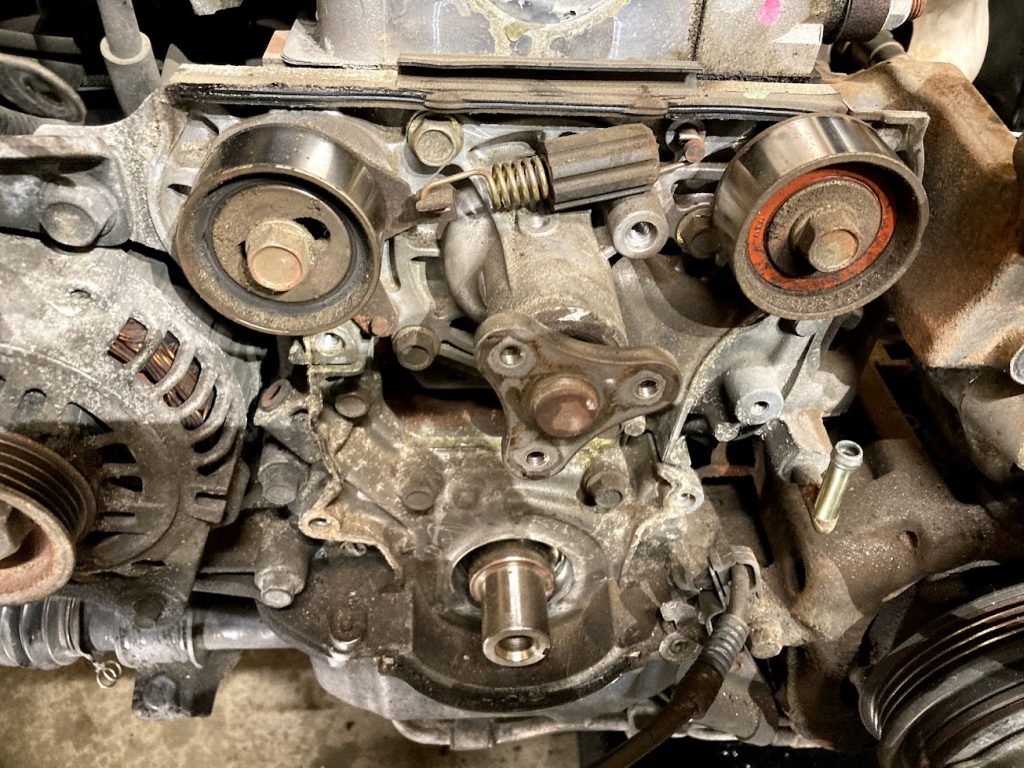
Recognizing the absence of prior maintenance documentation, the ownership timeline entered an intensive mechanical phase in April 2021. Although the BP4W engine utilizes a non-interference design—meaning piston-to-valve contact is generally avoided in the event of a timing belt failure—proactive intervention was deemed essential to prevent roadside strandings and mechanical degradation.
The initial overhaul involved stripping down major engine components to replace aging wear items, flush vital fluids, and inspect structural components. For grassroots motorsport participants, establishing a "known good" baseline is a critical financial and safety prerequisite. Neglecting fundamental maintenance prior to high-performance driving frequently results in catastrophic component failure, premature thermal fatigue, and escalated repair costs. By systematically addressing potential failure points—such as aging ignition components, degraded suspension bushings, and fatigued fluid lines—the vehicle was transitioned into a reliable mechanical state capable of enduring sustained high RPM operations.
Community Engagement and Enthusiast Integration
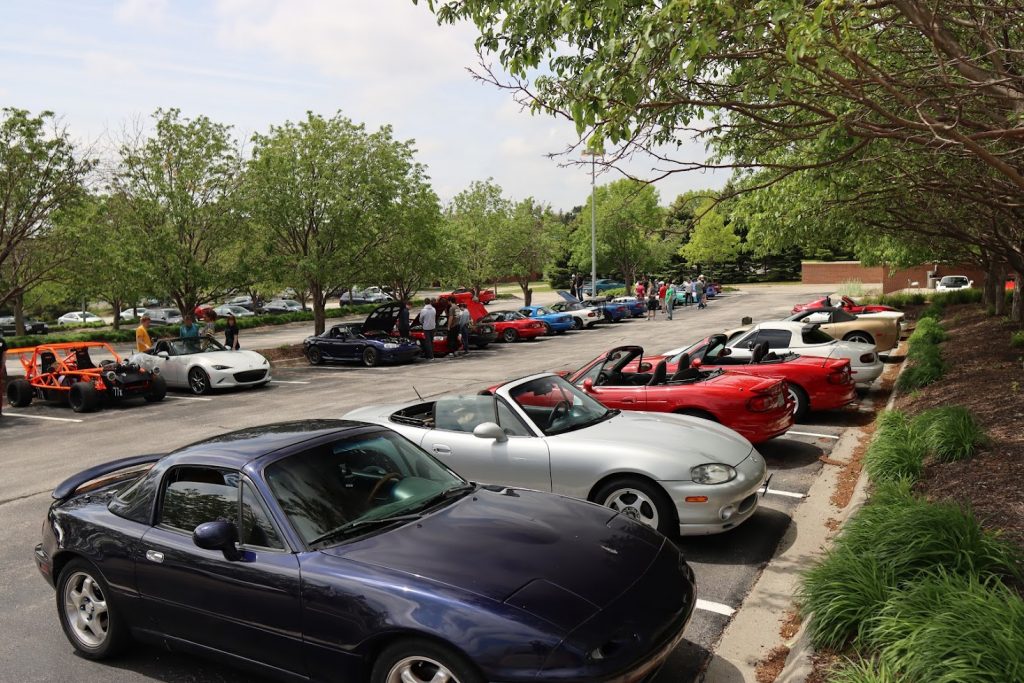
By May 2021, the restored roadster was integrated into the regional automotive community through attendance at local Mazda MX-5 enthusiast gatherings. These automotive meetups provide critical networking opportunities for project car builders, offering access to specialized knowledge, secondhand parts markets, and fabrication resources.
The diversity observed at these regional gatherings underscores the adaptability of the MX-5 platform. Contemporary builds ranged from factory-original preservation examples to heavily forced-induction configurations featuring custom turbocharger and supercharger kits, as well as extreme track-oriented conversions such as V8-powered Exocet kit cars. This broad aftermarket support network remains one of the primary economic drivers sustaining the vehicle’s popularity among both amateur mechanics and professional race teams.
Exhaust System Upgrades and Emissions Compliance Challenges
Performance modifications commenced in earnest during June 2021, driven by the presence of lingering catalytic converter diagnostic trouble codes (DTCs), heavily corroded exhaust hardware, and an owner preference for enhanced acoustic feedback from the powertrain.
The factory exhaust assembly was completely removed and replaced with an aftermarket performance configuration comprising a Raceland tubular exhaust header, a Cobalt midpipe, and a Racing Beat Power Pulse muffler. This specific component pairing is widely regarded within the community for producing a balanced exhaust note that avoids excessive drone while optimizing exhaust gas scavenging.
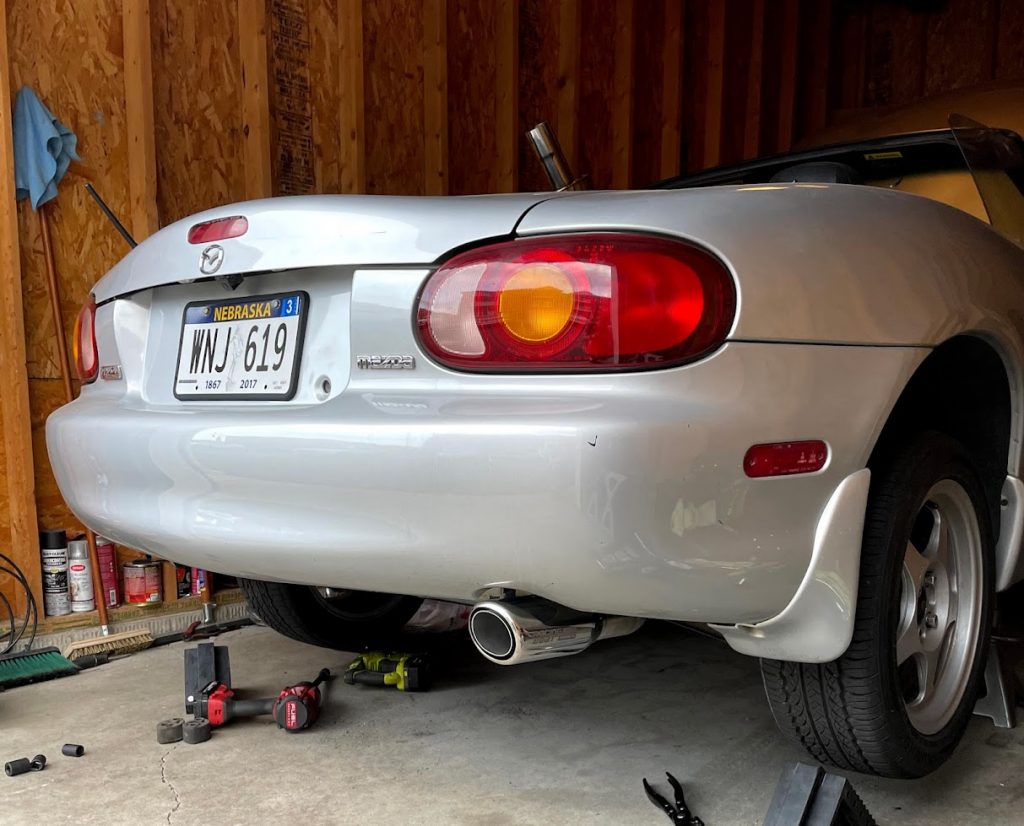
However, the installation process highlighted common pitfalls associated with DIY automotive modification. An oversight regarding the reconnection of the Exhaust Gas Recirculation (EGR) pipe resulted in persistent engine management codes, underscoring the delicate balance required when altering emissions-related hardware on OBD-II compliant vehicles. Resolving such complications demands meticulous re-inspection and reinforces the technical proficiency required for successful project car fabrication.
Aesthetic Transformation: From Silver to High-Visibility Yellow
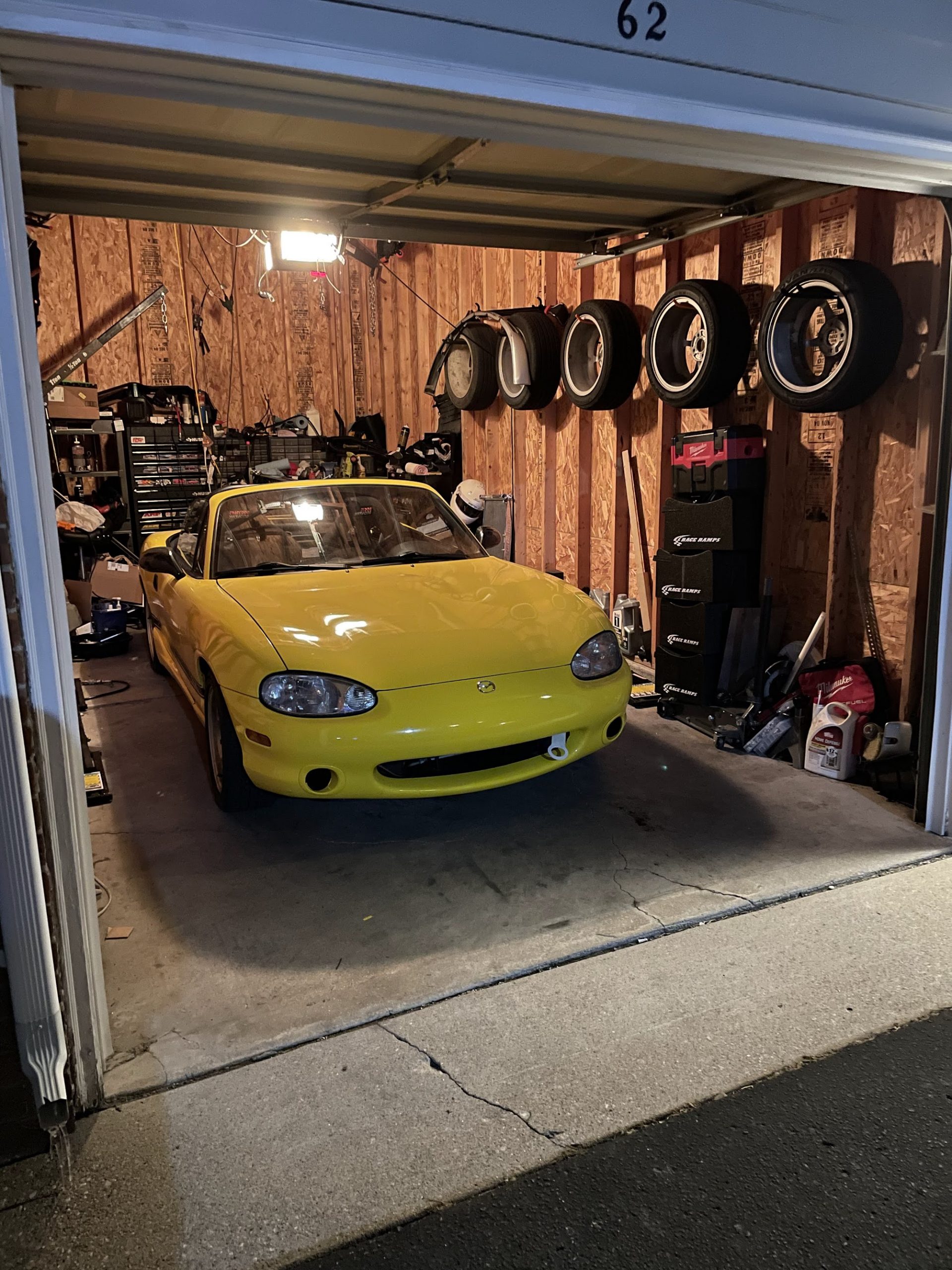
Cosmetic refinement took center stage in July and August 2021. Prior to visual modifications, a structurally compromised front fender—marred by a persistent dent—was replaced with a donor panel finished via spray-can application. While the interim paint finish was imperfect, it provided a smooth substrate necessary for a subsequent professional-grade vinyl wrap.
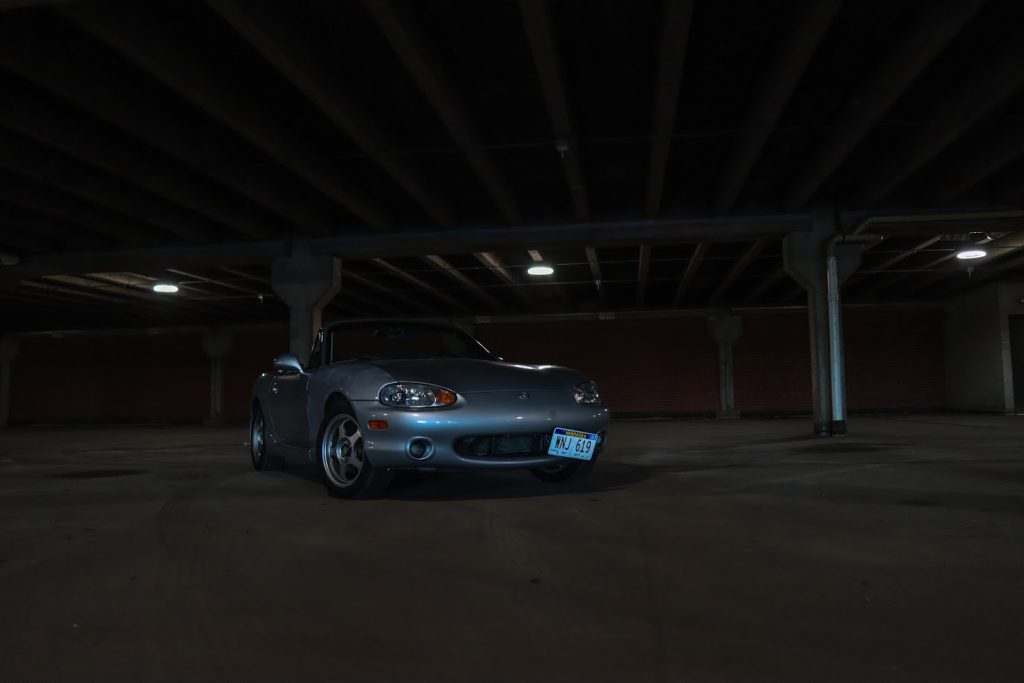
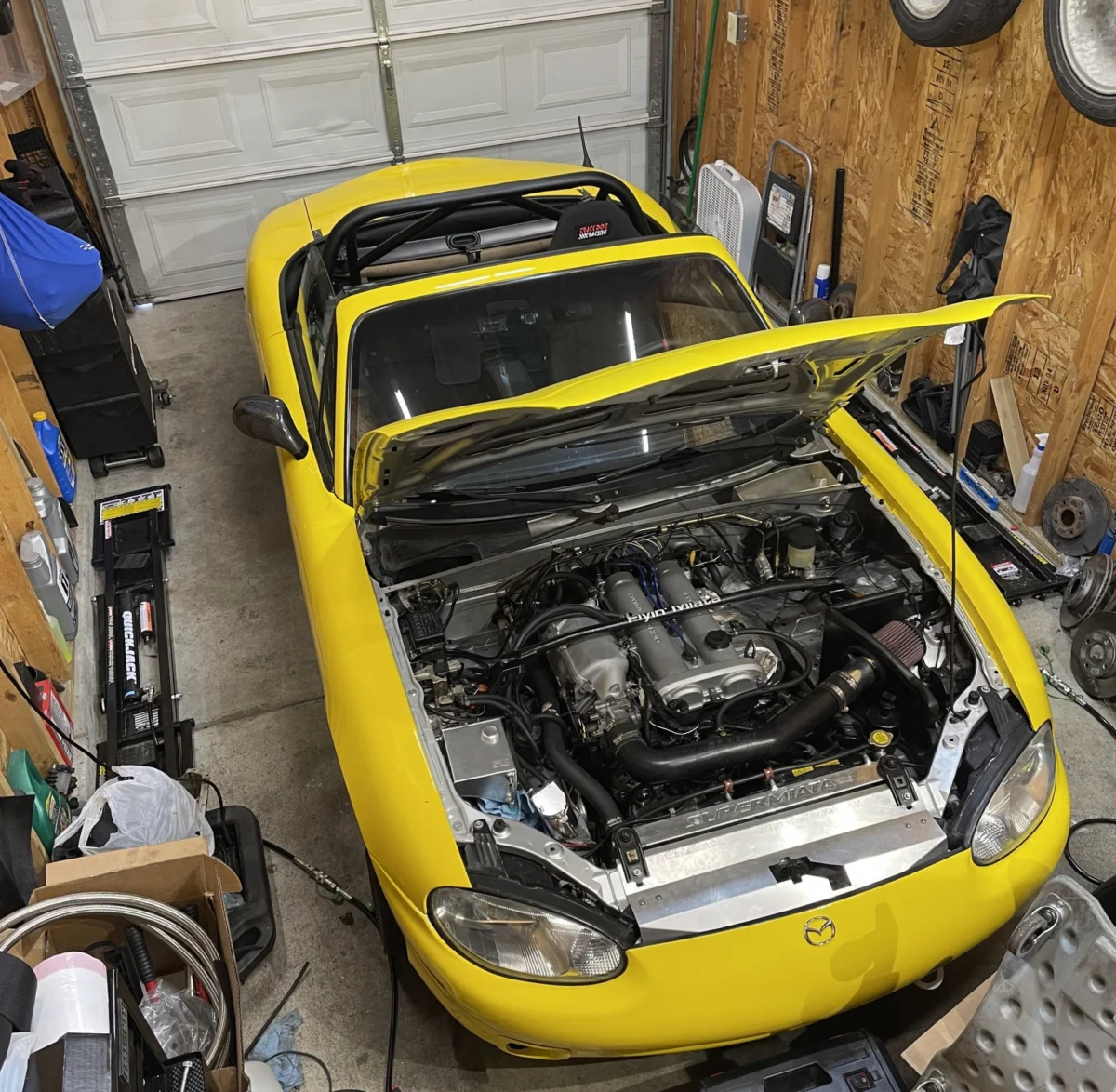
By late July, the vehicle’s exterior was fully transitioned from its factory silver finish to a vibrant, high-visibility yellow. Beyond personal aesthetic preferences, bright exterior color selections are frequently favored in motorsports environments for safety reasons, ensuring heightened visibility to marshals and fellow competitors during low-visibility track sessions. The modification effectively revitalized the exterior presentation of the aging chassis without requiring a costly professional paint job.
Motorsports Integration: Track Days and Autocross
With the mechanical baseline secured and aesthetic modifications complete, the vehicle transitioned from a street-driven project to a capable track machine in the autumn of 2021.
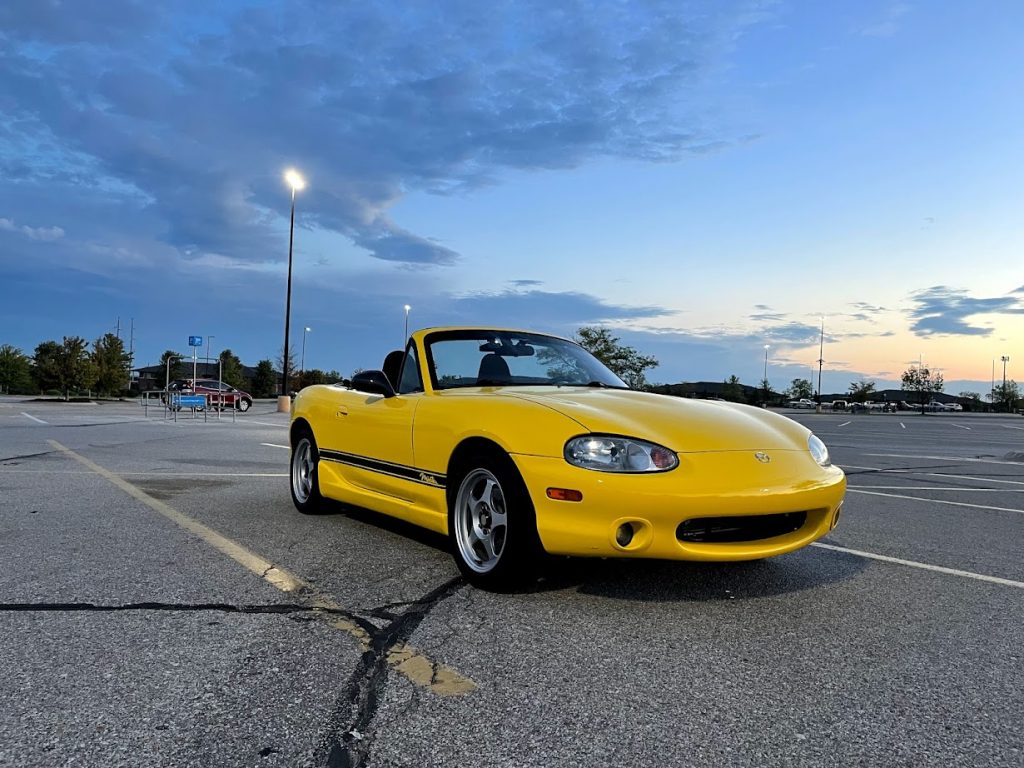
In September 2021, the Miata participated in its first official track day event at the Raceway Park of the Midlands. High-performance driving events (HPDE) provide rigorous testing grounds for suspension geometry, braking systems, and thermal management. The vehicle’s lightweight architecture proved exceptionally cooperative, offering predictable handling characteristics that allowed the driver to explore vehicle dynamics safely at the limit. Data and experiences gathered during this initial track outing directly informed subsequent engineering priorities, shifting the focus toward chassis tuning and driver safety equipment.
Complementing the high-speed track sessions, the vehicle was campaigned in regional autocross events throughout October 2021. Autocross—characterized by tight, technical courses marked by traffic cones in large parking lots—offers a cost-effective and lower-risk alternative to full-circuit racing. The discipline places a premium on transient handling, driver reaction times, and precise steering inputs rather than raw engine output, making the low-power, high-agility Miata exceptionally competitive within its respective classification.
Winterization and Structural Preservation Strategies
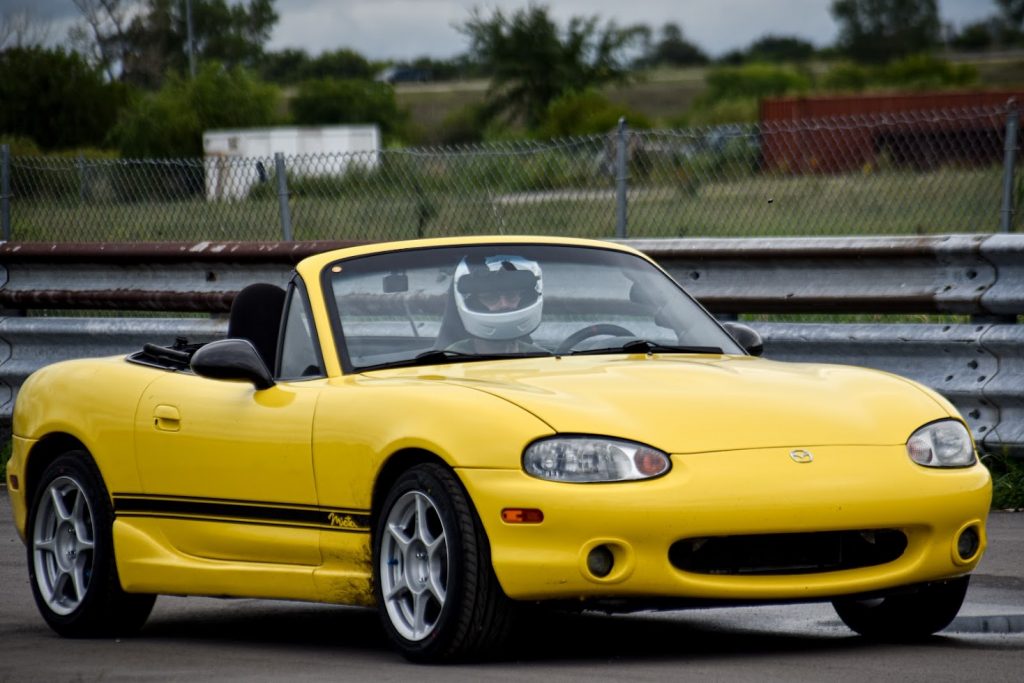
As temperatures declined in November 2021, preparations commenced for the vehicle’s seasonal storage. Operating older Japanese sports cars in Midwestern winter conditions introduces severe risks regarding structural corrosion. Second-generation NB Miatas are historically susceptible to rocker panel and frame rail rust, often exhibiting accelerated degradation compared to their first-generation (NA) predecessors due to trapped moisture and structural design nuances.
To mitigate environmental damage, winter operation was strictly curtailed to avoid roads treated with corrosive de-icing salts. Furthermore, the installation of a removable hardtop prior to storage fundamentally altered the vehicle’s cabin dynamics, improving thermal insulation, reducing high-speed wind noise, and enhancing the structural rigidity of the chassis during the transitional late-autumn driving window.
Suspension Overhaul and Bureaucratic Milestones
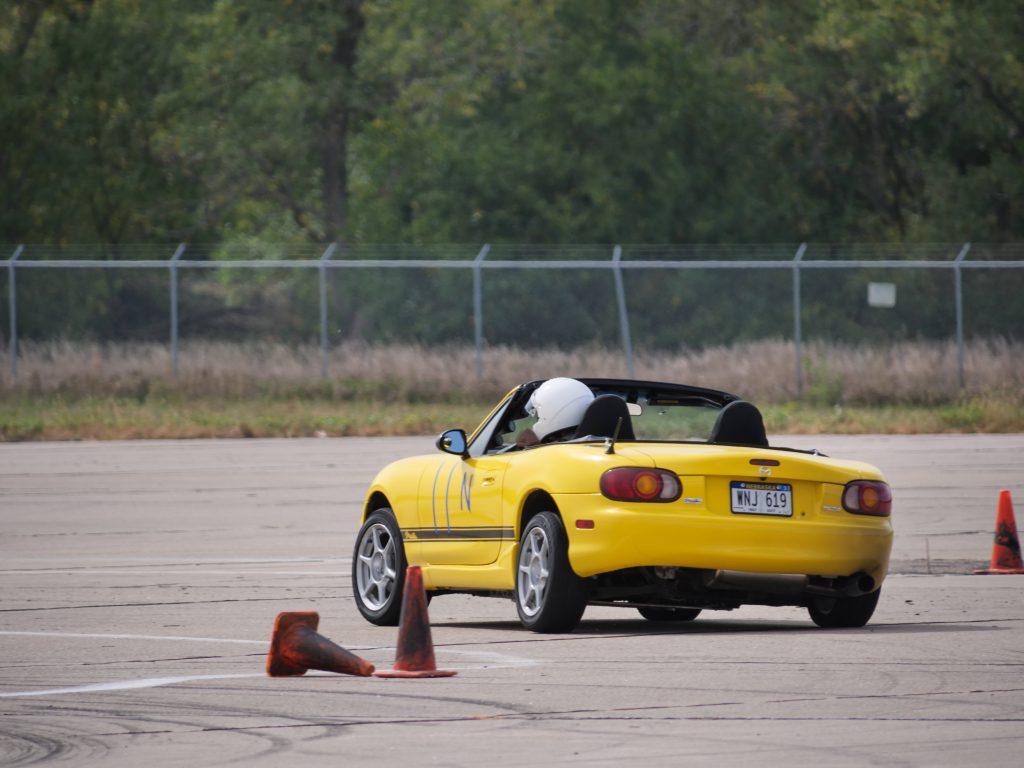
Unusually mild weather conditions during December 2021 allowed for an abbreviated operating window following an extensive suspension overhaul. The intervention involved replacing worn factory dampers, springs, and elastomeric bushings with upgraded performance components designed to reduce body roll and improve grip during cornering maneuvers.
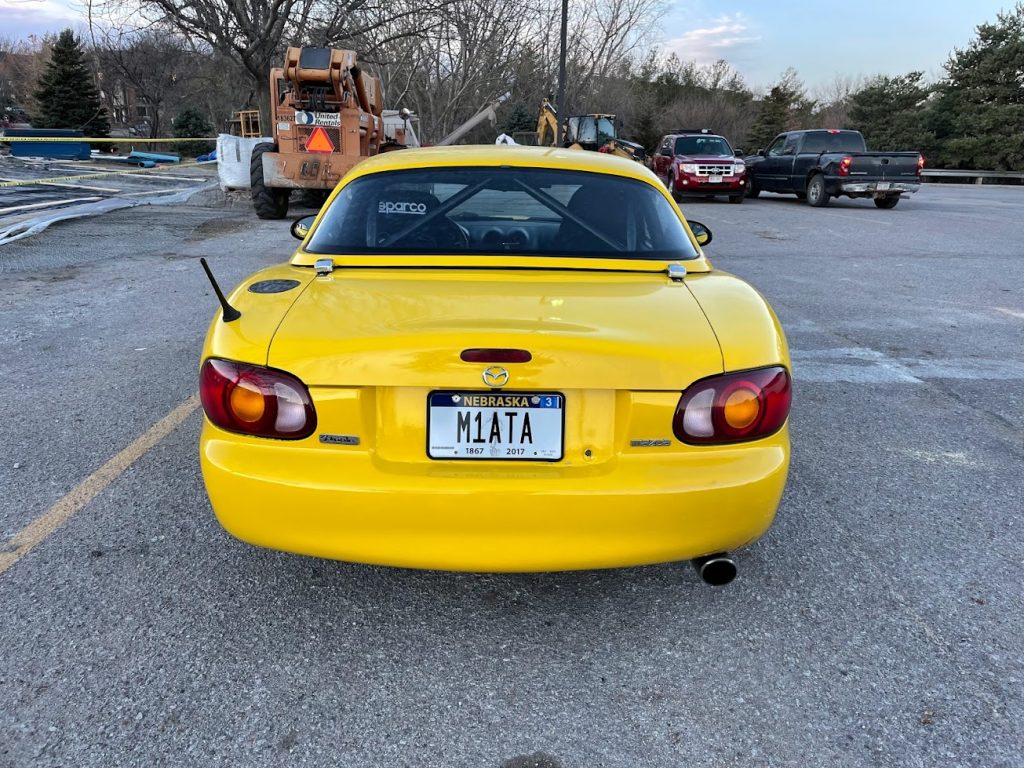
Amidst the mechanical restoration, administrative milestones were also achieved, highlighted by the acquisition of personalized "M1ATA" vanity registration plates issued by the Department of Motor Vehicles in late December.
Engine-Out Winter Maintenance and Preventative Engineering
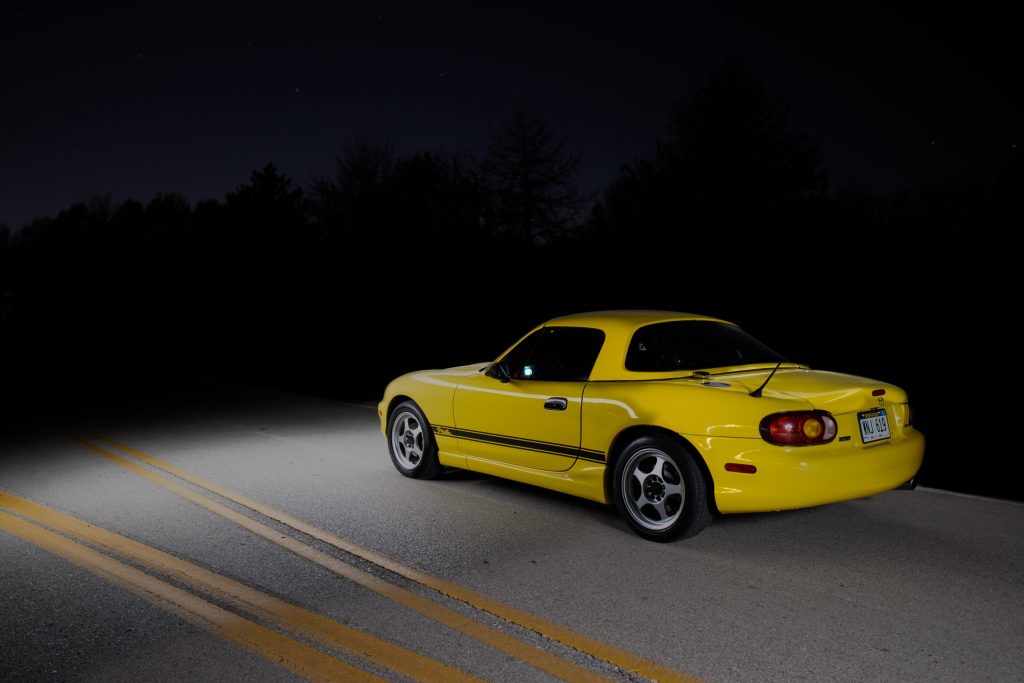
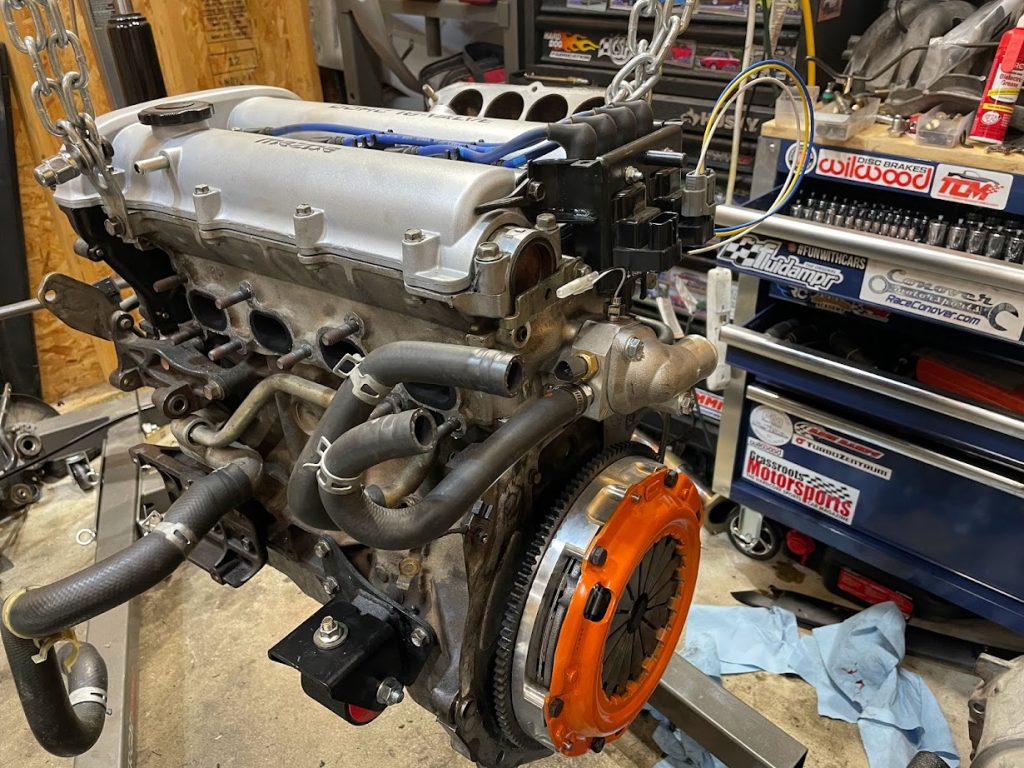
January 2022 brought sub-freezing temperatures and heavy snowfall, prompting an intensive, comprehensive mechanical overhaul that necessitated the complete removal of the internal combustion engine. Performing an engine-out service during the winter off-season allows access to critical wear items that are otherwise obscured or nearly impossible to service while the powerplant remains installed within the engine bay.
Key operational objectives during this phase included:
- Replacement of the leaking rear main oil seal to prevent persistent drivetrain fluid loss.
- Repair of a stripped oil pan drain plug threads.
- Installation of an aftermarket coolant reroute kit to address inherent thermal management deficiencies in the rear cylinders of the BP engine architecture.
- Comprehensive renewal of inaccessible coolant hoses routed beneath the intake manifold.
By executing these preventative measures during the winter downtime, mechanical reliability was maximized ahead of the demanding spring motorsport calendar.
Spring Preparation: Safety Compliance and Custom Alignment
As winter yielded to milder conditions in February 2022, final preparations focused on driver safety compliance and chassis geometry adjustments. Participating in advanced track events mandates rigorous safety equipment to protect the occupant in the event of a rollover or high-speed impact.
Safety enhancements installed during this period included:
- Track Dog Racing UltraShield Rally Sport fixed-back bucket seats.
- Six-point racing harness restraints.
- A securely mounted onboard fire suppression system.
- Acquisition and integration of a Head and Neck Support (HANS) device to mitigate cervical trauma during high-g decelerations.
Special attention was also dedicated to seating position ergonomics, ensuring adequate helmet clearance beneath the vehicle’s rollover protection structure—commonly evaluated via the standardized "broomstick test."
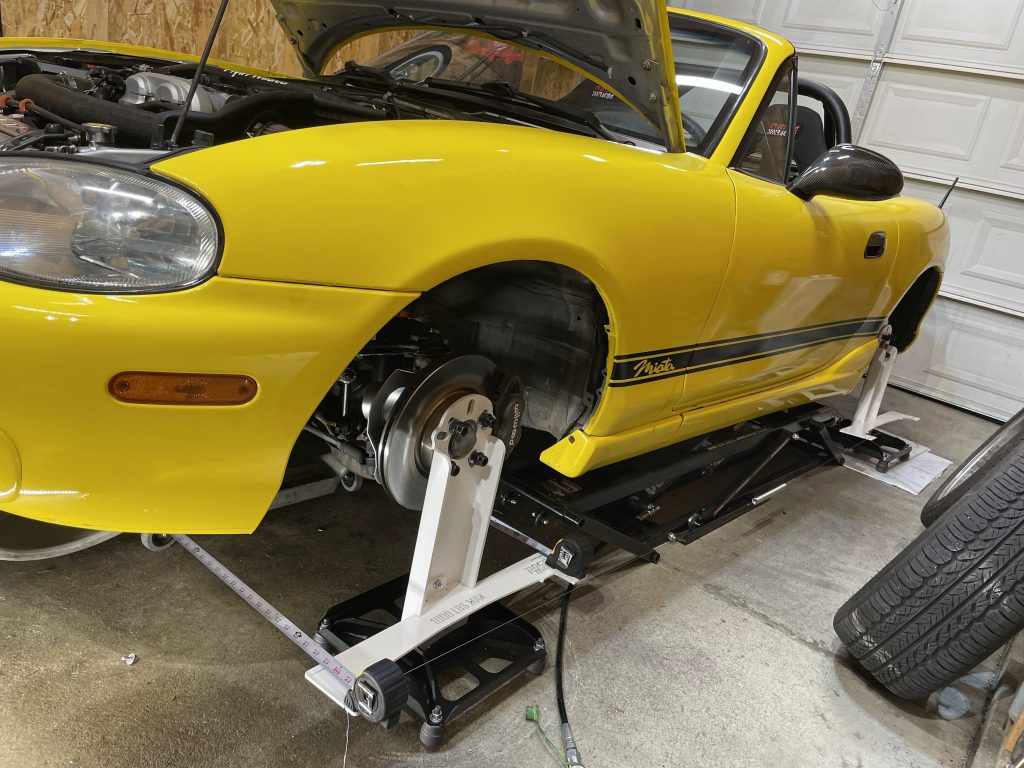
Rather than outsourcing the suspension tuning to a commercial alignment shop, the owner elected to execute a custom do-it-yourself (DIY) wheel alignment. Utilizing manual measurement techniques, camber, caster, and toe settings were adjusted to optimize turn-in response and tire contact patches for track utilization. While DIY alignments require iterative refinement, they empower grassroots builders with direct control over vehicle setup dynamics.
Conclusion and Future Outlook
Reflecting upon twelve months of intensive ownership, the project successfully transformed a neglected, high-mileage 2000 Mazda MX-5 Miata into a reliable, track-prepped sports car. Through systematic mechanical restoration, thoughtful aesthetic modifications, and rigorous safety compliance upgrades, the vehicle has demonstrated the enduring viability of the NB platform as an accessible gateway to motorsports.
As the vehicle enters its second year of stewardship, ongoing development is expected to continue within local autocross and high-performance driving communities. The comprehensive documentation of this first-year timeline serves as a practical blueprint for amateur automotive restoration, illustrating that patience, mechanical aptitude, and methodical planning remain the core pillars of successful project car building.