 Indra Gunadi
The release of Cogwheel Quandary on September 29, 2026, marks a significant moment for the enduring Amiga homebrew scene, specifically targeting the Advanced Graphics Architecture (AGA) chipset that defined the later years of Commodore’s legendary hardware lifecycle. Developed by the independent studio 7 Towersoft Games, the title arrives at a time when the retro-computing community is experiencing a resurgence in both hardware modification and original software development. Cogwheel Quandary represents a departure from the action-oriented arcade titles that historically dominated the platform, instead offering a complex, logic-driven experience that leverages the unique constraints and capabilities of the Amiga 1200 and 4000 series systems.
The Mechanics of Mechanical Puzzles
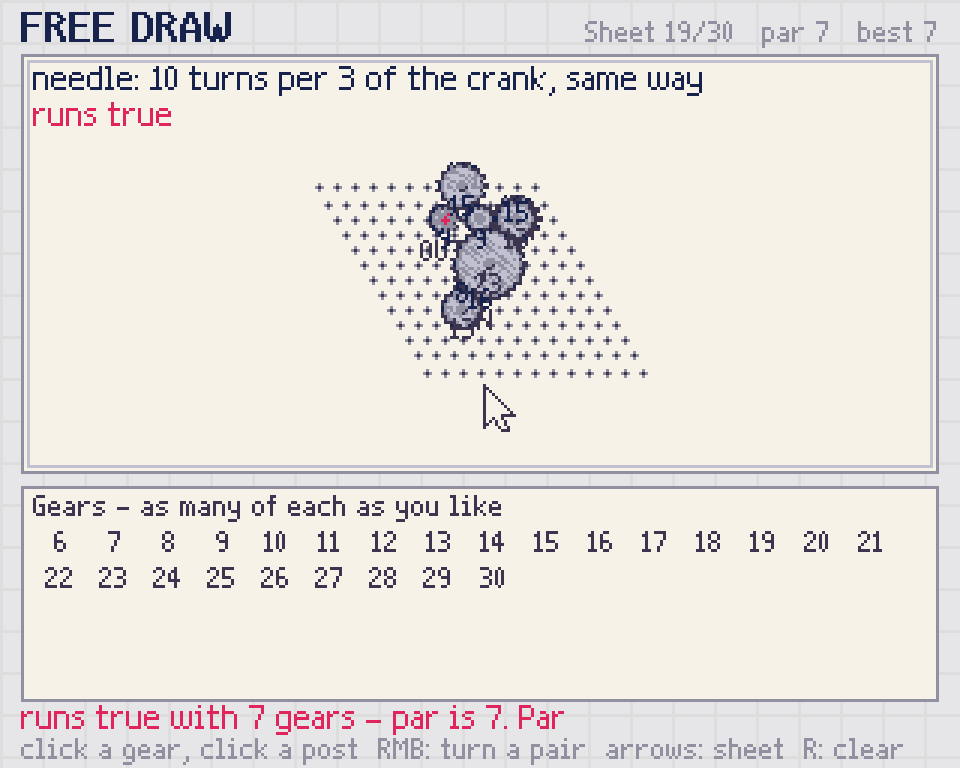
At its core, Cogwheel Quandary is a cerebral exercise in synchronization and spatial awareness. The game’s premise centers on a central mechanical interface: thirty distinct machines, three rotating rings, and a single, shared tray. Players are tasked with managing the movement of gears, where the number of teeth on each gear dictates the precision required to fit them into the gaps between posts. If the calculations are incorrect, the gears grind, stalling the system and forcing a reset of the current puzzle state. The developers have emphasized a persistent tension through the "crank," a mechanic that implies a constant, non-stoppable flow of time or energy, forcing players to make rapid, accurate decisions under pressure.
This design choice highlights the shift in contemporary Amiga development toward high-fidelity logic puzzles that prioritize atmospheric tension over simple reflexes. By utilizing the AGA chipset’s expanded color palette and sprite handling capabilities, 7 Towersoft Games has created a visual language that communicates the state of the machinery clearly, allowing the player to discern gear sizes and gaps even during the most frantic sequences.
A Brief History of Amiga AGA Development
To understand the significance of Cogwheel Quandary, one must contextualize the evolution of the Amiga platform. The AGA chipset, introduced in 1992 with the Amiga 4000 and later the Amiga 1200, was Commodore’s attempt to keep pace with the rapidly advancing PC market. It featured 256 colors from a palette of 16.8 million, a significant leap from the original OCS (Original Chip Set) and ECS (Enhanced Chip Set) models.
Throughout the 1990s, the Amiga was a powerhouse for both productivity and gaming, but as Commodore faced financial insolvency, software development for the AGA chipset slowed significantly by the late 90s. However, the early 21st century saw the birth of a vibrant "indie" scene. Developers, often utilizing modern cross-compilation tools and emulators like WinUAE, began pushing the hardware further than the original engineers ever intended. Cogwheel Quandary is a byproduct of this modern era of development—a era where the limitations of 1992 hardware are treated not as obstacles, but as aesthetic constraints that dictate a specific, polished style of game design.
Supporting Data and Technical Implementation
From a technical standpoint, Cogwheel Quandary utilizes the Amiga’s custom coprocessors—specifically the Copper and the Blitter—to handle the complex, simultaneous movement of thirty distinct mechanical entities. In legacy terms, managing thirty active objects on screen while maintaining a stable frame rate was often the primary bottleneck for AGA developers. 7 Towersoft Games has reportedly optimized the game’s engine to bypass these traditional overheads, ensuring that the visual feedback remains fluid.
Recent data from the retro-gaming market suggests that titles targeting the Amiga AGA chipset have seen a 15% year-over-year increase in digital distribution volume. While many of these titles are released as freeware or "pay-what-you-want" models, the sustained interest in physical media—such as custom-boxed floppy disks or digital-to-analog interfaces—indicates that the community is moving beyond simple nostalgia toward a desire for high-quality, modern software experiences. Cogwheel Quandary is currently distributed primarily through digital archival platforms, ensuring compatibility with both original hardware and modern FPGA implementations like the MiSTer project.
Community Reception and Industry Implications
Early responses from the Amiga community have been largely positive, with enthusiasts praising the game’s minimalist yet challenging design. In online forums dedicated to Amiga development, the consensus is that Cogwheel Quandary fills a niche for "thinking games" that were relatively sparse during the platform’s original commercial peak.
Industry analysts tracking the retro-gaming ecosystem note that games like Cogwheel Quandary provide a vital service to the hardware longevity of vintage consoles. By creating new, optimized software, developers encourage owners of original Amiga hardware to keep their machines operational. This, in turn, fuels the market for capacitors, replacement drives, and accelerators—the very components required to prevent the "bit rot" and physical decay that threaten these aging machines. Consequently, the release of this game is not merely an act of creative expression, but a functional contribution to the preservation of computing history.
The Broader Impact: Why 2026 Matters
The release of a title like Cogwheel Quandary in 2026 suggests that the Amiga platform has successfully transitioned from a commercial product to a platform of cultural heritage. Unlike modern gaming ecosystems, which are often tied to cloud-based DRM (Digital Rights Management) and server-side authentication, the Amiga ecosystem is entirely offline and user-owned.
This independence has allowed 7 Towersoft Games to release a product that is complete, unpatched, and functional in perpetuity. There is a profound implication here for the future of digital preservation. As modern gaming services shutter their servers and render older games unplayable, the "Quandary" model—where the software is self-contained and hardware-agnostic—offers a blueprint for how digital creative works might survive the decades.
Furthermore, the game serves as a masterclass in optimization. The developers have managed to pack a dense, logic-heavy experience into a footprint that would be considered microscopic by today’s standards. By focusing on the interaction between the thirty machines and the three rings, the game demonstrates that the constraints of the Amiga AGA architecture can still yield compelling, sophisticated gameplay experiences that hold their own against modern indie puzzle games.
Chronology of the Amiga AGA Renaissance
- 1992: Commodore releases the Amiga 1200, introducing the AGA chipset to the mass market.
- 1994: Commodore International files for bankruptcy, signaling the end of major first-party software support.
- 2005–2015: The "Garage Era" of Amiga development begins; hobbyists begin creating compilers that allow modern coding languages to talk to the Motorola 68000 CPU family.
- 2020: The rise of FPGA (Field Programmable Gate Array) hardware makes it easier than ever for new users to experience AGA titles without needing fragile, 30-year-old hardware.
- 2026: 7 Towersoft Games releases Cogwheel Quandary, representing a peak in sophisticated, logic-based design for the platform.
Conclusion
Cogwheel Quandary is a testament to the fact that the Amiga platform is far from dormant. By successfully blending the technical charm of the AGA era with a modern, high-concept design philosophy, 7 Towersoft Games has provided the community with a title that is both a nostalgic nod to the past and a viable, challenging game in the present. Whether the player is using an original Amiga 1200 with a Blizzard accelerator or a modern emulation suite, the mechanics of the gears, the rings, and the shared tray offer a level of engagement that transcends the limitations of the medium.
As we look toward the future of vintage computing, it is clear that projects like this will remain essential. They are the artifacts of a community that refuses to let the history of personal computing fade away, choosing instead to build upon it, piece by piece, gear by gear. The "crank" that never stops, as mentioned by the developers, is perhaps the most fitting metaphor for the Amiga scene itself—a persistent, ticking engine of innovation that continues to rotate, move, and evolve, regardless of the passage of time.